Words: Allie Rowbottom
Welcome to Ask Allie Anything, an advice column less about certainty than about critical thinking. Here, I’ll aim to answer all manner of your questions: from the macro cultural to the micro personal. What qualifies me to do so? I’m the author of three books and many reported pieces, on feminism, sex and the beauty industry, particularly. I have a doctorate, though what really, in my mind, makes me a good advice giver is that I’ve lived a lot relative to my time on earth. I’ve seen things that defy easy moralising or tidy narratives, and have tried to make sense of them in my writing. Along the way I’ve cultivated a community of thinkers and writers whom I intend to tap here, as sticky questions arise. So send me what scares you, what stumps and confuses you, and I’ll do my best to think about it with you on the page. To participate, email questions to hello@polyesterzine.com
I want to get Botox, but I feel a lot of shame around that desire. Like I am betraying other women. Can it ever be feminist? Or is this a cop out? Can it ever be “healthy”?
The last time I got Botox, I became convinced that I had botulism. It was difficult to swallow, painful even. My neck felt tight. That can happen? my husband asked. Of course it can, I snapped. It’s probably more common than they make it out to be. They here refers to the billion dollar beauty industry and everyone who buys into it. Including myself. ___STEADY_PAYWALL___
I began getting Botox at thirty, soon after losing my mother. I loved how the sting of each injection took my mind off the loss, if only for an instant, loved how the needle erased the grief from my face. You look just like her, people always told me. But I didn’t want to be reminded of her every time I looked in the mirror and saw only myself.
Nothing in life is ever simple and grief is especially complex. Botox made me feel better and it made me feel ashamed. Had I experienced symptoms of botulism then, I would have framed my illness as a punishment, the deserved outcome of my weak feminism and unchecked vanity, all of which led me to get injected in the first place. But time has passed. I no longer think this way, nor do I endorse the notion that cosmetic alteration is “self care,” and harmless.
Cosmetic alteration – from botox to boob jobs to eyelash extensions and hair dye – is a symptom of image culture, which is itself a symptom of capitalism, patriarchy and misogyny mixed with the fundamental human instinct to be seen, to be loved, to procreate and fear death. By pursuing cosmetic treatments, one is participating, at least partly, in the logic of image culture, misogyny, patriarchy, heteronormativity, ableism and thanatophobia (death anxiety); a partial list, I am sure. This is true of many choices one makes under capitalism and it sucks. But does not, to my mind, mean one should not pursue cosmetic treatments. Rather, that one should be mindful of who is selling them to you, and why.
In 2023, a well known influencer, of whom I am a passive follower, publicly discussed an adverse reaction to Botox, which she had been vocal about using in the past, telling listeners of her podcast that she went in for her standard dose and was soon beset by vertigo, blurred vision, muscle fatigue and anxiety. Doctors, unsurprisingly, dismissed her complaints. She thought perhaps she had Breast Implant Illness – loosely defined as a rare autoimmune response some bodies have to any foreign implant or device (please write in if you have questions about this topic) – and underwent emergency explantation (the removal of her implants). Then, a few months passed. As the toxin wore off, so did her symptoms. When she tried Botox again, the symptoms returned.
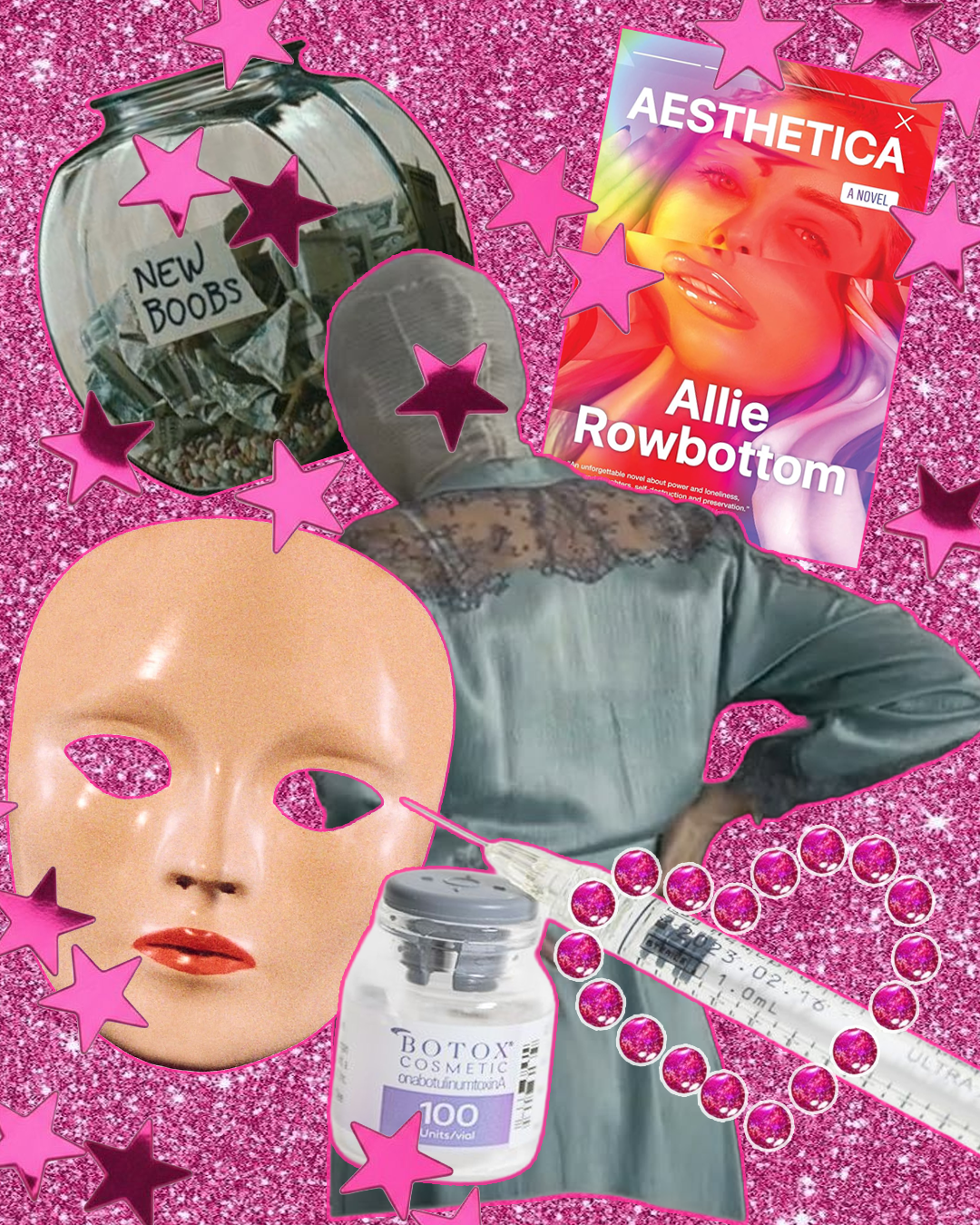
Strangely (or not), years before this happened, I wrote a fictional character with much the same story into my novel Aesthetica, itself inspired by my early forays into injectables. In the novel, having traveled far down the path of cosmetic “tweakments” – Botox, filler, breast implants – this character opts to remove her implants and forgo all injectables. I’ve been returned to myself, she tells her followers. Natural is better, natural is right and good. In return she gets clap emojis, follows and the opportunity to rebrand with an emphasis on wellness.
When I wrote Aesthetica in the early 2020s, plastic surgery – both in concept and practice – was at once research, personal obsession and what felt like a ready made metaphor for what compels me as a writer: How women make choices about our bodies despite cultural forces with a vested interest in objectifying us.
Growing up in rural New Hampshire in the early 2000s with no internet to speak of and strict rules around TV, I absorbed cultural messaging about my worth, its inextricability from my body and age from… Where exactly? The few Seventeen Magazines I was allowed to read? The Delia’s catalogue? My parents’ relationship, soon to crumble? Jung’s collective unconscious? Yes, yes, yes and probably. I was anorexic by the age of twelve.
Anorexia was a condition of which I was deeply ashamed and my shame was reinforced by the same culture that encouraged the disorder in the first place. These were the days of tabloid shaming Nicole Richie and Lindsey Lohan for eating disorders ostensibly developed in response to having been body shamed by the very same tabloids. For years I went to great lengths to hide my anorexia, even as it grew increasingly obvious.
But what does this have to do with Botox?
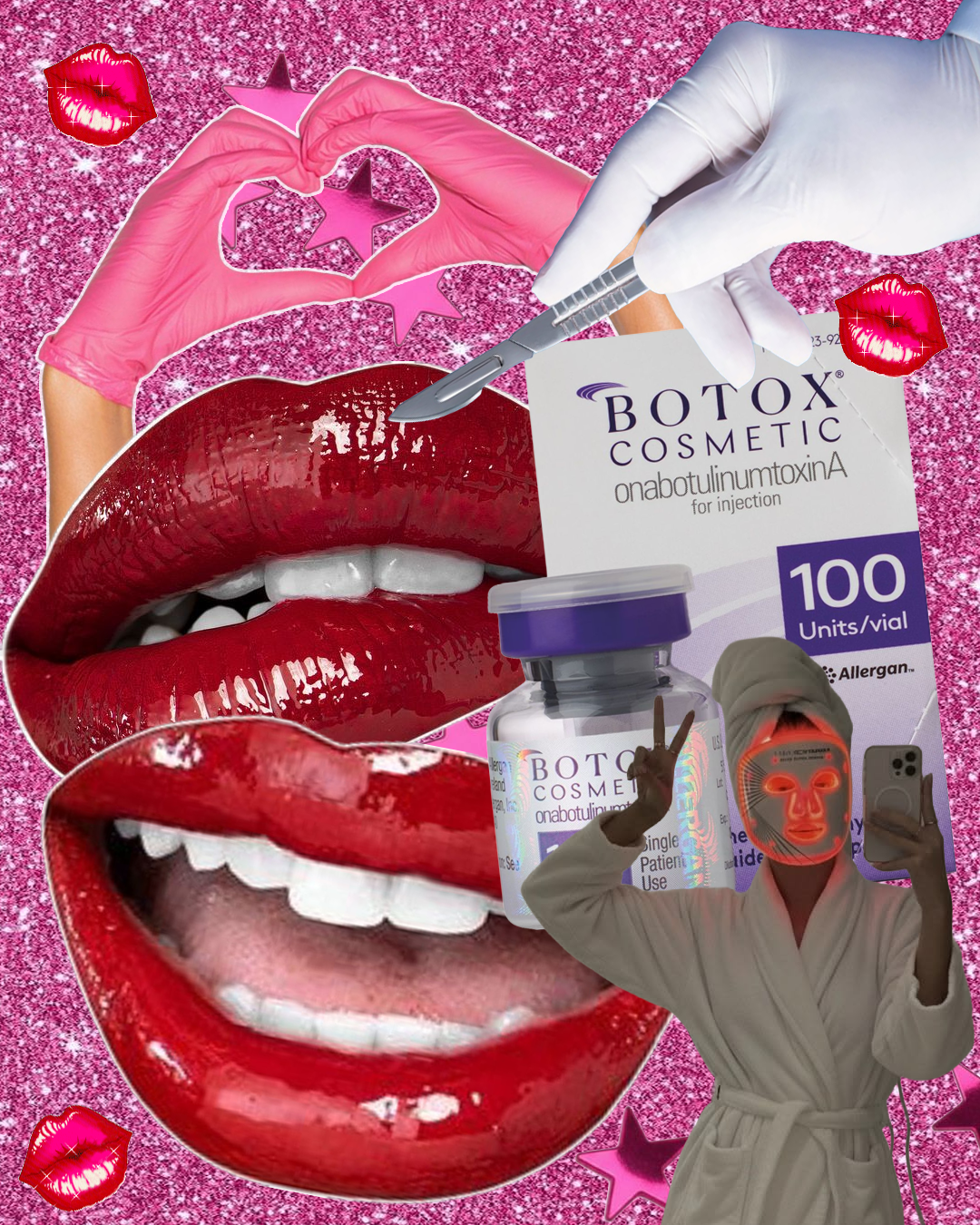
When I began to get it, almost a decade ago now, I did so in secret, with a familiar feeling of shame, the same that had prompted me to hide my eating disorder. Now, I encounter anything that promotes more judgement around aesthetics and see the same ideology - shame inspires change; unruly women should be shamed into conformity - that fomented my adolescent illness. It was therapy and writing about that shame, in my memoir Jell-O Girls and novel Aesthetica, as well as in pieces such as this, without reducing it to the good/bad binary, that turned compulsion into a choice.
I reflect on my long gone girlhood with melancholy and through the lens of a feminism I’ve had in me for just as long, which is to say an entire lifetime, absorbed in much the same way as its opposite: by osmosis and some deep inner knowing. By study. By looking at the world and seeing it’s a psyop and participating anyway. As we all do, to one degree or another. Which should not be read as carte blanche to callously perpetuate harmful standards. Or to partake in the mental gymnastics required to frame as feminist choices that obviously are not, as has often been the outcome of third wave “choice” feminism (no, I do not think getting Botox is feminist, in and of itself). Or to burden oneself with the false belief that, as a woman, it is one’s moral imperative to prioritise and caretake other women’s imagined feelings when making personal choices about one’s own body. But rather to think holistically about where harmful standards come from, how they assume space in our life, and to make decisions from this standpoint.
Research shows that botulinum toxin, by erasing emotional range, may render one’s face harder to read. Partners, children, colleagues may look upon a frozen visage and feel uneasy, confused, unsure of how to feel themselves. The person with the Botox, may likewise suffer from an inability to mirror the facial expressions of others, which helps their brain understand and empathise with emotions in the first place.
Yet just because a face has been injected with Botox, does not mean that face is “frozen.” Research also shows that looking at one’s own Botoxed face in the mirror may interrupt negative feedback loops and lessen depression. Mirror neurons work on ourselves, too, a theoretical phenomenon called the Facial Feedback Loop, traceable to the work of Darwin and James. We look in the mirror, see less trouble on our face, and become less troubled.
Botox has been in use for many decades, first as a treatment for eye spasms, then cosmetically in the 1980s, when ophthalmologists (and spouses) Jean and Alistair Carruthers began injecting patients’ foreheads (for more on this, I recommend the Household Name podcast episode on the subject). As a consumer of anything, but especially things I put on or in my body, as well as someone who has tried various cosmetic treatments to ill effects - Morpheus8, for example - I now avoid anything that has not been in use, successfully, for several decades. No new lasers, no “groundbreaking” new microneedling or filler, no cadaver fat. Which is not a failsafe, nor a guarantee of good results, nothing is.
It’s certainly possible, though not probable, to get symptoms of Botulism from Botox in any dosage. Yet the tightness in my neck and difficulty swallowing I experienced the last time I was injected turned out to be a tonsil infection. The influencer who influenced me into thinking I might be poisoned, has pivoted to selling facetape intended to mimic the effects of Botox, sans needle. Is this possible? Not really. Not yet. Though I’m sure someone with cartoon dollar signs in their eyes is working on it.
To live in our world is to straddle contradictions. We can acknowledge this is so without taking a side, though of course much of the modern media landscape, and the “attention economy” more broadly, rewards side-taking, the more extreme the better. Truth is always more both/and than either/or. Changing oneself, especially physically and electively, especially against the backdrop of a capitalist image culture predicated on keeping us ever-striving to spend money on becoming, is a choice that comes at a cost. A literal cost of course, but also a figurative one. An emotional, spiritual cost. It is not our duty to determine whether that cost is right or wrong for others; such is an impossible task, though perhaps everything would be easier if it weren’t. It is, however, our duty to think critically about whether the cost is one we can personally afford.