
Culture Slut: The Met Gala is a Mess
Words: Misha MN
Make it stand out
I love the Met Gala. I think about it all the time. I like to imagine future themes (some examples: Femme Fatale: A Study of Extreme Gender Performance, Body Censorship, and Rejected Feminity; Haute Tension: A Convergence of History, Futurism, Decaying Opulence and Modernity in Fashion; Media Circus: Couture in the Panopticon, From Warhol’s 15 Minutes to Social Media Stardom) and how people could interpret them, what pieces would be on display vs what archive pieces could be pulled by designers, and most importantly, what I would wear if I had access to wealth, prestige and celebrity budgets.
It feels like planning the most fabulous themed fancy dress party you could imagine, so I guess it’s lucky for me that that’s basically what I do in my real-world capacity as a nightlife producer. In these Met Gala fantasies, I am everything; curator, event coordinator, stylist, star, and attendee, experiencing every facet of what has risen from merely a museum fundraiser to an absurdist Super Bowl of celebrity fashion.
The Met Gala started in 1948 as the Costume Institute Benefit and was the brainchild of legendary fashion publicist Eleanor Lambert, the progenitor of New York Fashion Week, the Council of Fashion Designers of America, and the International Best Dressed List.
Diana Vreeland took over in 1972 after being one of the most influential chief editors of Vogue to ever exist, and she took the benefit from a small dinner event for New York high society and industry professionals to a star studded international soiree, featuring guests like Elizabeth Taylor, Bianca Jagger and Andy Warhol (fun fact, Vreeland actually hired Warhol to work at Vogue as an illustrator in the 1950s before his massive Pop Art career). Vreeland, as a true visionary of the Costume Institute, revolutionising the way clothing could be exhibited as art objects, also introduced the idea of themes into its annual fundraiser. ___STEADY_PAYWALL___
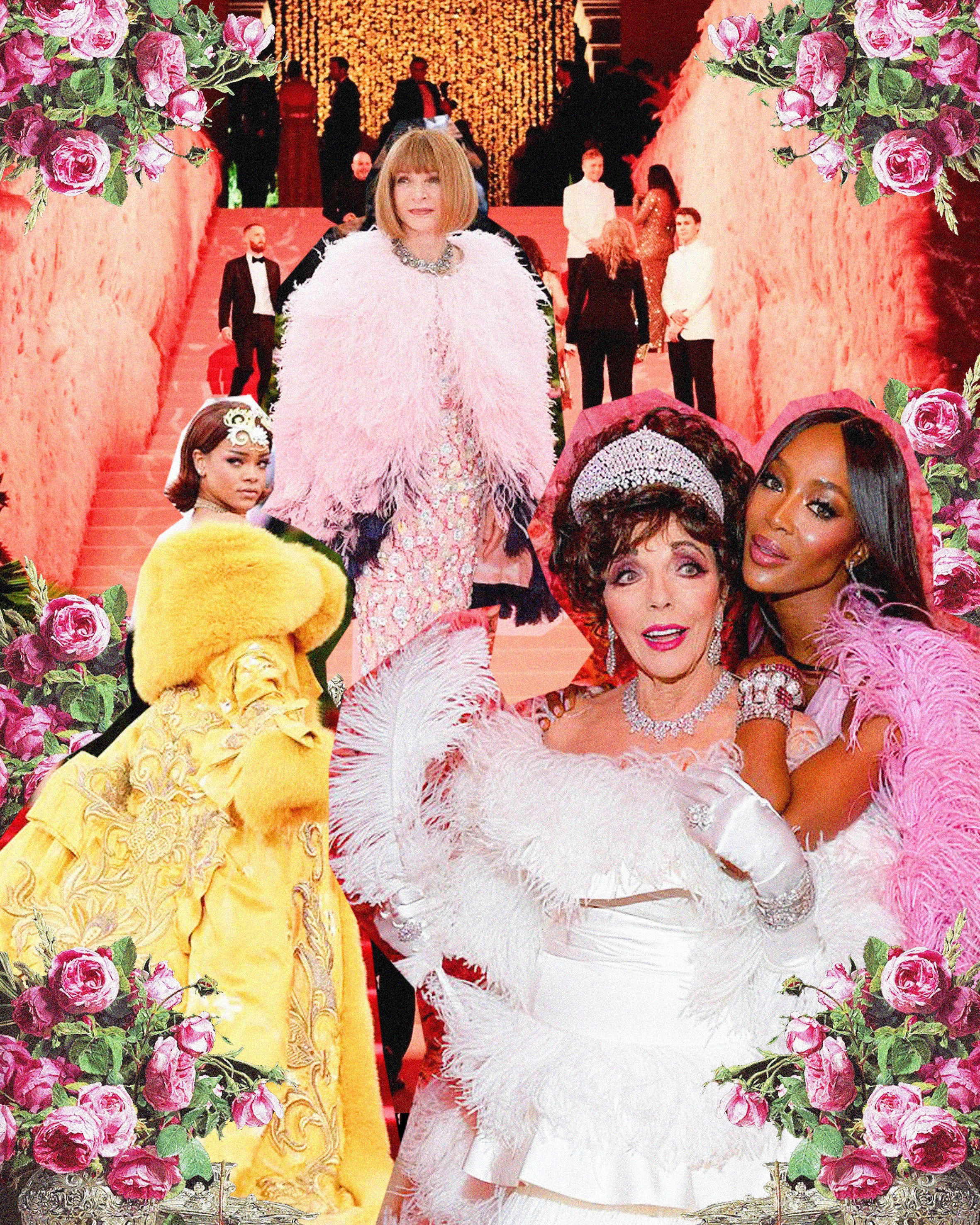
Anna Wintour took over in 1995 and has continued to push the Met Gala beyond its humble beginnings and created the most lavish night of celebrity spectacle on the fashion calendar. Continuing Vreeland’s implementation of dress codes that match the exhibition theme, we have been treated to couturier’s takes on Catholic art, Black Dandyism, and, my favourite, Camp.
One of my first Culture Slut columns was about the 2019 Met Gala - Camp: Notes on Fashion, and I still think about it all the time. It really highlighted the people that understood the theme, people who didn’t care, and people looking for virality. Standouts for me that year was Gemma Chan in a Tom Ford chic recreation of an Elizabeth Taylor look from the legendarily bad film BOOM!, Ryan Murphy’s tribute to Liberace which I think actually revealed his own inner monstrosity, and Joan Collins in a silver gown with white ostrich feathers. Joan Collins was the campest person there just by virtue of being Joan Collins. With time and distance, I also really liked Katy Perry as a chandelier on the carpet, changing into a burger costume during the dinner portion of the evening. That’s quite camp. (Tangent: I hate the way that celebs wear the most abstract and impractical garments in order to one up each other to the point where they have an outfit to walk the red carpet for the press, and then have to immediately change so they can freely move during the exhibition, cocktail hour and dinner. If you can’t commit to an outfit for the whole night, don’t wear it. In the pursuit of best dressed lists, celebs are cosplaying as couture customers in borrowed outfits that they don’t even have the stamina to stay in for ten hours. Do you think Nan Kempner or Marisa Berenson have to change out of their couture after walking up stairs because they need to send it back to the archives unblemished? No, because it's part of their actual wardrobe. Grow up and stop pretending to be something you’re not.)
“Chanel was a complex woman who completely changed the world of fashion at least two times over, but her insidious political machinations need to be just as much part of her story as the Breton stripe chemise.”
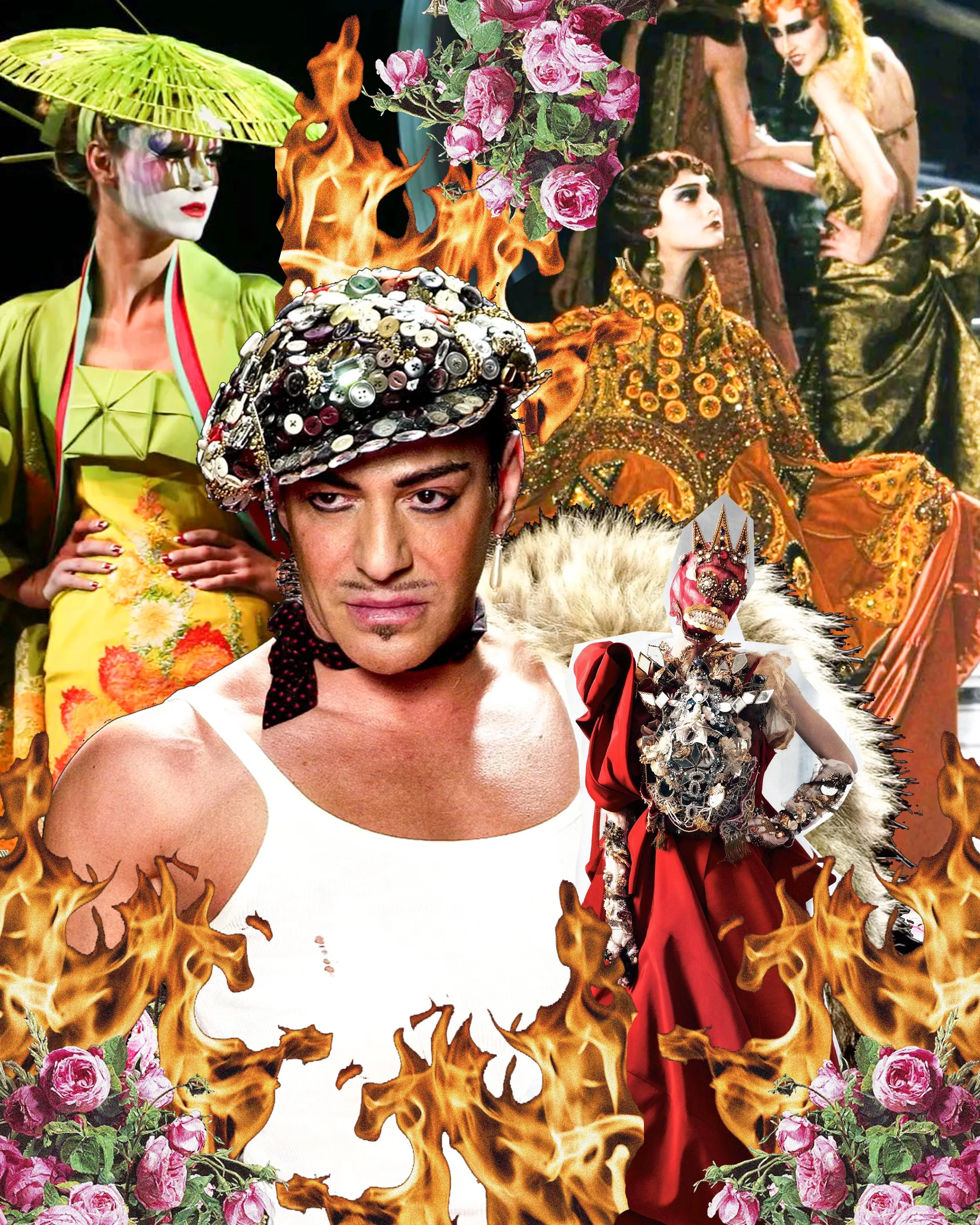
Seven years on, The Met Gala is still making headlines, in my brain, as usual, but also more widely. The 2027 Costume Institute exhibition (the show that the Met Gala opens) was scheduled to be a retrospective celebration of the career of John Galliano, the controversial enfant terrible of Givenchy, Dior, Margiela and now Zara, but was called off due to radical pushback from the public and the most important people to the Metropolitan Museum; the donors.
Galliano had a spectacular fall from grace back in 2011 after being filmed in a Paris cafe unleashing a vicious tirade of antisemitism towards some fellow patrons, professing his love of Hitler and applauding the horrific extermination of Jewish families. It truly is a shocking video. I remember hearing about it at the time and imagining it, but it wasn't until a few years later that I saw the actual footage and was surprised by the visceralness of its content. Galliano lost a lot of his prestige after that, but Vogue editor Anna Wintour and his powerful industry friends rallied around him and tried to rehabilitate his career far quicker than anyone thought they could. As early as 2014, a mere three years after the video, Galliano became creative director of Maison Margiela, a run which saw him return to form for a lot of fashion critics, if not social or political ones.
In 2024 a feature length documentary called High & Low: John Galliano came out, charting his meteoric rise, his collapse and his return, stuffed to the gills with endorsements and flowery admirations from heavy hitters like Wintour, Edward Enninful, Naomi Campbell and Kate Moss. Its aim was to remind us of how good Galliano was, and how much he had worked on himself since his outburst, but I really think it did the opposite. It reminded us as an audience just how bad what he did was, and how he still refuses to shoulder the blame for it. “I don’t know who that person is, that isn’t me, it doesn’t feel like me” he claims when rewatching the footage. The hard truth is that it is him, and he did say it. That’s not up for debate. Naomi’s impassioned defense of his character and simultaneous refusal to see the video is emblematic of the whole industry’s attitude towards Galliano’s shortcomings; blustering admiration and willful ignorance.
Anna Wintour’s incarnation of the Costume Institute has taken time to honour great designers after they’ve died, giving the public a chance to bask in their sartorial brilliance one last time. Karl Lagerfeld was honoured at the Met Gala in 2023 (the winning look for me was Nicole Kidman’s dress, from her 2004 Chanel No 5 advert) despite his reputation for being difficult and not exactly progressive with his fascist fashion visions. Iconic designer Alexander McQueen was the subject of one of the most successful exhibitions of all time, Savage Beauty, created by Andrew Bolton for the Met, and an incredible 2018 documentary called McQueen that gave a deeply personal look at McQueen’s collections, inspirations and relationships. One can only imagine that the creators of High & Low really thought their work would do as much for the legacy of Galliano as Savage Beauty and McQueen did for McQueen.
Separating The Art From The Artist has become a concept that is debated almost weekly in our modern era. Closely linked with Roland Barthes’ Death of the Author theory, this is the idea that art is shaped by the viewer, that it can be consumed at a distance from its initial creator, and it is most frequently applied to artists who have become problematic, or who no longer fit in with a modern sense of morality. For some properties, it works. The films of Elia Kazan, for example, are still truly great, despite Kazan’s controversial decision to collude with the House Un-American Activities Committee and give up the names of communist sympathisers for the black list. Kazan and the McCarthyist dinosaurs are dead, so the endorsement of his work does not have the same political edge that it might have done in the 1950s and 60s (although his 1999 Honorary Lifetime Achievement Oscar was met with protests and icy stares amongst the applause on the live telecast.) JK Rowling, on the other hand, is still alive and kicking (unfortunately), and reminding us daily that any profits made from her literary franchise directly supports her sadistic campaign against any trans person that dares to live in the public sphere. Whilst one can separate A Streetcar Named Desire from the Red Scare, it is impossible to remove Harry Potter from the rabid transphobia of the 2020s.
John Galliano and his rampant anti-semitism sits in a painful place in our current political climate, slipping between the cracks of growing right-wing Jew-hate and left-wing anti-Zionist protest, but no one wants to talk about it. Video essayists and online fashion commentators and TikTok GRWM stars choose to highlight the stylised drama of his collections, the archive pieces pulled by Kim Kardashian or Zendaya, the legendary excesses of the supermodel 90s, focusing only on the form and not the meaning. Galliano mostly remains in the shadows because if an audience can’t see his face, they can’t be reminded of the close up video of him saying the foulest things one can imagine. Absence makes the heart grow fonder, hopefully, and maybe Wintour and her cohort thought he had been in the doghouse long enough. But, unfortunately for them, once something is on the internet, it never truly goes away.
Controversial artists can still be valuable to a society, but the entirety of their output, the good, the bad and the dreadful, needs to be included in their legacy. A retrospective needs distance in order to be unbiased. Coco Chanel died fifty years ago and yet she remains a fascinating historical figure, it was not until around 2015 that the extent of her collaboration with the Nazis was truly revealed in freshly declassified documents. Chanel was a complex woman who completely changed the world of fashion at least two times over, but her insidious political machinations need to be just as much part of her story as the Breton stripe chemise.
Galliano has been one of the most exciting figures in his generation of designers, representing a crazed explosion of creativity and excess alongside Alexander McQueen, Jean Paul Gaultier and Marc Jacobs, but his story is not yet finished. His career, despite his setbacks (and the opinions of some critics) is not over. His world is constantly expanding and receding, forming and deforming, soaring to lofty heights and then plummeting into the depths of human repulsion. Who knows what else is lurking in those couture closets? One day we might be ready for a Galliano retrospective, but I can confidently say that today is not that day.