Culture Slut: The Odyssey And Unpacking The Inherent Immaturity That Surrounds ‘Authentic’ Adaptation Rhetoric
Words: Misha MN
Make it stand out
Well, it happened. Christopher Nolan’s The Odyssey came out and is officially the film of the summer, and people are losing their damn minds. The discourse is frenzied, film bros battle against old school legacy critics, feminist discourse channels go toe to toe with angry amateur classicists, the far right is sniffing around because the film had the gall to have black people in it, and now even one of the most famous modern translators of the original text is weighing in.
Everyone is desperate to A) have an opinion, and B) let everyone know it, with eyes on the prize of admiration and total assent. I went into my screening cautiously hopeful and, dear reader, about half way through the run time, I decided I liked it. Shocking, I know.
Like a hundred million other people, I was obsessed with Greek mythology as a child and of course, the Odyssey was a firm favourite. I read many different versions, ranging from comic strip adaptations made for small children, to more sea-faring swash-buckling teen versions, to actual adult translations, and I loved them all. I knew the order of islands that Odysseus visits on his journey home, the names of princesses and rich men’s daughters that he falls for, the litany of female monsters he must overcome, and of course, the whole gamut of Odysseus’ clever tricks and inventive solutions to his many problems. I knew his relationship with every God on Olympus, how many years he spent on each island with each divine mistress, every familiar soul he met in Hades when he went in search of guidance. I understand the bones of the story, the common skeleton that links all versions of the Odyssey together, but can also appreciate how the literary muscle and skin built on that framework can vary and make distinctly different beasts. Every staging is an adaptation, influenced by its author and, even more importantly, its audience. There is no definitive version of the text, because even Homer’s written poem came after a long long long oral tradition of bardic recitation.
The idea of “historical accuracy” when it comes to Greek Mythology is honestly contemptible. Yes, there can be an attempt to keep an adaptation in line with what we currently know about certain pre-christian centuries and eras, but enjoyment of the story shouldn’t depend on the correct fastenings of a chiton, or a style of a battle helmet. Narrative is the focus above all, from how the story affected its original audiences, to how it affects us in the modern day. This dogmatic idea of authenticity is actually being used as an arbitrary set of rules that people use to try and quantify an emotion-driven medium. Did we hate Emerald Fennell’s Wuthering Heights because it wasn’t period accurate? No, we hated it because it was an obnoxious piece of drivel made by a known enemy of the people.
___STEADY_PAYWALL___
Diverse or racially blind casting has been another hot button talking point for The Odyssey’s detractors, and to that all I can say is GROW UP. Lupita Nyong’o was a fantastic (if fleeting) Helen of Troy, and yet all people can talk about is her supposed blondeness and fairness. Reader, she was also meant to be sired by a divine swan and born from an egg, what do you want from us? The racialisation of her character becomes a subtle addition to her story, she sits in Sparta, wife to a rough and overbearing Greek husband that looks like a Sopranos character from Long Island who treats her like property. In Nolan’s world of realism, the overt magical properties of the story are underplayed, so it leaves it to the viewer to fill in the gaps. Maybe Helen was taken from a distant country as spoils of war? The state of singular Otherness granted to Helen by virtue of her beauty in The Iliad is perhaps recontextualised as Otherness relating to her race. Whilst there were other black and brown actors dotted around, Helen and her sister Clytemnestra (true to the myth, by the way) are by far the most dark-skinned of the cast, and this in itself highlights the isolation and burgeoning resentment both Helen and Clytemnestra have for their husbands.
But also, even if her racial identity didn’t make narrative sense, it doesn’t matter, because it's a fantasy film. It’s just a film. Films cannot erase other media, or your own imagination. I remember a few years ago it was announced that Tom Holland would star in a minimalist Jamie Lloyd production of Romeo and Juliet, opposite the fantastic Francesca Amewudah-Rivers, a black actress, as Juliet, and the internet went crazy, truly exposing the vitriolic racist hatred that constantly bubbles just beneath the surface.
People behaved as though this one stage production would erase all previous iterations of Romeo and Juliet, that this was an outrageous never-seen-before casting, that it was a slap in the face to Shakespeare (and thus, all whiteness) to have a black actress as a romantic lead in a classical play. Theatre, particularly modern British theatre, has made a lot of headway in racially blind casting, something that cinema, particularly American cinema, has yet to catch up with. That being said, Wuthering Heights (sorry to bring it up again) is a perfect example of how supposedly racially blind casting can fail, making a non-white hero white, and making white villains brown.
“All in all, I think it was a fun time and everyone is taking everything far too seriously. Was it the best version ever? No. Did I like watching it? Yes.”
Modern audiences seem to be constantly in search of definitive and authentic versions of classic stories, and I’m sorry, but there is no way that can ever happen. It’s not even a problem specific to our modern era of remakes, because to be honest Hollywood has been remaking its own content from its very first decade of existence. It returns to its own films again and again as technology advances, remaking silent 20s films as talkies in the 30s, then again as technicolor films in the 50s, and then again in the more permissive era of the 70s, then again in hideous CGI in the 00s, now again as supposedly-amusing meta commentaries in the 2020s. Every version is valid, and every version exists on its own plane of existence, sometimes in conversation with its other adaptations, sometimes in isolation.
Maybe this absolutism of definitive adaptation comes from our current media literacy crisis. I remember as a child loving classic the classic animated Disney fairytale films, Cinderella, Sleeping Beauty, Beauty and the Beast, and then at some point finding out that there were other versions of these stories that didn’t look like the ones I was used to. Leslie Caron in The Slipper and The Rose was very different to the animated strawberry blonde Cinderella I loved, so was the frightening black and white La Belle et La Bete, but even at the tender age of six and a half, audiences can understand different adaptations can exist at the same time. I had multiple collections of illustrated fairytales, often containing overlapping stories, and I had favourites from the pictures, but they all existed in harmony with one another. Ursula the Sea Witch in The Little Mermaid might be a dragilicious diva in the Disney film, but a kindly grandmother in a children's storybook, it depends on who is telling the story. No one is up in arms about the original ending of The Little Mermaid - her failure to secure the prince’s love, her subsequent death and transformation into a silent spirit of the wind - being altered for a healthy, wholesome kiddie flick, but they will kick off about change of skin colour. Go figure.
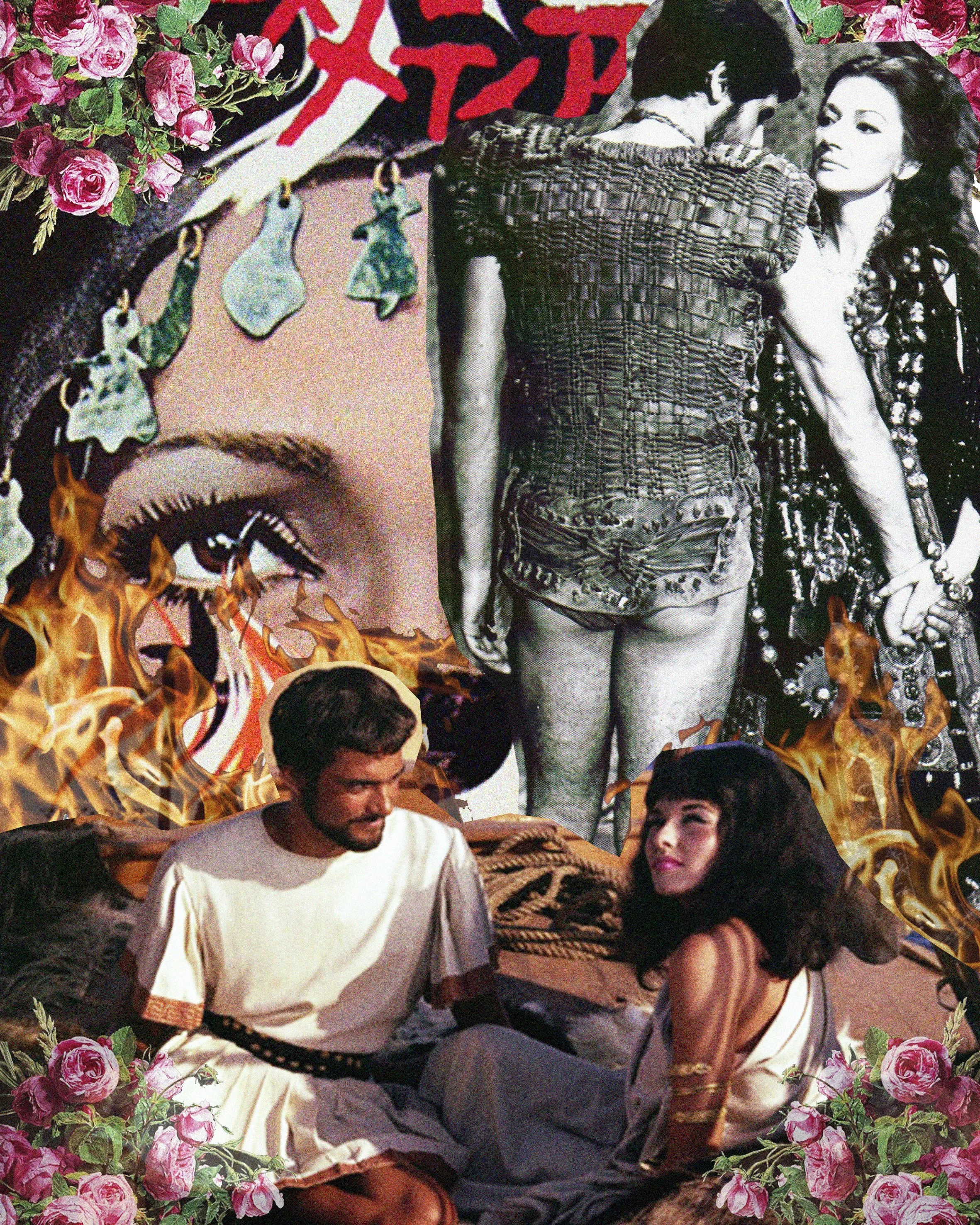
Greek Mythology has been fertile ground for classic Hollywood, leading to the swords and sandals craze of the late 50s/early 60s, producing a smorgasbord of stories set in ancient Greece, biblical times and the Roman empire. Hercules, Moses, and Sinbad all became epic heroes and audiences loved them. My favourite from this genre is 1963’s Jason and the Argonauts, an epic tale about how Jason must gather together a crew of heroes and sail to the other side of the world to retrieve a Golden Fleece so that he may claim the throne back in his homeland. Like the Odyssey, Jason stops at many different islands, fights many different monsters, and meets many exciting women along the way. Like the rest of the swords and sandals epics, it's overwhelmingly white, except perhaps for some black slaves in gold chains. It is this 1960s monoracial aesthetic that still governs the popular imagination about stories set in ancient Greece, where everyone is played by either an American western star, a British classical theatre actor or an Italian sex kitten. The Gods on Mount Olympus are all veterans of British Theatre, Niall MacGinnis and Honor Blackman in Jason, Laurence Olivier, Maggie Smith and Claire Bloom in Clash of the Titans, all booming away using their best Shakespeare voices.
But even in the 1960s, different and diverse adaptations of the same story can exist side by side. Jason and the Argonauts is a swash buckling romp featuring lots of fantastical claymation monsters engineered by the legendary master Ray Harryhausen, but also the enigmatic character of Medea, played by Nancy Kovack. Medea is a priestess that is seduced by Jason who eventually helps him steal the Golden Fleece from King Aeetes, and she is the perfect romantic heroine. Initially she's mysterious and aloof, then after changing into an ancient version of a 60s burlesque wiggle dress and performing a sexy dance, she is Jason’s damsel in distress. Later, in 1969, Pasolini released his version of Medea’s story, based on Euripides' play from 431 BC. Here, Medea (played by the incomparable Maria Callas) is more complicated and internal, she broods, she schemes, she fights. She dismembers her own brother so that Jason may not be caught. She travels home with him, but when she is abandoned, she curses him and kills their own children. These two versions of Medea exist, with neither of them being invalidated. Kovack’s Medea is a populist love interest, where Callas’ is a complex anti-heroine.
So, back to Nolan’s Odyssey: why did I like it?
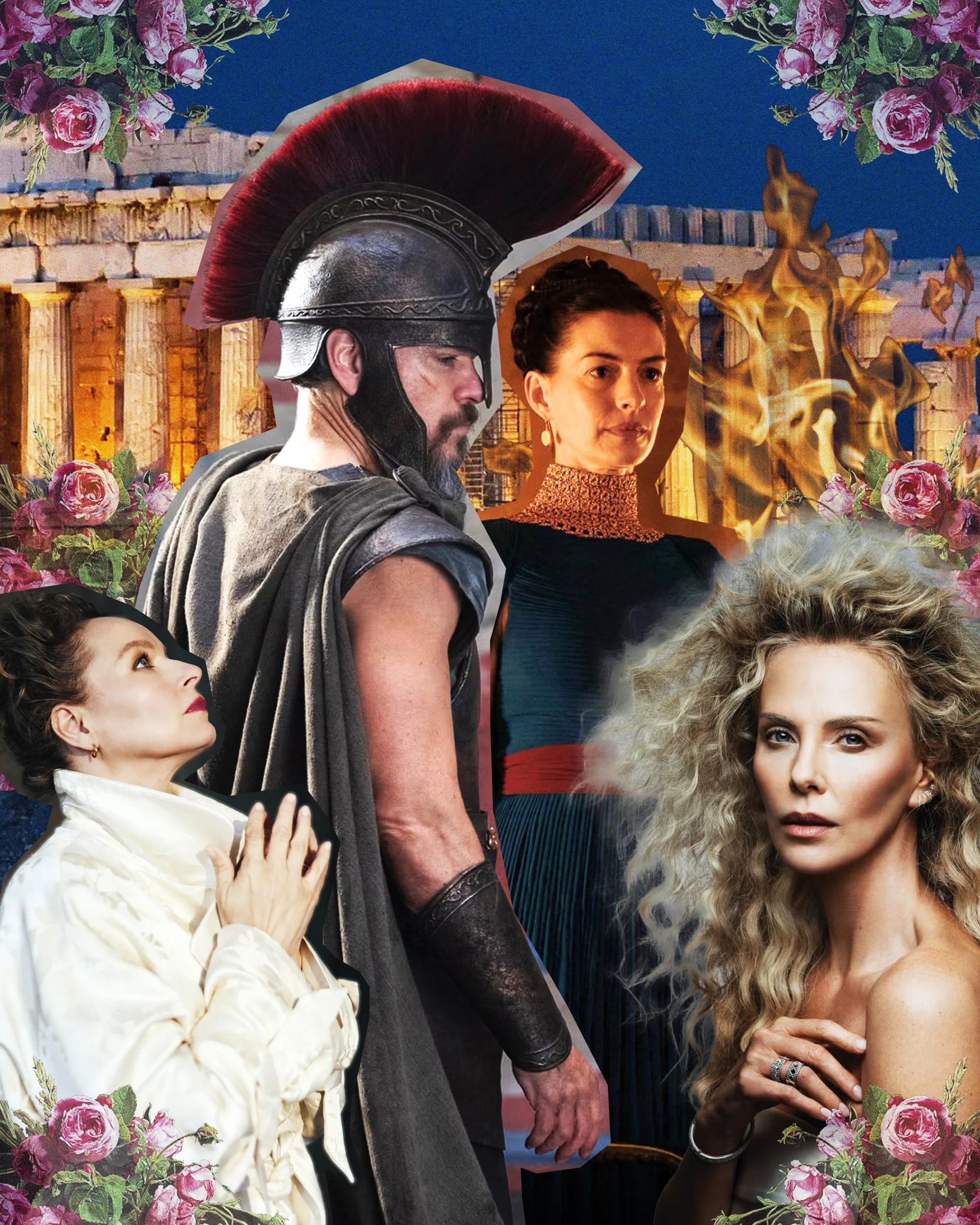
I enjoyed the film as an epic adventure, an ancient greek romp similar in spirit to those 1960s swords-and-sandals swashbucklers. I liked the practical effects (finding out that the cyclops was a giant puppet like something out of Labyrinth brought me a lot of joy), I liked the huge cast of A listers (again, very 1960s), and I liked some stylistic choices, like Circe’s transformation of the soldiers into pigs, and the aesthetic of Hades. I think the costumes could have been decidedly More Fun (not more accurate, but More Fun), and the dialogue could have been a bit snappier, though I know Nolan was going more for realism than clever tricks and verbose sleight of hand. I thought Anne Hathaway’s Penelope was good (a contentious issue apparently) and Samantha Moreton’s Circe was fantastic (Supporting Actress nomination incoming). Did I wish there was more Circe? Yes. Do I think someone might look into adapting Madeline Miller’s 2018 novel about Circe into its own film? Also yes. I liked Nolan’s rising political awareness, the way Odyesseus’ constant plundering becomes an allegory for American Imperialism and militaristic intervention. I liked the fabrication of the wooden horse. I liked Elliot Page, despite the small amount of screentime. I liked Lupita Nyong’o’s dual role (Clytemnestra adaptation when!). I liked Charlize Theron’s fishing net dress. I liked Mia Goth being a nasty little bitch. I even liked Robert Pattinson's villainous turn, despite him being an actor I find difficult to enjoy. I will say it was all supremely unsexy, though, on further rumination, has Nolan ever made anything even slightly erotic? No, and Florence Pugh’s nipples on show in Oppenheimer doesn’t count.
All in all, I think it was a fun time and everyone is taking everything far too seriously. Was it the best version ever? No. I'm struggling to think of any other direct adaptations off the top of my head, but even then, no. Did I like watching it? Yes. Will I watch it again? Maybe, some winter night with a takeaway pizza and glass of wine sprawled out on the sofa. Do we need to keep talking about a film’s worth based solely on its historical accuracy or perceived authenticity? No. That’s it. Just No. You all need to grow up. The end.