Daisy Parris on Painting, Punk, and Phyllida Barlow
Words: Rob Corsini
Make it stand out
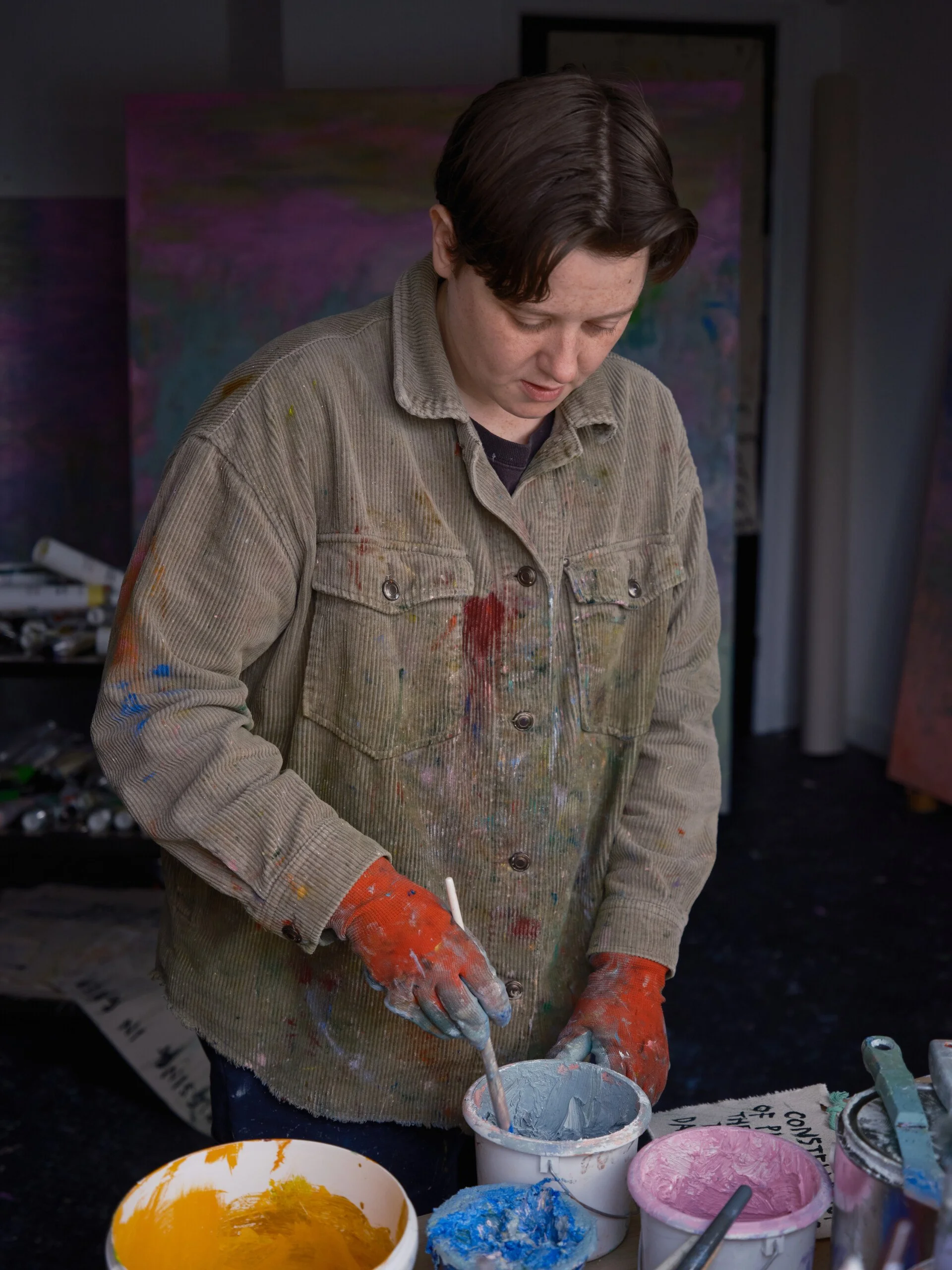
2026 was supposed to be a quiet year for Daisy Parris, but things don’t also turn out the way we plan. “I'm relentless,” they admit with a grin. “Even when I'm meant to be having a break, obviously I'm working.” For the past few years, they’ve been putting their all into their work, never letting their pace slow - yet in their moments of rest they’ve realised it’s taken a toll on their body.
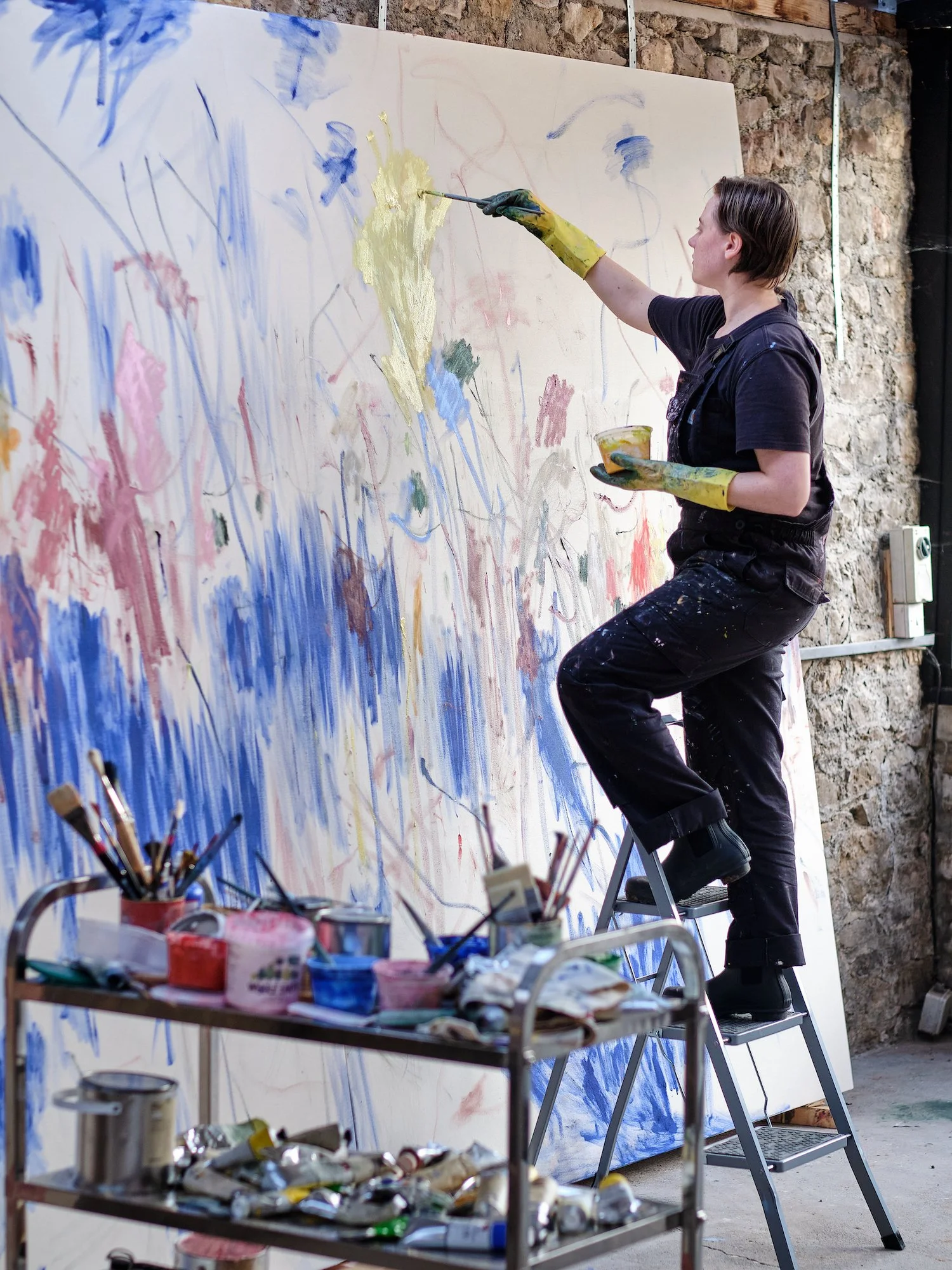
“I really pushed myself to the extreme the last few years. It took its toll on my arms and it became really painful to paint. Physically and emotionally!” they laugh. "I was making six meter paintings. It is an endurance test.”
Even as they reflect on the toll it’s taken on them, they still have the desire to keep going; the urge to make a fully realised piece of art. They note, “I’m definitely a perfectionist, not in the sense that things need to be neat and tidy, but they've got to have the guts. And if they don't, I've got to keep going.”
Parris believes they owe their career to their relentlessness, but it also feels innate - they have always been a grafter. Today, Parris has fronted solo exhibitions everywhere from London to Vancouver, Paris to Los Angeles, and New York to Finland - but they still remember when they’d just graduated from university. “I didn't have a studio, it was just painting in my bedroom. Just hustling, the discipline of working every day,” they recall.
In their most recent exhibition - Fist Full of Dreams at Wolterton - their work is paired with one of their hero’s, Phyllida Barlow. For Parris, it felt like the result of a lifetime’s labour - and even they can’t believe how far they’ve come since their bedroom days. “At the time, I didn't think that was possible for it to continue, but I knew I’d give it a try - because nothing to lose, really,” they reflect.
Parris can trace the vigour with which they attack their art back to their family. Born in Kent, they were the fourth of five children to parents who Parris describes as domestic artists. “My mum and dad were punks. That encompassed everything - the music, making your own clothes, designing your own album covers, designing posters,” they explain. The do-it-yourself spirit wasn’t just an artistic practice though, but the reality of being a family of working class artists. “It was DIY because we didn't have anything,” they state. “And getting through life domestically translated into my art.”
“No matter what I do, painting has taught me a lot about humans - and now I know how to paint about humans without painting a portrait.”
Parris’ mum gave them the permission to embrace their creativity, and they ran with it at full speed. “It’s funny looking back at the stuff she let me do - but there was no stopping me, either,” they laugh. Parris’ home became a sandbox for their art and no place was more experimented in than their bedroom. “My mum let me paint in my bedroom and I just collected random things off the street and painted on them,” they say.
For their GCSEs, Parris found a fridge on the street and carried it back home, before spending weeks painting on it. "Anything could be a surface. And it was free, you know? I was raised to not waste anything,” they say with a wry smile.
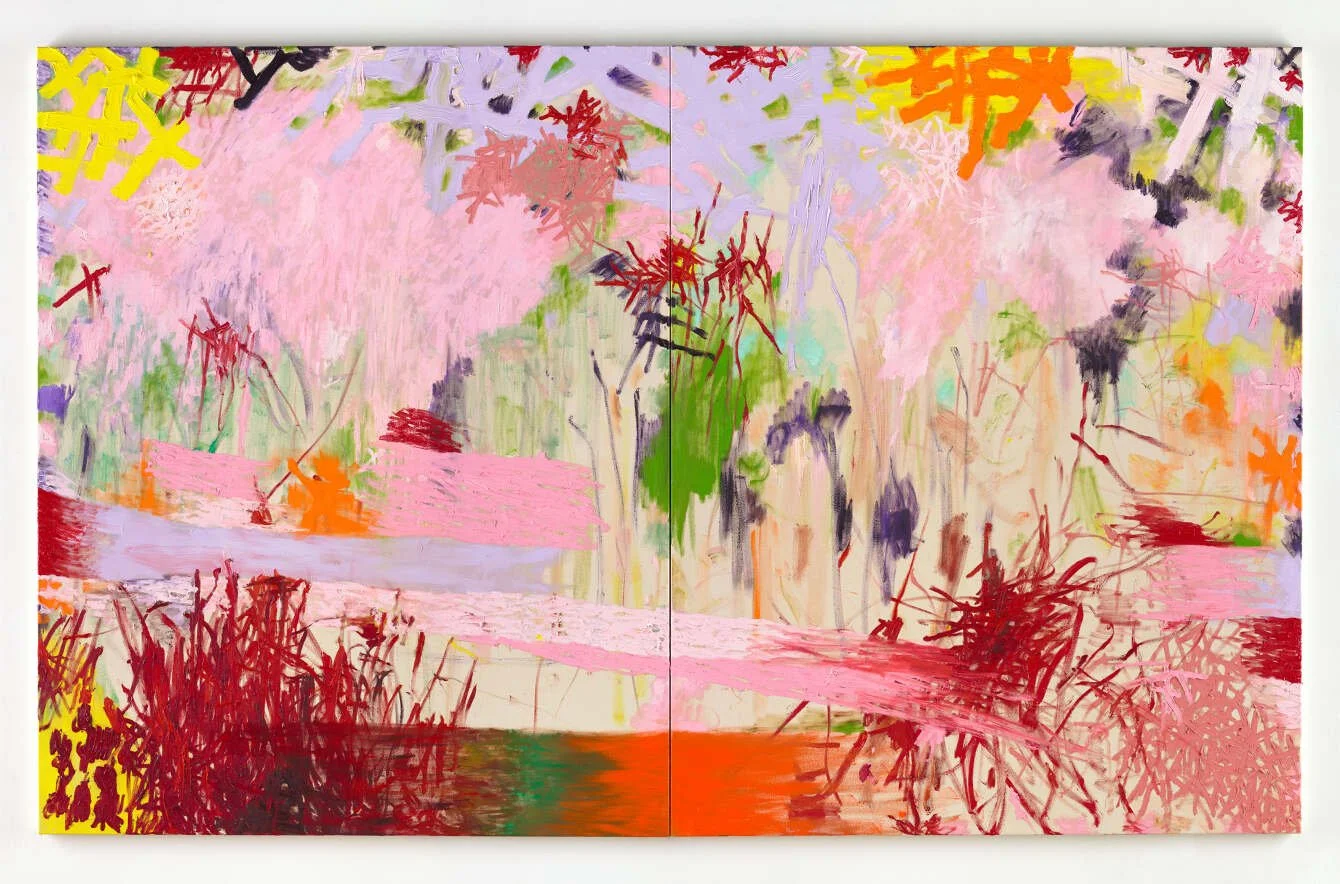
Although Parris sampled other mediums, they always know that painting was their primary love. “I'd always painted portraits, until I went to Goldsmiths and when I got there, and it was like: okay, No one cares about portraits,” they laugh. What Goldsmiths provided Parris though was an opportunity to reconsider the medium. Over their university years, their practice of painting formal portraits began to wane, but it didn’t mean they weren’t still painting portraits - just that they were painting them in a different way.
“My portraits were almost turning into rocks or landscapes. It just got looser and looser,” they explain. “No matter what I do, painting has taught me a lot about humans - and now I know how to paint about humans without painting a portrait.”
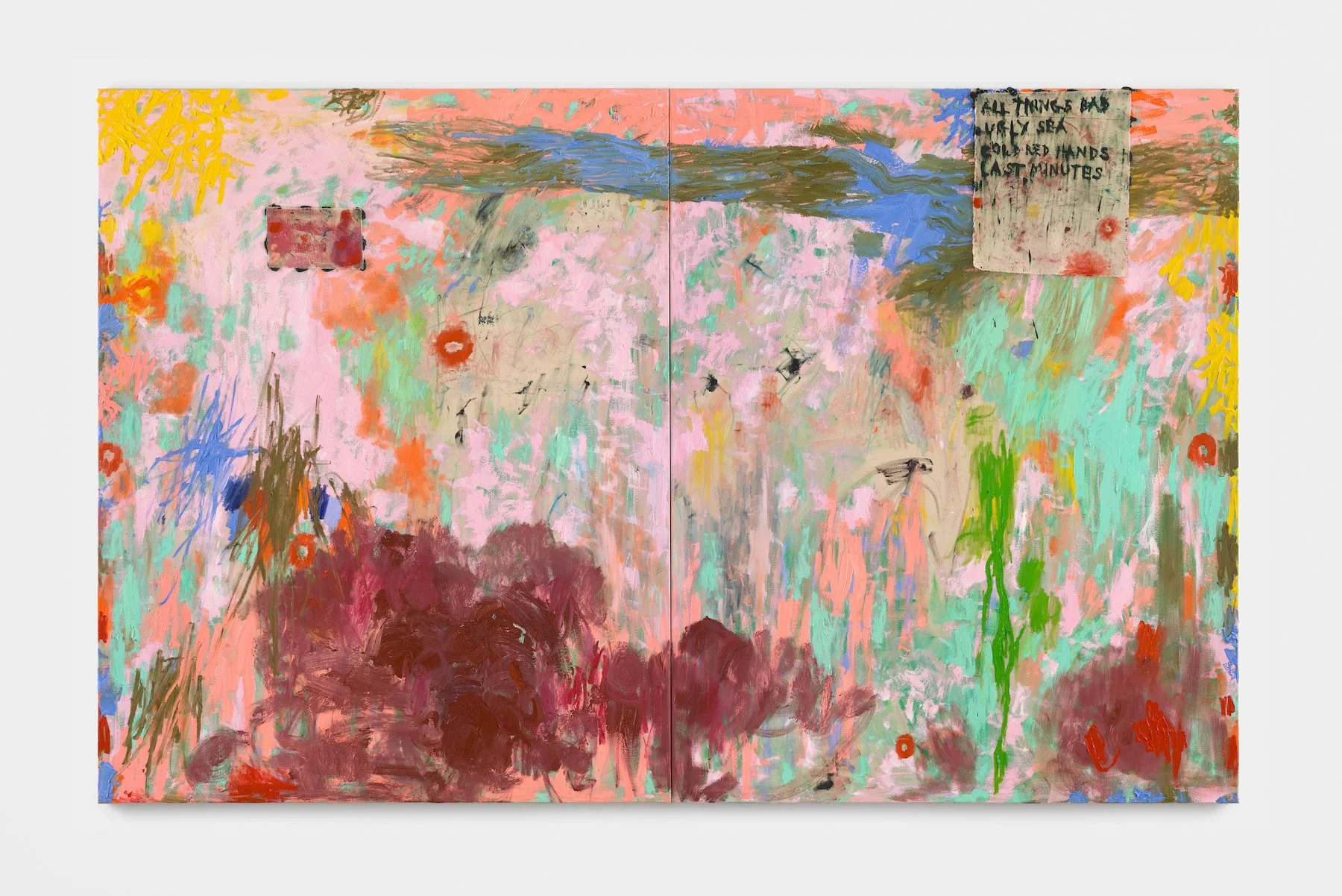
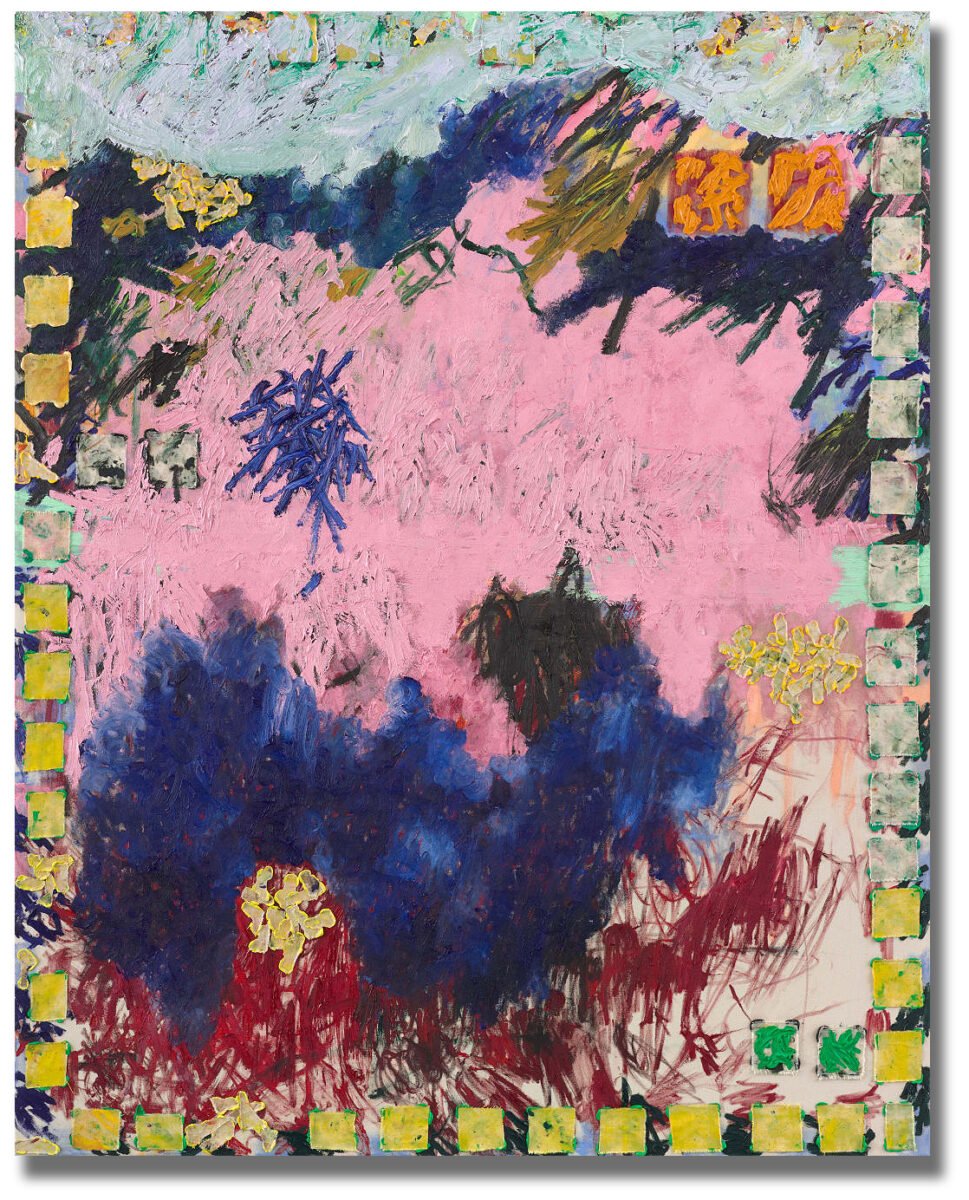
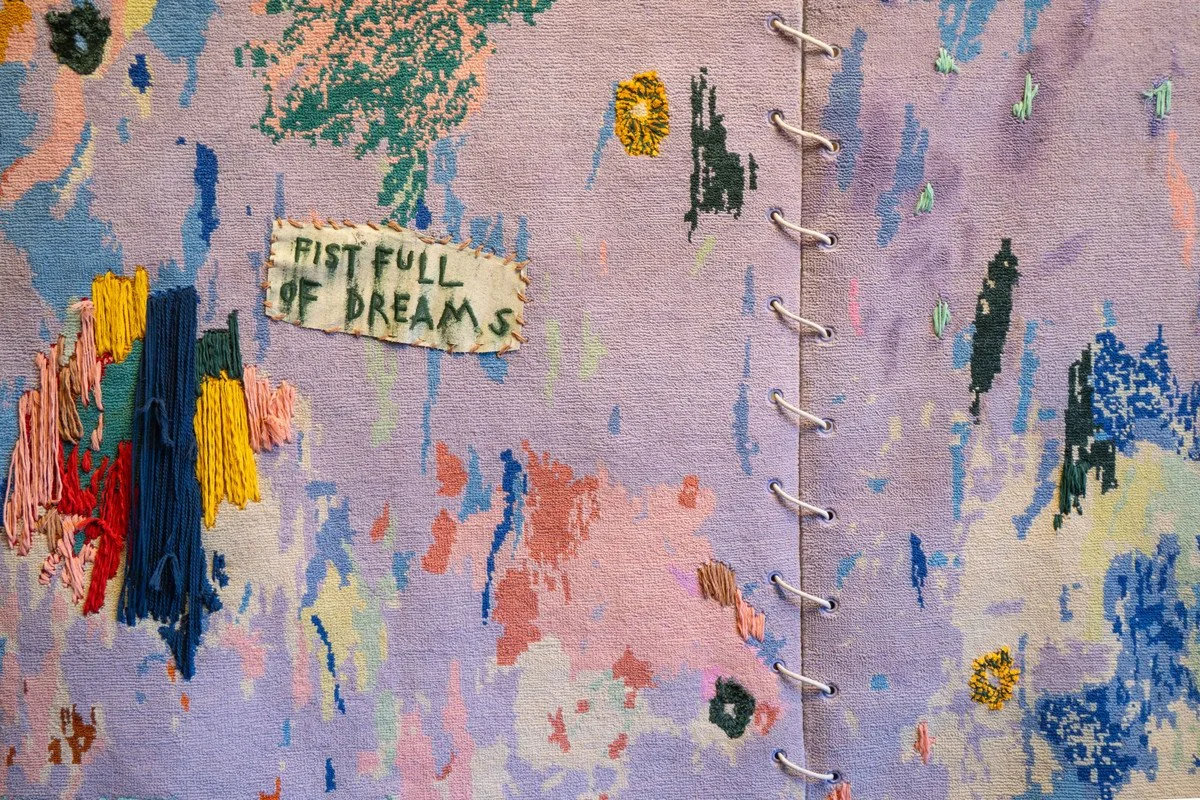
Parris’ paintings today feel like the natural endpoint of that journey. At their exhibition at Wolterton, visitors could see huge canvases awash with colour, stitched together and embroidered with thick string, and brandished with phrases like “kiss the storm swallow the rain devour the seasons weather the pain”.
When Parris’ paintings are discussed, one of the most common words that people use to describe them is ‘emotional’ - but the paintings don’t feel prescriptive. “Certain colours conjure certain imagery or nostalgia or feelings, but there's no set code for me,” they explain. “The funny thing that I’ve arrived at is that it just makes sense for me.”
In the exhibition, Parris’ paintings are displayed against the backdrop of Wolterton Hall - an 18th century stately home in Norfolk. In almost every way, the environment feels at odds with Parris’ DIY attitude - and when they first visited the space, they felt conflicted. “To be honest, when I went to visit I didn't relate to anything in the house,” they say. But as they spent more time exploring the grounds, they started to look at the workers' cottages, the outbuildings, and soon found a point of kinship. ”It's funny to be presented with this palace, basically, and I'm just looking at a fallen-down shed in the back,” they laugh.
Running concurrently with Parris’ exhibition was another featuring the work of Phyllida Barlow. “That's like the punkest thing to disrupt the space and challenge it,” they argue. Barlow’s sculptures, which were displayed around the estate, are made of everyday materials and are monumental in scale. Through the grounds, you’ll see stacked chairs or stacked tables that always appear as though they’re about to crash to the ground.
For Parris, exhibiting alongside Barlow felt like the culmination of their life’s work. Not only had Barlow art inspired Parris’ practice, but Barlow the person had too. In Parris’ third year of Goldsmiths, they visited Barlow’s workshop with some of the other students on their course. Parris felt a sense of reverence to the artist, but not all the students did - and one asked Barlow a question that Parris still can’t forget: do you think sculpture is fascist?
"I was just like: what the fuck are you talking about? Why are you asking Phyllida Barlow that? It's so disrespectful,” they say as they laugh at the memory. Barlow told the student that sculptures weren’t fascist, instead explaining how they were a medium that was accessible to everyone - and they also gave Parris a piece of advice that shaped her work: when you’re creating a big work of art, always work in segments.
Against the backdrop of Wolterton, Parris and Barlow’s art feels disruptive - but it’s not just their art, but also the presence of two working-class artists of marginalised genders who would have historically been excluded from that space. For Parris though, that discordance feels right - because that’s also what they hope to achieve with their art. “I like to leave a painting when it’s a little bit unresolved,” they say. “Then it keeps me looking. Not in total harmony, but with some kind of friction.”