
From Britney Spears to Chappell Roan - The Fraught History of the Tramp Stamp
Words: Tanya Fevzi
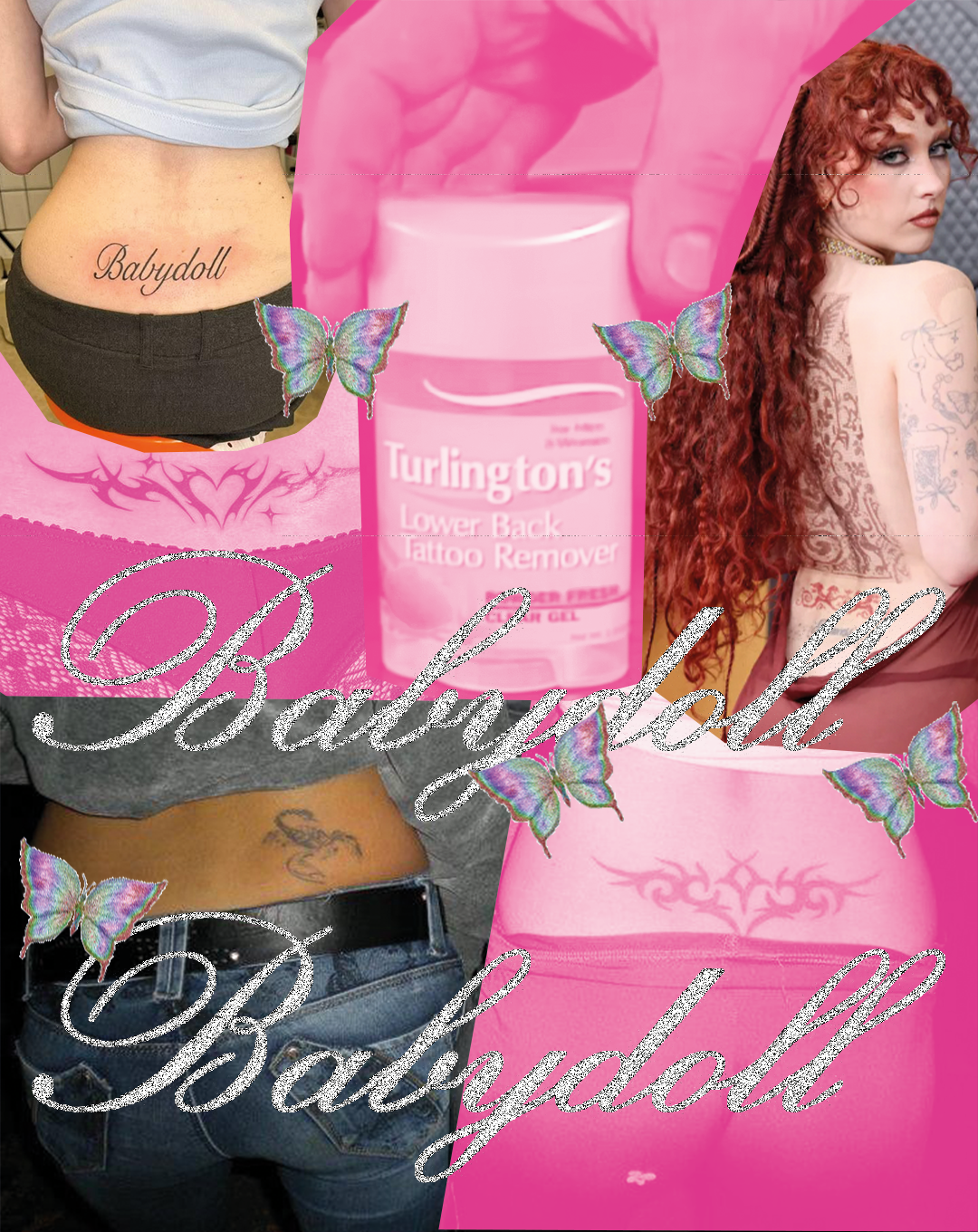
“Honey, would you put a bumper sticker on a Bentley?” were the words spoken by Kim Kardashian on The Wendy Williams Show in 2009. Her distaste for tattoos is easy to unpack: after a sex tape scandal that unfolded in the public eye, she leaned into a purity complex to regain control of who she wanted to be to the world.
Her lifetime curated image of perfection could have been permanently damaged by a tattoo, if to be tatted is to be ‘marked’. It was a time when clickbait as we know it now looked more like women on the front pages of tabloids, hounded by journalists for their appearance, relationships, or lifestyle choices. A new tattoo was no exception, since tabloid media was most cruel about the aesthetic decisions a woman made for herself.
An influencer in a pre-influencer-era, Kim’s words surmised a media landscape built on a culture that criticised women with tattoos. It is unsurprising, then, that the it-girl tattoo of the noughties - the tramp stamp - suffered a stigma far more dizzying than Kim Kardashian’s rejection. Misogyny was, of course, at its heart - but how did the tramp stamp remain both aspirational and shameful?
Historically, body modification like tattoos and piercings have had great cultural and religious significance, with unique practices developed around the globe far before the tramp stamp. Tattooing was a way the ancient Greeks marked criminals and slaves for permanent visual identification. ‘Marking’ these people intended to separate them from society by creating a visual indication that they were deviant. Even though this is far removed from the way tattoos are used today, it offers a glimpse into the lingering stigma attached to tattoos in the West.
___STEADY_PAYWALL___
“The tramp stamp fulfilled an aesthetic that was sexy, rebellious, and fun, but women and tattoos have always had a relationship dominated by unfair criticism.”
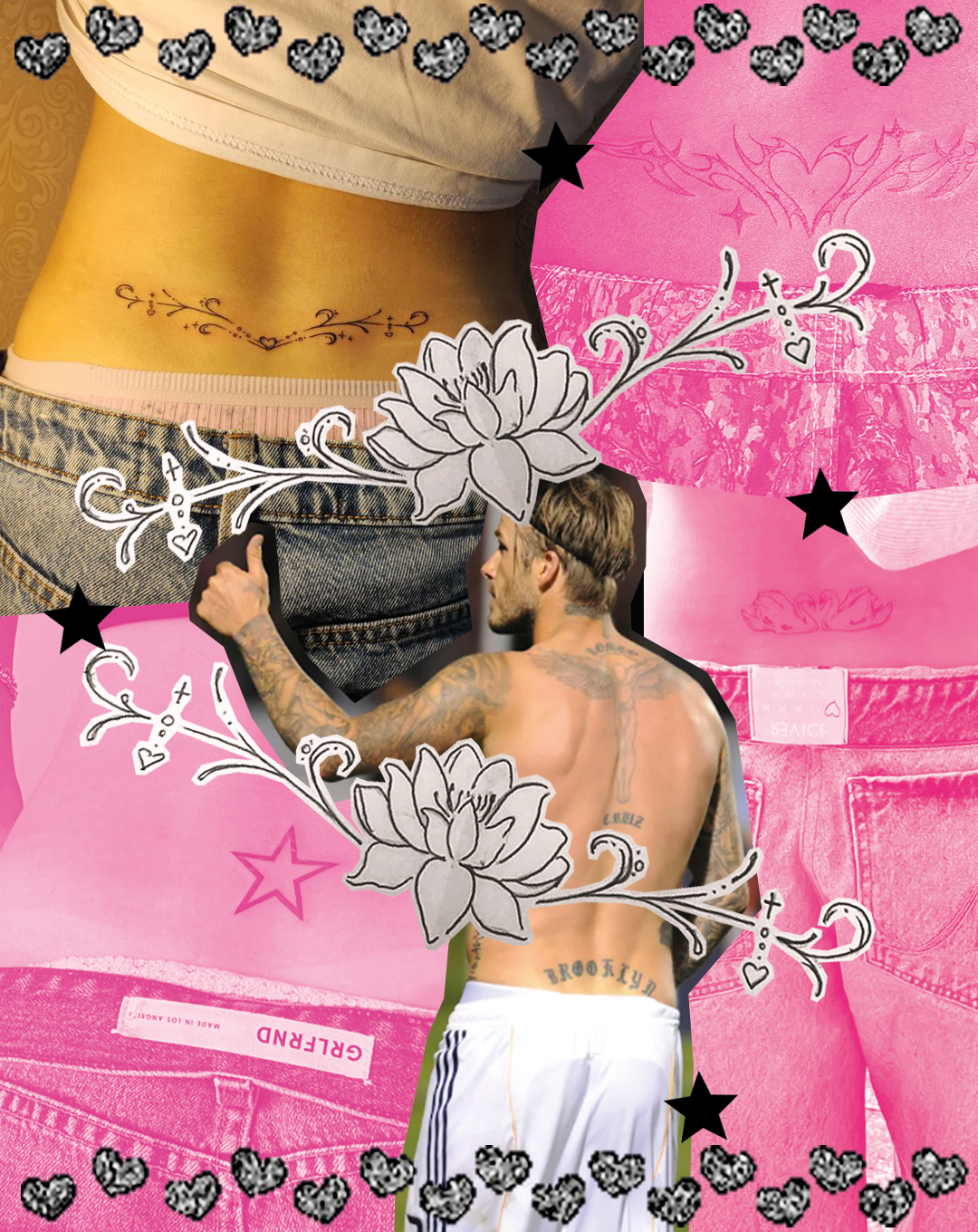
Tribal rituals are another example; the Native American Sun Dance is an ancient spiritual ceremony most well-known for being practised by the Plains Indians. The annual ritual involves fasting, praying, and a Sun Dance circle where the tribe dances around a central pole. In line with its motivations of a form of rebirth, some tribes also pierce the chest, back or shoulders in a self-torturous tradition - participants are pierced with skewers attached to the pole or tree in the middle of the dance circle, and dance around it until the skin tears. It is the ultimate act of sacrifice and holds great religious significance to this day.
The late 90s and 00s saw the height of the tramp stamp. In line with y2k fashion trends of low-waisted denim, juicy couture tracksuits and crop-tops, getting a perfectly placed lower-back tattoo was aspirational - all of your favourite celebs had one. Britney Spears’ fairy, Angelina Jolie’s Bengal tiger, and Kate Moss’ bird duo by Lucian Freud were part of the celebrity culture that taught a generation of young women that it’s okay - iconic, even - to rebel against societies’ expectations of them.
The tramp stamp fulfilled an aesthetic that was sexy, rebellious, and fun, but women and tattoos have always had a relationship dominated by unfair criticism. Critically, the tattoo was seen as an indicator of sexual deviance and promiscuity or impulsivity and irresponsibility. The latter was certainly perpetuated by a 2004 Saturday Night Live skit which cemented a societal view of the tramp stamp as a regrettable tattoo choice that is both tacky and embarrassing. The skit was a mock advertisement for a tattoo removal product. It presented four women with tramps stamps who were each shown with their children - the empirical evidence of their ‘promiscuity’. The doctor who presents the removal product promotes the idea that these women's tattoos are not ‘cool’ but shameful.
The sketch was intentionally belittling of the women in attempt to be preventative; one of the women’s tattoos says ‘pretty lady’, and is shown as it changes, with video effects, as she ages, so that when her skin sags and wrinkles, ‘pretty lady’ becomes ‘pretty sad’. The representation feels almost like a humiliation tactic, and, arguably worked; many women of the era, like Jessica Alba who’s tramp stamp was a bow, were driven to have their tattoos permanently removed because of the shame and embarrassment associated with them.
The misogyny lying behind the media’s attitude to tramp stamps is undoubtable. David Beckham is one of few male celebrities to proudly wear one - a gothic style script with his oldest sons’ name, Brooklyn. David has hardly been told that he is irresponsible, naive, or sexually deviant. Instead, his tattoo has resurfaced in the media amid the Bechkam family drama to support his status as a good father. His son’s name, permanently etched into his body, holds more emotional weight than social stigma for its placement on his lower back, which must be less anatomically promiscuous for a man.
If the tramp stamp emerged for the first time today, there would be less to say about its promiscuous connotations and perhaps more about concerns of it merely being a ‘micro trend’. But I would argue this would prove untrue - while the popularity of the tramp stamp dipped after its height in the 2000s, there is a difference between resurgence and reclamation.
Trigger Happy Tattoos is a tattoo studio based in West London known for the intricate and whimsy designs by its Kiwi founder, T. On the resurfacing of the tattoo placement, she said: “As women, we never really get autonomy of our bodies so tattoos give us a sense of control over how they're perceived. And you can’t get sexier than a tramp stamp. I think, traditionally, they would be seen as something overly sexual women would get to show off their ‘availability’ whereas now it’s just bad bitches wanting to look fly.”
The return of the tramp stamp feels different, in that it feels both hugely inspired by the celebrity culture of the 00s but also fuelled by the desire to achieve an aesthetic. There are big aura points held by the Instagram girl showing off her tramp stamp - it’s inspiration enough to fork out the money for a new tattoo.
Chappell Roan, America’s pop princess, is perhaps the perfect example of a gen z babe paying homage to the iconic tramp stamp era. Her lower-back tattoo, which says ‘princess’, is inherent to her image. The modern composure of the media - or perhaps it is Chappell's queerness - means that there aren’t any tabloids labelling Chappell as promiscuous; for gen z, a tramp stamp is simply a lower-back tattoo and its sexiness is not laced with prejudice. The shame that was once felt by women, largely a result of the media and representation like that on SNL, is no longer present. Booking my tattoo appointment now.