How ‘I Love LA’ Finally Gets Influencer Culture Right
Words: Helena Munoz
No one understands the pitfalls of online fame better than Gen-Z. Just ask any of them to describe James Charles’ COVID-era mass cancellation, or Shane Dawson’s online banishment, and you’ll find that this generation is well-versed in how a star (or in this case, influencer) falls from grace. This is the sort of tabloid fodder that entertained previous generations in print, now playing out for Gen-Z in real time and in HD video on their phones.
Gen-Z is intimately familiar with the ouroboros of fame, so it makes sense that major studios are intent on crafting moral parables out of influencer stories, though the timbre often feels off.
Take Spree, for example, a movie about a live streamer who commits mass killings to gain followers. Similarly, Nerve, Influencers, Ingrid Goes West, and Not Okay sensationalise the dangers of being online through graphic violence, murders, and stalking. Studios seem to think they’ve cracked the code: what better way to justify an influencer movie than splashing in some good-old-fashioned violence and darkness? Directors have a failsafe moral vantage point (social media = dangerous), and the metaphor creates an automatically shocking story. However, just as these films disturb, they also read as a finger-wagging scolding to Gen-Z: If you spend too much time on those apps, this could happen to you!
___STEADY_PAYWALL___
“I Love LA finally gets influencer culture right in its refusal to graft on meaning where Gen-Z already knows there isn’t any.”
Within a media landscape obsessed with turning “the influencer” into a sordid cautionary tale, then, Rachel Sennott’s I Love LA sparkles with online fluency and sugary satire, all without lambasting an outdated agenda.
After all, Sennott is an internet native herself, first rising to fame through Twitter. She understands that influencing doesn’t need to be twisted into something grotesque to be entertaining. Being a “niche influencer” is both a meme and a ripe subculture, with its own inside jokes and cult celebrities. Chronically online Gen-Zers already know Quen Blackwell’s career trajectory from Vine poster to It girl (she plays an exaggerated version of herself in the show), and can catch the reference to “Can I quiz you on ocean facts” on a character’s T-shirt. They also know that successful influencers are far more likely to face cancellation over a bad product launch than a murder spree.
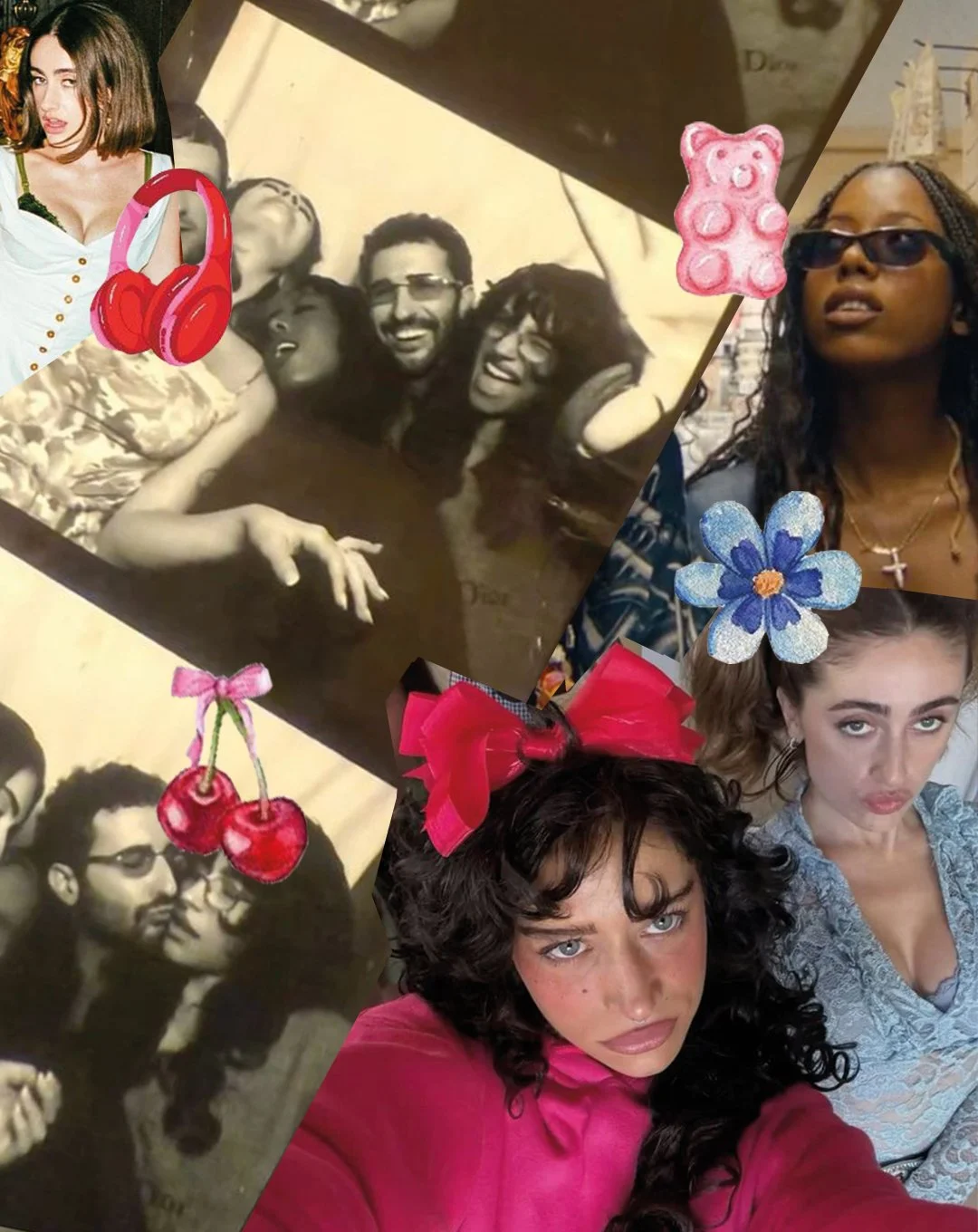
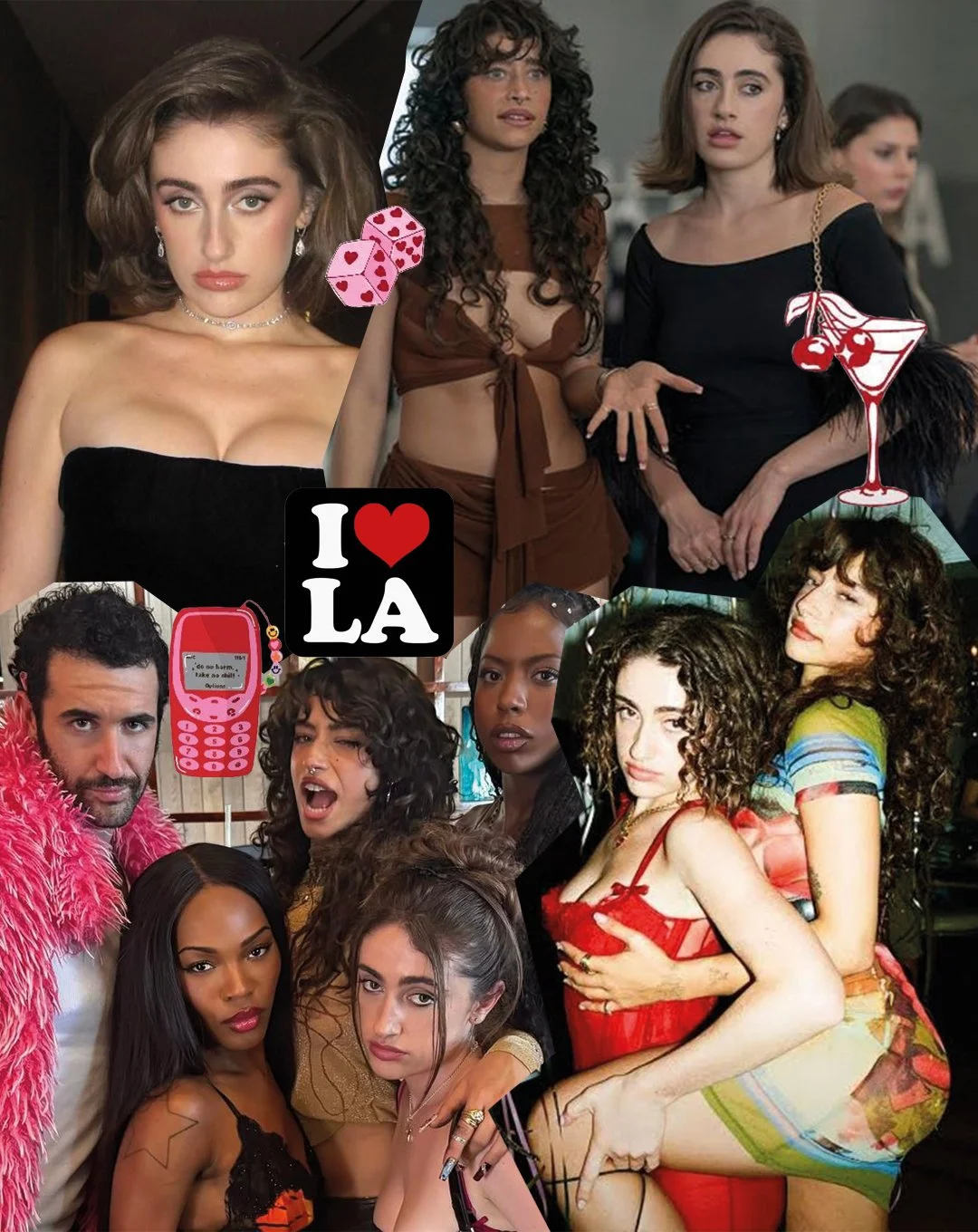
I Love LA is shiny and fun, mixed with flashes of surprising sincerity. In the pilot, Sennott’s character Maia is stuck as a talent assistant at Alyssa180 with a capricious boss who refuses to promote her. She takes solace in venting to her friends, Charlie, a sad gay stylist, and Alani, a ditzy nepo baby, about her former best friend Tallulah, now a wildly successful NYC influencer.
When Tallulah unexpectedly shows up at Maia’s doorstep, Maia wants no part of the chaos. She has to take imaginary work calls and prepare for a big promotion that might be coming up. Tallulah upends Maia’s birthday plans, convincing everyone the beach is a better idea than Maia’s Erewhon plan. In response, Maia sulks home, opting to make calls from an exercise ball while Tallulah frolics in true LA fashion (think shopping, shots at the beach, flipping off the Church of Scientology). Maia’s breaking point comes when Tallulah hijacks her birthday dinner, leveraging Instagram clout to score a “party room” at the restaurant.
When the birthday cake arrives with Tallulah’s name emblazoned on it, Maia storms to the bathroom. Here, the show finally drops its guard. Tension explodes, culminating in a moment of pure vulnerability from Maia: “Having you here reminds me how you’re doing so good without me, and I’m, like, a fucking flop” only for Tallulah to reveal that she is secretly broke. In the face of shared failure, the two decide to work together. Pulling down the facade in an industry of image-making, even briefly, is how I Love LA lets its characters find closeness.
The characters are annoying, but comfortingly so. Who can’t think of an acquaintance like Maia, overly online and ambitious, speaking with internet-inflected cadences about the importance of “seeing and being seen.” At the same time, she’s motivated and sweet, even willing to strut in heels on a broken foot to help you. Or Tallulah, a financially reckless vape addict, who is morally dubious but undoubtedly captivating? I Love LA inflates these characters, perhaps for satirical humour, or perhaps because being an influencer exacerbates these very traits. Don’t we turn to influencer content in real life for this exact joy, of getting to love or hate them without really having to know them? We watch Alex Consani’s Birkin haul or Alix Earle getting ready for dinner for the simple pleasure of voyeuristic entertainment: investing in drama that doesn’t matter, escaping into a world where the stakes are designer shoes and restaurant reservations.
I Love LA is best when it leans into campiness, flitting through Tallulah’s brushes with near-cancellation. In one case, fellow influencer Paulena exposes Tallulah for stealing her Balenciaga City bag. Tallulah redeems herself by lambasting Paulena as the daughter of a “war criminal”. It’s a dog-eat-dog world out there, pure villain-on-villain influencer crime!
Equally comical is when Maia’s quest to elevate Tallulah’s career goes awry—she arranges a deal for Tallulah with a “blue chip cracker brand”. The brand in question? Ritz, who blasts a mural of her in LA with kitschy rainbow flags “celebrating” her queerness. The tagline reads, “Proud to help spread queer stories.” In Charlie’s words, “I get why proud is italicized, but why is spread?” The mural is met with massive online backlash for its corniness. Cancellation looms close for Tallulah, in situations and comebacks that are absurd but plausible. The enemy? An omnipotent but unidentifiable audience. We, as the viewers, are now the villains of the story, the all-powerful unknowable force who can keep Tallulah going or end her career. Still, we keep watching.
I Love LA, therefore, finally gets influencer culture right in its refusal to graft on meaning where Gen-Z already knows there isn’t any. There’s no longer a need to point out the frivolity of a brand dinner; Gen-Z is well versed in the banal horror of watching the rich and privileged online. It doesn’t need manufactured darkness to make it disturbing, either. Influencer culture reflects its own brand of ambient, postmodern nihilism: monetising your personality for an algorithm, and ultimately, for corporations. Everybody knows how meaningless the brand dinner or Erewhon trip is (just look at any meme page on Instagram making fun of prices for a Hailey Bieber smoothie). Gen-Zers know this. The influencers creating the content know this. And I Love LA gets this.
I Love LA treats the attention economy as a given condition, in which the players may be desperate, kind, self-aware, or delusional. LA functions less as a setting than as a shorthand for influencer culture itself, where situations naturally lean absurd. Sennott merely taps into this. She knows that influencing is neither secretly noble nor uniquely corrupt. It simply is what it is: glamorous, entertaining, and occasionally annoying, yet hard to look away from. This separates I Love LA from the studio influencer film. Where one reaches for violence to justify its existence, the other campily leans into its inherently interesting qualities. The show exaggerates without condemning its characters or audience, mocks without positioning itself as holier-than-thou. I Love LA’s campy fluency, however shallow it may seem, is precisely how it steps in where previous influencer movies have failed.