
Words: Jenn Lehwald
Make it stand out
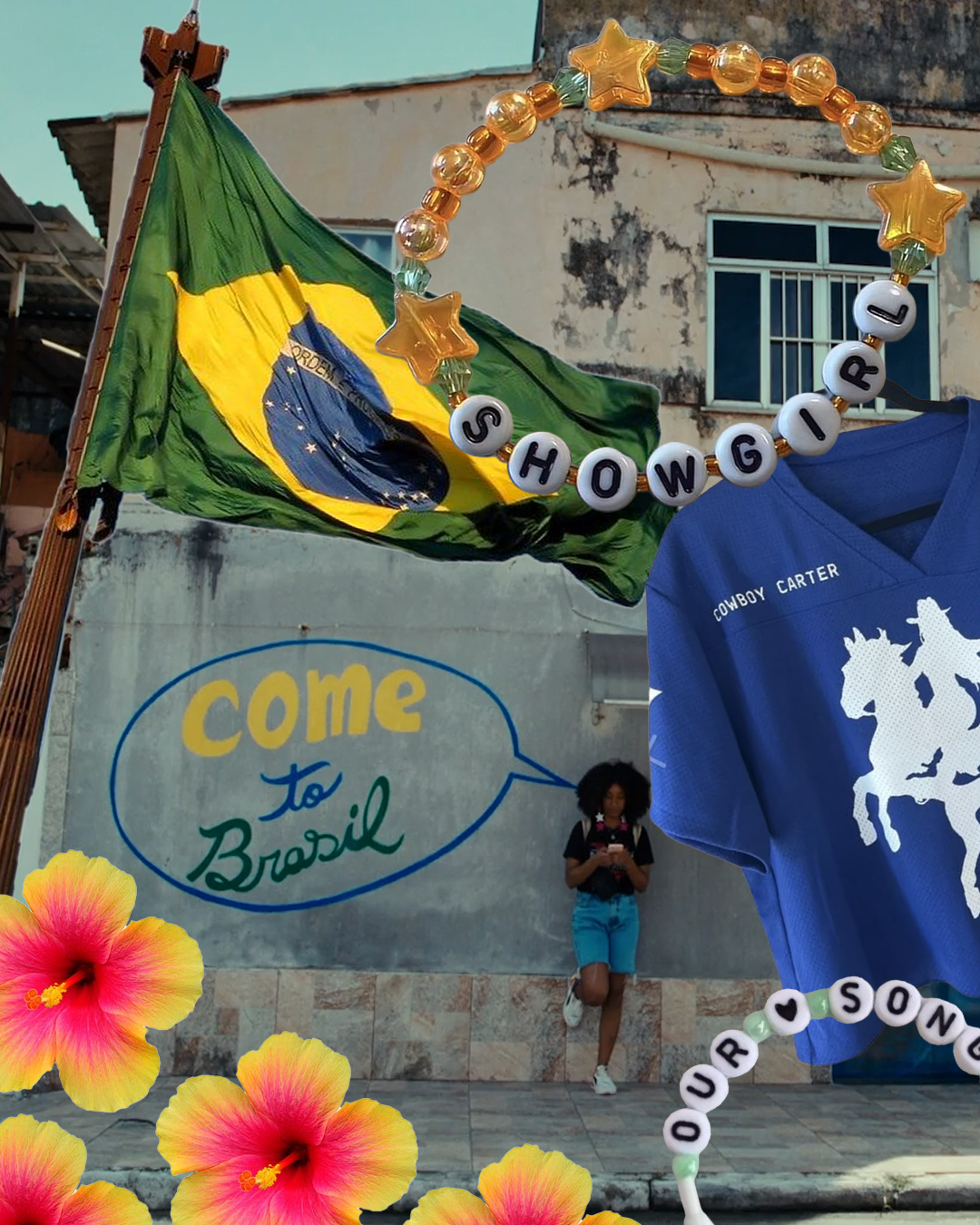
Lina Abascal is a Los-Angeles based filmmaker and writer whose work explores music, the internet, fan culture, and the communities that surround them. Her latest project, the documentary short Come to Brasil, looks beyond the memeification of a phrase that has been present online since the dawn of the internet, to examine what it reveals about super-fan culture - and what it means to those fans when some of the world’s biggest pop stars leave entire countries off their touring circuits.
It felt particularly fitting to talk to Abascal about fandom over Zoom and realise that, just a few weeks earlier, we’d both been in the same crowd at All Points East watching Lorde alongside tens of thousands of other fans. It was a small reminder of exactly what Come to Brasil focuses on: the connective experience of being a fan, and the communities we find through loving the same thing.
Can you start by introducing yourself to the Polyester audience?
My name is Lina Abascal. I’m a filmmaker and writer from Los Angeles. I’m the director of Come to Brasil, and I also directed a short documentary called Stud Country. I write for magazines and online publications, and I have a book called Never Be Alone Again.
What made you want to make Come to Brasil?
I’d been seeing the phrase “Come to Brasil” online forever. My friends and I would leave it on each other’s pages as a joke. When I went to Brazil before making the movie, I captioned a photo, “I finally came to Brazil.” ___STEADY_PAYWALL___
Then I started looking into it and realised that it actually isn’t a joke. The sentence means exactly what it says: you, artist, celebrity, come here and do what you do for us.
Taylor Swift only went to Brazil for the first time two years ago, despite being famous for almost 20 years. Beyoncé hadn’t performed there in 13 years, and when she came back, she didn’t perform. Adele has never performed in Brazil. I started thinking, how is that possible?
Brazil has a huge online population and a massive appetite for international music, yet so many major artists just skip it. Obviously Brazil has an enormous culture of its own, and I never wanted to dismiss that. I was interested specifically in how US and European artists often overlook Brazil and, more broadly, South America.
That just blew my mind. I thought, no one’s made a film about this. So I started talking to a producer friend, and we shot it in December 2024.
What do you think artists skipping Brazil says about who gets to be included in global pop music?
It’s an exact reflection of that. Brazil is a country of 250 million people. It’s massive. Then you look at tour dates in Europe, where relatively small countries might get multiple shows, while this huge nation gets none or one.
I try to identify the reasons in the documentary, but I still come away thinking there’s something not being said. If you wanted to go, you would go, and you might not make as much money. But I don’t think you’d necessarily be in the red.
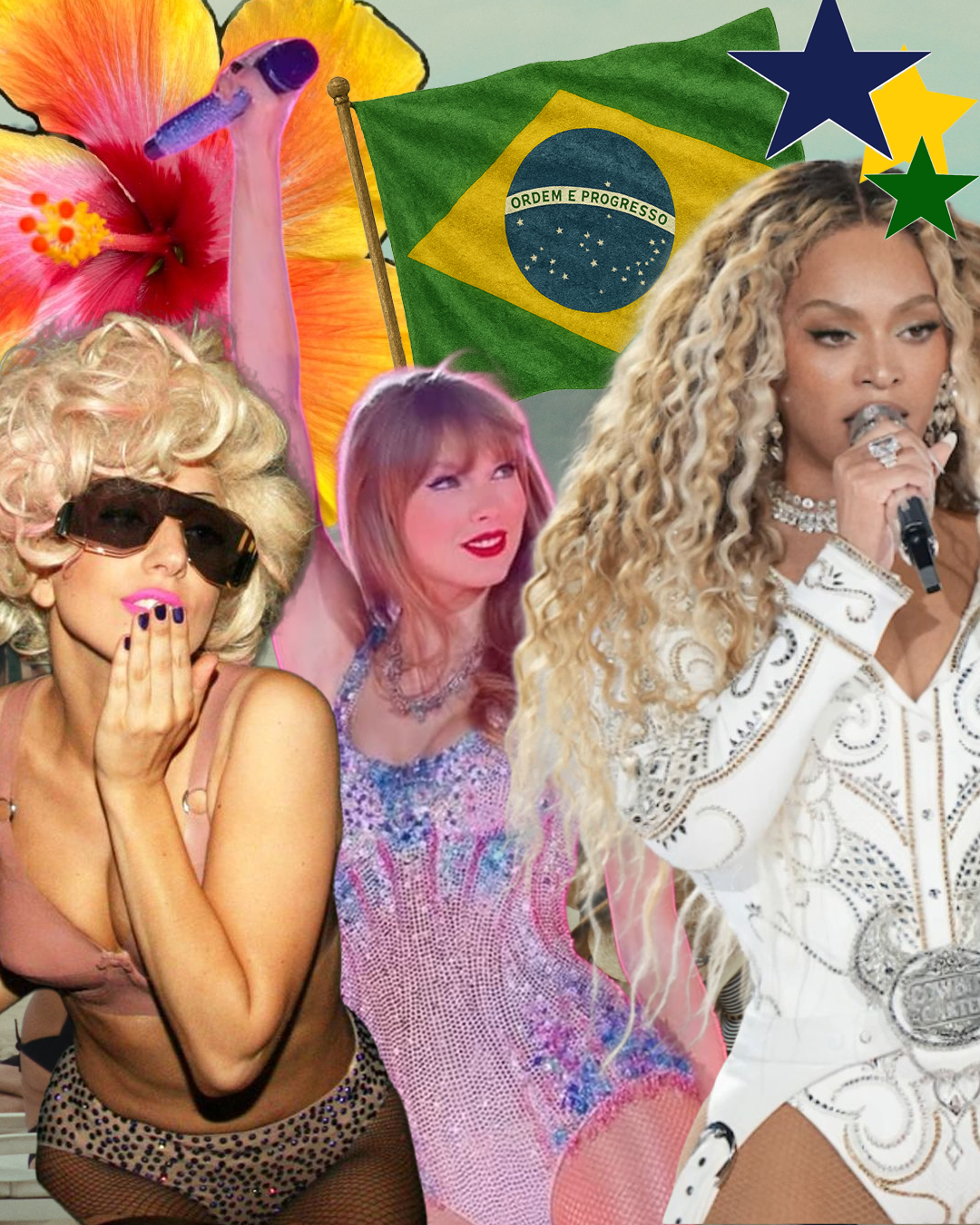
There’s also this Westernised bubble around how people perceive Brazil. One promoter we spoke to suggested that some people still imagine Brazil as this huge, wild jungle rather than a country with thriving cities. That’s obviously ignorant, but I can imagine that perception exists.
I think there’s an element of reputation, but ultimately I think it’s money. What’s strange is that when artists do go, they often say it was one of the best shows of their career. We have this montage in the film of artists saying, essentially, “I’m finally here. I’ve wanted to come here. It’s even better than I thought.”
I don’t think if artists came more often, the passion would decrease. I think people are really underestimating this audience.
Is there a general feeling from fans in Brazil that they’re frustrated about being overlooked?
Absolutely. We encountered two schools of thought, and sometimes people who had a mixture of both.
One of our characters, Neto, talks about finally deciding not to travel abroad to see Gaga because he thought, “I’m not going to put in the effort for an artist that won’t put in the effort for me.” I loved that because it’s a kind of reclamation. You’re saying, this artist isn’t above criticism just because I love them.
Then there are people who almost have to believe the excuses. “They’re exhausted.” “They can’t come.” “There are infrastructure issues.” I think that can be a survival tactic. People don’t want to disrespect their idol, so they accept whatever explanation they’re given.
That variation was really interesting to me. I wanted people who had found other ways of connecting with the artist in their absence—through online communities, cover bands, drag or impersonation culture. I wanted to show that absence can actually create its own forms of community.
Was it always clear that the film would be about that community, rather than simply about fans wanting their favourite artists to come to Brazil?
It kind of uncovered itself. My instinct was that it couldn’t just be about getting to the concert.
Neto does get their happy ending. They go to the show. Case closed. Gaga came. But then what? The clock restarts and they wait another 10 years.
I loved the idea that the artist can be both a person and a concept that feels very far away, while everything the fan has built around that absence—friends, community, identity—is actually close to them.
I wanted the film to be poppy, alive, musical and colourful, but I didn’t want to just put a “Brazil filter” over it. There’s a lot of nuance here, and that’s where the story becomes interesting.
Fan culture can very easily be turned into a spectacle or treated as something to be mocked. How did you avoid doing that?
I think it started with the casting. There were some people who really wanted to put on a show for the camera, and I totally get that, but it didn’t feel right for this film.
I wanted to make sure we were never laughing at anyone, only with them.
I also wanted the film to feel lived-in. We see people in their homes, going to work, hanging out with their families. Everyone has a room with their stuff. Some people might think it’s strange that a grown adult has Madonna posters all over their living room, but who cares?
The story is strong enough without cheap jokes about fans being ridiculous. I really didn’t want it to feel hysterical or like “look at these crazy people.”
How did you cast the film?
It was a journey. We initially made flyers in English and Portuguese and put out a Google Form, but it didn’t really work.
Our Brazil-based producer partnered with a PhD researcher and cultural insights expert called Duda. I gave her a series of archetypes rather than specific people. I wanted fans of different major artists, and I wanted the characters to reflect Brazil's diversity, racially, socioeconomically and in terms of personality.
I wanted someone who had seen their artist many times, someone who had never seen them, someone older, someone in a cover band, and someone connected to drag or ballroom culture.
She found more than 100 people. We gradually narrowed that down through interviews until we found the final group. There were so many interesting, passionate people.
There’s obviously a stereotype that a superfan is a young woman. Was it important to challenge that?
Definitely. People think of fandom as young women crying in the front row, and that is part of it. But those people grow up, and there are so many other ways to be a fan.
The final characters being two gay men, a non-binary person and a young woman, with nobody really under 25, wasn’t necessarily the demographic people expect, which I liked.
What do you most want an audience who has never experienced Brazilian culture, or only knows “Come to Brazil” as a meme, to take away from the film?
If you’re a fan, I want you to have some gratitude and awareness of how privileged we are to have access to see this music.
And if you’re an artist or work in music, I want you to ask yourself: why aren’t we prioritising this? How can we make this happen? It isn’t just a favour to Brazilians. It benefits the artists, too.
But I also wanted to make a film where, even if you don’t like this kind of music, you can understand the passion, dedication and faith these characters have and apply it to whatever you care about—sports, art, anything.
We’re more alike than we are different. Everyone cares about something, and everyone finds their people through that thing. I hope the film can humanise that and make people realise that it’s all the same.