
Lissette May Monroe on HRT, Hard Lines and Returning to Image Making
Words: Lisette May Monroe | Portraits: Jesse Glazzard | Exhibition Documentation: Matthew Arthur Williams | Billboard Documentation: BUILDHOLLYWOOD
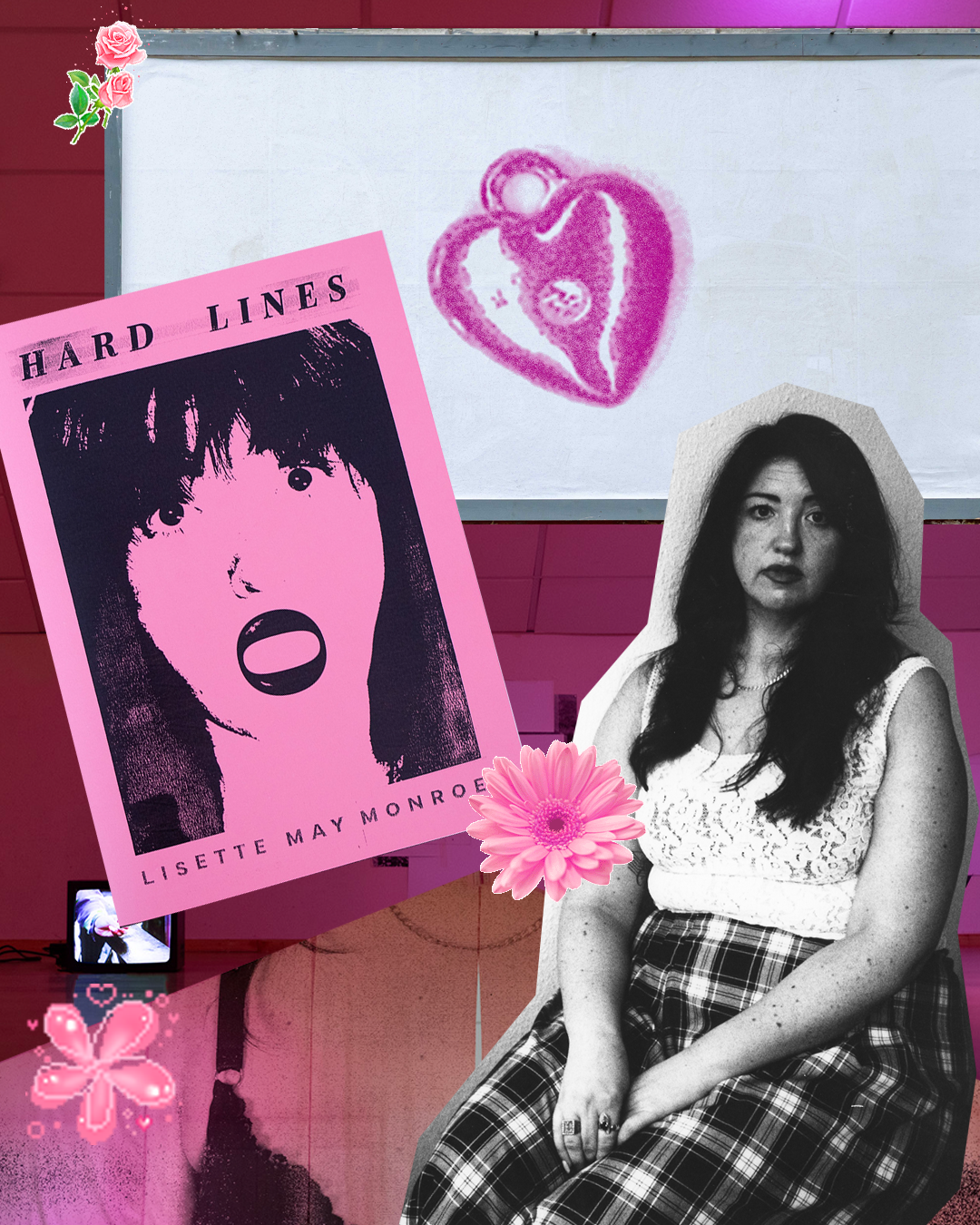
Eighteen months ago, I received a diagnosis of early-onset menopause. This condition served to significantly exacerbate my existing disability of Ehlers-Danlos Syndrome. My body and my brain were ravaged; the brain fog, which I had heard so many people talk about, but never really understood, pulled the connectivity of my thinking apart. I would often spend days in bed, asleep or in pain. It was during this moment of extreme bodily fragmentation that I found out my partner, whom I had lived with for a decade, had been having an affair in our home with a woman ten years younger than me.
The six-month affair, which took place during the long swathes of time I worked away, was revealed through jewellery left by my partner’s lover. She left a necklace and a locket containing pictures of her on her wedding day, and her baby. She later admitted that she wanted me to find them; she had intentionally positioned them. It seemed she already knew something that I was about to find out: my ex was, at best, avoidant and confused, and at worst, manipulative and lazy. Yet she still wanted him more than her own partner, so she set things in motion.
Their relationship could only exist in our home because, due to how small the Glasgow community is, they couldn't meet in even the quietest of bars. They loved each other, perhaps, or they both just loved the idea of not living their current lives and saw each other as a way out. It feels easier to be subjective on this now. I want to say I remember anger, I remember pain, I remember how it felt like I was being emotionally vandalised, but in truth, from that first week, I remember nothing. Images stir sometimes, but it all exists outside of linear time. I know the bin men came, friends moved in and out, I stayed in a hotel, and I was on the phone a lot. The things that were real to me no longer became anchors to fix my life around. The only things I knew for sure were that my body was collapsing, my reproductive cycle was diminishing, youth and the desirability it fundamentally holds were fleeing from me, and my life was a lie.
The fix for any of this isn’t easy, and it’s certainly not quick. In fact, the idea of a fix is a fallacy; there is no return, but there can be a shifting of sorts. The Hormone Replacement Therapy (HRT) started to kick in. I got sleeping tablets. Friends phoned and voice-noted daily. They gave me places to live until I could bear to go back to my own flat. I left the country, I came back. I shagged about. I fucked up often, and I eventually began to think about other things more than the things directly in front of me; life and my capacity for it inevitably cracked open again.
Crucially, I went back to the studio. I had been working in curating, publishing, and writing for ten years, but in all this, I had lost my ability to hack language. I felt like I had no grasp on the story; I couldn’t find the edge of myself or my situation, and I felt using language to unpick it forced a kind of testament that I couldn’t stand beside. So I returned to making images: photographing my body, my home, photocopying my archive and the archive of my relationship over and over, layering and compressing, pushing all these emotions on top of each other within a frame until they couldn’t take it anymore.
“I will never regret that I managed to take something of myself back, even if it does end up only being for a second.”
I read about HRT and how it initially came from pregnant horse urine, and I started tracking down pregnant horses to obsessively photograph them, their bellies becoming this symbol of potential, an opportunity for me to be able to live my life again. I started working with my ex’s archive of images from over the past decade; he was also a photographer, and this was the only thing he left when he moved out. I began thinking about what it meant to leave me in custody of this essence of him. I began remaking his images, folding them into my work, and making collages with his prints.
I kept returning and returning to the locket, which I still had. This weighted object, once so intimate to her, that had sat on her chest, right by her heart. So I photocopied it again, made images with it, and eventually made a film with three of my closest friends – the ones who answered the call the day I found out – where I threw it into the River Clyde.
It all sounds straightforward, but it wasn’t, and at the time, there was no motivation other than for this to also become a story about me. When affairs happen, when disability happens, you become the diminished thing. The story is always about the condition or the lovers – you are secondary, even though it has happened to you. So my only intention, through making the work, was to attempt to bring myself back into being.
This body of work became an exhibition called Hard Lines for Glasgow International. The audience entered through a 10-metre curtain printed with an image of my chest – my body once again being broken in two at the whims of other people. There were 200 replicas of her necklace; his work was there, the collages, the film.
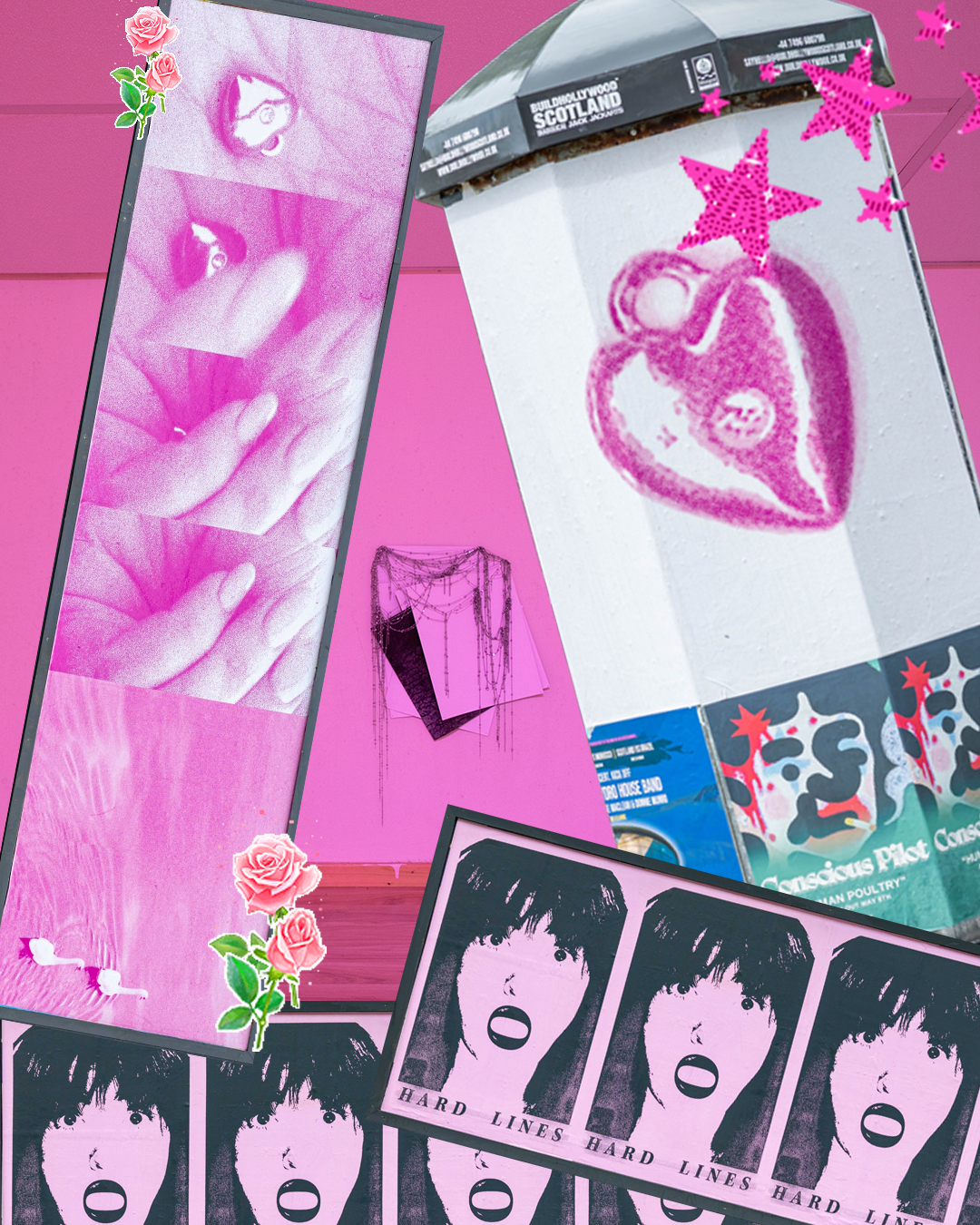
There was also a series of billboards in the city centre – the city that all three of us still live in – which featured giant images of the locket. I wanted to take this secret, shameful thing that was guarded by my domestic space and use the city’s architecture to make it visible. By exposing this object to this city it felt like it lost its power and its potency. After all, if her intention for leaving the jewellery was visibility, why not follow that intention to its biggest conclusion?
In a way, it was a tell-all. It’s been remarked on as scandalous; it’s been talked about, by me and others, as revenge. Perhaps it is. A question only men have asked me about the show is: “Do you think you have got your revenge now?” As if they want to know there is an endpoint, they want to be reassured that if and when they do something bad, there will be a point where people will move on, and the retribution will stop.
On the day my ex was forced to tell me about the affair, I asked him why. The only answer he could give me was that he wanted to have a secret, that he felt like I had more than him in life, and he wanted something I didn’t have, which the secret gave him. So then for me, this revenge is disallowing that secret by making this thing as public as possible and refusing the shame of this whole circumstance at the same time. Without his secret, what is he left with?
I don’t know if this is a story of triumph. I don’t think it’s about wins anymore, and I don’t think revenge is about winning, but I think it is about achieving neutrality. It’s about autonomy and about not swallowing circumstances forced upon you. Working-class women are given little movement, little opportunity to see things differently; we are always two feet in the mire, and it is capitalism and misogyny that keep us there. This is nothing new, of course, but it’s worth reviewing constantly, especially now in the rise of the internet “soft boy” – an equally dangerous counter to the manosphere – where men can read up and regurgitate feminism they learnt on TikTok, but do not enact it as a lived politic.
I am worried that, having made this work, I fall into the scorned-woman archetype – the “unstable woman” men fear. Again, we know this is a pathology that serves as protection for questionable behaviour. Still though, I worry that this will all make men wary of me, even though it is all a response to a situation I did not cause.
Though it may seem it, I do not hate men, and I do not fear love. I do, for my sins, find men compelling and am gripped by romance and its sentimentality. But I also do not shy away from accountability. Shame is not something that occupies me now; I became too broken to be embarrassed or maintain the energy required for upkeeping that.
Like I said, it’s not a story of victory, but it is a story of authorship. We are told revenge is empty, that it’s hollow, that its buzz is short-lived. Maybe that’s true – but I will never regret that I managed to take something of myself back, even if it does end up only being for a second.