Literature’s Bad Women Need To Be Worse
Words: Ceridwen Millington
Make it stand out
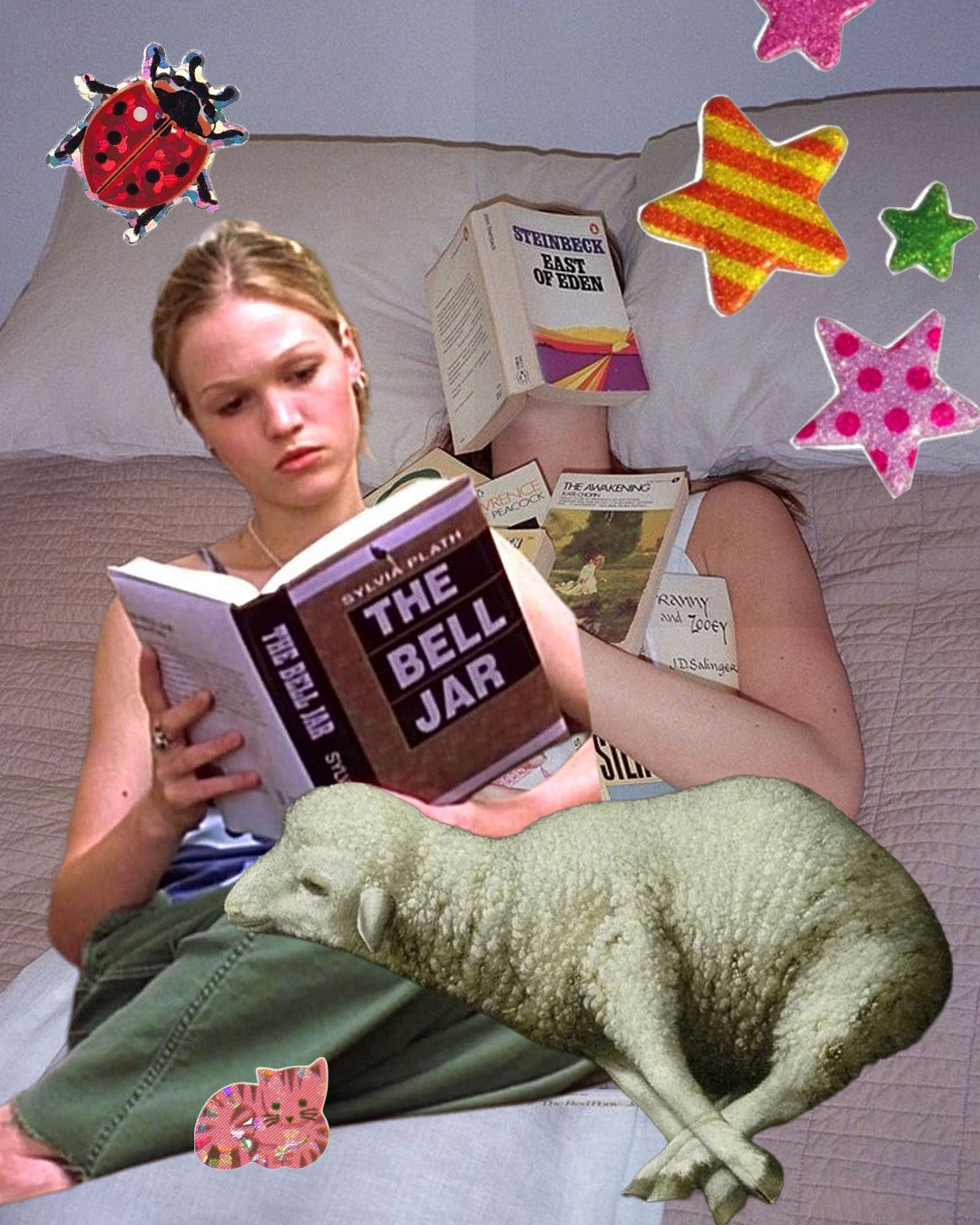
Literature has long been interested in the woman who stands amidst society and casts judgement on its norms. However, such curiosity is generally unimaginative, allowing only for a certain sort of improper behaviour. A widespread fascination with Sylvia Plath’s 1963 work The Bell Jar showcases a willingness to accept women’s unhappiness as long as it’s still within certain parameters. Plath’s character acts out in a way that is more internal cataclysm than outward destruction. Women are – then and still now – expected to push past piques of feeling, ultimately to be responsible, level-headed, and restrained. It’s the tacit acceptance of such notions, external and internalised, that allowed the sensational popularity of Ottessa Moshfegh’s late ‘10s novel My Year of Rest and Relaxation. The brief excursions into the freedom of collapse presented in such books serves as testament to a bleak, limiting idea of what is to be female: freedom meaning, at best, a self-indulgent flit between rebellion and acceptance.
There is merit to Moshfegh’s work as, beneath the familiar surface of a woman’s unravelling, it tries to interrogate the challenge of meaningfully fighting social norms. Its protagonist is someone who is able to duck away from life in a way most can’t, given she’s rich enough to spend a year in retreat from work and wider society. A superficial reading might be of someone who doesn’t realise how good a life they’ve got, that anyone else in such a position would be homeless for not having paid their dues. The cynical, clipped narration, however, is really rooted in the character’s dismissal of self-understanding. Hope has been squeezed from her soul since birth so that she would rather not contemplate it at all. Ultimately, though, this book doesn’t present an extreme form of badness - and so, no matter its insight, is unlikely to startle readers into their own reawakening. It’s not a guide to the modern, multifaceted, and unique lives that exist well beyond the foundations of it and The Bell Jar. ___STEADY_PAYWALL___
Rather than continually having the daily horrors of patriarchy reworked in literature, genre fiction needs to open up. The odd Daenerys Targaryen or Rey Skywalker can’t make up for the rich milieus that women are still being sidelined from. A clear omission is a gender balancing of chain-smoking, hard-drinking PIs, sat waiting in their office for a dame. Noir is a genre that has always had hard men at its core, facing the moral complexity in both the world and their own souls. Women have been scorned as femme fatales or their struggles given second billing, as if their lives couldn't be equally as significant or knotty.
“These stories need more readers and, in particular, critics willing to look at gnarly writing and say “yes, that’s me”
Megan Abbott has made a career out of putting women at the centre of this storied genre, and given a voice to their own turpitude and tumult. Bury Me Deep (2009) is a particularly interesting tale, given that it’s a fictitious take on a real crime - and an attempt to provide real-world justice. It’s inspired by the real-life 1931 case of Winnie Ruth Judd, charged with the killing – and transporting the corpses of – her two friends. All three were dismissed as wild hedonists by the lascivious press, ignoring nuance and the powerful men on the story’s edges. Abbott keeps the mystery and wry mood of the genre whilst casting away notions of madonnas and whores; instead giving an ultimately hopeful look at people striving in a bleak, patriarchal world.
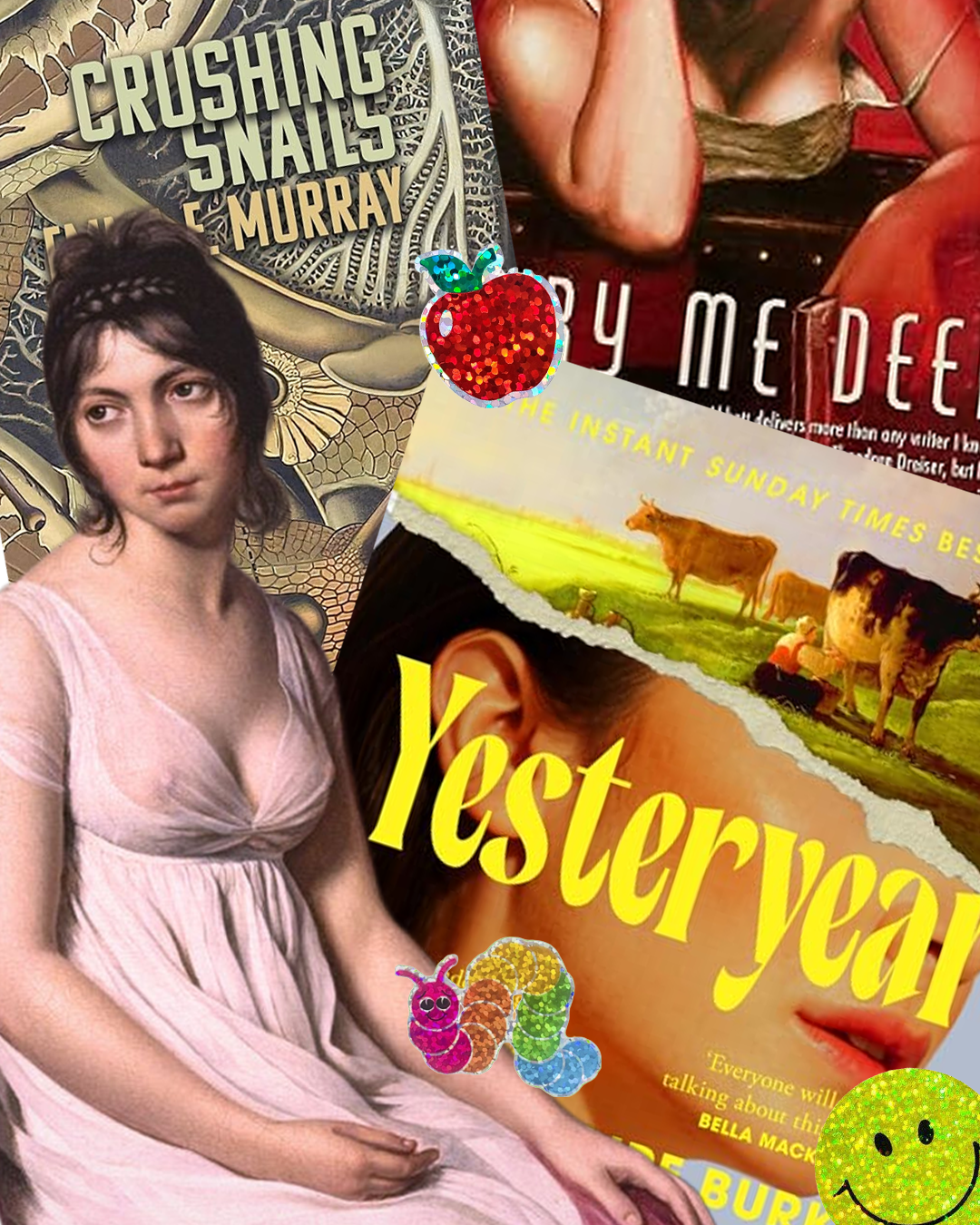
Most noir tales still tend to keep women away from truly unexpected roles, and horror is an area that’s particularly progressive - and transgressive - in showing women who exist way beyond moral norms. Emma E. Murray’s 2024 shocker Crushing Snails is a particular highlight, a book that stands quite alone, and presents the troubling tale of a kind teen who excises her torturous home life through killing. It’s just as interesting, however, to see work that presents daily, troubling, and often-unshared experiences like obsession. Monica Sabolo’s All This Has Nothing To Do With Me (translated in 2015) shows someone who becomes obsessed with their lover – even beyond the tentative relationship’s end. It’s hinted that a number of things might be the cause of this clinging: her parents’ destructive trauma bonding, abuse, her lover’s manipulations. But, much like horror, there are no trite and simplistic scenes that try to miraculously spell a life out.
2026’s Yesteryear, a major debut by Caro Claire Burke, shows a burgeoning mainstream willingness to tackle such depth; for even popular work to explore and understand unpalatable women. Its protagonist, Natalie, is a social media influencer and “tradwife”, someone trying to present an idealised, history-evoking, and far right-beloved vision of family life. Most of the book tries to straddle the line between pity and odiousness, and isn’t afraid to show reprehensible neglect and violence whilst reminding readers of Natalie’s stifling mental inheritances. The descent into an all-consuming social media performance even has a ring of the doom and darkness in Herbert Selby Jr’s bleak oeuvre. However, the book’s determination to couch the story in a mystery-laden frame, one Natalie seems to have been literally transported to the yesteryear of pioneers, reflects an unwillingness to stare too squarely at the horrors that make us. If we did stare, the question might rise in front of us of what to do about such things, rather than dragging us into the distractions of twists and sweeping melodrama.
Women might have a voice in fiction that is bubbling up many different forms, but rougher, less palatable tales are more likely to get buried. Abbott, for instance, has been regarded by crime legend James Ellroy – behind the source of beloved film L.A. Confidential – as poised to reach “quite possibly something beyond” the top of their genre. Most of her noir novels, however, are only known by aficionados or out of print. And great works like Emma E. Murray’s are revered in niche circles, given they’re published by independent presses. Such works need to be celebrated for their nuance, and their willingness to bring to light an unsightly mixture of emotion. These stories need more readers and, in particular, critics willing to look at gnarly writing and say “yes, that’s me”. Because the unsightly emotions that they show are ones that roil around, in both shocking and pedestrian ways, through most of us.