
Put Him in the Jar: Rituals, Revenge, and Survivor Justice
Words: Skylar Sanders
Content note: sexual assault and abuse

Make it stand out
When I was caught in an endless doomscroll populated by a staggering number of thinkpieces about the Cornell 7, a voice cut through the noise: "I will curse anyone's SA'er or abuser for free." Sophie, a self-described witch and sexual assault survivor who goes by sagmoonmagic on Instagram, has pledged to add the names of survivors' offenders to her "justice jar," with the help of a Google Form that asks only for the name and birthdate of the offender.
Sophie describes the ritual as being inspired by recent events - "In honor of TikTok taking down [her] video about cursing the Cornell 7" - although she has done this before, with enough engagement to confidently post "success stories" post-ritual. The justice jar has been making the internet rounds for over a year now, and in that time Sophie has amassed somewhat of a cult following of supporters who spare no words in her comment sections. "I wrote my submission with pure rage. I hope he feels nothing but agony when he passes (which god willing it's soon)," one user commented.
Sophie says the power of the jar lies in its communal nature, citing engagement with her posts and others performing similar rituals alongside her own as the reason it packs a punch. How much weight is behind that punch, you ask? In a video detailing her "100% not true" claims of success which, "for legal purposes" are completely fabricated since "none of this actually happened - wink, wink," Sophie spins tales that would make even the most anti-woo-woo survivor second guess their skepticism. Her "success stories" span everything from an ex boyfriend having a warrant put out for his arrest, to an ex-husband being diagnosed with four different types of progressive cancer and being informed he had just 6 weeks to live.
For anyone who has survived sexual assault or domestic violence, it's not hard to imagine submitting the name of an offender, nor is it difficult to understand why so many have turned to such a "magical" means of securing some type of karmic justice. According to RAINN, over 800 people experience sexual assault every day in the US, with 443,634 rapes and sexual assaults occurring yearly against people aged 12 or older. 89% of victims of reported rape are girls and women, and nearly 2 in 3 American women experience sexual harassment.
When paired with the fact that nearly 80% of rapes and sexual assaults go unreported, these numbers are far lower than what reality reflects. When violent crimes like these are reported, they are often dismissed or thrown out for a lack of substantial evidence, giving perpetrators a new lease on life while survivors are left to pick up the pieces. A 20-year review of reported rape and sexual assault cases found that 89% were determined to have "more than likely occurred," but that only 8% ended in conviction. In the case of Cornell, perpetrators were asked to write essays following their actions - gang raping a ketamine-riddled Jane Doe for 7 hours at the Chi Phi fraternity house as she was photographed and pawned off as "free pussy" in a Snapchat group chat.
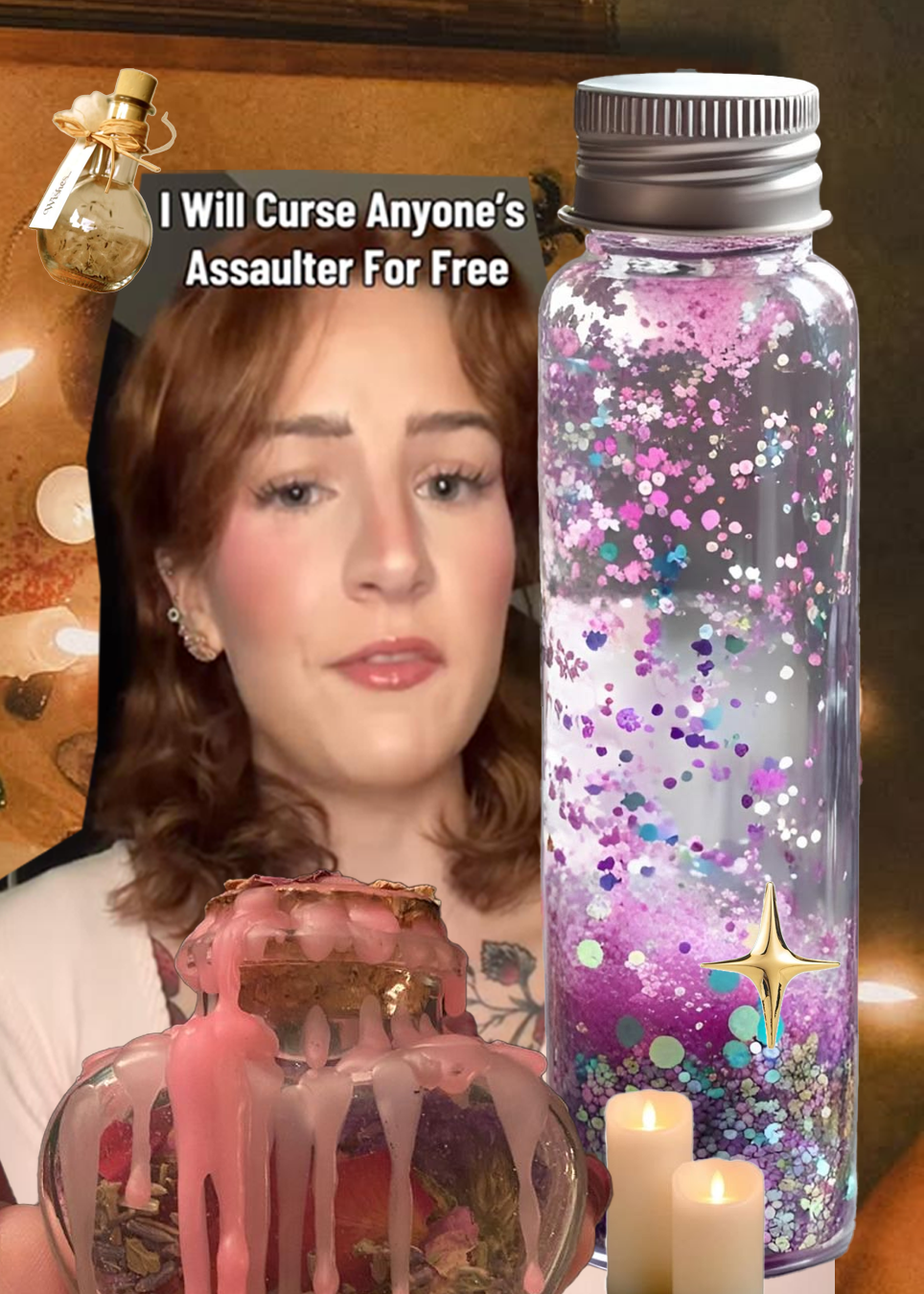
When violent crimes like these are reported, they are often dismissed or thrown out for a lack of substantial evidence, giving perpetrators a new lease on life while survivors are left to pick up the pieces.
As Amanda Montell writes in her book, Cultish: The Language of Fanaticism, "America's laissez-faire atmosphere makes people feel all on their own. Generation after generation, this lack of institutional support paves the way for alternative, supernaturally minded groups to surge." Though Montell's commentary is in the context of cults, it is not lost on me that when institutional avenues fail, we see an uptick in alternative methods of justice. And so, enter the justice jar.
Less than 24 hours after Sophie's initial video, the number of submissions climbed to 52,372. Given that many have submitted the names of multiple offenders, Sophie says "there's easily over 200,000 names." And among those 52,372 submissions is my own. I don't know what I expect to happen. I only know how it felt to know that someone out there cared enough to offer a space for an anonymous sender to reclaim some sense of agency, with the knowledge that this confession would be handled with care.
After triumphantly clicking "Submit," another video from Sophie appeared on my feed. In it, she emotionally breaks the news that Jess Michaels, an Epstein survivor who openly speaks about her experience online, caught wind of the ritual and submitted names of her own. "I can't believe how many people this is reaching," Sophie said through tears. "I'm so glad it found her." Staring at my phone with the realisation that the name of the person who abused me was sitting on the same list as Michaels' submission was overwhelming, to say the least.
What fascinates me most about this phenomenon is not whether or not the justice jar ritual produces tangible results, but that tens of thousands of people apparently wanted to believe, even temporarily, that it would. When anger and grief become public, communal, and ritualistic, there is something healing that emerges. Countless studies have shown that shame and self-esteem are inextricably linked. And humans do not handle shame well. In fact, it can lead to withdrawal, intense feelings of worthlessness, and a slew of physical manifestations in the body. But when it shows up in supportive environments, it can actually promote accountability and moral development.
It is not lost on me that Jane Doe's offenders at Cornell also engaged in a ritual, backed by the cult-like nature of fraternities. But from what I can glean from Sophie's now 76,836 submissions and counting, there is a much more powerful ritual taking place. And it's one that's making room for survivors in a world where their victimisation has been systematically side-stepped by those in power.