
The AI Takeover of the Internet Is Costing Us Community
Words: Tanya Fevzi
Every month, Dollhouse members vote on a topic for us to explore on the site, and below is this month’s pick! Join the Dollhouse for your chance to vote…
Make it stand out
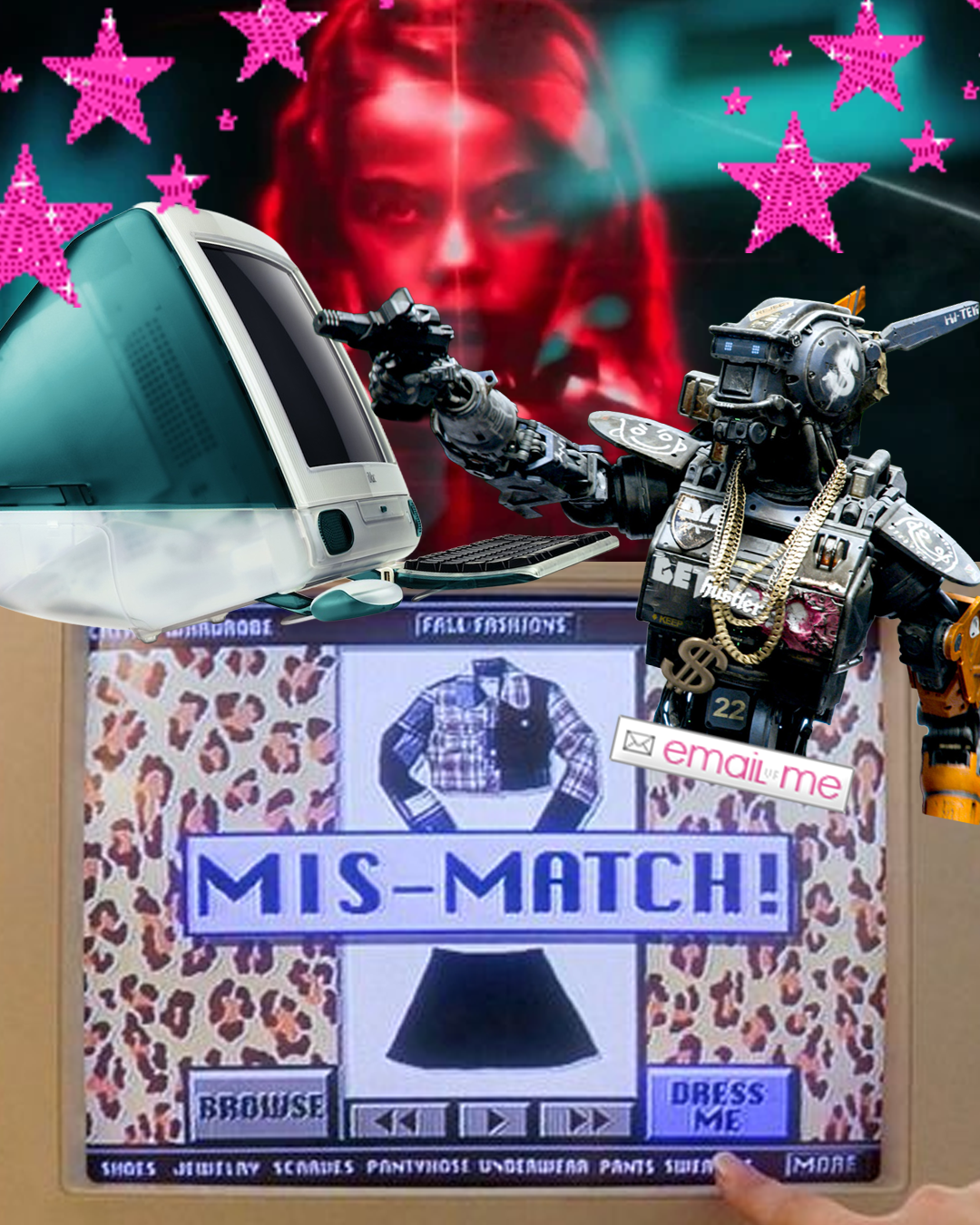
When Clueless came out in 1995, Cher’s digital wardrobe was aspirational. She could browse all the items in her wardrobe on a software that helped her choose an outfit in a matter of seconds, and she was good to go. Wardrobe crises and feeling like you have nothing to wear in front of a pile of overflowing clothes is a too-real problem, so, even if it was just an animation, Cher’s digital wardrobe was something girls around the world felt they needed. It represented the potential of technological innovation that could be accessible to everyone - fashion girlies and tech bros alike.
While the 90s weren’t entirely analogue, what with brick phones, cassettes, and bulky computers slowly being replaced by smaller, more portable devices like the Bondi blue iMac, it was a time when the future of technology was a source of hope. What already existed was, in the eyes of its consumers, harmless, and what was yet to be invented, was something to look forward to. People were hungry for more.

Thirty years on, the reality of technological advancements is bleak. The development of AI is undeniable, but what it has to show for itself - ChatGPT, Gemini - and the ways it is being used - to plan meals, offer therapy, and do homework - is a concerning concept. Large Language Models (LLMs) - advanced AI systems like ChatGPT - are trained to understand the human language, thus their capability to communicate with us and do what we tell them to. The risks that come with this are endless; as well as being inherently racist, sexist, and terrible for the environment, they are also costing us our communities. ___STEADY_PAYWALL___
There is little left that AI can’t do for us. Don’t know what to eat for dinner? Ask Chat. Don’t have any friends to vent to? Chat will listen. Want ideas for what to do on the weekend? Chat knows the best spots. Can’t solve a maths equation? Chat can. Cher’s digital wardrobe, even, exists today - Indyx and Whering were created to mimic the software in the film. The excitement, though, has withered.
The reward of AI is instant gratification. Unlike your friends, it’s always there. It’s available when you need a reply, fast. And it doesn’t require any of the discomfort that comes with building relationships. An Ofcom survey found that 12% of generative AI-users used it as a friend or as someone to talk to. This explains elements of the shifting social landscape, like the lonely influencer epidemic: creators posting having no social circle as a net positive. These people have found joy in the isolation many of us are feeling, and are, ultimately, profiting off it. The mindset of ‘why do we need each other when we have AI, who isn’t asking for anything from us?’ makes sense, but, at what cost?
In her letter for Polyester’s latest print issue, Editor-in-Chief Ione Gamble, introducing the “besties” theme, said: “It feels like a harder time than ever to find friendship. Third spaces basically no longer exist, comment sections are full of bots, and capitalism encourages individualism to grow profits.”
The basis of community is reciprocity - taking what you need and giving back when you can - because it takes a village, right? Humans need connection, and within this digital age, it is more important than ever to cherish friendship and touch grass (together). In the UK, youth centres have shut down and community spaces are disappearing… and too little people seem to care. With less and less places that exist for the sole reason of connecting with another person, it’s becoming more and more clear that we cannot allow those in our communities to fall trap to the ease of self-isolation and reliance on AI for what human relationships offer - because it literally can’t provide it.
AI lacks reciprocity, because AI is a robot. It isn’t difficult to conclude that its further implementation into our lives will have (and is already having) a very negative impact on human relationships. If people are engaging with AI without having to pay it the same mind as you would to a human - being respectful, empathetic - these dynamics will undoubtedly translate into the everyday. This is something we should all be fearful about.
It’s still okay to watch Clueless and marvel at Cher’s digital wardrobe because it will never stop being cool, but shows like Charlie Brooker’s Black Mirror, depicting the dystopian consequences of our relationship with technology, will keep reminding us to steady on. I’m not sure that people are hungry for more than already exists, and, for the sake of our communities, perhaps what is hopeful now is that we are satiated.
So, take this as a sign to go see a friend, IRL, and remind your communities of the importance of having each other.