The Modern Magpie: How Tumblr Taught The Last Dinner Party Creative Process
Words: Georgia Davies
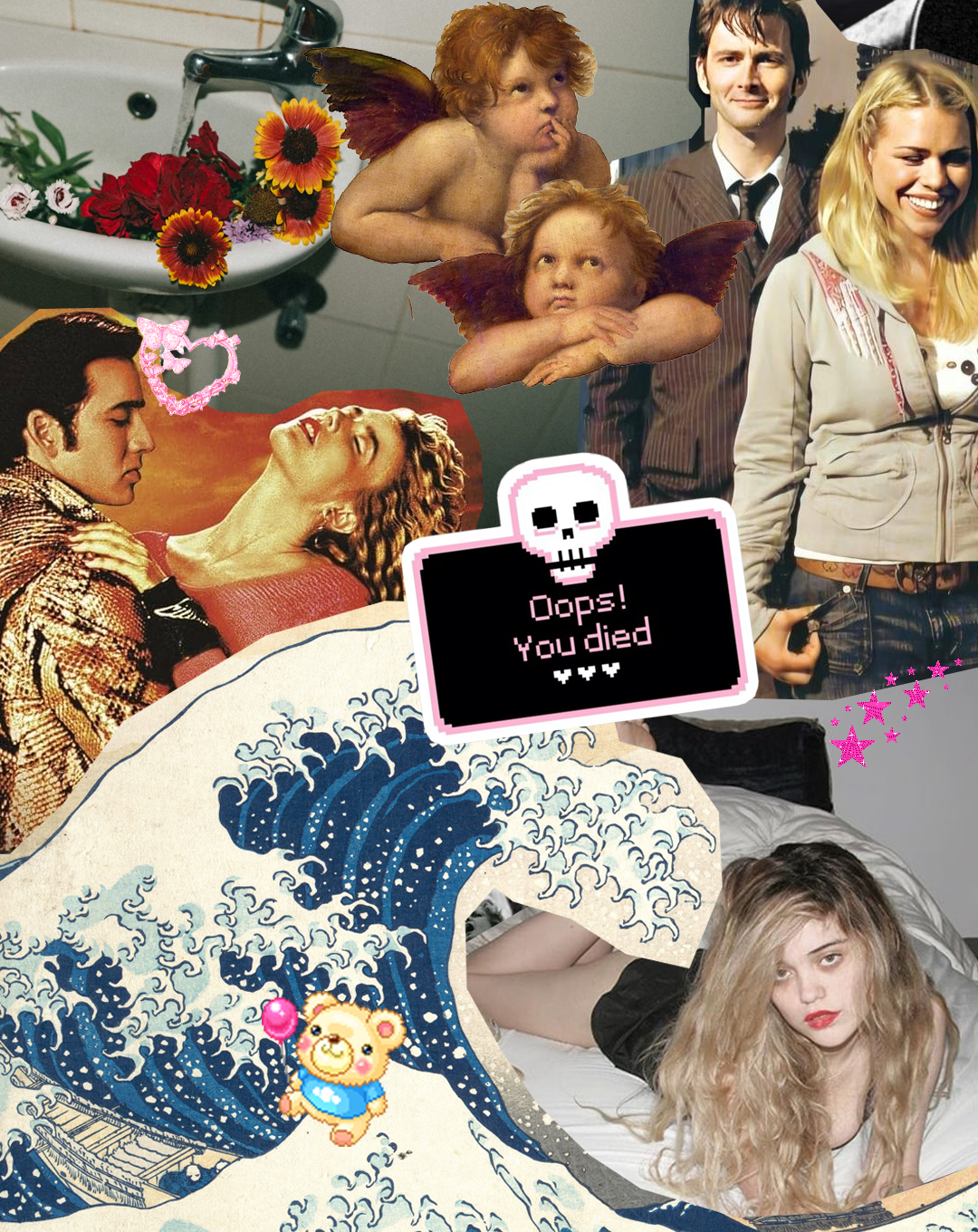
When we sat down with our record label in a meeting for the first time, the ink still wet from our signatures on the deal, we asked them politely to refer to our moodboard. This is a sixty-page-long document (we fondly call it ‘the motherboard’) of still images, collected from Italian opera and anime and architecture and archival fashion.
Executives were amused, in-house creatives were impressed, our managers hadn’t seen it done before. To us though, it didn’t feel audacious to have spent our time pulling together references for music videos, staging and album artwork, and organising it into a legible, scrollable presentation. It felt natural, and obvious. We’d considered the fonts and the way certain images looked when grouped together. We added little explanations of how things related to our vision for the band, and sometimes images with no explanation at all. It was, unmistakably, like a Tumblr blog.
As a band, we were early teenagers in Tumblr’s most influential era. We were too young for MySpace, Instagram was in its infancy and Facebook had all our parents on it. Tumblr though, was cavernous and impenetrable unless you put some serious time into it. I grew up in Sydney, in a quiet coastal suburb where nothing happened. Despite, and maybe because of, this, I spent a lot of time hashing out teenage angst on the family desktop computer. My own blog went through many changes, but its final form was a pastel coloured, holographic visual nightmare, which autoplayed “Pretty Vacant” by the Sex Pistols as soon as you opened it, with a cursor shaped like a lightning bolt.
I posted pictures of my outfits and about funny things that happened to me, I reblogged screenshots from movies I’ve never seen and sad lyrics and scans of riot girl zines. I learned a very diluted version of feminism from graphics and slogans, and felt pride in my own bisexuality because I saw cute queer imagery. Nothing was embarrassing, everything was aestheticised, for better or worse - though even my friends who maintained the most anonymous, strictly beachy-sunset-footprints-in-the-sand type blogs couldn’t help but occasionally reblog funny stupid text posts we would laugh about the next day at school. The most curated blogs still sometimes cracked; a sudden swerve in tone, a sense of humour. It had a way of letting the human peek through the aesthetics of it all.
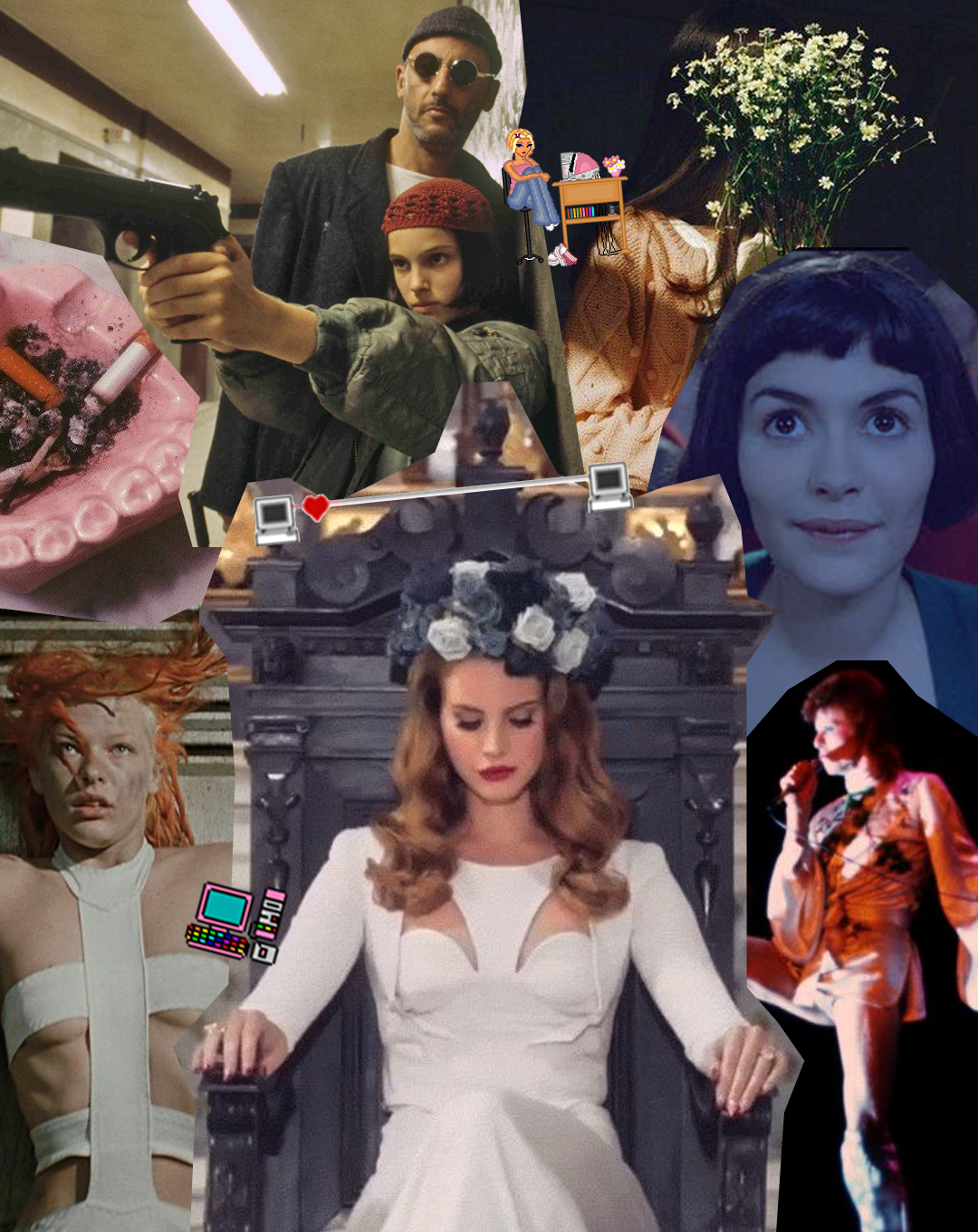
Tumblr taught us that a combination of things didn’t need to make logical sense together to belong together. The connection was the curator. Images of the scene where David Tenannt and Billie Piper are trapped in different dimension in Doctor Who lived next to the Lana Del Rey song, which was related to the GIF of a hot dog spinning on its axis because there was someone who liked things and had interests there at the heart of it.
“You could linger, collect, change your mind, reinvent, world-build, all in private and without having to explain yourself.”
To create and maintain a blog, even if you never posted anything original or gave away anything about your identity, was to put your taste on display. It helped me figure out what my taste even was. You were forced to make decisions, what to reblog or ignore, what your wanted your page to look like and say. Looking through your own Tumblr blog is both a mirror and time capsule, a reflection of what spoke to you at some point in your life, and how you wanted to project yourself. And I would have never watched Leon The Professional or Amelie or Fifth Element or any other movies about women with beautiful fringes and complex inner worlds unless I’d seen images that excited me. The dashboard was a chaotic stream of many of these unique individual consciousnesses, and it was up to the user to decide what spoke to them, and to collect, like a magpie, these little shiny unrelated things from all kinds of places. What Tumblr gave us, without us realising it, was a methodology.
This way of working is something we’ve carried directly into The Last Dinner Party. When we start talking about the visual world for a photoshoot or an album campaign, we don’t start with a fully formed idea. We start by magpie-ing. Images, references, feelings, half-formed ideas, bad screenshots. Its how we’ve ended up with a world where we can stand on stage in a tricorn hat and angel wings under strobe lights and play David Lynch inspired elegies on a keytar. Disparate things can belong together on one stage, or in one album, because we learned earlier in our lives that they could comfortably exist together on one blog. We absorbed the tonal freedom of the dashboard; a non-hierarchical inspiration soup.
It’s not incidental that Tumblr’s culture was propped up by girls and queer people. Practices that are often dismissed as unserious or juvenile like mood-boarding, collecting screenshots, writing headcanons, obsessing over characters, were celebrated. What gets labelled as vapid fan culture is also close reading, archiving, prediction and analysis. Tumblr allowed these practices to exist without funnelling them into being productive or profitable. It taught a generation of young women to experiment with and develop creative instincts long before those instincts were validated as careers. And perhaps that confidence, and the practical fluency in image-curation that came with it, unsettles people when they encounter female artists with fully realised worlds. Women are so often accused of being manufactured when what they really are is self-possessed. It certainly stung when it was suggested that a record label think-tank had decided on our image, which was actually a life’s worth of R&D. We came to a shared visual language long before we had a project to attach it to.
This all makes me wonder if what people are nostalgic for when they talk about Tumblr isn’t really the platform or the culture, but the conditions. It felt like my whole world in 2013, but in comparison to the internet of today it seems a quiet place; no open-ended comment section full of debate, no endless autoplaying algorithmic abyss. There were trends, and Tumblr ‘famous’ people, but the stakes were low, the pace was slow. You could linger, collect, change your mind, reinvent, world-build, all in private and without having to explain yourself. I am of course wearing rose-tinted-glasses about this corner of the internet - there could be another essay about the horrors of it all. But the band we are now, theatrical and referential and led by instinct, could only have grown out of the feeling of freedom to find inspiration in anything.
