
Traditional Chinese Medicine is the Next Big ‘Beauty Trend’: Why It’s Important For Geopolitics
Words: Lily Knight
Every January first something strange happens to the people of the world. For the first four weeks of the New Year, we are all collectively called to arms by the battle cry that is ‘New Year, New Me.’ This mantra inspires the best (and possibly worst) in our society; from post-Christmas crash diets, to newly acquired pure gym memberships with aspirations to ‘lock in’ for 2026. And every new year, we are offered something new and shiny to (supposedly) make us the best versions of ourselves.
Every New Year acts as a litmus test of what is ‘in’ and what is ‘out’ in health and wellness. A decade ago it was Veganuary, then all the O’s (Keto, Paleo, everything which is ‘low’ in something), and now everyone clutches to a bottle of Botivo while preaching the virtues of dry January. But this New Year, while we make our many resolutions, a revolution is mounting within the world of Western wellness in the form of Traditional Chinese Medicine.
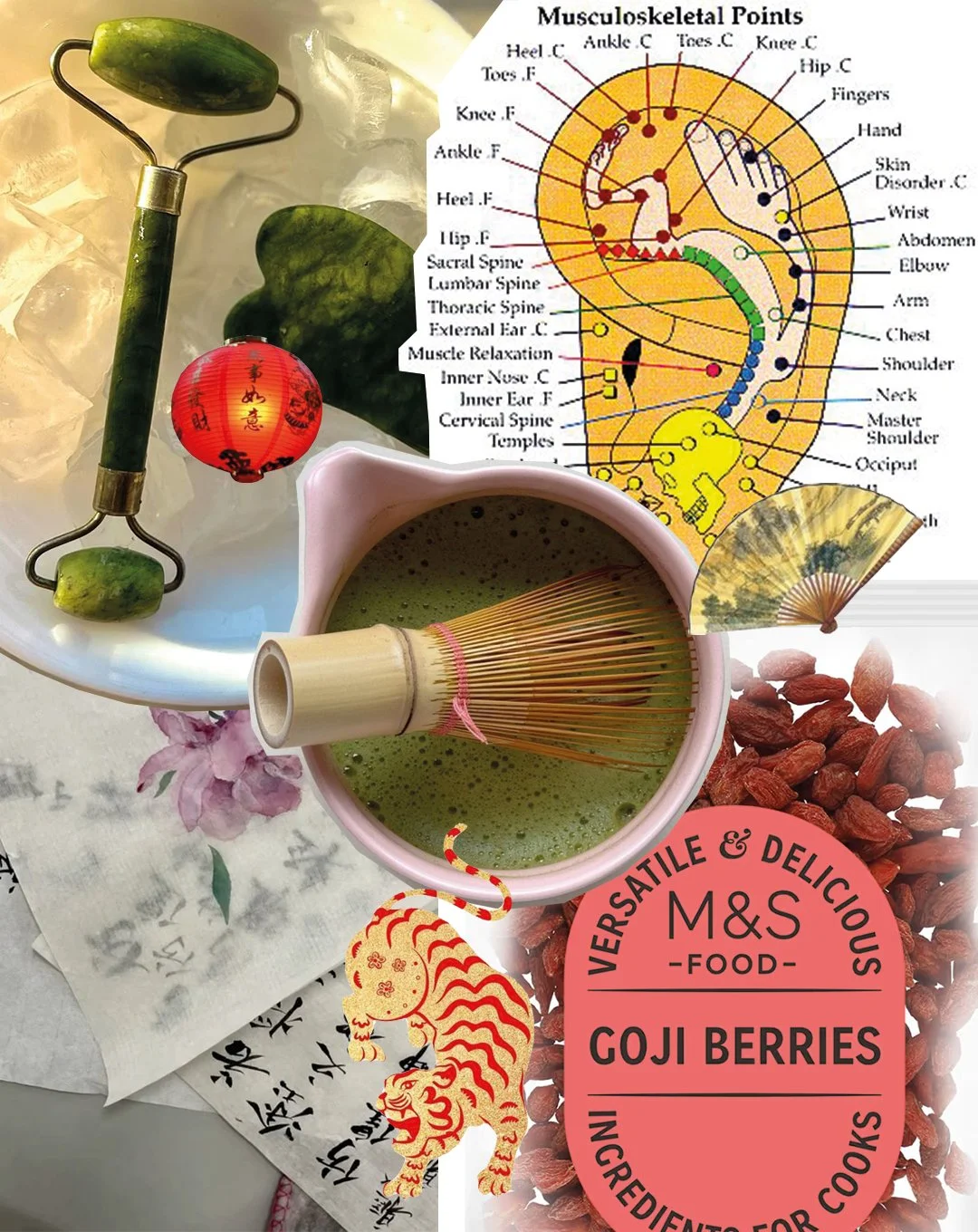
Traditional Chinese Medicine, or ‘TCM’ for those in the know, is an “alternative” system of medicine which has been around for hundreds of years and combines food, exercise and elements of Taoism to cure aches and pains. For every ailment, Chinese medicine has an answer, usually in the form of some herbal remedy. Got Acne? Eat Coix seed in abundance. Cramps? Drink plenty of Mugwort tea. Or, perhaps your Yin and Yang is out of whack? Black sesame may be the answer.
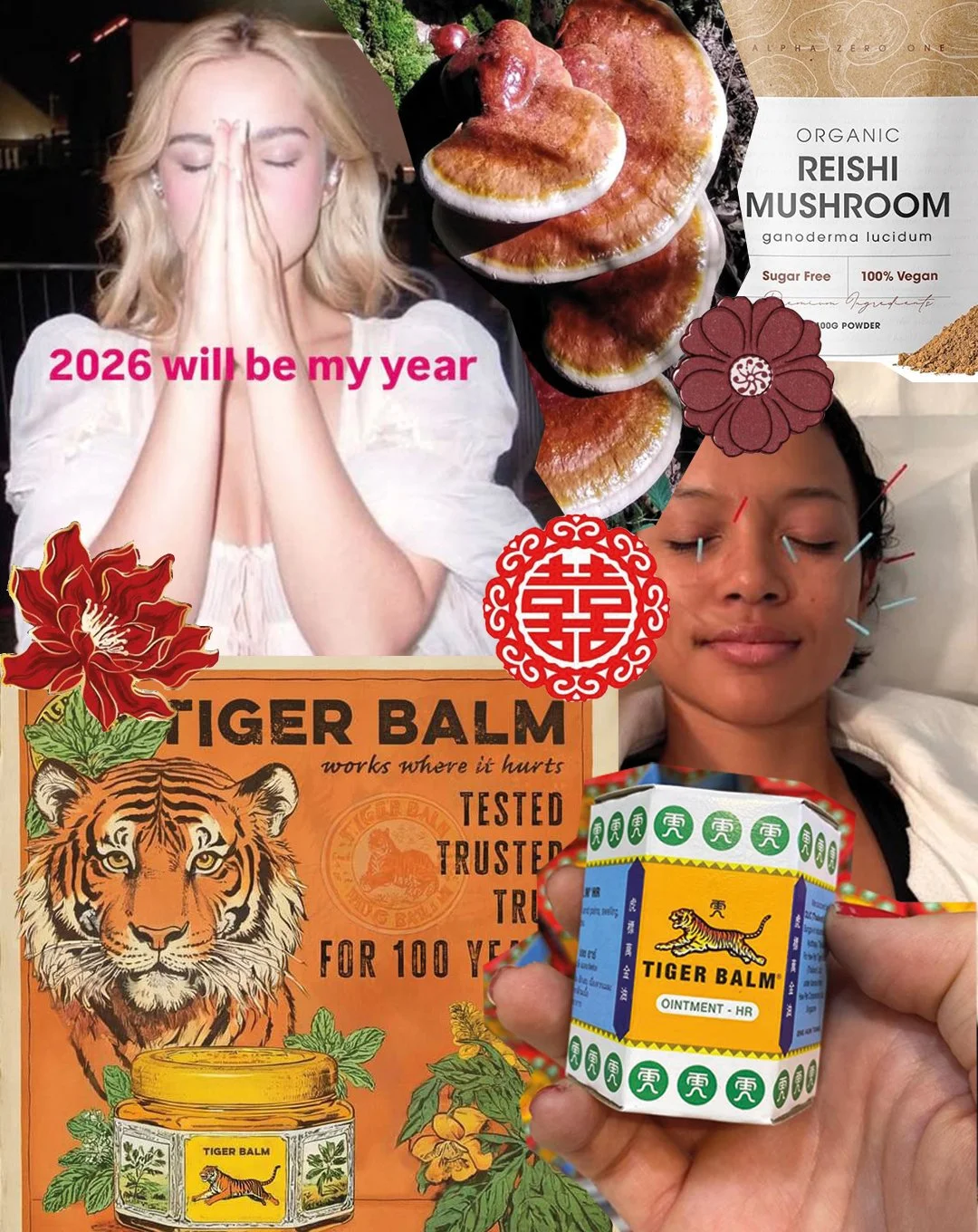
And as someone of Chinese descent, I’ve always seen TCM as something that my 婆婆 ‘Popo’ (grandma in Cantonese) and jade bangle wearing aunties do. For the unacquainted, think acupuncture needles, astringent soups made of beans, and the heady smell of ‘Tiger Balm’ (it’s like Olbas on steroids). But recently, I’ve noticed that TCM has been ‘discovered’ and slowly adopted (or should I say co-opted) by the West. Goji berries are now available in the M&S fruit and nut mix, Reishi Mushrooms are being sprinkled into in our matcha, and we’re all increasingly concerned about our 气 ‘Qi.’ Heck, people even know to pronounce the ‘ch’ in Qi now.
___STEADY_PAYWALL___
“Brands like Muihood which openly reference Chinese culture (‘mui’ means sister in Chinese), and rely on TCM ingredients like rice water, goji berries and snow fungus, have become hugely popular. Muihood has even been praised by British establishments such as The Sunday Times and British Vogue, as well as being sold on the shop floor of Liberty and entered into their beauty hall of fame”
Perhaps, the writing has been on the wall since Gua Sha and jade rollers entered the public consciousness a few years ago. Now, all manner of crystal face rollers are available at Boots up and down the country. But even then, C-Beauty (Chinese Beauty) has always been dwarfed by the wellness giants of K-Beauty and J-Beauty, and the generally larger appetite for South Korean and Japanese culture in the West. Historically, this is arguably rooted in the relationship China has had with the Western world since The Cold War, which has been frosty even at the best of times. Unlike South Korea and Japan which have been consistently diplomatically and politically aligned to The United States and Europe, China (or rather the Chinese Communist Party) has become the symbolic antithesis of Western democracy and capitalism. As a result, ‘China’ has become a byword for cheap manufacturing and even cheaper takeaway food.
But in the past year or so, this has begun to change rapidly. Brands like Muihood which openly reference Chinese culture (‘mui’ means sister in Chinese), and rely on TCM ingredients like rice water, goji berries and snow fungus, have become hugely popular. Muihood has even been praised by British establishments such as The Sunday Times and British Vogue, as well as being sold on the shop floor of Liberty and entered into their beauty hall of fame. And to my complete surprise, ‘ear seeding’ (a TCM acupuncture technique) went completely viral on TikTok a couple of months ago for its apparent ability to de-puff your face by sticking gold studs or ‘seeds’ into different parts of the ear. Taken in totality, these trends suggest the perception of China, and its position on the global stage is shifting.
In the midst of failing western healthcare systems, whether that be the discontinuation of the Affordable Care Act in America or the NHS brought to breaking point through super flu, it is perhaps unsurprising that people are turning towards “alternative” medicine such as TCM. But trading paracetamol for acupuncture and ibuprofen for Frankincense suggests a very specific turn toward a more Chinese brand of health and wellness. And it is this cultural shift which arguably reflects China’s increasing political importance within the global healthcare system.
Following the decimation of USAID and what can only be described as an acrimonious divorce between the United States of America and the World Healthcare Organisation, 95 million people have lost access to most fundamental forms of healthcare, with another 14 million people projected to die by 2030 if these cuts aren’t reversed. As a result, China is endeavouring to fill the medical void left by US isolationism, with the aspiration to garner soft power abroad. Just last May, China pledged an extra $500 million to the World Health Organisation over the next five years in order to offset America’s exit. And while RFK Jr. spouts his latest outlandish lie about vaccines, China uses vaccine diplomacy across Asia and Africa to expand their influence. So, is it any wonder then that modern medicine is moving toward China?
All of this to say that the trickle down effect of these politically turbulent times (to put it mildly) is a new Chinese cultural wave in the West. While The United States sinks daily into an Orwellian nightmare, authoritarian China seems all the more benevolent by comparison. Consequently, China’s cultural cache of ‘cool’ is exponentially rising. Beyond the newfound interest in TCM, the recent vogue for Chinese things proves this; from Adidas’s 2026 Chinese New Year Collection which we went absolutely feral for in December, to our love affair with Labubu. Although seemingly trivial, these trends reveal an underlying and ongoing power struggle between the East and the West as The United States and China vie for the title of the most powerful country on earth.