
We Don't Need Another Pride and Prejudice
Words: Alicia Kort
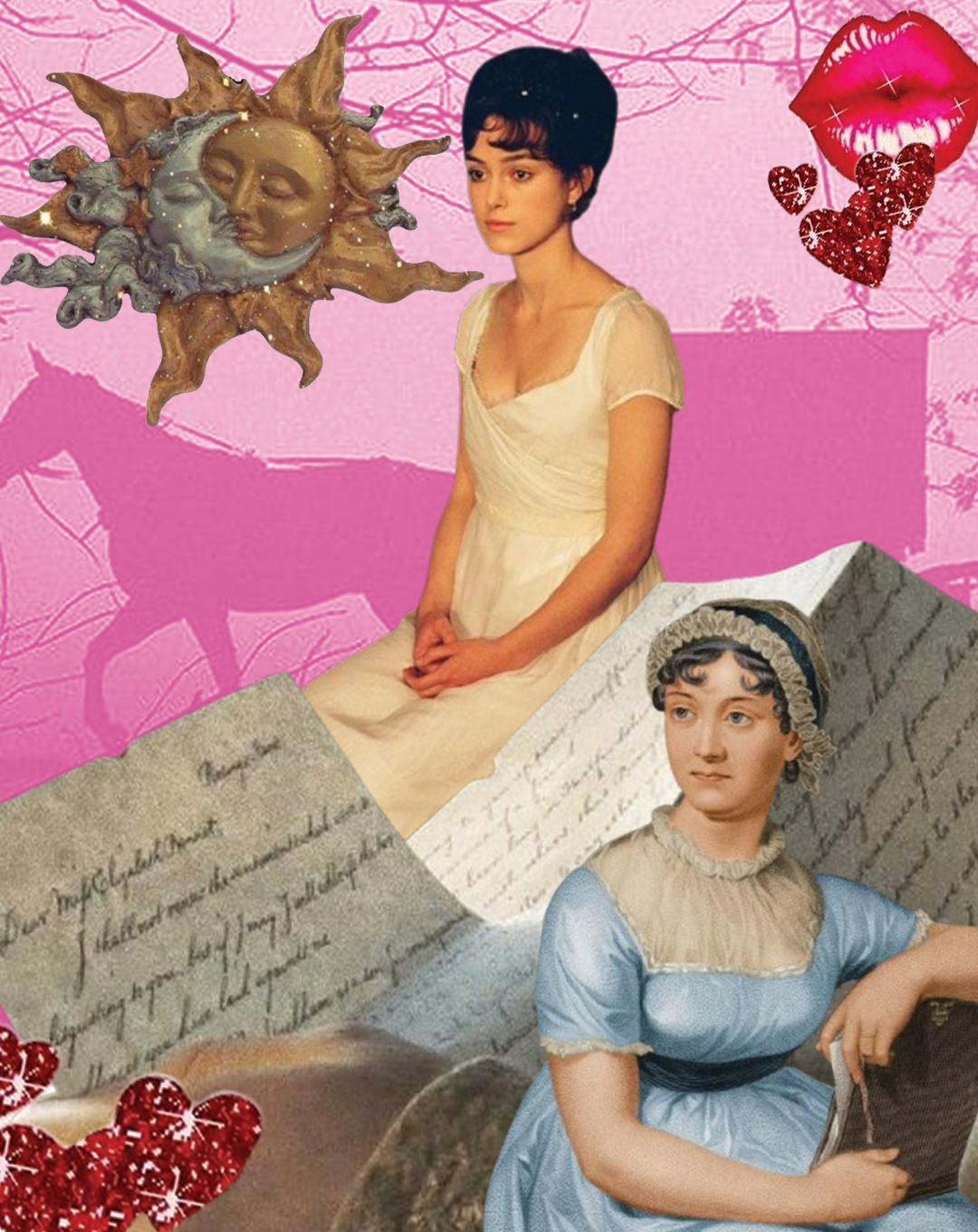
At 13, I decided that I was going to read Jane Austen’s Pride and Prejudice for the first time. Since then I’ve revisited it three times and watched the mini-series (1995) and film (2005) more than I care to admit. I have always enjoyed reading classic literature and historical fiction and love yearning, truly - but when I saw the new Netflix Pride and Prejudice trailer, the announcement for a Jane Eyre mini series, and the Sense and Sensibility movie details, I sighed with exasperation, especially because I had just endured Emerald Fennell’s take on Wuthering Heights in cinemas that weekend.
These stories have been told so many times, and told well, too (the P&P mini series is a masterpiece!), and certain studios have a mixed reputation with these adaptations (don't talk to me about Persuasion). Why is it that Hollywood keeps returning to Jane Austen and the Brontë sisters?
While some of the popularity is due to our ongoing love of slow-burn romances, and fascination with the trials of the marriage mart, class and social customs, the books are often required reading in schools in the United States and Great Britain. If you ask someone to name a historical woman writer, I guarantee they’d say Austen or Charlotte or Emily Brontë. Austen began publishing her books in 1811, and both Jane Eyre and Wuthering Heights were published in 1847, while the British Empire was still vast and powerful. Today, these film and TV adaptations have become one of Britain’s most reliable modern exports and a point of national pride. The stories remain relatable, gripping, and often cozy, despite the vastly different customs that modern society has adopted. They’re also wildly successful from a financial standpoint, which means, in the film and TV industry, that they’re going to triple-down and crank out as many adaptations as possible. For example, despite being bogged down by controversies, Wuthering Heights has grossed an astounding $213 million worldwide so far. For the streamers, adaptations attract eyeballs: the new Pride and Prejudice six-episode mini series stars Emma Corrin and comes out later this year.
___STEADY_PAYWALL___
Like Carrie Bradshaw, I started to wonder. Why was it that only Austen, the Brontës, Mary Shelley, and Louisa May Alcott, seemed to be the only women from the 1800s whose writing gets revisited? There had to be more writers out there, even if the path had been immensely difficult at the time. Luckily, rare books specialist and author Rebecca Romney sought to answer that same question. She dug through history to identify Jane Austen’s contemporaries and the books that Austen enjoyed in her book Jane Austen’s Bookshelf. As much as Austen posthumously dominates culture today, that wasn’t necessarily the case when she was writing.
“If you love Austen's novels, if you ever wished that she had written more, then don't limit yourself. You can read Austen's own favourite writers, too. These are extraordinary writers whose works fell out of the canon for a variety of reasons: sexist commentary, genre of writing, lack of biographical resources, changing tastes, politics, and more.”
“Jane Austen wasn't anywhere as popular in her own time as she has become today,” Romney says. “Writers like Frances Burney, Maria Edgeworth, and Elizabeth Inchbald far outsold her and enjoyed far more critical acclaim. It used to be her ambition that she might one day have her books on the shelf with them; now we have to make the case for why they belong on the shelf with her.”
We’re got the literary canon to blame for this problem. The canon is composed of a body of writing that has been deemed essential within Western culture. It’s very limited and exclusionary, but it often determines what’s taught in schools and what’s remembered.
“The canon is useful in that it helps you find great books from the past that are still worth reading today,” says Romney. “But the mistake is in thinking that those represent the only great books from the past. Literary criticism has historically allowed one woman to stand in for many, Austen to represent all the courtship novels of her day. But if you love Austen's novels, if you ever wished that she had written more, then don't limit yourself. You can read Austen's own favourite writers, too. These are extraordinary writers whose works fell out of the canon for a variety of reasons: sexist commentary, genre of writing, lack of biographical resources, changing tastes, politics, and more. The canon should not be a brick wall that prohibits your exploration, but a springboard for finding the books you love.”
If you, like me, are inspired to expand outside of Austen, Romney has a point of entry for you. “If you want something that reads like Austen's novels, try Evelina by Frances Burney,” says Romney. “It's a courtship novel that was one of Austen's early models for Pride and Prejudice, down to a famous ball scene where the hero is overheard making a critical remark of the heroine - a scene we all associate with Pride and Prejudice, but in Austen's time would have been immediately recognisable as from Evelina.”
As much as I love Austen, I think it's beyond time for the world to deviate and dig deeper into the past to highlight books by other historical women authors. Romney has proved that there is an untapped well of authors to dig into. Just because someone is in the literary canon does not mean that they’re unequivocally the best, and this way of thinking is vastly limiting what stories can be told in a capitalist world that doesn’t want to fund anything that isn’t going to be a guaranteed success. Hollywood is adverse to risk, but I’d argue that people would happily watch an adaptation of a movie of one of Jane Austen’s favourite books, even if the author isn't necessarily "proven out" in advance by movie studios financially.