Why Are Disabled Women Constantly Being Nitpicked?
Words: Silvia Almeida
Make it stand out
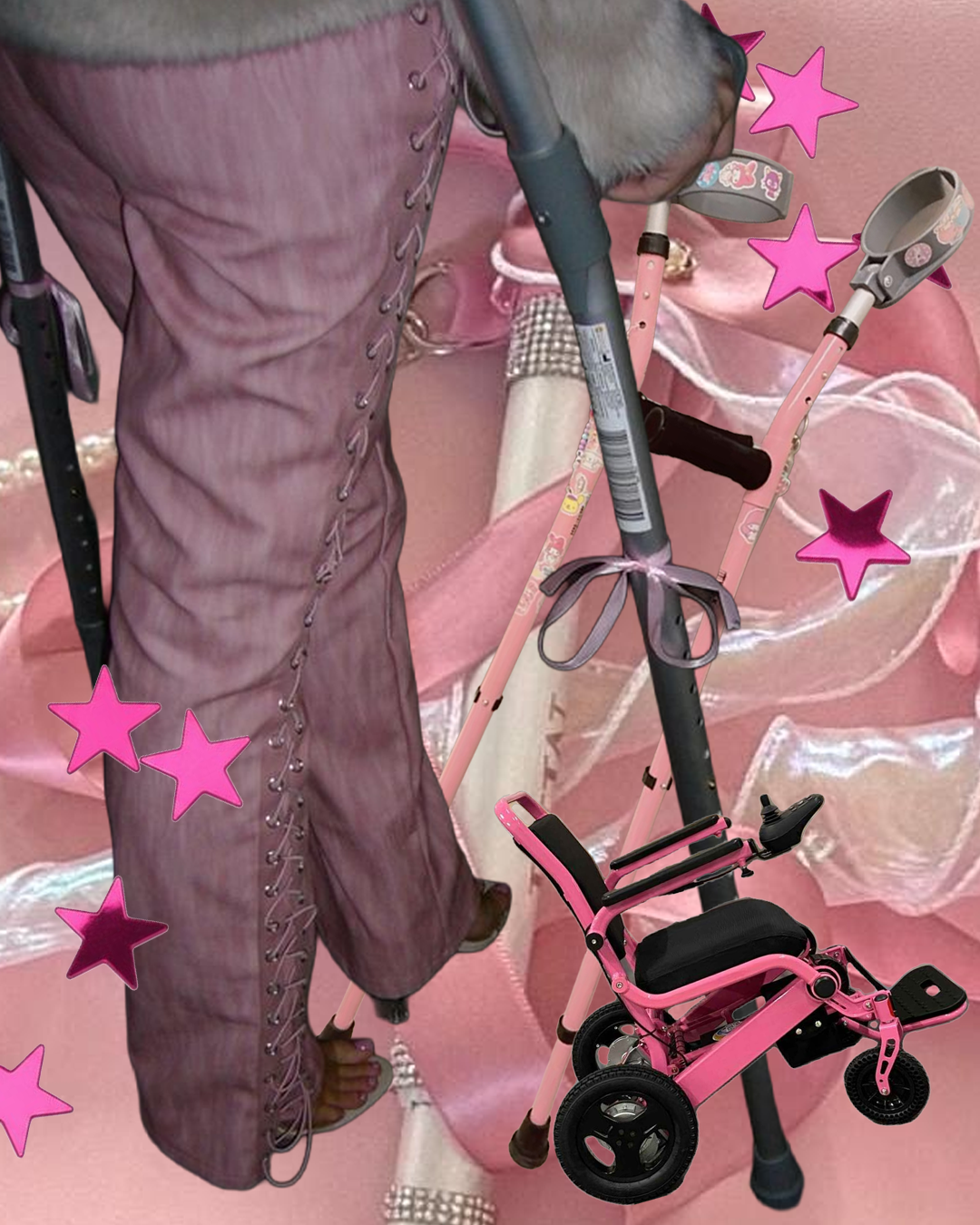
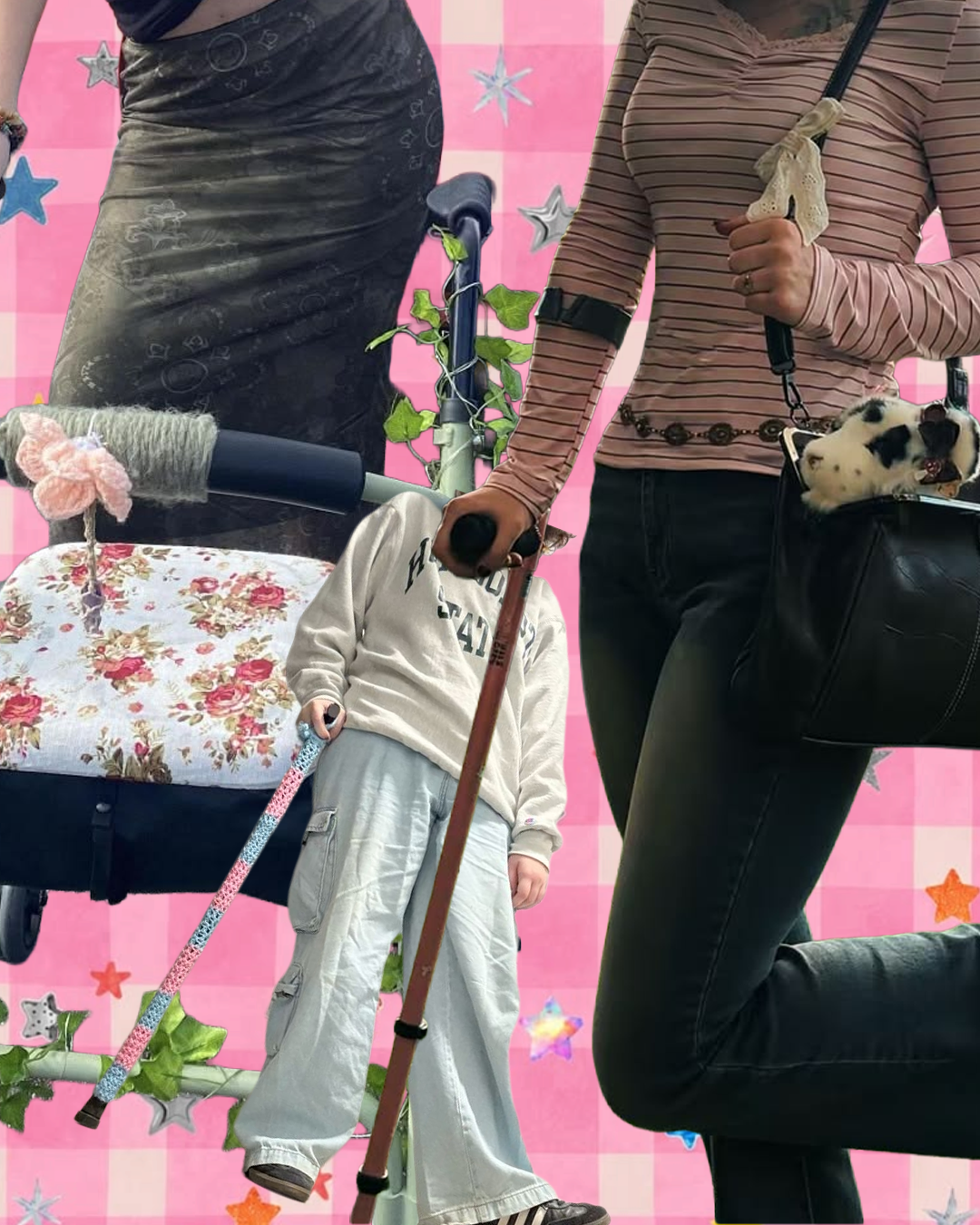
In the year 2026, it seems we are still discussing disabled women via the lens of the 16th century hysteria myth - but now we are calling it: social contagion. Last week, Kathleen Stock wrote an essay for The Times titled “Why are young women using walking sticks?”, and it not only rests on terrible ableism, but also on gross patriarchal beliefs. Stock gets worked up about young women using canes! She wonders why there seem to be more disabled Gen Z women than any other generation before! She questions whether social media might be the cause for this! She asks if TikTok videos showing outfit inspiration matching shiny canes, and affirming disability aids as hot accessories, influence women who aren’t disabled into a so-called ‘disabled state’! It’s all really depressing!
It seems society will always find another reason to not allow disabled women to just exist. This is especially true when our lifestyles challenge able-bodied individuals’ assumptions of disability: they need us to keep small and miserable. When disabled women reclaim power on social media, we are accused of spreading our “disabled state” onto other women. This really makes me conclude that Stock looks at Gen Z women as femmes fragiles – passive, vulnerable, weak humans incapable of critically assessing what speaks to them and mindlessly copying what they see online. I’m just not sure how this applies to disability aids. Most disabled women who use a cane have only done so after years of suffering and pain, having realised that they don’t need to ask permission to use life-changing mobility tools. ___STEADY_PAYWALL___
When I was in the pit of my chronic illness, walking and standing felt draining, yet I still refused to rely on a disability aid even though it would clearly have improved my every day life, and allowed me to leave home more regularly. Most of us, disabled women, make it our mission to evaluate if we are truly sick ‘enough’ to rely on aids, while we continue suffering. However, Stock seems to think it is a new trend we happen to hop onto from one day to the next.
“I essentially have a part-time job that no one pays me for: visiting doctors, managing multiple appointments, crying about pain, paying for supplements, calling health insurers, battling migraines, advocating to be heard, researching my disability that makes me so special, and dealing with people who deny my existence.”
What most seem to brush over is the current medical system that is predicated on andronormativity – a subconscious worldview that sees white men as default for the rest of us. If Stock were to dig a little deeper into the question of why most of the women who rely on walking sticks suffer from “medical-sounding”, “non-specific” syndromes, she would find centuries of research dismissing, overlooking and stereotyping women. She would find that most conditions that primarily affect women are underfunded and understudied. The reality is that society would rather believe women’s pain was fictional than look at the failure of the health system. Should we look back at how women were excluded from clinical trials until the early 1990s, for example?
Stock is up-front about her thoughts on disabled women: they are hysterical and must be protected at all costs. Anxiety has been linked to women’s pain and illness for centuries, which has been hysteria’s footprint. Women, who at the time could possibly have been suffering from conditions such as endometriosis, POTS, and ME, were told to have a psychological condition linked to, of course, their genitals. It was believed that their nervousness arose from the uterus that dislodged and wandered around inside the body, which was termed the ‘wandering womb’. So, this article could have just as well been published in the 16th, 17th, 18th, and 19th century.
Women can be disabled AND hot. Disabled AND sexual. Disabled AND capable. Disabled AND cool. Disabled AND happy. These statements defy the ableist stereotypes society likes to force on us. Able-bodied people can’t wrap their head around the possibility that disability can mean so many different things at the same time. This might be why discourse around ‘pretty privilege’ is so ingrained in the autistic community – “you’re too pretty to be autistic”, which translates into “you’re too pretty to be disabled”. So, when disabled women use the online space to share fashion tips, accessibility tips and seem happy doing it, it can only mean they aren’t disabled in the first place. If disabled women speak of embracing and accommodating their disability, and do so with confidence, they are doing it wrong. According to society’s rules, they should either try to overcome their limitations or feel miserable. Stock seems to think disability has a specific look, and it can’t possibly be that of a young woman.
Contrary to this article, I am still waiting for a world that allows me to gain something from being disabled. Stock lives in a world where disability “makes you different, special, excused from the pressure of life, pleasingly fussed over by strangers”. I’d love to be teleported there! I need to know where! Instead, I get sent from doctor to doctor, where each new office feels like I’m entering a dungeon. I don’t feel special because the doctor in the dungeon hands me anti-depressants after I tell him I can’t stand up or walk or spend time with friends because of the dizziness and pain. He tells me to breathe and says it’s all in my head and sounds just like Stock. Contrary to her worldview, I essentially have a part-time job that no one pays me for: visiting doctors, managing multiple appointments, crying about pain, paying for supplements, calling health insurers, battling migraines, advocating to be heard, researching my disability that makes me so special, and dealing with people who deny my existence.
If Stock really wants a “happier ending” for young women, she needs to stop seeing us as passive figures who need saving - and contribute to the women’s rights she is supposedly so committed to, by helping to change an abusive, regressive and patriarchal medical system.