
Abuse is Not Love: How Tech Can Contribute To Intimate Partner Abuse

Make it stand out
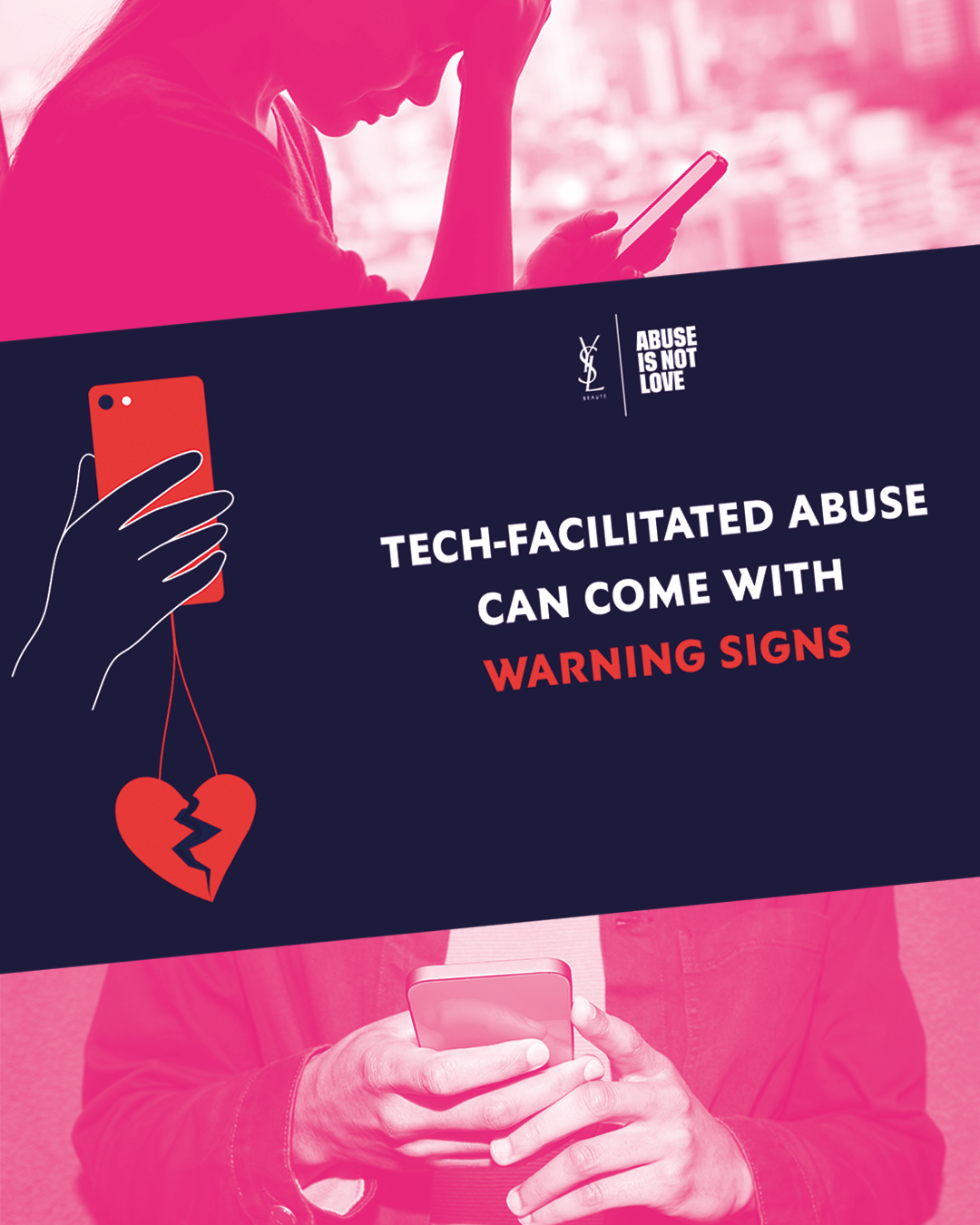
Intimate partner violence is the most common form of violence against women: statistics tell us that one in three women will experience it in their lifetime, whether this abuse be sexual, physical, psychological, or financial. But in a world where technology is such an important part of so many of our relationships, are we able to recognise when it is being used as a weapon rather than a tool?
New commentary, compiled by psychotherapist and researcher Nina Jane Patel, from information contributed by NGOs in ten countries across Europe, Asia and Africa - as part of YSL Beauty’s Abuse Is Not Love programme - tells us that technology-facilitated intimate partner violence has risen even further in recent years, in tandem with technological advancements. Indeed, AI, legal enforcement, and the normalisation of surveillance at home and in society at large are all cited as factors that contribute to this type of abuse. Dr Patel’s commentary highlights the reasons why technology-facilitated intimate partner abuse has been allowed to flourish.
Here, we break down those reasons - and when to be wary about technology and how it’s being used in relationships.
Normalisation of Surveillance
Overwhelmingly, NGOs report that young people don’t recognise digital control for what it is: technology-facilitated intimate partner violence. This is simply because surveillance is so embedded into daily life as it stands - we’re posting selfies from Ring doorbells and supermarket checkout cameras and filming each other on Meta glasses, after all - that digital control simply seems like an extension.
Location tracking on phones by partners feels particularly common, according to experts. In the United States, Tracey Vitchers, Executive Director of It’s On Us, notes that students who attend the organisation’s university campus support groups are often confused by location tracking by partners: they know that it feels intrusive, but due to the normalisation of such technology (often for good reason - for safety among friends, for example), they are frequently unsure whether a line of privacy and liberty has been crossed.
“Surveillance is so embedded into daily life as it stands - we’re posting selfies from Ring doorbells and supermarket checkout cameras and filming each other on Meta glasses, after all - that digital control simply seems like an extension.”
Parent and Caregiver Modelling
It’s pretty widely agreed upon by experts that being a young person in 2026 is to basically live in a surveillance state, a surveillance school, and a surveillance home. Zandra Kanakaris of the NGO 1000 Möjligheter in Sweden observes that parents track and monitor children to the extent that they “learn to be controlled”. Of course, in a parental context, this is usually about care and, again, safety - but across nine of ten countries, experts observe that young people carry this lesson directly into their intimate relationships, too, meaning that partner control goes all-too undetected.
A Language Gap
Maia Samuel, Research and Evidence Manager at Women’s Aid England, says that in situations of technology-facilitated intimate partner abuse, young people “know something feels wrong but don’t have the language”. This is the language gap. They may feel nervous and hyper-vigilant; they may receive constant notifications and feel concerned about response times, but they don’t recognise these responses as the effects of abuse. In Spain, Ana Bella, Founder of the Ana Bella Foundation - a survivor-led organisation that helps to empower women who are abuse survivors - says she hears the same words over and over again: “He’s just a bit intense,” “He’s protective,” “He cares too much,” young women say. This, too, is a language gap - one that disguises this type of abuse as something much less concerning.
“He’s just a bit intense,” “He’s protective,” “He cares too much,” young women say. This, too, is a language gap - one that disguises this type of abuse as something much less concerning.
Legal Gaps
As many women who have suffered abuse at the hands of partners know all too well, laws and law enforcement agencies across the world are poorly equipped to deal with this type of abuse. And when the abuse is centred on fast-paced technology, which is always shifting and changing, and is best understood by the young people who are native to it, it’s no surprise that the laws let women who need them down. In England, for example, domestic abuse laws only come into effect when both parties in the relationship are 16 or over - but teenagers much younger than this are privy to both technology and relationships. In South Africa, Sidwell Sehoana of the charity ADAPT, notes that even where laws are in place, police simply don’t have the expertise to understand and properly advise on this type of abuse, which allows offenders to re-offend.
Find out more from Abuse Is Not Love here.
If you’re concerned about technology-facilitated intimate partner violence in your own life, you can reach out to Women’s Aid in the UK, and It’s On Us in the US.