
Black Lines of Code: Room Themes Explored
Words: Danielle Udogaranya
Make it stand out
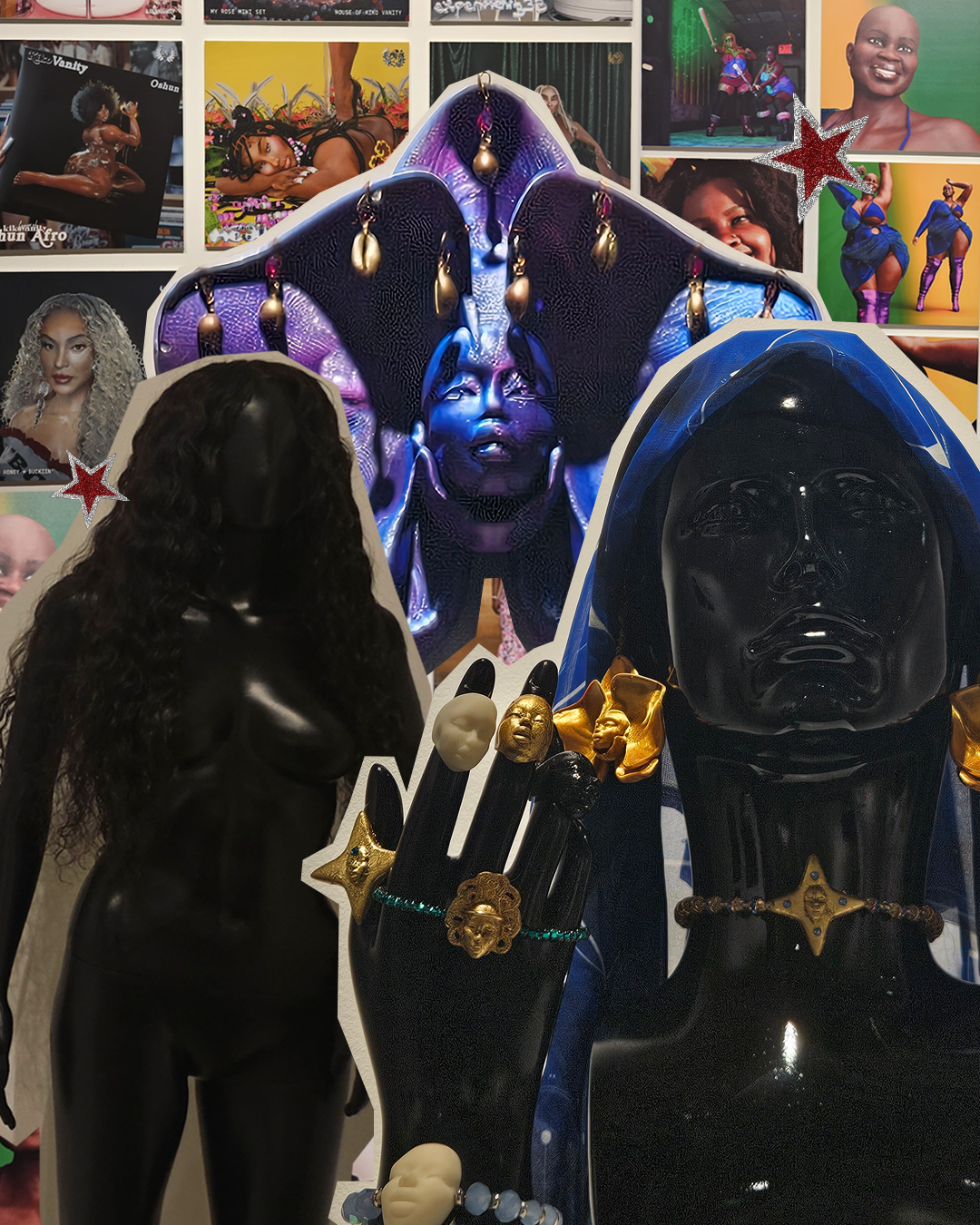
Black Lines of Code is an ongoing exhibition and cultural programme exploring Black identity within games, virtual worlds, and emerging digital technologies. Delivered by The Ebonix Foundation C.I.C., the exhibition examines how Blackness is designed, coded, represented, and experienced across digital spaces.
When it took place at Copeland Gallery, Peckham (11 – 20 December 2025), the exhibition blurred the boundaries between art, technology, and identity—inviting audiences to experience how Black creatives are rewriting the visual language of virtual worlds.
The exhibition became a space for reflection, celebration, and cultural rewriting and reclamation through technology. It was never meant to be experienced passively, but designed as a journey and reminder of what’s possible, that mirrors the ways in which many of us have moved through digital spaces over time, from curiosity, to frustration, to reclamation, to possibility. Each room holds a distinct theme, but together they tell a single story about presence, authorship, and what happens when Black creativity is allowed to exist without limitation.
Nostalgia
As you enter the exhibition, you’re greeted by Room 1, which is intentionally rooted in the feeling of early gaming. Vintage CRT TV stacks, looping visuals, the glow and grain of older screens, and the presence of classic consoles are all there to pull visitors back to the moment many of us first fell in love with games. Before representation became a conscious conversation, before we had the language to describe what felt missing, there was joy. There was curiosity and child-like wonder.
The work of VinceJG sits at the heart of this room because it understands nostalgia as emotional infrastructure, as opposed to an aesthetic or trend. His visuals reference early PS1 gaming eras that many of us grew up with, but he subtly disrupts the memory by placing Black characters at the centre of those worlds as protagonists who belong there. It asks a simple question: what if our earliest gaming memories had included us fully? This room acknowledges that many of us entered gaming spaces with love first, long before we noticed absence.
Progression
Room 2 centres Black game developers and storytellers who are building worlds created for us, by us. It explores what happens when unconscious bias is removed from design decisions, narrative framing, and character development. When Black creators are not asked to justify their presence or translate their experiences for a default audience, something shifts. Stories expand. Mechanics change. Characters breathe.
Progression here is not framed as technological advancement alone, but about authorship. It is about control over how stories are told, whose perspectives are prioritised, what kinds of futures are imagined. The games and experiences in this room demonstrated that when Black developers lead, representation moves beyond survival narratives and narrow archetypes. Beyond gangs, drugs, violence, sports and hypersexuality. There’s joy, softness, conflict, humour, and vulnerability.
This room is a rebuttal to the idea that representation is a box to be ticked. It shows that progression happens when Black creators are trusted as designers, directors, and worldbuilders, not the consultants brought in at the end.
Celebration
Room 3 is a pause.
In a digital culture defined by speed, scrolling, and constant output, this space is deliberately still. It exists to celebrate artists, creative technologists, and game designers not as content streams, but as makers whose work deserves presence and attention. The Celebration room is where the noise drops away and the work is allowed to speak without interruption.
This room acknowledged something we rarely make space for: how easily digital work gets lost online. No matter how meaningful, how detailed, or how culturally important a piece is, it can be swallowed by timelines and algorithms within hours. There is no scrolling. No multitasking. Visitors are encouraged to stop, look, and sit with the work.
Artists like Rich Taylor exemplify why this room matters. His work explores Black femininity with care, sensuality, and nuance. It resists flattening. It holds strength and softness at the same time. Experiencing work like this in person, in silence, changes the relationship between viewer and creator. It restores intention.
This room is a thank you. A recognition. A testament. A declaration that Black digital labour deserves reverence, not just reach and that we exist, undeniably. Anything less than the effort and labour displayed in this room – is a choice.
Inspiration
Room 4 was intentionally personal.
Supported by The Sims, this space closes the loop between where the journey began and where it continues.
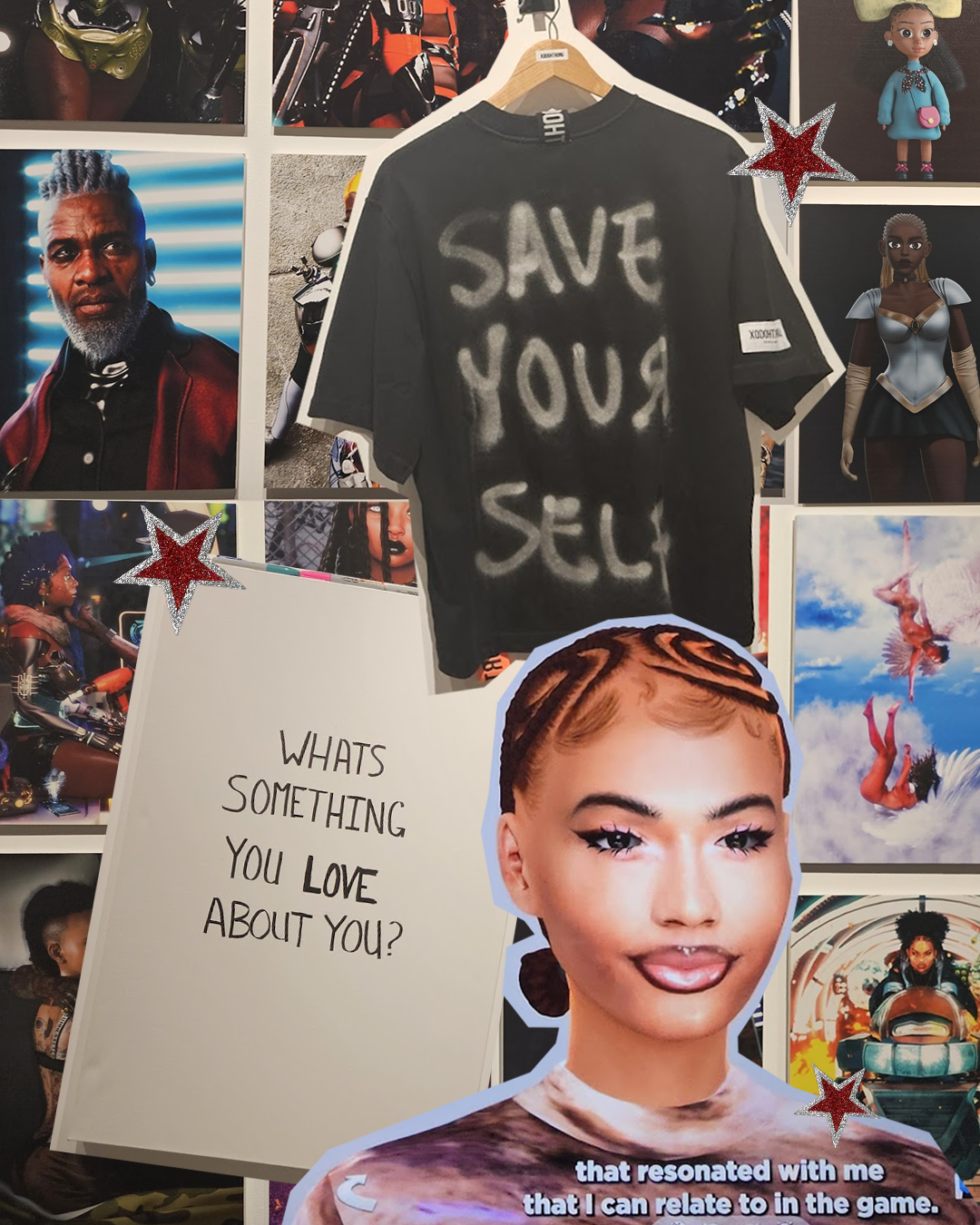
It marked ten years of my journey in creative technology, from my earliest creations of Black hairstyles for The Sims to the clarity that came from persistence, doubt, failure, and growth. It held some of my very first introductions to games, notably my Dad’s Windows 98 Hewlett-Package that housed my first experience with The Sims. It also held my recent accomplishments such as my TEDx Talk and moments where I questioned whether this work mattered, and the moments that confirmed it absolutely did like my work with the Urban Homage Kit. This room exists to make the process visible, not just outcomes.
I wanted this space to feel honest and real. Because inspiration does not come from perfection. It comes from seeing that someone else kept going even when the path was unclear and acts as an invitation to anyone standing at the start of their own path, unsure if their why is enough, this space says: it is.
Supported by The Sims, this space closes the loop between where the journey began and where it continues.
Immersion
Powered by Ubisoft, room 5 immerses visitors in games led by Black protagonists and shaped by Black narratives. Titles like Assassin’s Creed Shadows and South of Midnight offer something that has historically been rare in mainstream gaming: stories where Black characters are complex, central, and treated with care.
Immersion here is intentional. It is not just about playing a game. It is about feeling what changes when Blackness is not framed as a problem to solve or a stereotype to perform. These worlds allow players to inhabit stories that acknowledge culture, history, and individuality without reducing them to a single lens.
Ending the exhibition here is deliberate. After memory, agency, celebration, and reflection, visitors are invited to step fully into what becomes possible when representation is treated as a design requirement, not an afterthought.
What Comes Next
The future I imagine, inspired by this exhibition and the creators within it, is one where Black and Brown artists are shaping the foundations of virtual spaces. Where tools, engines, and pipelines reflect a diversity of cultural logic. Where young creators do not have to begin their journeys by fixing absence, but can start by building abundance.
Through curated exhibitions, public talks, workshops, commissions, and research-led programming, Black Lines of Code will continue to bring together artists, game developers, technologists, and cultural practitioners to challenge narrow representations and expand who gets to shape digital worlds. The programme creates space for critical conversation, creative experimentation, and new forms of visibility within gaming and digital culture.
Black Lines of Code operates as a recurring platform rather than a one-off event, with each edition building on the last to create long-term cultural impact, education pathways, and opportunities for under-represented creators.
Founder, EBONIX
Curator, Black Lines of Code