Forging a Crip* Model of Transition
Words: Emma Cieslik
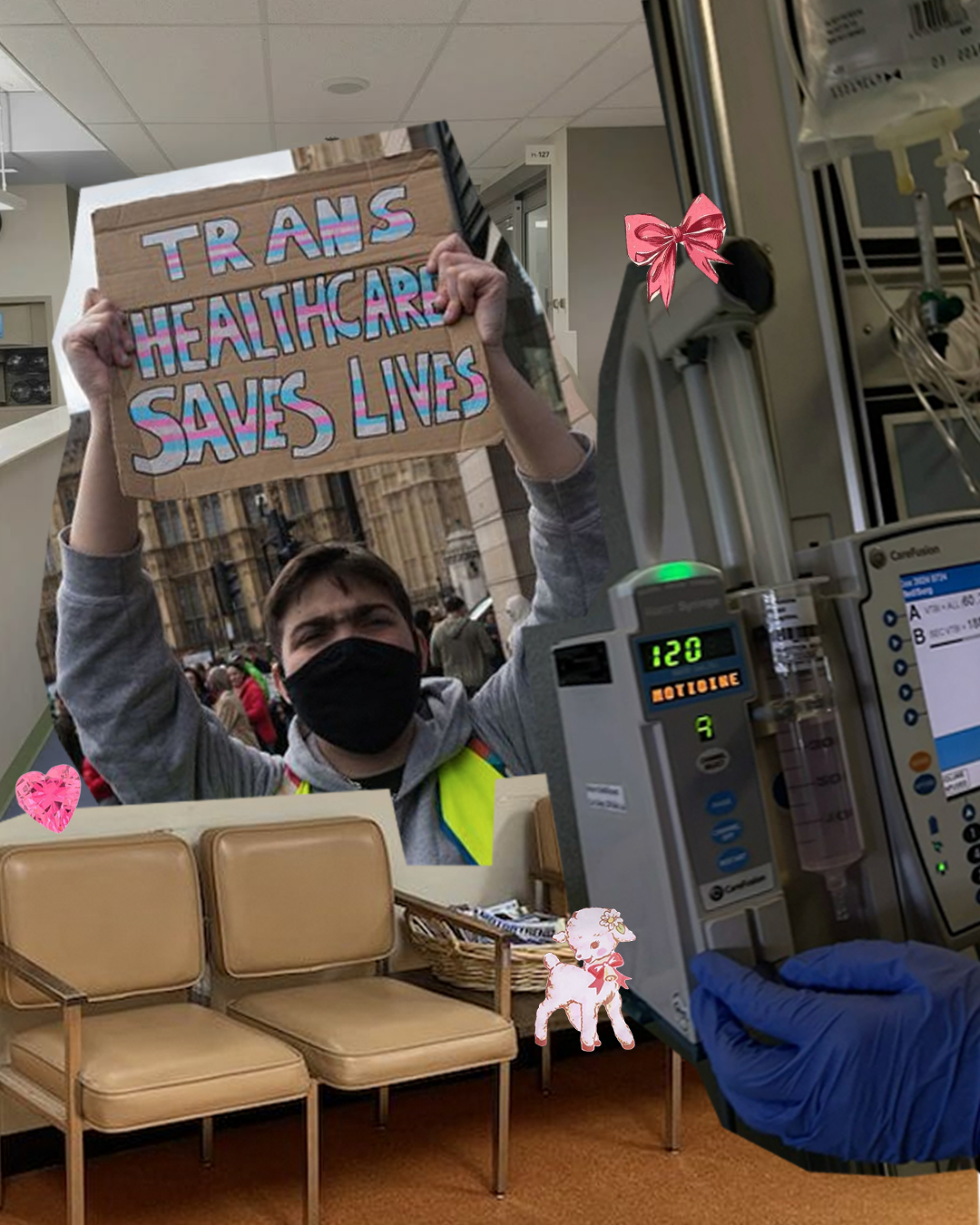
This past week, the US Supreme Court heard oral arguments about the legality of prohibiting trans women and girls from competing in women’s sports. As media outlets - and even one of the virulently transphobic justices making the decisions - are beginning to realise, the outcome will affect not just trans rights as a whole but also the rights of cis women as it would require sex verification of women to ensure they can participate in sports.
This type of genetic testing and genital inspection is not only invasive, it’s a form of eugenics that shows how transphobia is intrinsically tied to ableism in the United States.
In America, transphobic and ableist legislation, policy, and violence are both centered around the nationalist project of the “good body.” Within a Christian nationalist system, a good body is one that serves the state, one that satiates (not supersedes, and especially not one that challenges) the bodily standards set by and to serve authoritarian regimes. For transgender and disabled individuals, their (our) bodies cannot and do not fit within the fascist system.
American fascism glorifies the body that does not “tax the state” as well as a body that affirms traditional gender norms. Within white Christian nationalism, a “good body” is also defined as an explicitly white one that performs passibility and excuses state-sanctioned violence.
The American Medical Industrial Complex is also a White Christian nationalist project. It seeks, whether consciously or not, to produce a “good body,” a cured, perfect, realised body - and to commodify the tools and treatments so that access to a “good body” is intimately tied to race, wealth and social status.
___STEADY_PAYWALL___
“I propose that socially and communally deconstructing transition as inherently medical (or as one in the same) is not only a way to confront ableism within queer and trans communities but to challenge the Medical Industrial Complex itself and the harm that it has and continues to cause for people in both communities.”
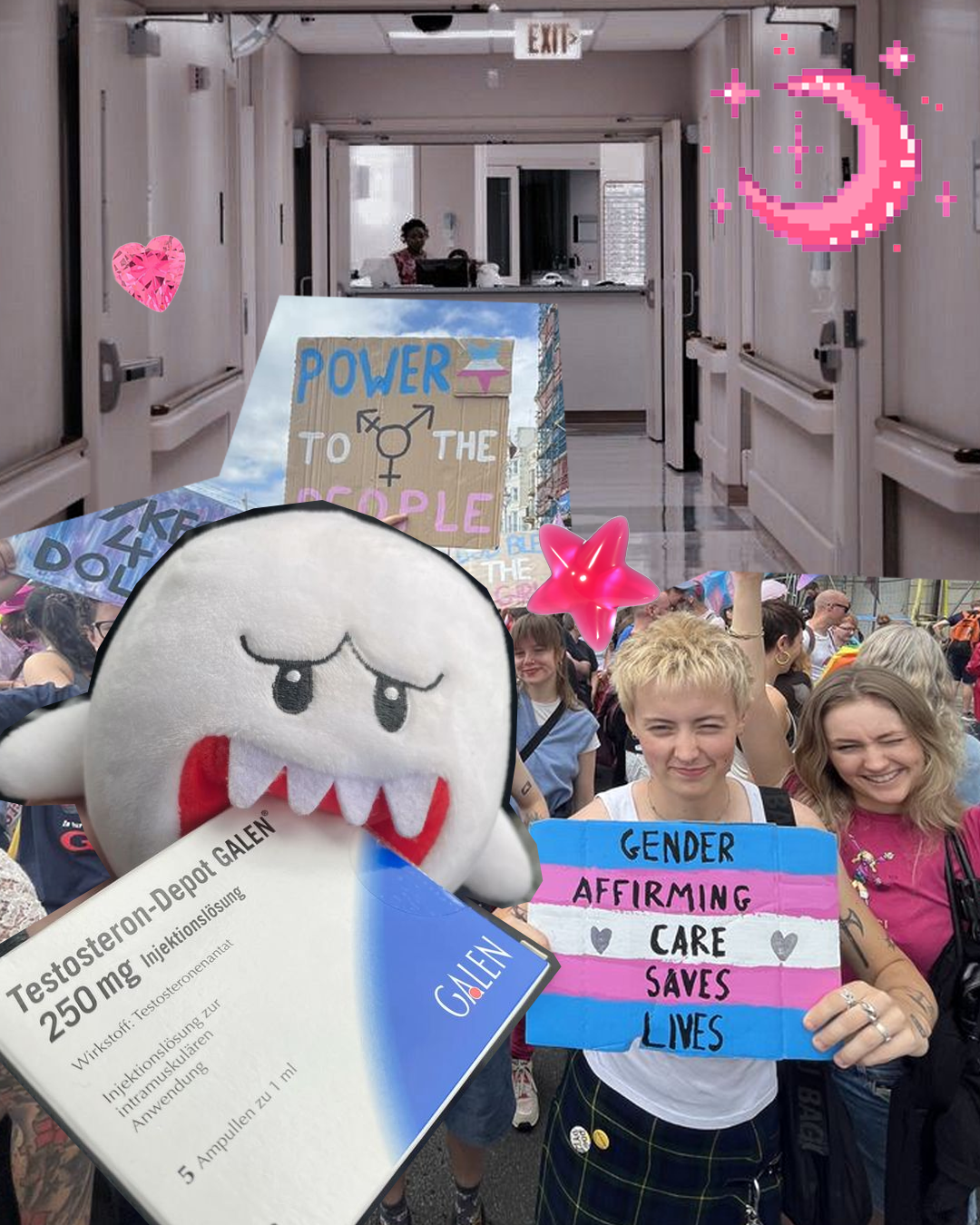
For both disabled and trans individuals, the Medical Industrial Complex has historically failed us. For this reason, I am arguing for a crip model of transition that allows us to fight and deconstruct a Medical Industrial Complex (and the society around it) as part of our gender affirmation process.
In this model, I propose we untether transition from the Medical Industrial Complex itself. While taking testosterone or estrogen, getting a mastectomy or hysterectomy, undergoing a phalloplasty or breast augmentation, or any other form of gender affirming healthcare can and is valid and lifegiving (and often lifesaving), it cannot be conflated to the act of transition, an act that for many of us who cannot and choose not to medically transition is not and cannot be tied to medical tools and treatments.
I propose that socially and communally deconstructing transition as inherently medical (or as one in the same) is not only a way to confront ableism within queer and trans communities but to challenge the Medical Industrial Complex itself and the harm that it has and continues to cause for people in both communities.
For disabled people, the Medical Industrial Complex (emboldened by nationalist and eugenicist ideals) has practiced solutions, often dehumanising and non-consensual ones, to “correct” us. This has included forced institutionalisation and sterilisation that not only hides us from sight (through “unsightly beggar ordinances” that lasted through the 1970s) but also denies our bodily autonomy. In order to build a visually healthy society, this Complex has subjected us to horrific tools and treatments, many of which were ineffective. It has also made diagnoses simultaneously vital to receiving care and government support, yet also deeply difficult to acquire because of inaccessible healthcare and systems that devalue and gaslight chronically ill people.
For queer individuals, this includes the historical and present pathologisation of trans, nonbinary, and intersex identity as well as the rampant medical assault committed against intersex infants to enforce a gender binary. This includes a Medical Industrial Complex that up until 1973 classified homosexuality as a disorder in the American Psychiatric Association’s DSM. This includes medical institutions that encouraged or were complicit in subjecting some queer people to horrifying treatments like electroshock therapy and are still willing to sacrifice our care, and our lives, in favor of institutional safety and funding.
It’s no coincidence that far right American leaders have advocated for the institutionalisation of both trans people and disabled people this past year. It is important historical grounding to understand how ableism and transphobia intersect - both are facets of eugenics, White supremacy, and Christian nationalism. For this reason, many trans and disabled people - and people in both communities - are understandably suspicious of the Medical Industrial Complex.
To be clear, there are doctors, nurses, and healthcare providers that stand in solidarity with these communities, that are part of these communities and strive to unpack and make reparations for generations of harm, and that provide lifegiving and sustaining care.
This fear of the Medical Industrial Complex continues to coexist alongside the fact that many trans and nonbinary people choose not to or are unable to medically transition, instead choosing solely to socially transition.
Sometimes this is because of personal preference, of where they are in their transition or how they express their gender; sometimes it is because of an allergy to progesterone or estrogen. Sometimes they want to medically transition but are struggling to find access to gender affirming healthcare that is covered by their insurance, or they cannot use binders, packers, or other gender affirming tools because of asthma, cystic fibrosis, or other injury or disease.
Even if the choice not to medically transition is not one impacted by disability or resources, it is valid. All people are valid in their identities regardless of undergoing medical transition, just as all people are valid whether or not they “pass.” In the same way, people are valid in their disability whether or not it is visible. Just as being an ambulatory wheelchair user does not disqualify a person from being disabled or using a wheelchair, not taking hormone therapy or undergoing surgery (or doing so temporarily or only partially) does not invalidate someone from being transgender or nonbinary.
Medical diagnoses or visible indicators or equipment are not validators of identity. The products of the Medical Industrial Complex (while helpful, lifesaving tools that affirm our identities) are not the things that make us transgender or disabled. It is who we are, who we feel and know ourselves to be in our own bodies that gives us meaning, identity, and tethers us to our communities.
In a world where transitioning (and being transgender) is seen as a radical, “political” act, embracing a crip model of transition is an act of rebellion against the Medical Industrial Complex that has long harmed us and denied who we are.
*Like “queer,” many disabled activists have reclaimed the word “crip” which has historically been used as a slur against disabled individuals. Alongside “mad,” a term reclaimed by activists with mental illness, “crip” is a term whose reclamation foregrounds and destabilizes ableist frameworks of bodily autonomy, institutionalization, and productivity.