Caroline Wong on ‘Girls Who Devour’, Women Eating in the Age of GLP-1s and #Girlhood
Words: Alekia Gill
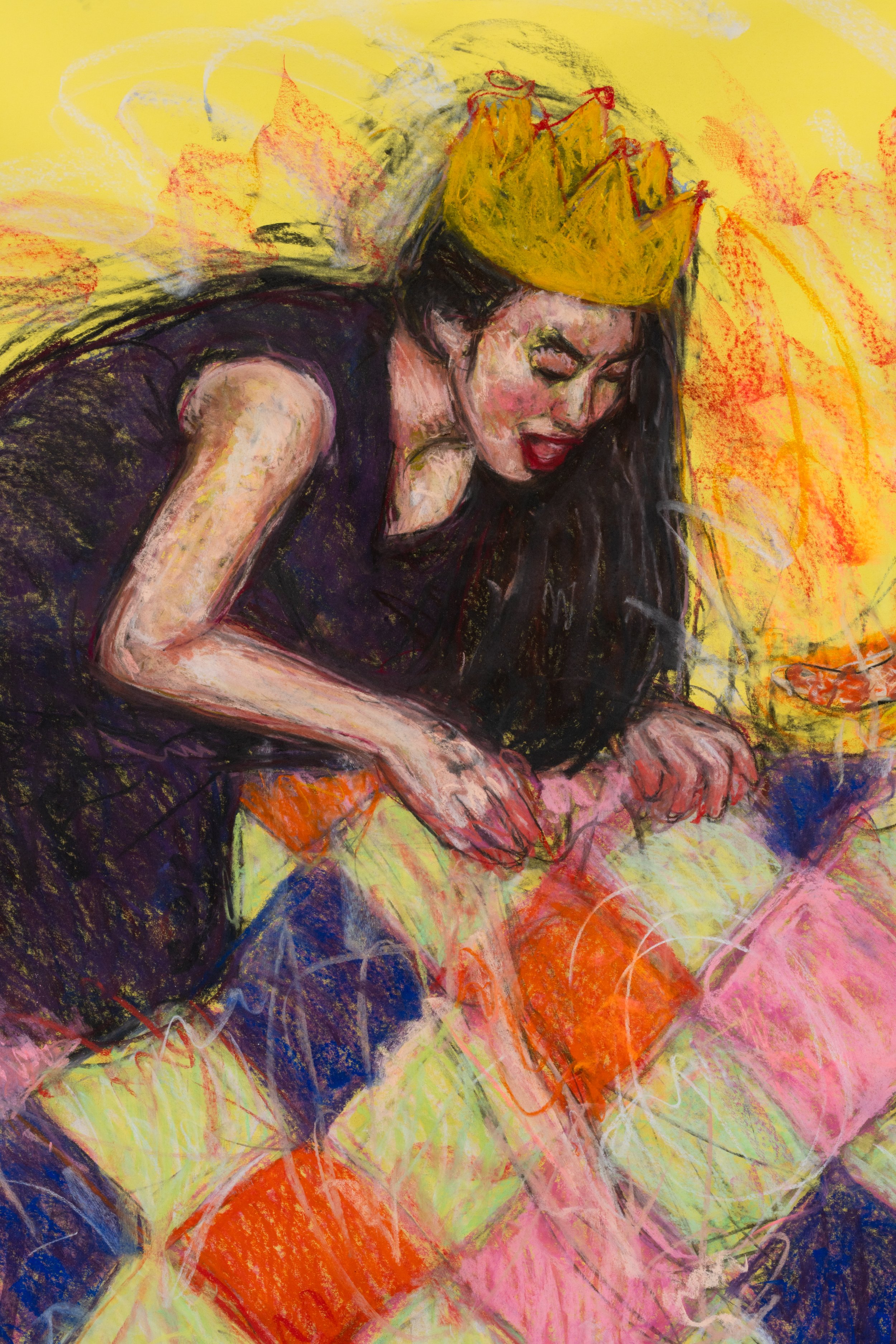
Caroline Wong’s ‘Girls Who Devour’ were running riot in the Saatchi Gallery last month. The show, a combination of three bodies of work, is an epic tribute to girlhood, joy, and revelry. In a culture where being skinny is a mainstay in our trend cycle and television remains a stomping ground for depraved male fantasies, is our tendency to reach back to girlhood a mark of modern feminism?
There are currently 1.5 million videos under #girlhood on TikTok. In a bout of collective healing, groups of 20-somethings cherish the small acts of girlhood in their everyday lives - getting ready together, sharing clothes, having sleepovers. Though not always a beneficial trait, we carry our younger selves with us and feel the need to protect them. We want to let them eat that second slice of birthday cake, to devour cheesy pasta whenever they like, to sloppily paint their own nails. Perhaps that is why, instead of looking forwards, our generation’s female creatives are looking back.
Wong’s ‘Girls Who Devour’ not only evade being consumable objects, they evade the act of shrinking away. They assert their presence until we can almost hear shrieks of laughter escaping the frames. Wong’s past selves saturate her drawings and, of the lively series ‘Cats and Girls’ she tells me: “It's so sentimental. I'm really embarrassed to be saying this: it was just a tribute to my childhood cat and to being a young girl. It was about acting without inhibitions and not thinking, ‘Oh, I'm eating way too much’ or, ‘Oh, I look fat’ or anything like that. Because when you're a child, you don't think about those things.”
Influenced by French impressionist Pierre Bonnard, Wong works multiple layers into several paintings at once, a process which sometimes takes as long as seven months to a year to complete. Pastel strokes shift into focus in some areas and slip off the page in others. Wong’s choice to base her practice on pastel drawings is also derived from her childhood. She explains, “It's such a tactile medium and the way I draw, it's not very precious or detailed or focused. When I start, I just make this huge mess in charcoal and I'm not thinking about whether the proportions are right. Form just emerges. It’s just going back into this state of play and girlhood and making a mess. I love making a mess. Just this big colorful mess, that's what I always did as a child.”
“Devouring a bucket of fried chicken or a weird dessert. It appeals to the little girl in me, ‘That's so pretty. I want to eat it.’ That kind of thing.”
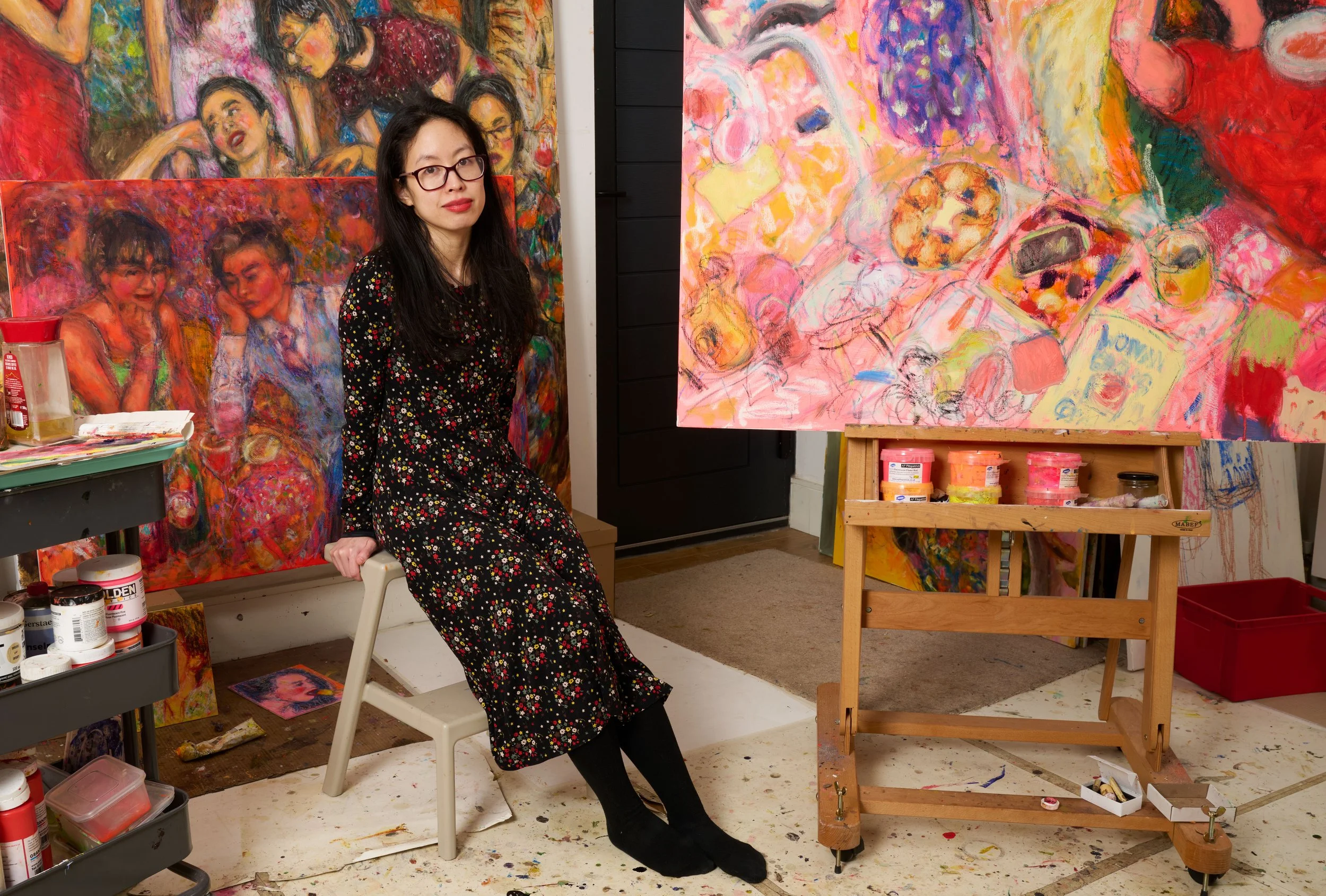
Her use of nostalgic, gaudy colours also toys with this theme. The joy the art elicits is not only due to its subject matter; we are allowed to marvel at the colour pink again, to see purple as if we’ve never seen it before, to wonder at how blue and yellow look when overlapped. In true John Waters fashion, we allow ourselves these guilty pleasures. We have faith in our own bad taste.
Wong agrees, noting, “ The idea was just to transfer the pleasure of eating into making art. All the colours I use, they're very delicious colours. There are certain ones I use that are ‘bad taste colours’ so I used this to reference guilty pleasures. Devouring a bucket of fried chicken or a weird dessert. It appeals to the little girl in me, ‘That's so pretty. I want to eat it.’ That kind of thing.”
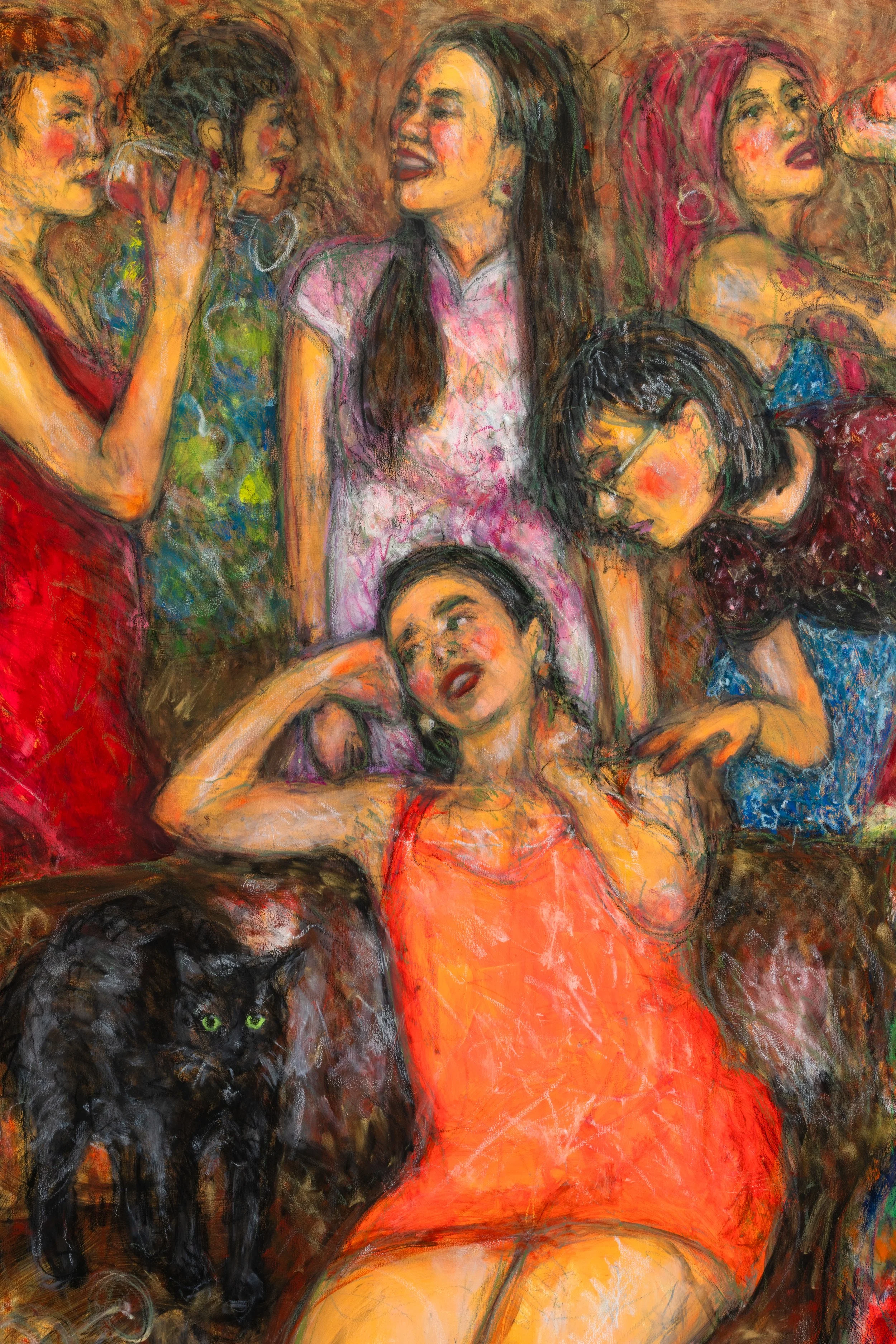
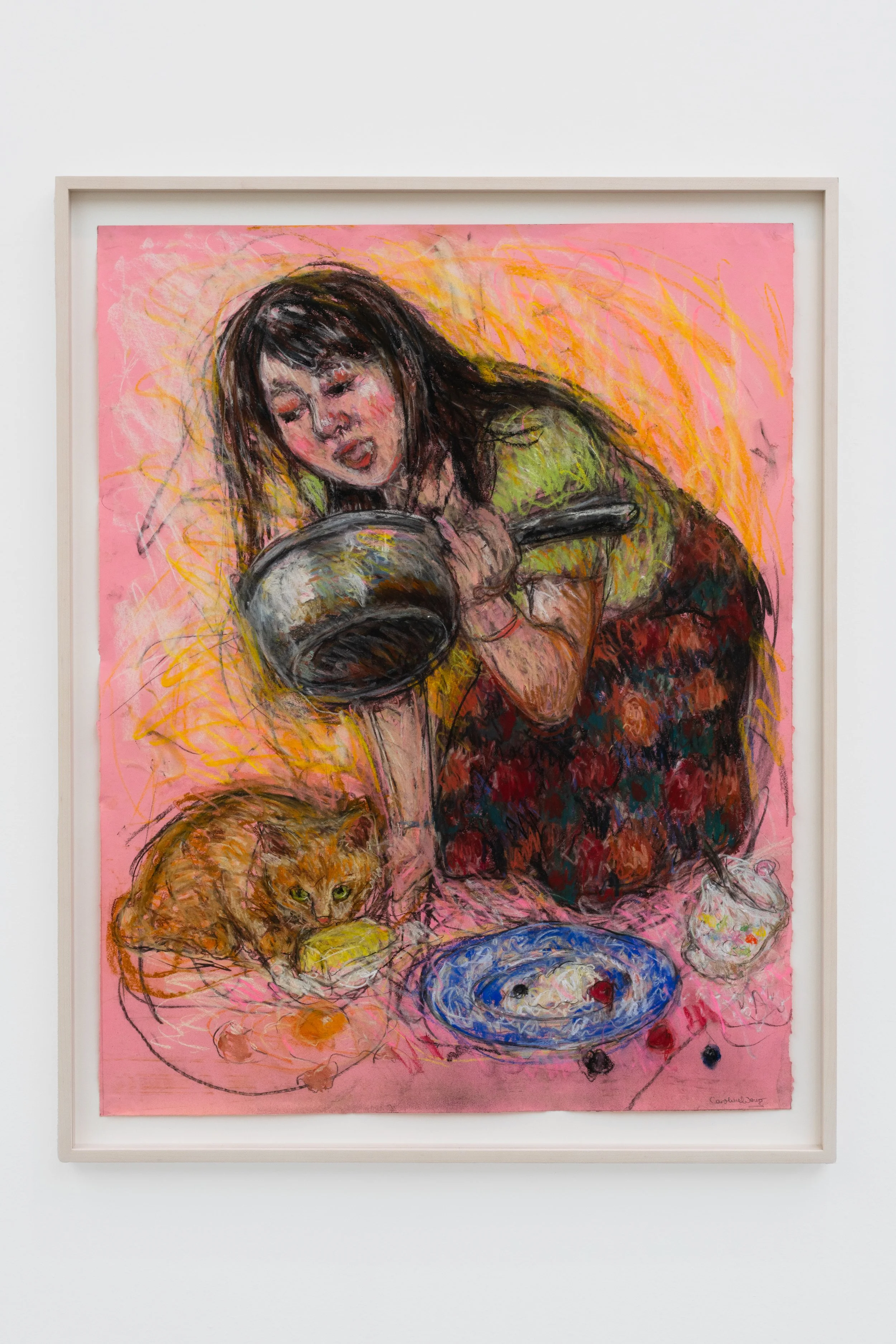
At some point, the devil’s advocate in me asks if her ‘Girls Who Devour’ really have escaped the feeling of being watched, controlled and sexualised. In researching Wong’s show, I was reminded of mukbangs and the shadowy, kinky world that undercuts them. It seemed I wasn’t the only one whose mind jumped to the taboo of a woman eating. Others have previously brought this theme up to her, specifically in regards to Hungry Women, a series of mid-bite scenes.
In response, Wong comments, “The close-ups of women eating, I never actually saw anything sexual in them. Even if some of the foods were phallic, I was mainly focused on the food they were eating. Some of them were just eating foods that I thought were really nice or I hadn't eaten in a long time. It seemed the sexualization was happening in other people's heads. I think because I'm not painting little girls, but grown up women, it tends to look very sexualised.”
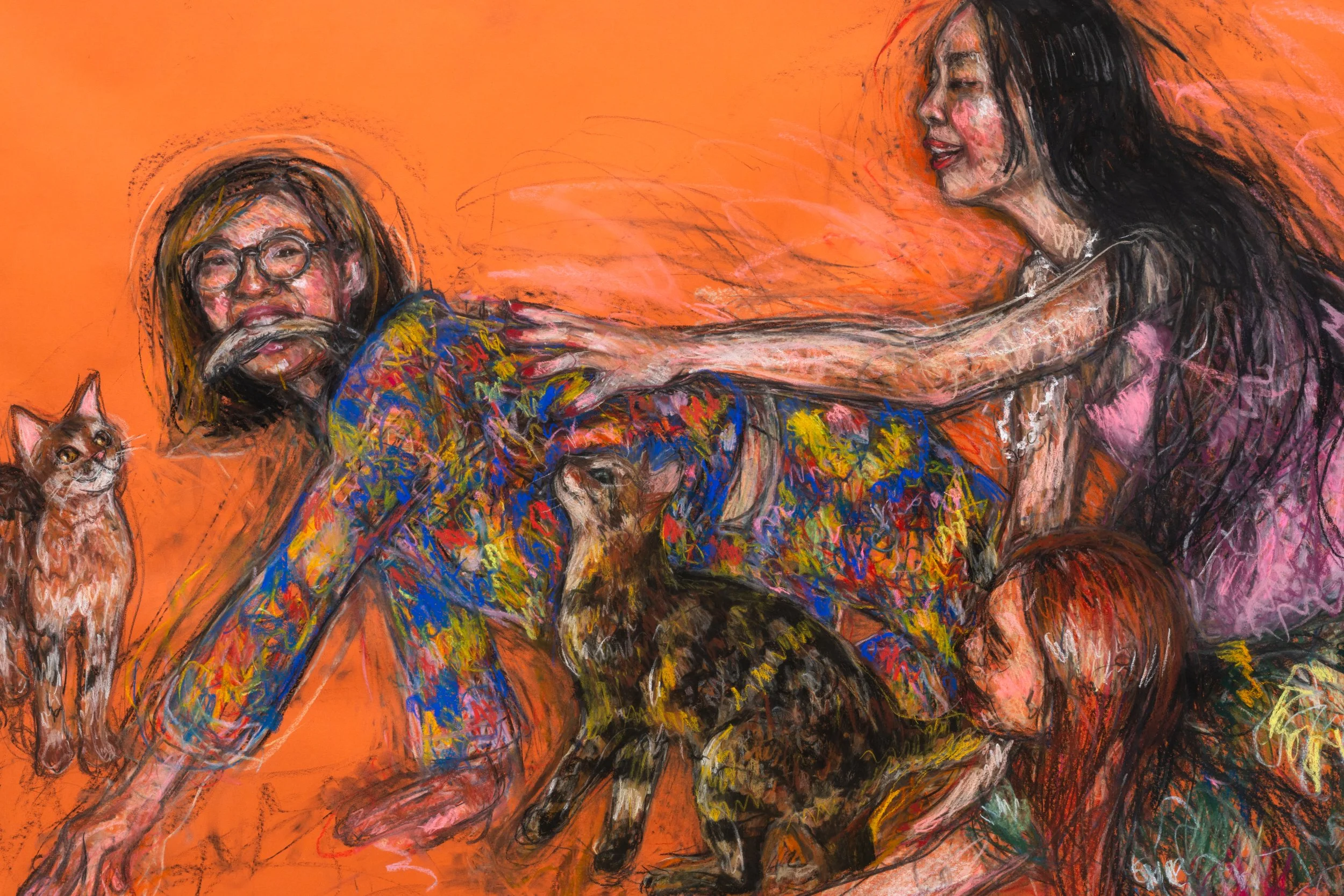
Though not necessarily their intention, Wong’s girls confront our own ideas surrounding images of women and food. Their animality and innate contentment indicates a simple, natural part of living - nourishment. So why do they seem so audacious?
Since the rise of the GLP-1, we have been overwhelmed by images of celebrities brandishing visible collarbones and sunken cheeks like status symbols. Wong, however, understands this is nothing new. “The crazy thing is that diets and this sort of thing have never disappeared. I'm 40 now and since the age of 12, I've felt that people want us to stay small.” She adds. “They're always observing how women appear and if you put on a bit of weight, it's such a sin. I have never seen this die down, it just goes through phases.”
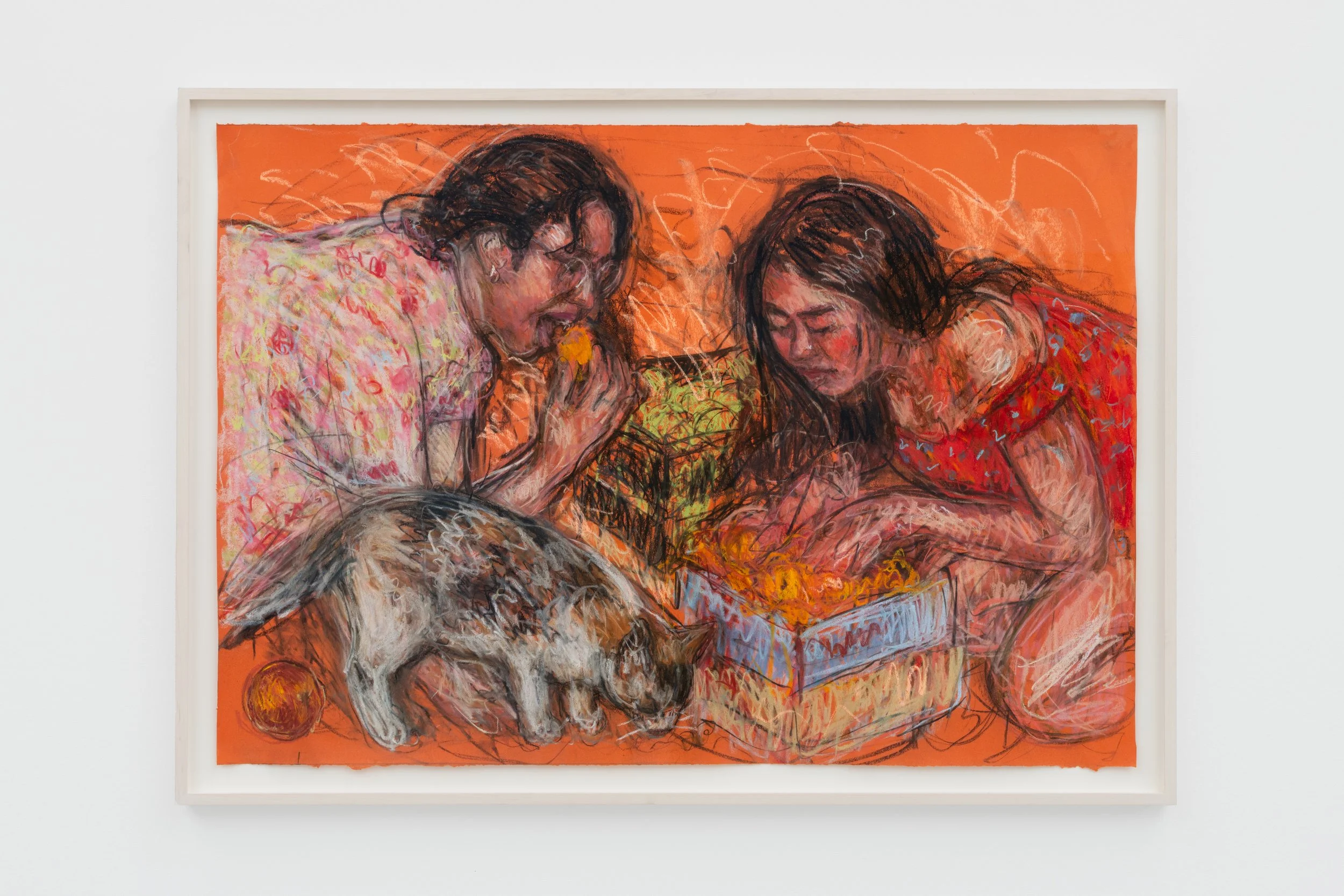
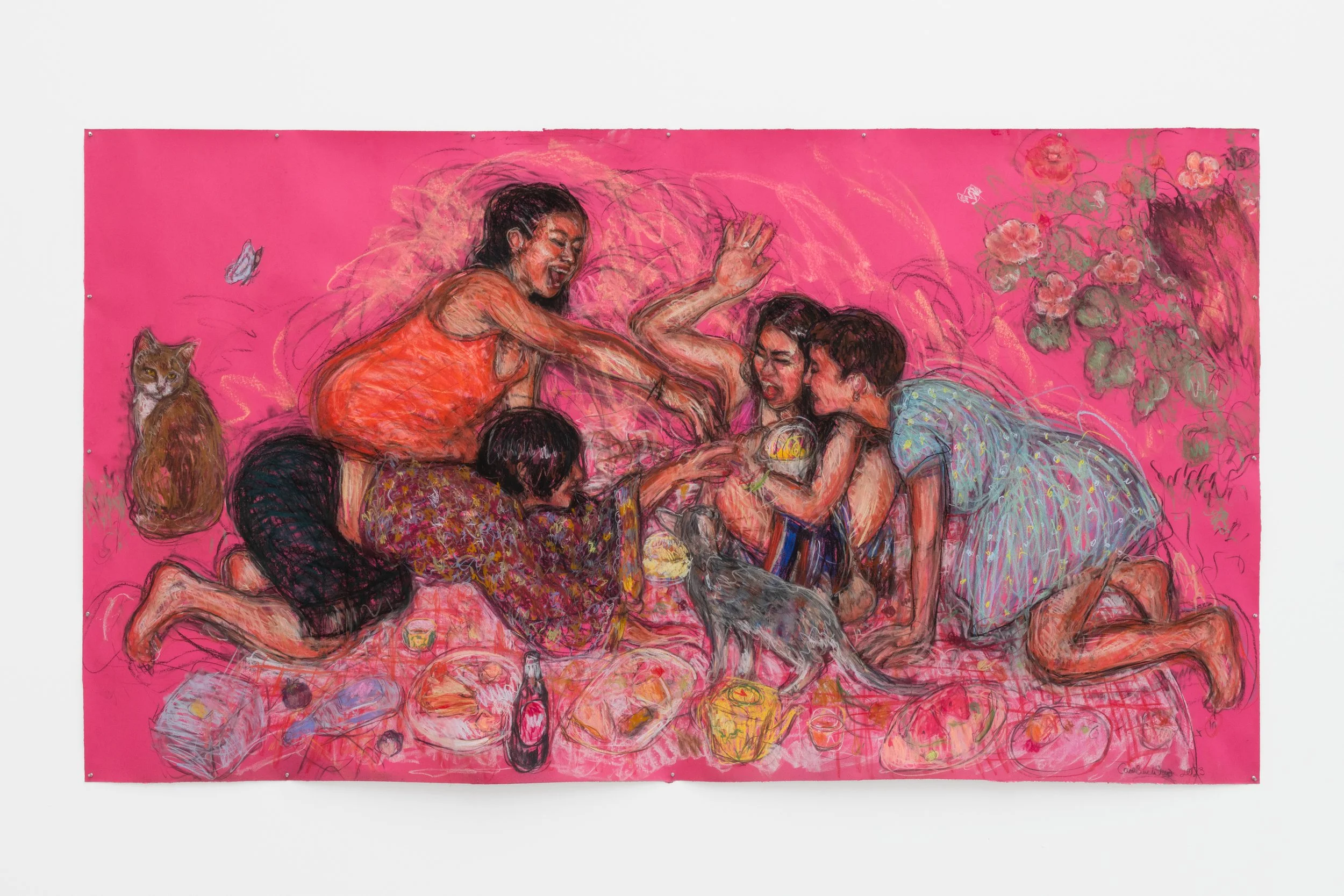
I had turned up to meet Wong with all sorts of heavy questions in my head. I was ready to ask one of Saatchi’s newest artists about the sociological commentary of her works in the midst of what I feel is a turbulent storm for those identifying as female today. Halfway through our conversation, however, I realised I had it all wrong. The British-Malaysian-Chinese artist’s paintings are tactile, immediate and sensuous. Her true intentions are to do with joy, not turmoil. The works exist in a plane of their own, a sort of heaven we are allowed to glimpse into - much more of an escape than I could have imagined. Wong’s artistic mastery creates a bridge between the distressing mess of our own world, and the exuberantly happy messes of hers. They do not converse with any oppression we ascribe onto them; they are too busy having fun.