
The Female Artists Turning Internet Slop into Fine Art
Words: Smizzo
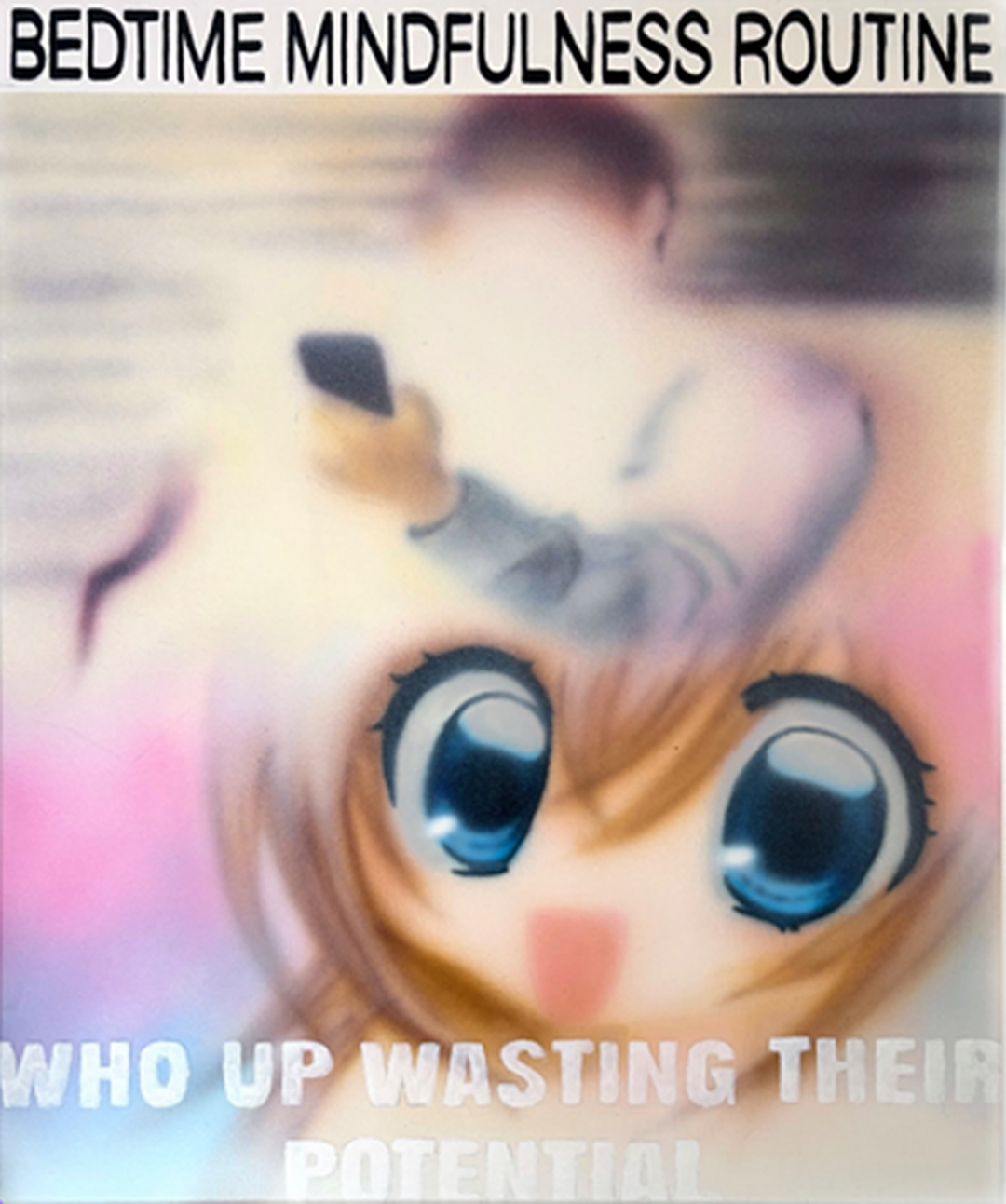
Consumerism, late-stage capitalism, mass marketing and fame — this is the realm of pop art. A movement born in the aftermath of World War II, as both a critique and celebration of commodity culture. But it seems the muse has changed — it’s no longer Campbell’s soup cans and Marilyn Monroe. A new renaissance is emerging, with Gen Z women taking control of the canvas.
Internet and pop culture may be transitory and mass-produced, but they are consumed en masse. In pop art, art imitates life. As culture becomes increasingly shaped by AI slop, meme culture and rage bait, it only makes sense that the muse has changed too. It is late-stage capitalism on canvas. From Trisha Paytas and Bonnie Blue to WhatsApp chickens, we speak to the girls redefining pop art in the age of doomscrolling, virality and collective brain rot.
Sophie Jackson / @sophjcksn
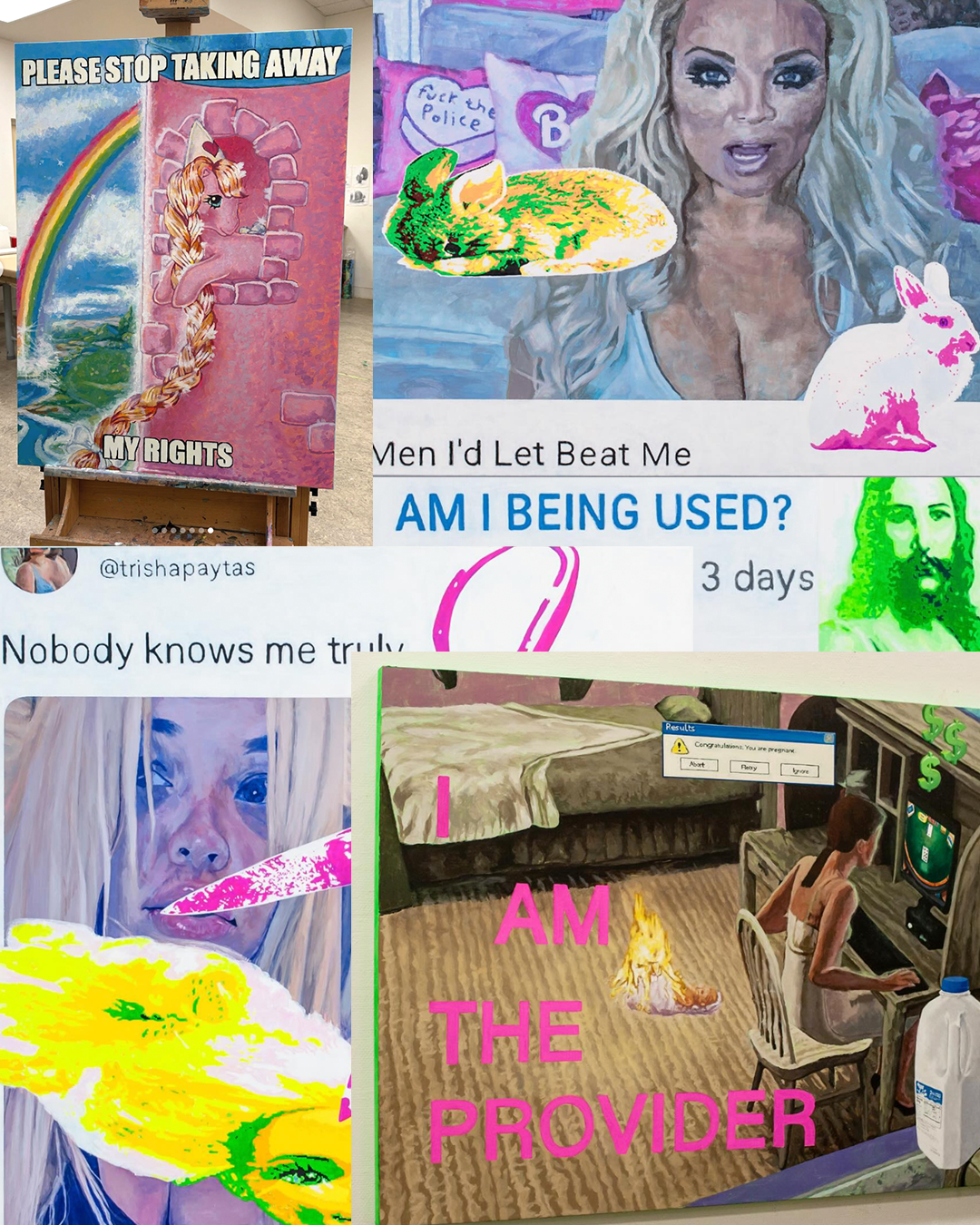
22-year-old Sophie from Victoria creates art that explores personal identity in the post-internet world. Her recent Trisha Paytas trilogy immortalises the influencer’s viral videos and rage-bait titles on canvas.
What drew you to Trisha Paytas as a muse? What does she represent in the digital era?
I see Trisha Paytas as a sacrificial lamb of the internet era - a necessary “evil”. The woman is a professional ragebaiter. There’s a depressing realism to what Trisha talks about, it reveals a deeper underlying subconscious of women as a collective. It’s a yearning for community. I think the internet has cultivated this dynamic, with short-form and clickbait content.
How do you think post-internet culture and Gen Z's consumption shape your approach?
We’re in an era of all-consumption, all the time. I speak for a lot of people when I say I feel a distaste for this lifestyle. It’s impossible to separate yourself from it without going off the grid. Through painting the internet, I aim to bridge the gap between fleeting images and reality. Why are posts online considered “disposable” when digital footprints exist? Likewise, why are physical objects considered “permanent” when they could be destroyed in the blink of an eye? I’m interested in questioning what we consider permanent and temporary. Artists have been documenting the world for millennia. Art history is responsible for why we understand the ancient world. For me, internet content is just as real as a piece of old media. Memes transcend culture, a viral moment can bring communities together.
Has the way we perceive fame changed in online culture?
Fame has become more disposable in recent years. Cancel culture has played a part in this: who we consider notable or impactful can quickly be tarnished. Trisha Paytas, despite all the controversies and “cancellings”, continues to stay relevant, whether through change or because attention spans have shortened. Disposability in the online world has had a huge influence on people’s psychology. That is why I choose the subject matter I do. By turning what “should” be a passing moment into a fixed image through hours of labour, I ask the viewer to reconsider whether online content should be seen as disposable.
Georgia Nielson / @georgianielson
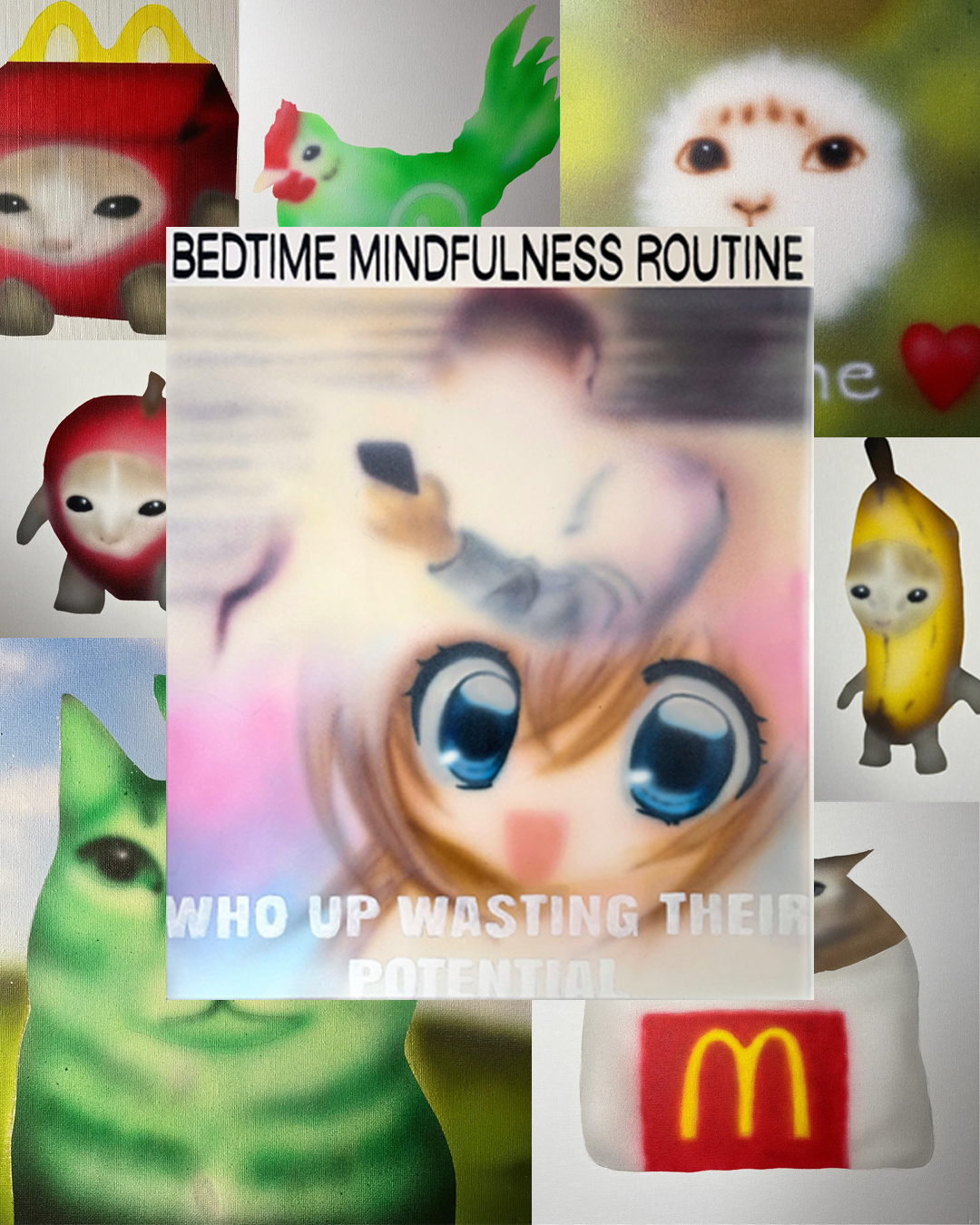
28-year-old Georgia, based in North Wales, uses airbrush to lean into meme culture through paintings of cats, Pokémon and anime icons.
From the WhatsApp chicken to the Happy Meal cat, what draws you to these subjects?
I think it’s just a general refusal to take anything too seriously, the images I paint are generally pretty silly and whimsical, that creates a lot of joy in what I do. When people askme what I do for a living I love being able to respond by saying “I paint stupid pictures of cats”.
How has pop and internet culture shaped your work?
My work is rooted in nostalgia. I spent my teen years on Tumblr and playing MMORPGs, this was in the era where meme culture really started to proliferate. That imagery became like a second language with emoticons and meme reaction images replacing words. A lot of the motifs of those cultures have cropped back up – revisiting that has played a massive part in the subjects I’m interested in.
Where does your work sit for you - satire, critique or something else?
I’m interested in the fast-paced nature of meme culture. A lot of the images we see are disposable, I like being able to monumentalise that. Images are often viewed through doomscrolling and dismissed as brain rot, so taking them out of that context and placing them in a gallery changes their position. I’m interested in merging “high art” with “low culture” aesthetics.
Julia De Rutter / @aloversburden
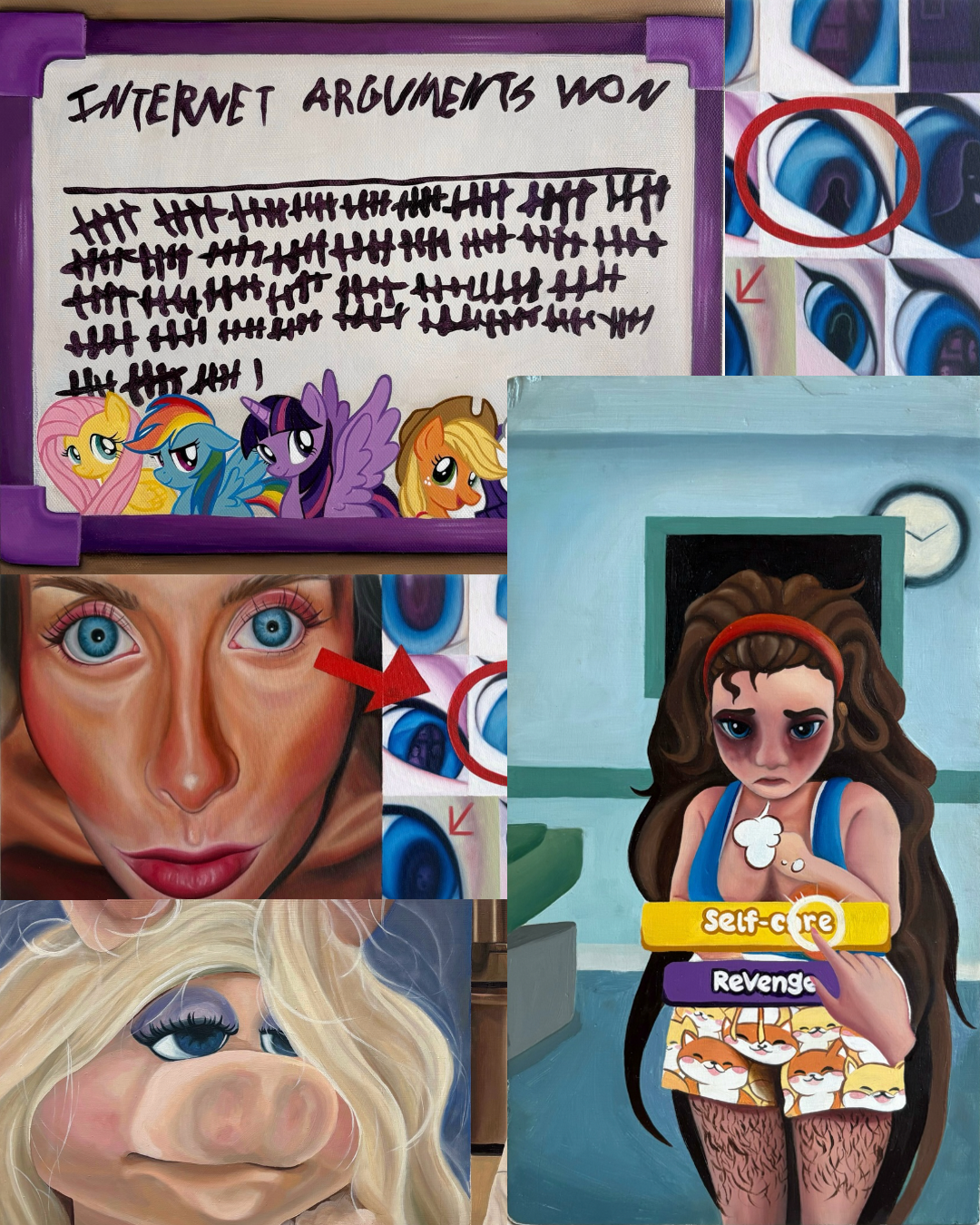
22-year-old Julia, based in Toronto, uses oil paint to immortalise internet chaos, with her latest piece placing Bonnie Blue side by side with Talking Angela.
What inspires your art?
I paint about internet culture, largely about incels, predators, and the manosphere. Like many children growing up in the early 2000's I had unsupervised access to the internet. I turned to online platforms where I was exposed to predators. These men did a lot of things that I didn't realize were not okay for a middle school girl to be exposed to. So my practice largely surrounds these experiences.
What drew you to Bonnie Blue as a muse? What does she represent to you?
I decided that I was going to paint Bonnie Blue after speaking with a family friend who has two younger boys. We spoke about how there needs to be education about porn. It's insanely addictive and can rewire your brain and brews this perfect recipe to create incels and misogynists. Bonnie Blue feeds directly into the harmful ideologies that people in the manosphere promote.
Is there a reason you painted Bonnie and Talking Angela together?
I painted them side by side intentionally. I’ve seen discourse in the comments of TikToks about how Bonnie Blue has “soulless eyes”, that she’s a “succubus”. Alongside the conspiracy that I wholeheartedly believed as a child, that the Talking Angela app had a man that was spying on them through the eyes of Angela. The painting is poking at the fact that Bonnie’s marketing is targeted towards young boys. She operates no differently than misogynists and red pilled incel men, sucking in the impressionable. She functions in tandem with the communities that purchase her content. Is Bonnie Blue controlled by the men who give her a salary? Or the person behind her eyes, who is watching and controlling?