
Cinecism: Tony, The Anthony Bourdain Biopic, As Told By 2011
Words: Maia Wyman

Make it stand out
I just got back from a trip to Cape Cod. We stayed at a friend’s family home in Falmouth, and spent the week driving top-down in a Jeep, getting nipped by crabs, digging for shells, and eating some of the best oysters I’ve ever tried. Reminded by childhood visits to the Canadian Maritimes, I came away enchanted by the Cape’s ramshackle character. Its proudly quaint buildings and unapologetically kitsch nautical paraphernalia were a welcome departure from the manicured fare of many upstate towns I’d been to of late, now hopelessly gentrified by rich city folk.
Matt Johnson’s latest feature, Tony, is also taken by this quality of the Cape. It strolls languidly along the gritty boardwalks and shingled houses of 1970s Provincetown, and happily breathes in the fishy salt air. Watching it, you feel nostalgia for a feeling you never experienced. You are overcome with a sense of gentle warmth. Of cozyness. So much so, that you forget you’re watching a movie about Anthony Bourdain.
Tony is a biopic which opts to portray only a chapter of its subject’s life, as opposed to the “cradle-to-grave” features plaguing our film landscape in recent years. It follows the legendary chef, writer, and travel documentarian during the summer in his college years he spent working his first kitchen job. The film begins with Bourdain (Dominic Sessa), referred to here as “Tony,” getting rejected for a writing fellowship at Vassar college, and instead chasing his crush, Nancy (Emilia Jones) to her summer vacation spot in Provincetown, MA. There, with no money and no prospects, he gets a job working in the kitchen of a fast food restaurant from a chef (Antonio Banderas) who takes pity on him.
If you close your eyes and stop reading, you can probably predict the rest (spoilers abound): Tony experiences tribulations at first but soon wins the respect of his kitchenmates. He gets in too deep with one such kitchenmate, the drug-using, womanising Sal (Leo Woodhall, delivering the best performance of the film), and loses his way.
He lies to the girl, wins her favour, but then the lie is revealed. He lies to the chef, accidentally burns down his restaurant, and then the lie is revealed. Finally, he’s able to hatch a plan so clever and pure-hearted that they are left with no choice but to forgive him. He releases Sal, the embodiment of his inner demons (“sineater”). We end on Tony interviewing for culinary school, where in a final line he reveals to us, with spectacular ham-fistedness, the name we’ve likely forgotten about by this point: “Anthony Bourdain.” (There’s even a “drop the ‘the” moment midway where Chef tells Tony to go by “Anthony”). ___STEADY_PAYWALL___
“Although Tony is a tightly-made film with decent performances and appealing cinematography, its generic trappings smooth over the ridges and bumps, that thorny, imitable magic, we came to love about Anthony Bourdain.”
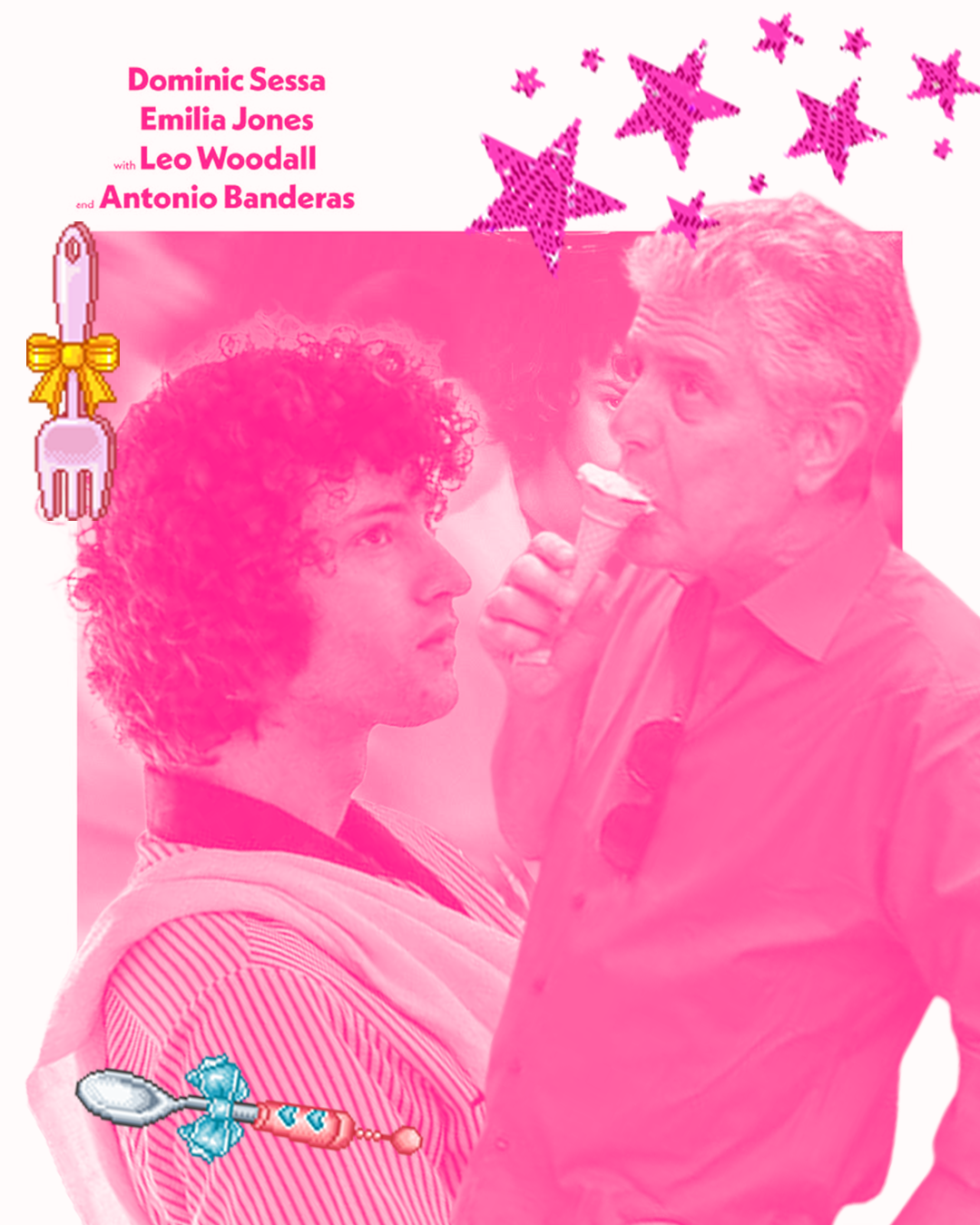
Tony, while enjoyable enough, is a bizarre project. Johnson’s distinct authorship leaves little trace other than the occasional quick zoom and bizarro joke (the jokes got a laugh out of me, to be sure). The score, composed by Johnson’s on and off screen partner-in-crime, Jay McCarroll, is so saccharine it makes your teeth hurt. Even stranger, the film is a paint-by-numbers feel-good indie summer flick based on, of all things, Bourdain’s bestselling 2000 memoir, Kitchen Confidential.
The screenwriters of Tony (Matt Johnson, Matthew Miller, Todd Bartels, and Lou Howe) pitched the film to Bourdain’s estate as “a Provincetown summer coming-of-age story that ends in a clambake.” If you weren’t sure of this, despite Tony’s unmistakably Caulfieldian sensibility, the term “bildungsroman” is referenced repeatedly throughout the film. But Kitchen Confidential is less bildungsroman than whirring joyride atop Bourdain’s hardened shoulders, from which we zoom around the seediest corners of his beloved culinary industry. The screenwriters, however, seem to have ripped one or two pages out of its early chapters and conveniently threw out the rest.
Of course, to place the focus on Bourdain’s troubled later years, which culminated in his suicide at age 61, could veer towards the exploitative. But Tony, which smudges most of the facts from Bourdain’s summers in Provincetown with liberal vigor, doesn’t seem all too interested even in the part of its subjects’ life that it does depict.
Artistic liberties are almost essential to the biopic. What few greats you can pick out from a trough of gormless middlebrow slop are full of creative deviations that lend to a more compelling narrative structure. But the liberties taken in Tony, the inciting incident, all of the characters in the kitchen, the contrived climax with the fire, and the ending with the clambake, bear so little resemblance even to the short chapter they were pulled from, one has to wonder why the filmmakers felt the need to attach Bourdain’s name to the project at all. With a flat female love interest whose charm is entirely derived from how bro-like she is, and several montages of the men in the kitchen making dick jokes and throwing lobsters at one another, the film comes across as a hybrid between that special brand of new age dude food porn wishfulfillment popularised by The Bear, and a twee 2011 coming of age movie - the film equivalent to what my friend calls “lens flare music”.
Aside from a moment in the book where he foolishly peacocks to the no-nonsense crew of a P-Town kitchen and is exposed as an “obnoxious pretender,” the real Bourdain was largely outspoken, beguiling, and self-assured. He was a force to be reckoned with who moved through environments with a no frills sensuality. Tony’s Bourdain, however, is a snivelling, shrinking violet, superglued to a remark from Kitchen Confidential that Bourdain had been in his youth a “spoiled, miserable, narcissistic, self-destructive and thoughtless young lout.”
Sessa does his best with what little interiority the character is given, but is left mostly to glower, stomp around like a newborn calf, and gaze upon his crush with school shooter-esque intensity. Biopics that depict a portion of a life still have the task of capturing the essence of their subject. But in its bid for universality, the film takes a Bourdain who, due to his youth, lacks that special sauce that made him who he was. The Anthony Bourdain of Tony is so half-formed and affixed to archetype, that the spirit of Bourdain barely comes out at all.
Bourdain was a blazing star in the constellation of public life. His voice, transmitted through numerous books and food travel shows, was at once glib, brutally honest, hilarious, and tender. He had a proclivity towards the unsung, the outcast, and the subaltern. In his later career he grappled with his own celebrity and its suffocating effect on not only himself, but the tiny unknown restaurants he chose to spotlight. To have this voice silenced so early was, to many, nothing short of a tragedy. Although Tony is a tightly-made film with decent performances and appealing cinematography, its generic trappings smooth over the ridges and bumps, that thorny, imitable magic, we came to love about Anthony Bourdain. The oyster remains unshucked.