
From Ninajirachi to Oklou: Excavating the Girl EDM Genre
Words: Zara Dosanjh
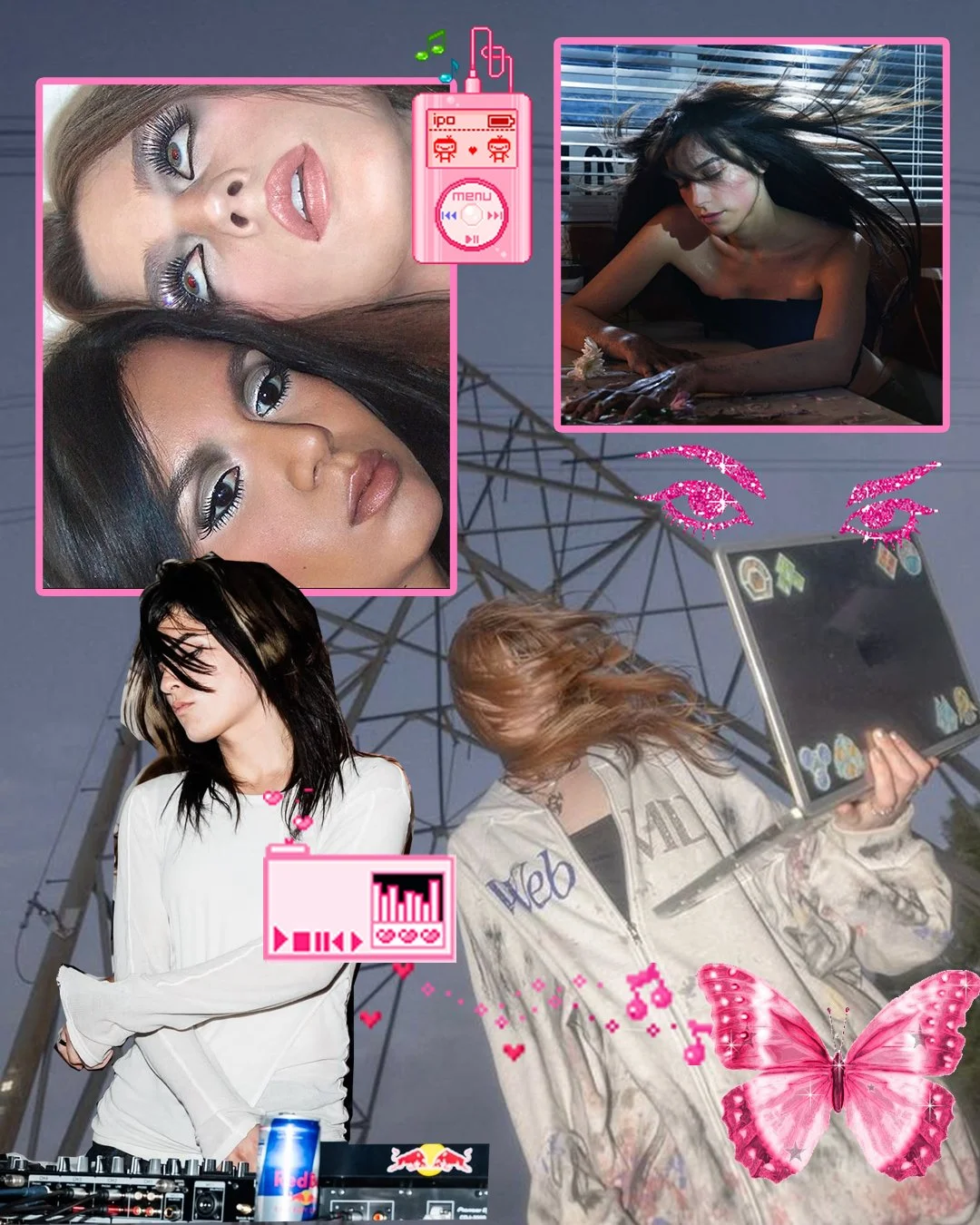
Say the word “EDM” to most people and you’ll be instantly swung back to the 2010s, a landmine of light-up laser shows, party favours, heavy bass and wobbling synths. EDM (short for electronic dance music) has pulsed through pop culture for two decades, exploding in the 2010s alongside a boom in festival culture. Now, in 2026, women and non-binary DJs, producers and musicians are driving its re-emergence.
In an interview with EDM.com, Australian producer and DJ Ninajirachi noted: “There are girls and EDM and there is girl EDM… Cat ears, furry paws, Angel Music, headphones on world off, sci-fi fantasy, ren-fair cosplay, windows down, hands in the air, Nintendo 3DS, at the beach until the sun sets… The next step in evolution and a window to the soul.”
girl EDM is the title of Ninajirachi’s critically acclaimed 2024 EP, but it’s also an apt cultural signifier for a scene increasingly led by women and non-conforming artists, bound by a style that’s computerised, energised and fluid in technological femininity. It is music that’s brash and unapologetic, resting on an architecture of vibrant and internet-native subcultures rooted in hyperpop, electropop and dance music. It’s a space women and non-binary musicians such as Ninajirachi, underscores, Oklou, MGNA Crrrta and Jane Remover, among others, have steadfastly carved out for themselves. These artists have redefined what EDM and femininity mean in the digital age, at the tail end of post-pandemic party culture and 2010s nostalgia.
___STEADY_PAYWALL___
“Girl EDM is not gentle or light but breaks the mould of femininity in music and offers something revolutionary and inherent to modern existence all at once.”
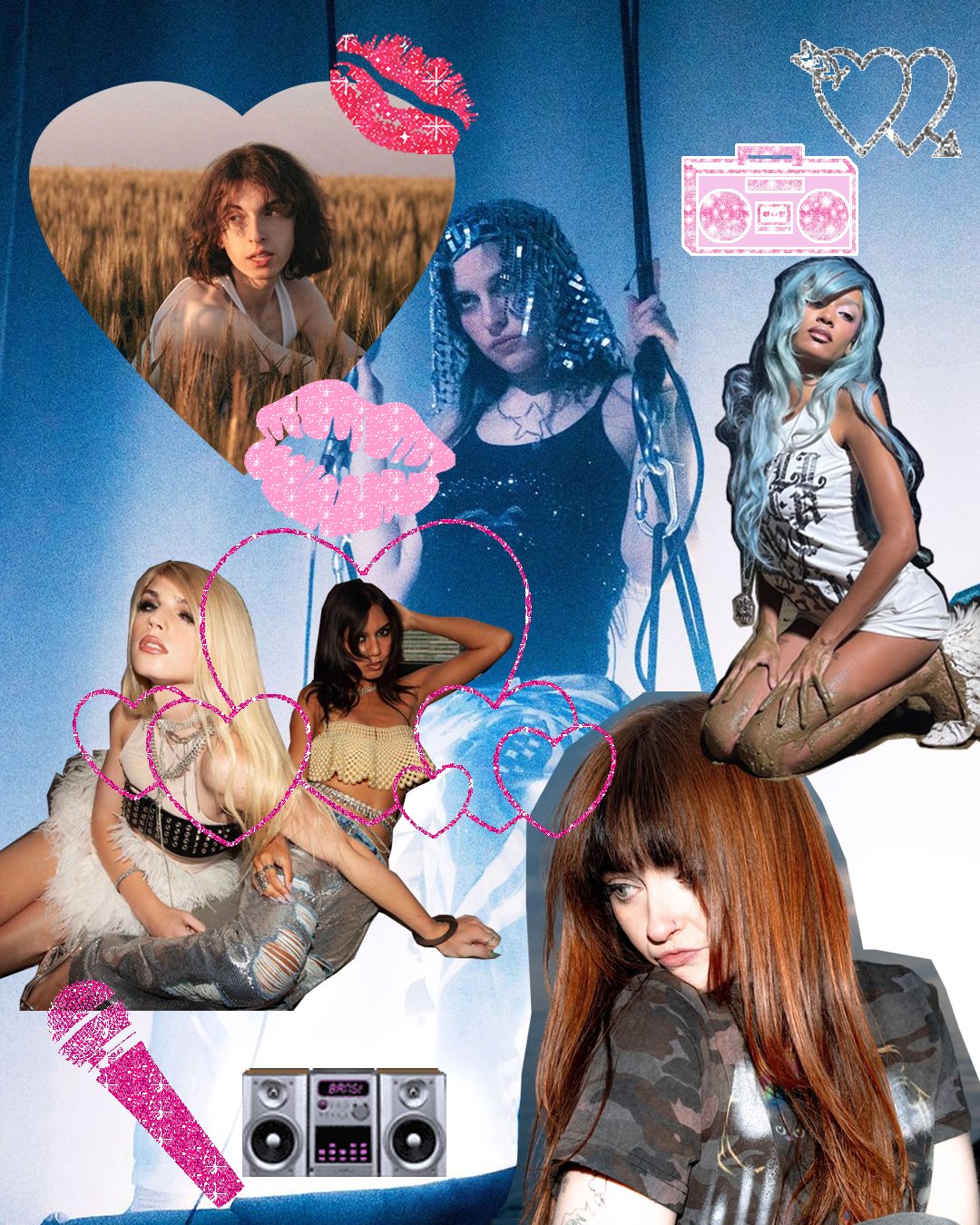
Girl EDM captures the thrashing hum of modern existence in a way other music forms can’t. Take Ninajirachi’s “F*ck My Computer,” or underscores’ “Music” – both songs function as love letters to machine-built sound, an inverse of traditional tender acoustics that fail to capture the intensity of a world spinning beyond control. In his essay Disco as an Operating System, critic Tan Lin describes disco as something absorbed rather than heard, a programming language that’s “passively absorbed by a brain connected to a dancing body.”
Girl EDM, in a way, loops disco back to the 2020s, peeling back its synth-heavy programming language and releasing it back onto the dancefloor. What femininity means, beyond or in between, in 2026 is neatly articulated by these electronic artists. Girl EDM is not gentle or light but breaks the mould of femininity in music and offers something revolutionary and inherent to modern existence all at once.
Now almost two decades ago, the scene in the 2010s was undeniably male-centred. David Guetta, Marshmello, Calvin Harris, Skrillex and the late Avicii were some of the key players on the field, names that still spur a reaction a decade on. EDM quickly became a money-making affair; SFX Entertainment was a major EDM conglomerate during its cultural takeover, publicly valued at over $1 billion in 2013 before filing for bankruptcy in 2016.
Writing for Pitchfork in 2019, Noah Yoo traces EDM artists’ popularity, such as Skrillex, alongside the explosive popularity of subgenres like “brostep,” a chaotic amalgamation of styles that Skrillex helped popularise and which culture quickly branded as EDM. Yoo’s account of EDM in the 2010s is thorough, but makes one thing painfully clear about the time: it was all about men.
Women were not entirely absent in the 2010s – they’re just not well-remembered. Ellie Goulding remains one of the era’s most famed vocalists with hits such as “I Need Your Love” with Calvin Harris, while Alison Wonderland was the highest-billed female DJ at Coachella in 2018. Yet, a persistent bro culture sidelined women from the technical side of music, as many tech-heavy industries are guilty of, and kept many artists from becoming household names.
This imbalance persists: only 25% of festival line-ups include women DJs according to VYBZ Academy, and according to a 2019 study by the University of Portsmouth, women make up less than 10% of DJs and just 5% of recognised electronic music producers.
The summer of 2026 offers a neat inverse of 2016: EDM has bubbled to the surface once more, but the names and faces behind the music have changed. Built on the dust of the 2010s, the girl EDM renaissance has fleshed out a space for self-expression beyond corners of the internet, with all the sleaze and messiness that comes with it.
In Ninajirachi’s words, girl EDM is femininity evolved, still evolving, and thankfully refreshingly different from the trad-wife modes of femininity that swept the internet just a couple of years ago.
EDM is euphoric by nature. It offers release through pulsing beats, choppy synths, waves of machine-built and human-crafted sound, exactly the music the 2010s begged for, and the 2020s are pushing to return.
While euphoria, queerness and womanhood are synonymous with one another, EDM raves and festivals are no longer the pinnacle of bro culture – Ninajirachi and Oklou played All Points East in London this year, a sign girl EDM is reaching across the mainstream and crafting actualised spaces where women and non-binary people can connect with the music, the crowd, and the artists taking the stage, and finally see and be themselves.