Culture Slut: Is Jennifer Lawrence the Greatest Actress of Her Generation?
Words: Misha MN
Kids, Mama is on her way home, and she’s gonna take care of us all! Jennifer Lawrence, the star, the diva, the mother is back! Kind of. Maybe.
I have to say, I was never a Jennifer Lawrence girly. I was slightly too old for The Hunger Games (2012), never saw any of her David O. Russell collaborations like Silver Linings Playbook (2012) or Joy (2015), and I wasn’t a fan of her brand of overly-relatable goofy-girl-makes-it-big celebrity persona. I prefer my stars to be glamorously untouchable and unknowable, somewhere between Recluse Garbo and Cannibal Kidman. I did, however, love Mother! (2017) - a controversial opinion, will revisit later - and her charisma has always been magnetic (hello Hot Ones), so I was excited to see Jennifer make her big cinematic comeback with a weighty character-driven showcase like Die My Love (2025). Co-written and directed by Lynne Ramsay (We Need To Talk About Kevin (2011) is a masterpiece), Die My Love is a psychological drama about a woman experiencing severe post-partum depression and psychosis in rural Montana, and I… did not like it very much.
Jennifer Lawrence looks radiant, and is charmingly endearing at the beginning of the film where it matters most, establishing a strong relationship with the viewer that will keep us present during the painful struggles she will no doubt go through later. Robert Pattinson plays her husband, and to be honest I really don’t think I like him either. I’ve not engaged much with his work other than the first and last installments of the Twilight franchise, but based on Die My Love, it doesn’t look like I'm missing much. His bad-boyfriend-buffoonery makes for a frustrating character (intentional), but he lacks any moments of genuine connection that makes you think oh, he does love and care for her, she should definitely stay with him. Sissy Spacek makes a memorable turn as an elderly mother-in-law, recently widowed and prone to sleepwalking with a loaded gun, and is a definite highlight in a film that ultimately feels reductive and sluggish.
___STEADY_PAYWALL___
Now, I have never experienced postpartum, so I cannot speak to the accuracy of the actual feelings of the film, but I can see the obvious parallels to earlier cinema and its attempts to build on what worked in those more successful films. Firstly, we jump around in the timeline a fair bit, a Ramsay trick which really paid off in We Need To Talk About Kevin, but just feels confusing here. The isolated rural setting brings Mother! to mind, but also for me, Lars Von Trier’s Antichrist (2009); either way, the message is clear: couples in complicated relationships should stay in cities, not in run down houses in the middle of nowhere. The call of the woods, the rivers, the cliff-edges are just too much, ask Charlotte Gainsbourg, Virginia Woolf, Ms Melancholia, anyone who has ever had to struggle through an emotional purgatory.
“Did I just not like Jennifer Lawrence? I wanted to, I thought that I did, or at least would. No, I know that I did, because I had just watched what I think of now as her greatest film performance, Darren Aronofsky’s Mother!”
The film that one can clearly see as the main inspiration for this story and Lawrence’s performance is A Woman Under The Influence, the 1974 John Cassavetes classic starring Gena Rowlands, widely touted as one of the best actresses of the twentieth century. Rowlands plays a housewife and mother who clearly suffers with some kind of mental health disorder, but she struggles through her day-to-day life and self destructive ideations until her rough-but-caring husband has her committed to hospital. After her treatment is over, she returns home and we watch with baited breath as she gingerly tries to settle back into her own home, knowing that it could all go wrong at the slightest problem. It's painful, hopeful, doomed, and most importantly, real, so real that you feel sick throughout most of the runtime, but in a gripping way. You can’t look away from these characters because you need to know they will be alright in the end, even though they clearly won’t.
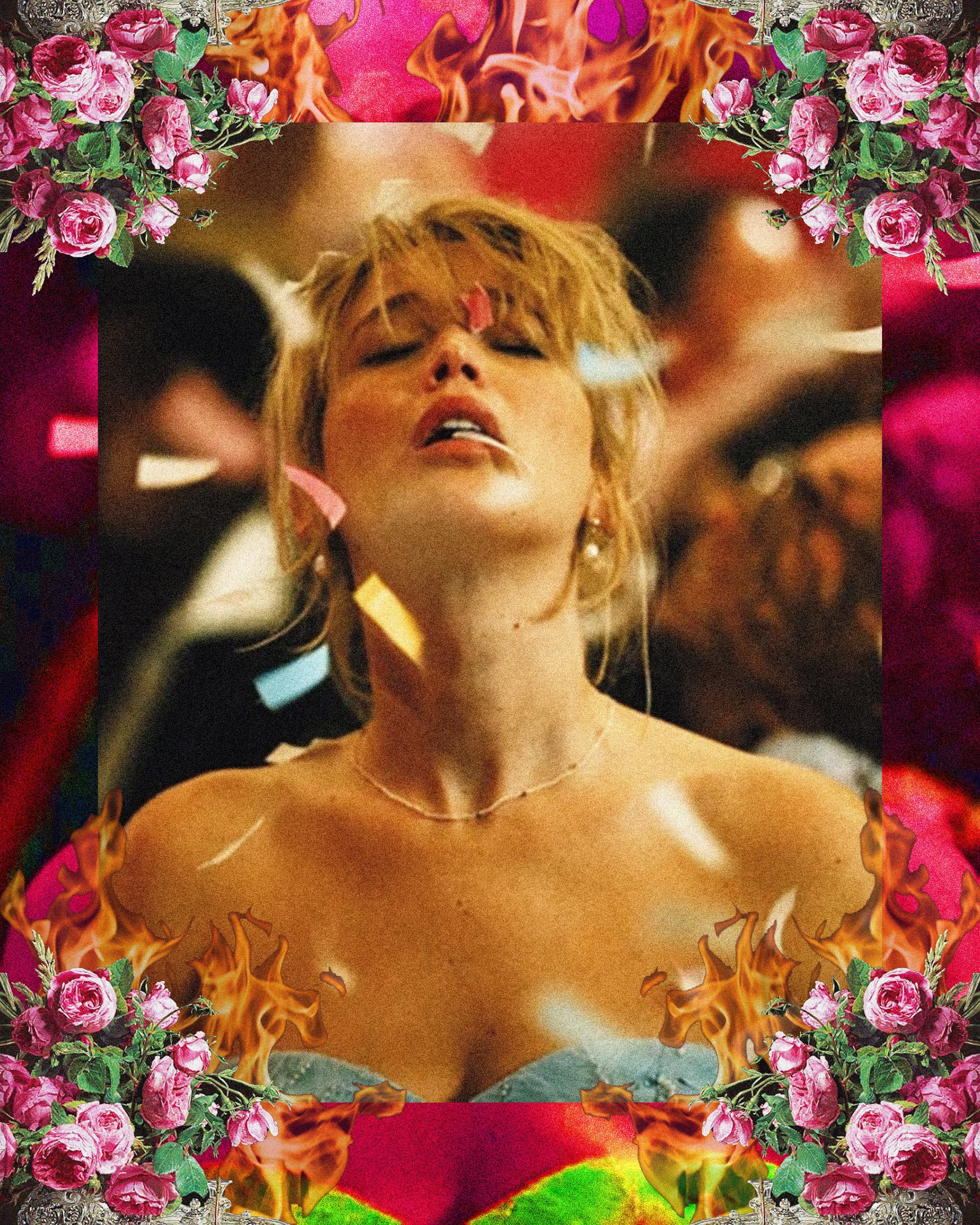
Lawrence treads many of the same beats, but with a veneer of Hollywood artifice that really prevents the audience from truly getting in. I didn’t have many preconceptions about Lawrence going into this film, I don’t think of her as Katniss, as Mystique, or any other role, but still, I could only see her as Jennifer Lawrence. Her hair is perfectly blonde and tousled, she wears an array of lovely summer dresses and skimpy underwear, she's sexy and full of confident desire, but in a way that almost feels male gaze-y. I’ve lived with women who had recently given birth, and, to my (admittedly limited) knowledge, they never walked around with arched backs in thongs with their tits out. Even her dramatic final scene (spoiler) involves her taking off all of her clothes to boldly walk into some CGI fire, a moment that aimed for The VVitch (2015), but ended up more like a Shakira music video. All this is so confusing to me, because Lynne Ramsay is obviously a great female director, not a porny sleaze-meister, so is this misogynistic reading coming from me? Is the crazy-woman-too-sexy-to-live trope rearing its ugly head here? Is Jennifer Lawrence just too hot? Who knows. I did, however, enjoy the moment when she threw herself through a plate glass door for attention, I felt like I could relate to that level of self destruction.
I felt relief when the film finished, but also conflicted. Did I just not like Jennifer Lawrence? I wanted to, I thought that I did, or at least would. No, I know that I did, because I had just watched what I think of now as her greatest film performance, Darren Aronofsky’s Mother!
Over the Christmas period, I had found myself seeking out some non-traditional holiday films, and I had a truly great time. From the heart-fluttering doomed department store romance of Carol, to the New York December party orgies of Eyes Wide Shut (1999), and the anti-capitalist Christmas capers of the world’s greatest Catwoman performance from Michelle Pfeiffer in Batman Returns (1992). I got my fill of tinsel, snow and holiday angst in the most satisfying way possible. And then I revisited Mother!. Arguably, it’s a great Christmas film, from its religious allegory to the gnawing feeling of social anxiety into a full blown apocalyptic panic attack. What could be more appropriate during a season of forcibly-jolly socialisation and accommodating estranged family members in your own house when all you want to do is be alone and get on with your own life?
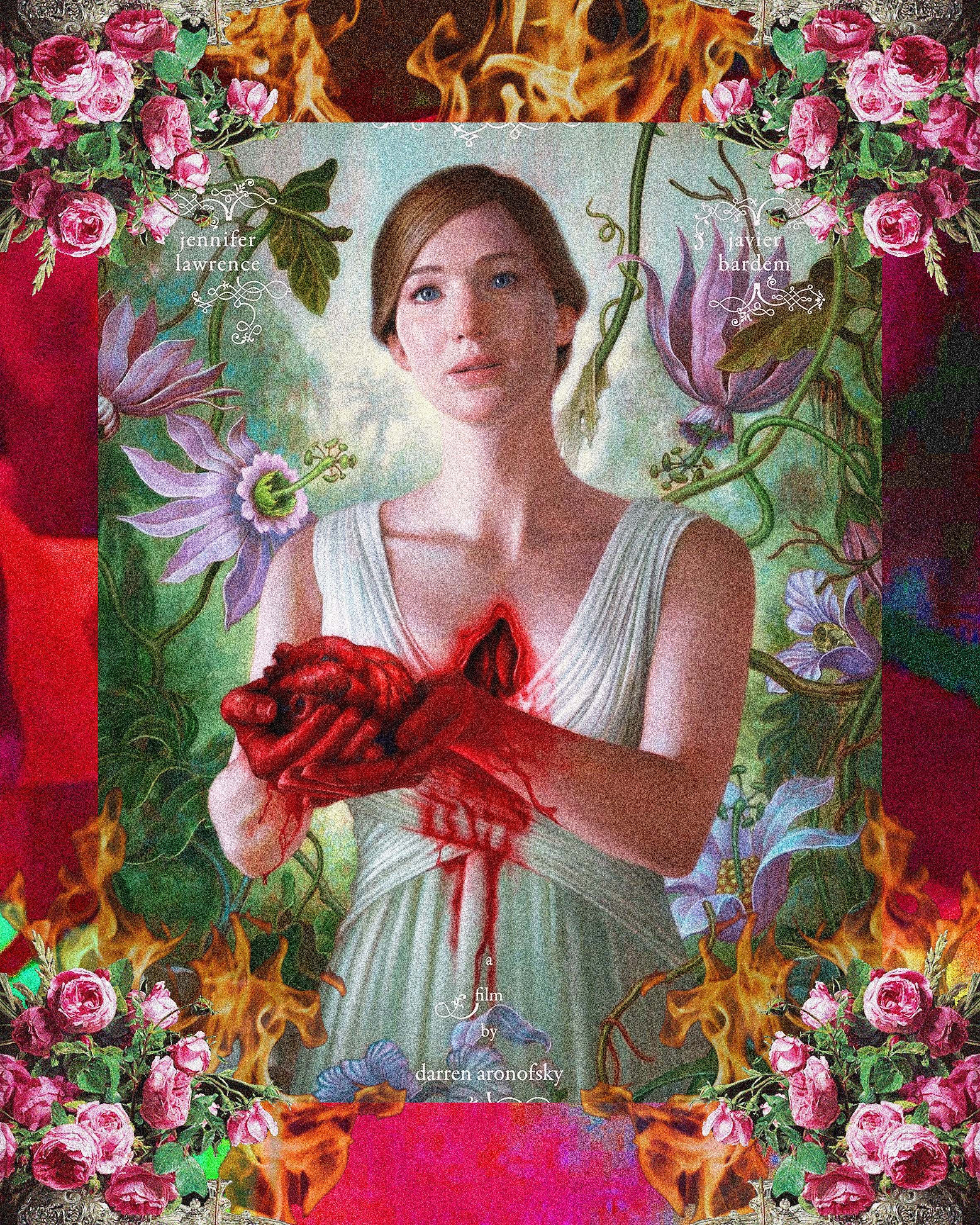
Mother! has no named characters, it works in allegory and archetypes. Lawrence wakes alone in a house undergoing renovations, a work in progress, and walks around until she finds her husband, a poet who is struggling to create. Lawrence, the titular mother (though not quite yet), is the earth, whereas her husband is the God of Genesis and the Bible. The roles of Mother Earth and Father Sky are as old as religion itself, from Navajo beliefs to the ancient Greek primordial deities Gaia and Uranus. Here, we see Lawrence working on the house, building her environment, whilst her husband, played by Javier Bardem, lies in stasis, impotent and lost, until one day a man is introduced into their empty paradise. Lawrence is wary, but Bardem welcomes him freely, and soon they are joined by the man’s wife. This is clearly Adam and Eve living in the garden of Eden, a parallel further compounded by the wife’s curiosity getting the better of her and venturing into Bardem’s office where she breaks a precious object, causing the pair of them to be expelled from the house and Bardem to barricade the room.
Later, the couple’s family arrive, two warring sons that end up in a deadly brawl (Cain and Abel), which brings more and more visitors to the house as they pay their respects to the grieving parents and thanking Bardem for his continued hospitality. Lawrence struggles with the accommodations, her house is being destroyed by these interlopers and she can’t handle the pressure and the disrespect she receives. Eventually, she breaks a water pipe and floods her own kitchen (The Great Flood, Genesis chapters 6-9, where the wicked are wiped out by natural disasters), causing everyone to leave, so she and Bardem can regain their state of paradise.
The second half of the film ratchets up the tension as Lawrence becomes pregnant and Bardem releases his greatest poem yet (The Bible), something which causes new struggles as the pair get besieged by rabid fans (blind followers) and sinister professionals (corrupting church officials). The home becomes a literal battleground, where parties rage, fights break out, terrorists are executed, bombs go off, all in the name of the poet and the crowd’s blind love for him. The house, and by extension Lawrence are trampled, neglected, attacked, left for dead, until it comes time for her to give birth. Bardem takes care of her during her labour, but she no longer trusts him and refuses to give him the baby. We, the audience, know what is going to happen (if you’ve been paying attention), and so does she. Bardem, the Poet, is God. This child is his son. Bardem wants to give his son to the baying crowd as a gesture of his love and power, and Lawrence knows that it can’t end well. It doesn’t. The film ends with Lawrence finding the crowd eating the mutilated corpse of her son (no Catholic miracle of Transubstantiation here), so she causes an oil fire that becomes an inferno that wipes out the entire house and everyone in it, a true armageddon.
Lawrence’s performance is jaw-dropping. She carries the film on her shoulders, sometimes literally, through its use of extended tracking shots as the camera follows her running through the corridors of her disintegrating home. She is vulnerable, she is loving, she is powerful, she is distrustful, she is hopeful, she is real. In a film that becomes highly stylised and anarchic, she maintains a groundedness that keeps a feeling of authenticity that makes it frightening. You don’t know why these things are happening, and neither does she, all you can do is fear for her safety. Aronofsky’s obsessive close ups and long takes focus only on Lawrence’s face, or the back of her head, with much of the true action and horror happening in the background. It’s claustrophobic, it’s suffocating, it's a full blown panic-attack of a film. Her performance is understated yet totally devastating, natural in the most powerful of ways, completely unlike her most recent film. Here, the script gives her space to exist, rather than the drama school crazy-woman exercise that is Die My Love.
Mother! was critically divisive when it first came out, with many hating its over-the-top production, the lack of concrete answers to the questions it posed, and shocking violence. I liked it when I first saw it nearly a decade ago, but after my recent rewatch, I loved it. In our era of constant televised violence, media focus on infant death in war, totalitarian regimes working on seemingly arbitrary religious assumptions, and our continued climate crisis, Mother! is more relevant now than ever before. Lawrence is the only actor that could have pulled it off. Her familiarity both comforts and frightens the viewer in ways unique to her celebrity persona. Jennifer Lawrence is the star. Jennifer Lawrence is the earth. Jennifer Lawrence is Mother!