
Culture Slut: An Ode to Shirley Bassey
Words: Misha MN
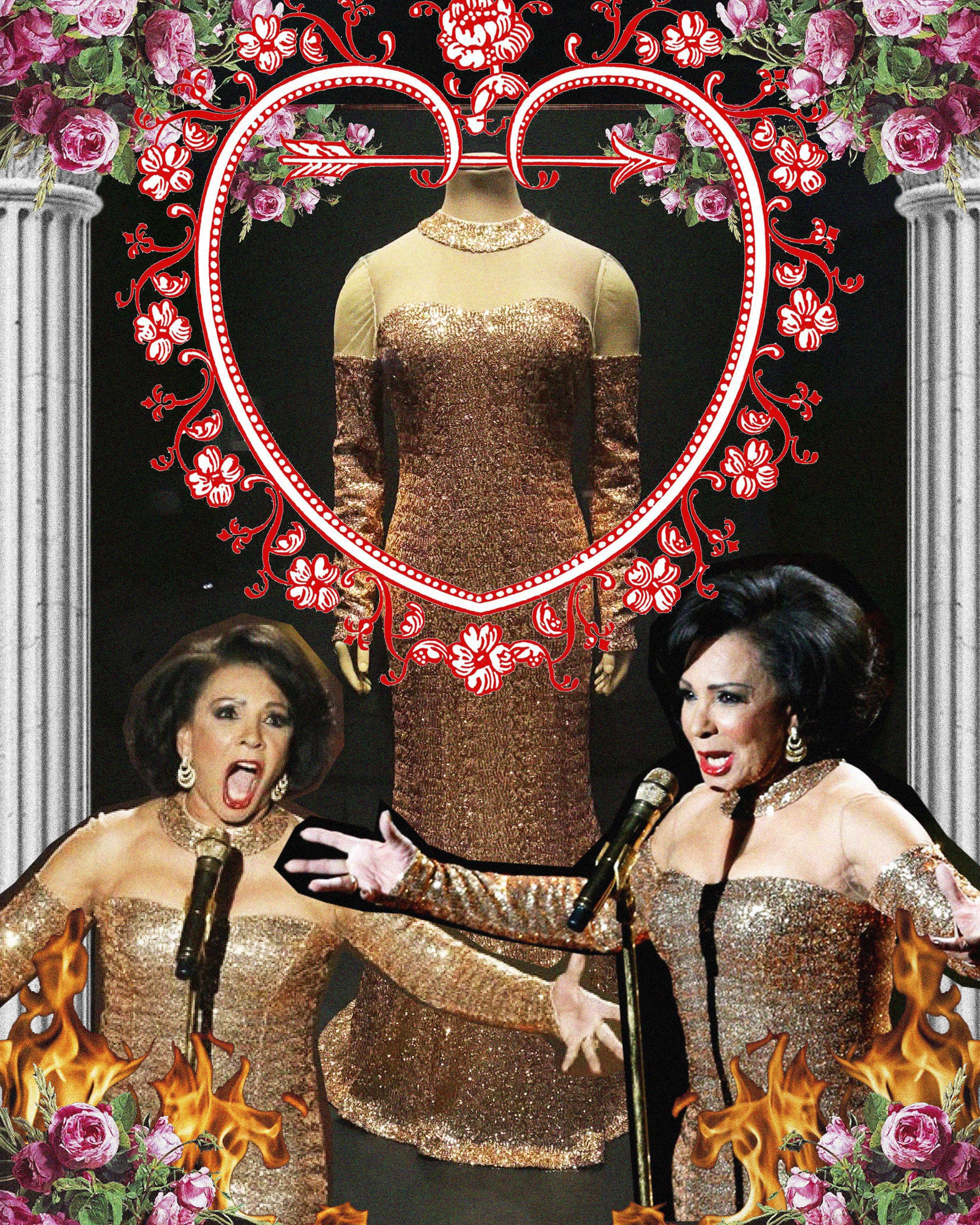
I love Shirley Bassey. I love everything she has ever done, every song she has sung, every gown she has worn. I have loved her at every age, from her 1950s records to her septuagenarian performance at Glastonbury and beyond. Her songs are my go-to karaoke numbers (I Who Have Nothing or This Is My Life), and my friends have heard me belt them out thousands of times. I have a lifesize cardboard cutout of her in my bedroom, which sometimes ends up in the background of intimate photos that get shared on grindr, leading to awkward questions. I have a grand memoriam playlist of my favourite Bassey songs ready to go the second she exits this mortal coil, and my heart leaps into my throat every time I scroll past a black and white photo of her on instagram, terrified that this might be the day my world ends. Where other people have Beyonce, Britney and Sabrina Carpenter, I have Shirley Bassey.
Recently, I had the opportunity to go to V&A East, the newest branch of the Victoria and Albert Museum, and see the incredible exhibition The Music is Black: A British Story, and in depth look a black British music and its place in the cultural zeitgeist. The objects presented painted an enveloping and poignant story, starting with the earliest instruments discovered in Africa, through to the Atlantic Slave Trade and the arrival of African music in Britain. From 1920s Jazz we move through to 1950s Big Band music, and then again to the pop explosion of the 60s, leading to the genres we all recognise today, not just Reggae and Dub, but the uniquely British creations like Lovers Rock, Brit Funk, Trip Hop and Grime. To my excitement, one of the pieces they had on display (amongst a whole slew of icons and trailblazers) was the glittering gold gown that Bassey wore to perform at the 2013 Oscars, and I found myself getting lost in the intricacies of the sequins and in the history of the star herself.
Shirley Bassey was born in 1937 in Tiger Bay (rebranded as Cardiff Bay in the 1990s by developers looking to shift the rough reputation of the docks) to an English mother and a Nigerian father. She left school at 14 to work in a factory and sing in pubs in the evenings. She went professional as early as 1953 at the age of 16, and in 1959 she became the first ever Welsh person to have a number one hit on the UK Singles Charts.
During a conversation with assistant curator Josephine Small, I asked how important Basey’s blackness was to the creation of her legacy; “Growing up in Wales in the mid-20th century, her whole experience would be so informed by the fact that she is black and was surrounded in a majority white community. Across Britain we have riots and racist violence, it's something that was a very real issue for people to grapple with and to try and live their lives around. For Shirley Bassey I think it's so important and special for us to be able to have her here, not just because she's an incredible, iconic performer, but also that she is a black woman from Wales at the heart of it, and we're really celebrating that.”
___STEADY_PAYWALL___
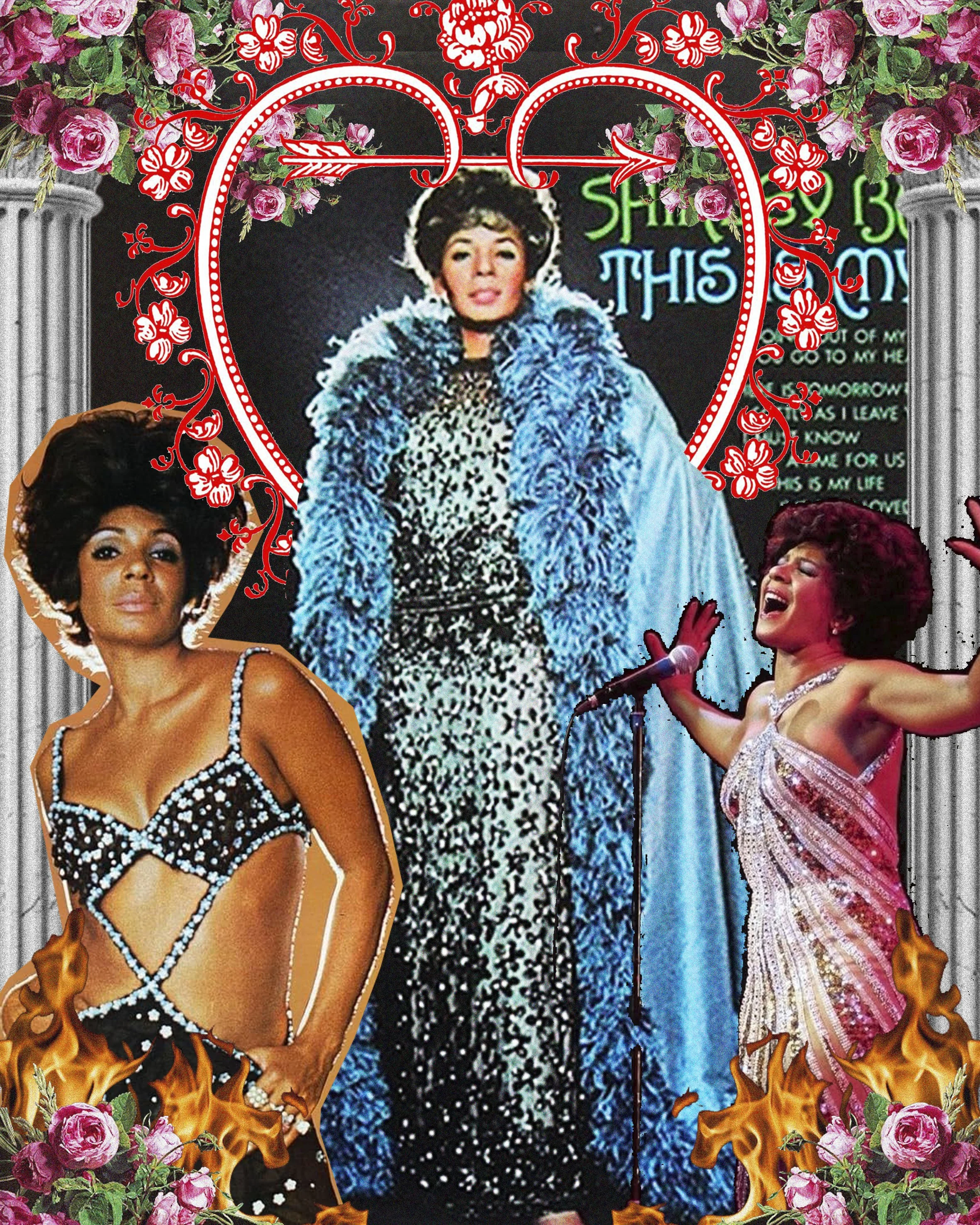
Shirley Bassey has been a family favourite for decades, from her grand cinematic James Bond themes (the only artist to have sung for the franchise more than once) to her shamelessly sparkly glamour, and the remarkable longevity of her career is a testament to her mainstream acceptance. What I love most about her though, is her unique appeal to queer audiences. Bassey’s back catalogue is understandably huge with hit singles that span over six decades (something for the Taylor Swift gays that love to obssess over chart statistics to chew on), but within that we can find the characters that Bassey is constantly drawn to, and who her persona has become aligned with. Behind the more frothy pop sounds of Kiss Me, Honey Honey, Kiss Me and As I Love You, we find that classic Bassey strength in her ballads.
“Just as she weaves through the story of black British music itself, Bassey is an instrument through which we can see where we have come from, and where we have yet to go”
1960 sees Bassey release As Long As He Needs Me, the doomed love song Nancy sings in Oliver! about her abusive husband, as well as The Party’s Over, a wistful lament for an unrequited romance. I Who Have Nothing is a desperate attempt to win a man who is clearly interested in someone else, and What Now My Love is an absolutely distraught cry for help in an increasingly lonely world. Bassey emerges as a strong romantic figure with buckets of heartache to go around, something many closeted (and non-closeted) queer people would have easily been able to identify with. Who else knows the pain of watching someone you love choose someone who they can openly take to clubs and restaurants when you, undesirable (and illegal) creature that you are, can only watch them from afar, nose pressed up against the window pane? This throughline of pain (geddit?) paints Bassey as a tragic heroine and thus places her in such hallowed company as Judy Garland, Janis Joplin and Maria Callas, the only difference being that Bassey is still alive and kicking at almost 90 years old.
In tracking the career of Shirley Bassey and seeing her succeed in spaces not yet known for their racial diversity (the UK Singles Chart, the Royal Variety Show, the BBC where she hosted two series of The Shirley Bassey Show), I am reminded of the incredible American opera singer Leontyne Price. Born ten years before Bassey, Price came from segregated Mississippi and managed to carve out a place for herself in the famously white world of opera, becoming a recognised star of La Scala, Vienna, London, everywhere. Starting in the 1940s and coming to prominence in the 50s, Price broke barriers in America the same way Bassey would do in Britain. We can’t talk about global superstars like Whitney Huouston, Tina Turner and Beyonce without acknowledging the black divas that broke the ground before them, the stars who proved to music directors and record labels and TV executives that black women could command audience attention and enter into the mainstream.
Bassey’s voice is her most important quality, it is powerful, resonant, moving, but she never scrimped on her visuals. Her glamour is as legendary as her longevity, arriving to perform at Glastonbury by helicopter and stomping around in rhinestone-encrusted wellies and a full length sequin gown, or emerging from glittering stagelights wrapped in huge feather boas and chiffon capes on low quality television specials. It is this quality which is so often imitated by drag queens when they wish to evoke Dame Shirley. That longing for glamour is partly what endears Bassey to her queer audiences; you can be drab as anything, you can be working at an office, or a supermarket, or down the Welsh mines, but when you go home and listen to that Bassey record, you can be enveloped by the very glitter she seems to exhale. Josephine Small said that “She was never afraid to show her flare, and exploring a performer’s aesthetic is a huge part of this exhibition. What they wear impacts how the fans dress, like with Two Tone, how fans started raiding charity shops for 1940s suits and Jamaican Rude Boy style. It's an interesting way to explore the whole culture of sound, not just sound itself.”
Having listened to almost all of Shirley Bassey’s discography, some albums stand out to me more than others. 1970’s Something has long been a favourite, with her version of My Way really doing things for me (for what is a woman? And what has she got? If not herself, then she has nought!) 1973's Never, Never, Never with its title track, and the English version of the Italian song Grande, Grande, Grande being one of my most beloved songs of all time is also a gem that shouldn’t be missed. But I think one of the best Bassey records is actually 2000’s The Remix Album: Diamonds Are Forever, featuring some of the diva’s best tracks remixed by the most iconic DJs from the turn of the century; Groove Armada, Away Team, Kenny Dope and Nightmares on Wax. It is here where we see how Bassey’s voice can bridge the gap between past and present, history and fantasy, retro and future. Just as she weaves through the story of black British music itself, Bassey is an instrument through which we can see where we have come from, and where we have yet to go. The divas says it best in her 2009 song The Girl From Tiger Bay; I bought a ticket of a lifetime, there's no denying who I am, forever young, I will stay the girl from Tiger Bay.