
Exclusive Excerpt from misery meals, a Crip Cookbook and Lifeline
Words: misery | Aisha Mirza
Buy misery meals (worldwide shipping): https://ko-fi.com/miseryparty | Newsletter sign-up: https://miseryparty.substack.com/subscribe
'misery meals: a crip community anti-cookbook for when eating and cooking is hard', is a much-needed radical community cookbook by queer bpoc mental health arts organization, misery, Edited by writer Aisha Mirza with an Afterword by disability justice icon Leah Lakshmi Piepzna-Samarasinha. Below, we share an extract from Aisha’s introduction to the book. You can buy your copy here:
Purchase misery meals (worldwide shipping): https://ko-fi.com/miseryparty | Newsletter sign-up: https://miseryparty.substack.com/subscribe
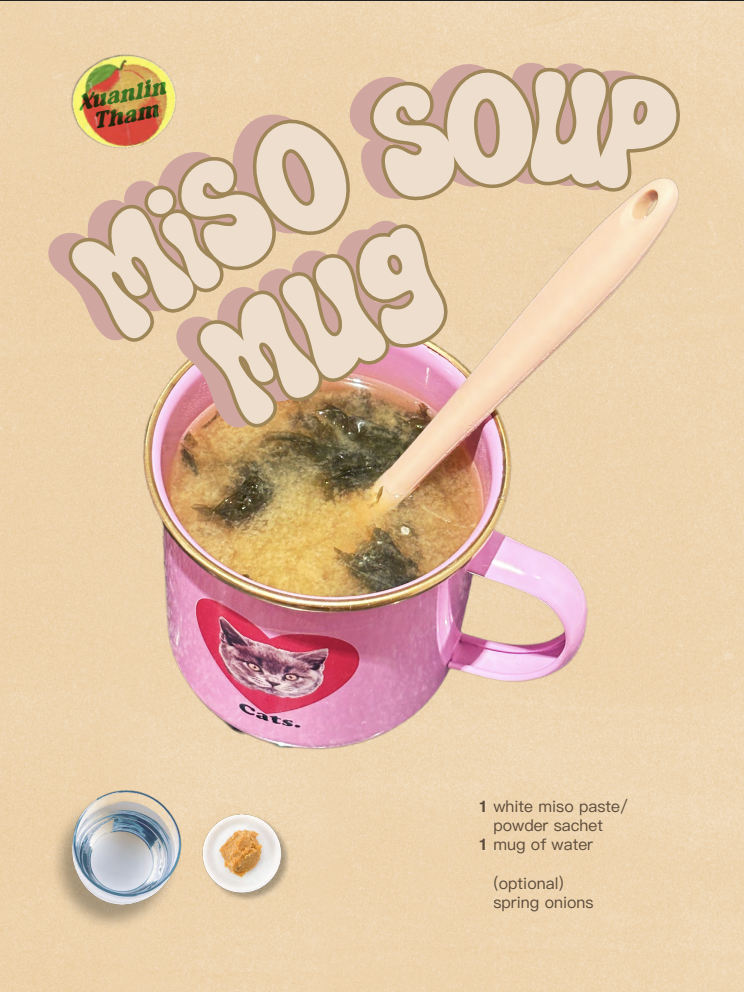
How do we feed ourselves when we can’t get out of bed? When every time we try to make rice, it feels like the first time? When we aren’t even sure we want to be alive?
I have wanted to make a book attempting to answer these questions for a long time. I think I initially spoke this out loud about 10 years ago, in a session with my therapist, who was trying to convince me that if I was sure I could only cook and eat fried eggs, might I consider at least melting some spinach in? In the decade that has passed, I can confirm I have subsisted on instant noodles, take-aways, hot drinks, the kindness and skill of others, and you guessed it, fried eggs. So yeah, I am delighted, bewildered and relieved that this book finally exists.
I have had a wonky relationship with food all of my adult life. Sometimes with eating, and always with cooking. I’ve never been able to eat regularly, find grocery shopping a bit nightmarish and am not really interested in what you ate on holiday. Usually I cannot visualise the future enough to meal plan, even for later in the day. Whenever I am distressed (often lol) my appetite vanishes. My eating distress could definitely have been worse, but I have never found my rhythm or any sort of ease in the kitchen, to put it mildly.
I had hoped this might eventually sort itself out, but over the years, I found myself increasingly alienated by a culture that, understandably, finds great pleasure in food. This remains true, even among fellow mad and disabled people who relish eating as a crucial pathway to self-love and community - as a rare break from pain. As a chronic depressive, I do wish that food could have functioned this way for me. Sometimes I skip dinner to try to ensure I will wake up hungry, and that that hunger will be enough to will me from my bed. But that’s not really the stuff of queer utopia is it.
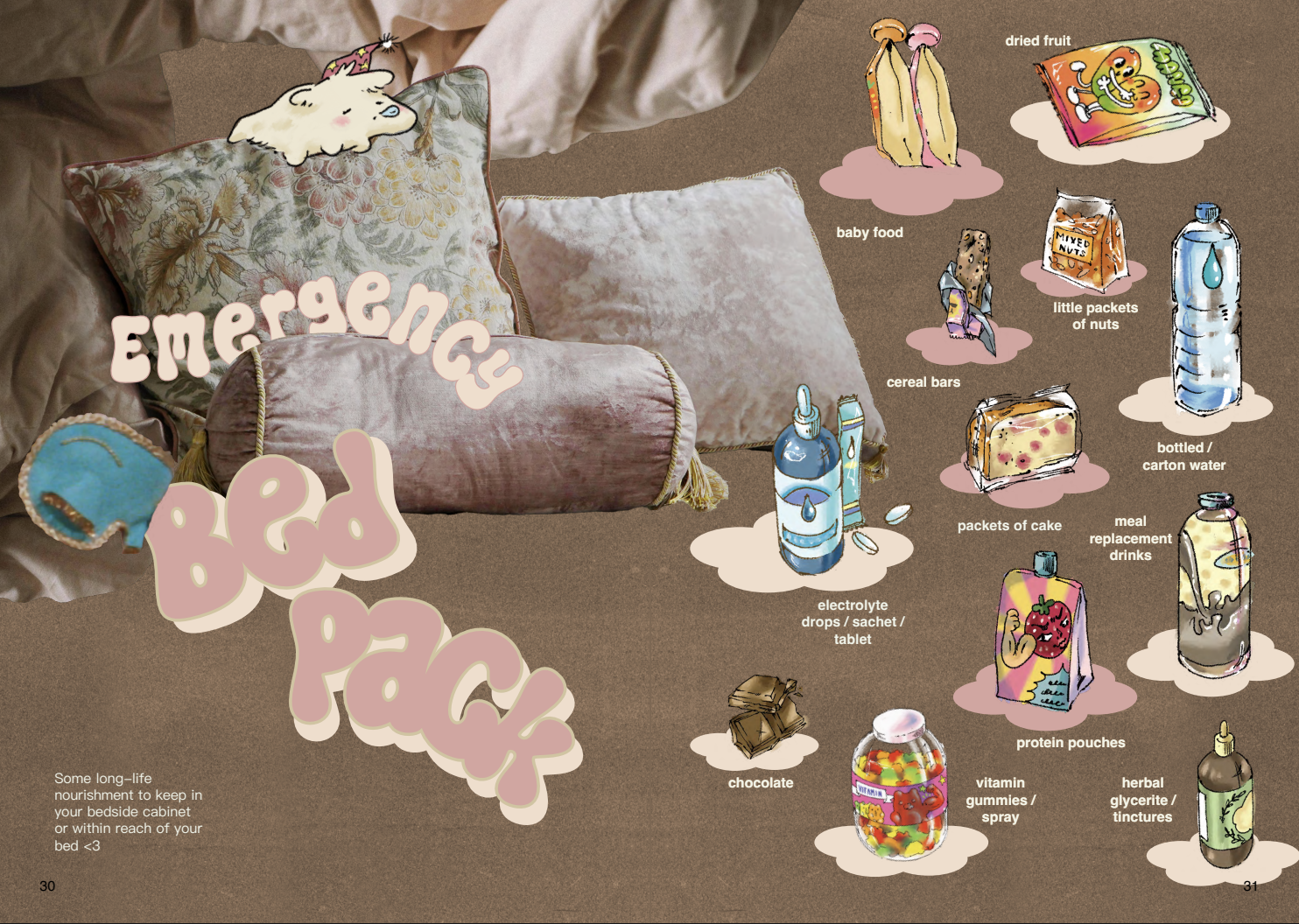
I am in awe of people who can make delicious meals, and I understand everyone’s passion for it theoretically. I am blessed enough to be no stranger to the sublime delight of being cooked for, of having meal trains organised for me after surgery and of someone who loves me learning the minor details of what I enjoy. But if I’m at your dinner party, know I definitely purchased the food I brought, and that really, I’m just waiting for the moment we clear the plates, push the table to the side and dance. I once changed my dating app bio to read simply - “not a foodie” - to avoid any expectations regarding, conversations about, or dates revolving around food, which worked, because no-one matched me.
“This is not just a ‘cook’ ‘book’ but also a portal, an ember of community that can sometimes feel elusive, out of reach.”
Given the current climate of rapidly increasing worldwide fascism and wealth disparity, of polygenocide and pandemic and crisis and mass unprocessed grief, it is becoming clear that the collected wisdoms of disabled, queer and colonised people were never the purview of those communities alone. That, in fact, everyone needs to know how to nourish ourselves when we can’t move, when we have limited ingredients, when we’ve lost all hope. That we could all do with the space to listen to and work with our bodies just a little bit more. That we deserve it!
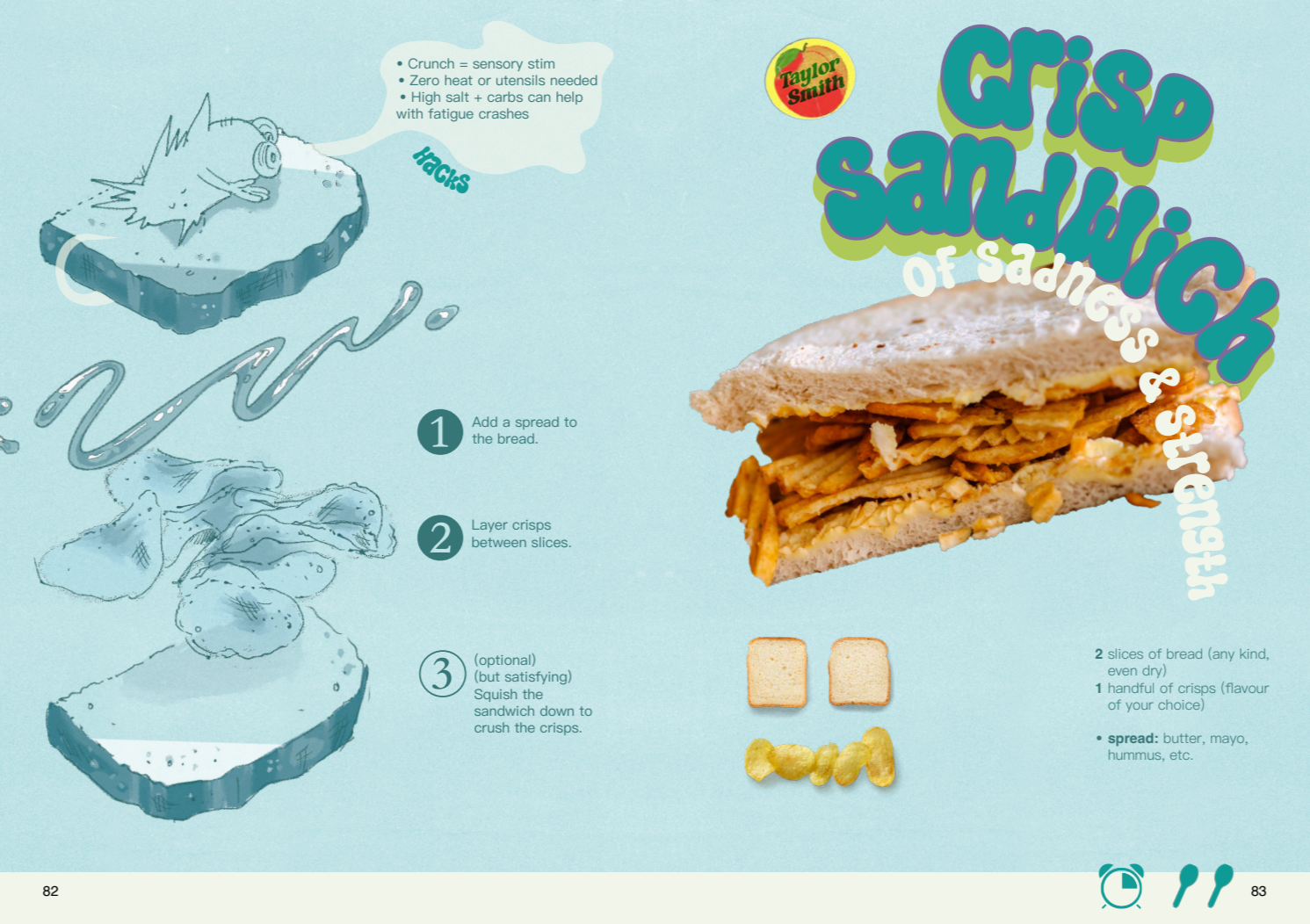
This book rethinks what an eating guide can be if we approach it from the lens of madness, disability, emergency, or disinterest. We explore no-cook cooking, no-chew eating and no-appetite nourishment, to reimagine the cookbook as a place where access needs around nutrition are centered through an artistic radical mental health crip justice lens. We’ve included collected crip community wisdoms, developed a food safety plan and trauma-informed guides to food shopping, batch cooking and appetite regulation. And of course, there are the many incredible community submissions that form the heart of the project.
The most profound part of sorting through submissions for me, was reading the stories people shared with their recipes. The flavours and textures that might ground someone after a panic attack, the ingredient that unexpectedly saved a life. I was moved by how thoughtful and generous they were, and I hope you can find the validation in them that I was able to.
Among the submissions, you’ll find recipes spanning health conditions and continents; one-pot tin can curries, drag pasta and 100 ways to eat yoghurt, broken down for the ears, hearts and bellies of fellow crip kin. There are poems about washing up, foraging for sunshine, and making tea with a broken heart; love letters to homeland cuisine, a crip food influencer moment and drawings made from hospital beds.
Through these submissions, we explore cultural reflections on what a misery meal can mean, the role of class in access to and internalised beliefs about disabled foodways, the variations in what feels doable to people at different spoon levels, and the understanding that for many of us, it’s not helpful or possible to hold moralistic ideas about what we or other people should and should not be eating, because for many of us, it’s just about getting food in, nourishing ourselves however we can, and celebrating our attempts at it.
misery meals is a love letter to the sad stomach, the bloated brain, the soupy soul. This is for all of us! This has been all of us! And there’s no shame in any of it. This is not just a ‘cook’ ‘book’ but also a portal, an ember of community that can sometimes feel elusive, out of reach. Those of us who are chronically sick are familiar with the abandonment that comes when our sickness is too unruly, even for the people who love us. More than anything, I wish for this collection to feel like a companion and a reminder that we don’t have to be alone, that we’re not. That though sometimes getting out of bed is hard, a meal, miserable or not, can be a reason to do it. And we could all probably do with more of those.