
Words: Misha MN
The least cool thing about me is that I love Downton Abbey. I’ve watched every episode, every film, followed every storyline, laughed and cried with every character, and I’ve enjoyed every second of it. I love period dramas. Not even just the cool ones, I love a lush, high budget, understated BBC period drama, an anachronistic Channel 4 historical sex romp, an ITV Sunday matinee juggernaut, an Edwardian romance, a 1920s murder mystery, a Tudor political drama, a Victorian biopic, The Crown. The only thing I won’t touch is Bridgerton. Something about those Netflix candy colours and string arrangements of Taylor Swift songs just revolts me, like those mosquito alarms shopping centres started setting off in the hopes of dispersing gangs of teenagers
I think there is something slightly queer in all period dramas, or at least, British ones about aristocratic society. They are always written with a slight archness, a wry knowingness, a little nip of commentary no matter how beautiful and fantastical the settings, the costumes, the verisimilitude of the storytelling. Maybe that tone is always present when modernity looks backwards at a past the audience can no longer access, a sort of history-is-written-by-the-victor principal, or maybe it's because the British entertainment industry still echoes with the those fabulous biting satirists of upper class life Oscar Wilde, Noel Coward and Terrence Rattigan.
There is something gay about The Crown that is very hard to put into words. It is just a knowingness, a feeling. There are some gays - old queens - that dedicated their lives to knowing everything there was to know about aristocratic women. The Queen Mother still ranks as a Gay Icon, or perhaps more accurately a Gay Interest, nearly twenty five years after her death. I myself am guilty of knowing the intricacies of some branches of the Royal family, for instance that Princess Diana’s step mother was Countess Raine Spencer, known as Acid Raine to her family for her temper and pithy put-downs, and that Raine’s mother was the monstrously pink and frothy Barbara Cartland, full-time romance novelist and part-time melting wedding cake. Knowing history like this is camp. Liking Princess Margaret is camp. ___STEADY_PAYWALL___
Having an opinion on Mary of Teck is camp. Knowing who Princess Alice of Battenberg is is camp. Knowing that she became a nun after she was widowed because she was inspired by her aunt Elizabeth Feodorovna, sister of Tsarina Alexandra Romanova, who started her own Holy convent in 1909 before being executed with the other Romanovs during the revolution is camp. Interesting, but very camp. Military history is for straight men. Aristocratic history is for the kinds of closeted gay men who had to fill their lives with something other than romance. This mantle is now taken up by straight men like Julian Fellowes and his cohort. Diversity always wins out in the end, I guess.
I say all this not to out myself as a Gay Tory - death before dishonour - but to underline the intrinsic campness of British period dramas and historical biopics. We have a dense history of grand eccentrics and slightly insane (inbred?) people of prominence that would make fascinating subjects for cinema. Dame Edith Sitwell, poet, critic, and fashion icon, William Lygon, Earl of Beauchamp and exiled homosexual, and of course, Henry Cyril Paget, Marquess of Anglesey, the Dancing Marquess. Paget was one of those figures who is remembered as a great eccentric, a dandy living an outre lifestyle thanks to his family fortune, and who is often listed alongside grand provocateurs like the Marchesa Luisa Casati as artists of visionary spending and inevitable bankruptcy. On paper, this should be a great film. A young man inherits a title and a giant fortune, spends it all on jewels and theatrical costumes, putting on shows and dancing. He drives his estate into ruin, escapes his debtors and later dies in Monte Carlo, all before the age of 30. What could go wrong? Everything, according to the 2026 biopic Madfabulous.
“Period dramas are inherently camp. It is the most theatrical mode of cinema in the mainstream consciousness, with actors we all know and love in the present putting on funny wigs, powdering their faces and speaking in affected tones.”
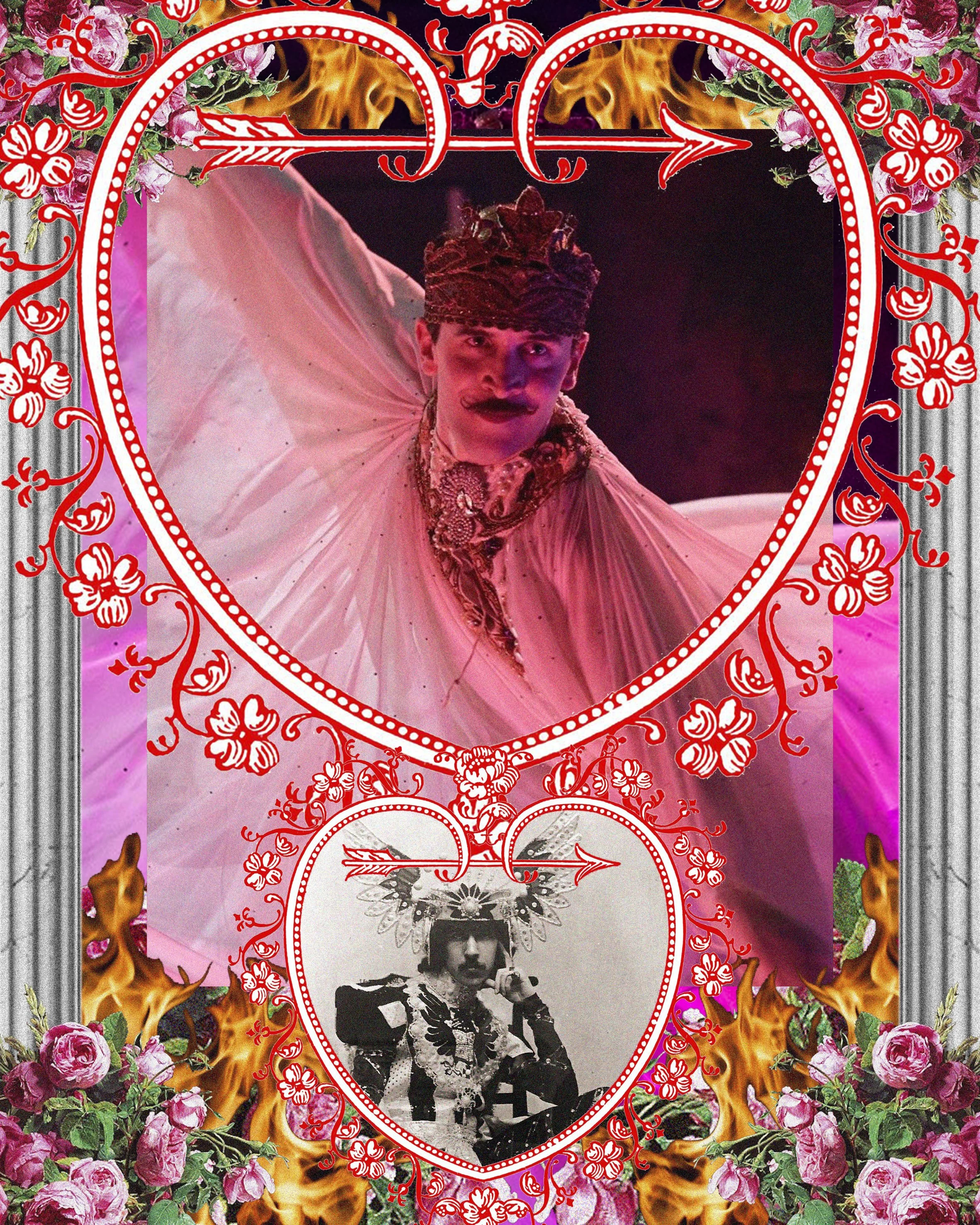
Madfabulous promises an intimate portrait of a man ahead of his time, a passionate individual who subverts his regal status with whimsical abandon and shows us that fabulous queer people have peppered our collective history since the beginning. What it delivers is a surprisingly outdated, regressive, almost homophobic look at yet another charmless aristocrat that we are meant to love purely because he's played by that lovely gay boy who died from AIDS in Its A Sin.
Callum Scott Howells is not enough to save this drivel, in fact he makes it worse, acting like a 2020s influencer lost in the 1890s, a tuberculosis patient with washboard abs and bulging biceps. Astoundingly, the film comes from the perspective of Paget’s long suffering wife - or short suffering as in real life its said that she left him after a mere six weeks of unconsummated marriage - and thus paints Paget as a kind of funny, ineffectual gay best friend, obsessed with shopping and clothes and dressing up. The second Paget finally gets some queer desire of his own going with a shady theatre maker, it’s dark and sinister, played off screen and as a symbol of how Paget’s excessive lifestyle is leading him to ruin. It is a well known fact that having a boyfriend makes you evil.
It just feels so reductive, in the same way that Freddie Mercury in Bohemian Rhapsody (2018) felt dated. Bisexuals on screen are fine, but when the girlfriend or wife is always the hero, the default, and the boyfriend or transitory male sexy partner is evil, it becomes very tiresome.
Paget’s boyfriend took him away from his pretty wife and stole his money. Mercury’s male rebound after the end of his marriage led him down a dark path of meaningless sex, drugs and HIV. Paget doesn’t have to be a virtuous character, he doesn’t even need to be a likable one if that's the angle the film is going for, but he needs to be a real person, one who finds connections and explores relationships that subvert the rigid protocols of his time. He’s drawn to this conniving hustler, they shared a bed in his home for months, yet they never kiss on screen, just sit uncomfortably close in pitch black rooms lit by flickering candles, a very presbyterian vision of Hell. Madfabulous and Bohemian Rhapsody judge their gay characters and revel in the punishments they receive from engaging in sodomy.
It reminds me of Mr Barrow, the evil gay butler from Downton Abbey, who’s only characteristics in the run of the series was that he was evil and gay. They really put him through the ringer - social isolation, career stagnation, suicide attempts, the whole shebang. He was only permitted a taste of joy in the first Downton film, nine years later, where he goes to an underground 1920s gay club before getting arrested for it, and then in a subsequent film he gets taken away to Hollywood as a valet to a closeted film star. Barrow was first on screen in 2010, when gay characters were finally appearing in prestige television shows, but never in ways that granted them sexual agency or fulfilled desire. Esoteric language was used to describe them, the kind of archaic slang that would pique the interest of those in the know and go over the heads of the uninitiated. Keep that queerness deniable.
I have to say, I’m not against flamboyant gay side characters in period dramas, in fact I love them; the suave Ivor Novello in Robert Altman’s Gosford Park (2001), the wonderfully wicked yet ultimately heartbreaking Miles Maitland in Bright Young Things (2003), and even back to Downton Abbey when a very arch Noel Coward turns up in the final film to deliver a few tongue lashings. But my favourite, I think, has to be in the 1998 historical drama Elizabeth, Cate Blanchett’s first Oscar nominated role and the first in a new wave of flashy, exciting, modern period dramas.
Following the life of Elizabeth I, we are introduced to Henry, Duke of Anjou, nephew of Mary of Guise, as a potential suitor to Elizabeth. He is handsome, a fairytale prince played by Vincent Cassel, until after some back and forth, Elizabeth walks into his private quarters and discovers what can only be described as the early stages of a Renaissance orgy, with Henry presiding over it, giggling, wearing a luxurious wig and gown. Is he gay? Trans? A crossdresser? No, he’s just fun, and honestly, aspirational. What self respecting friend of Dorothy wouldn’t want to play dress up in an Elizabethan wardrobe? Is his character nuanced and well written? No, but he is at least fun, and impactful as a very minor character. And Not Evil. At least not very. He does spend the rest of the film looking sour in Scotland with Mary of Guise (villain), but you can’t help who your family is.
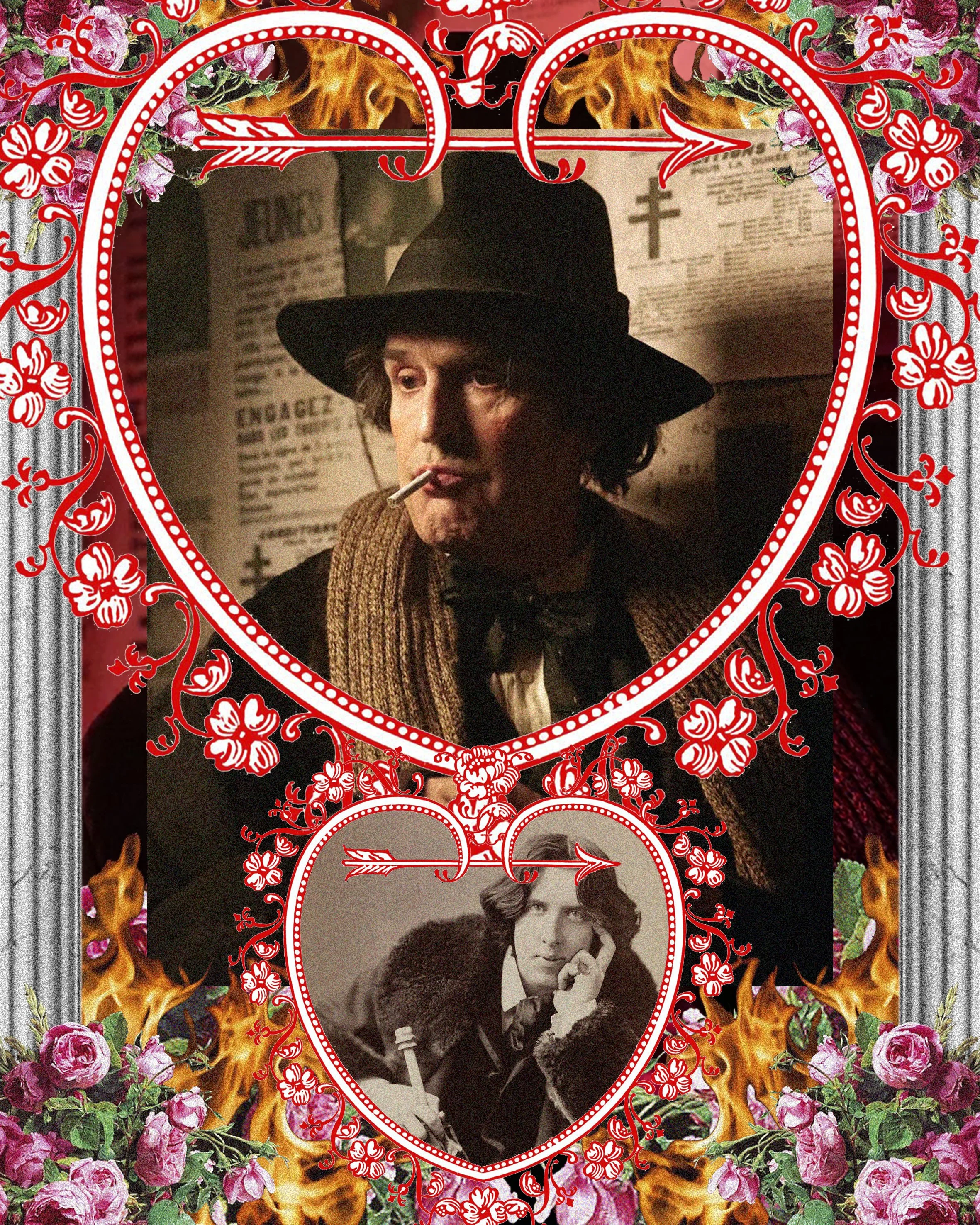
One of the least nauseating parts of Madfabulous was Rupert Everett playing a friendly old butler just trying to help. Just seeing him there reminded me about The Happy Prince, a biographical drama about the final years of Oscar Wilde’s life. Released in 2018, Everett both directed and starred in this incredibly intimate portrayal of history’s most famous aesthete, and it shows us the right way to make period dramas about queer people. Wilde was released from Reading Gaol after two years of Hard Labour and died just three years later, and The Happy Prince explores Wilde’s difficult, nomadic existence during this period with nuance and sensitivity. Everett’s Wilde is not a flawless tragic hero, he is vain and self-serving, cruel to those who love him, sleazy to the teenage prostitutes he plies with absinthe and cocaine, but still sympathetic, a dignified wreck of a charming wit, a magnetic protagonist with a rich inner life full of love, regret, hope and weariness. He even has an evil gay boyfriend, Lord Alfred “Bosie” Douglas, but here we see the relationship between them, elevating Bosie from just a nasty demon twink to a true character, a vindictive, viper-tongued, love-starved rat prince. He doesn’t exist just to punish Wilde, he lives on the same plane as him.
Period dramas are inherently camp. It is the most theatrical mode of cinema in the mainstream consciousness, with actors we all know and love in the present putting on funny wigs, powdering their faces and speaking in affected tones. Smart drawing rooms become battlefields for warring countesses, mannered epics fought in country estates, and stars become history incarnate. As with everything, queer people have always been present in these stories, but it is only recently that writers have finally been giving them the dignity and respect they deserve. I love evil gay butlers, but even the evil gay butler is a person when he's alone in his room, dreaming about the love he can’t have.