
Excavating the gURL Movement, A Web-1.0 Feminism That Burned Out Bright and Fast
Words: Annabelle Smith
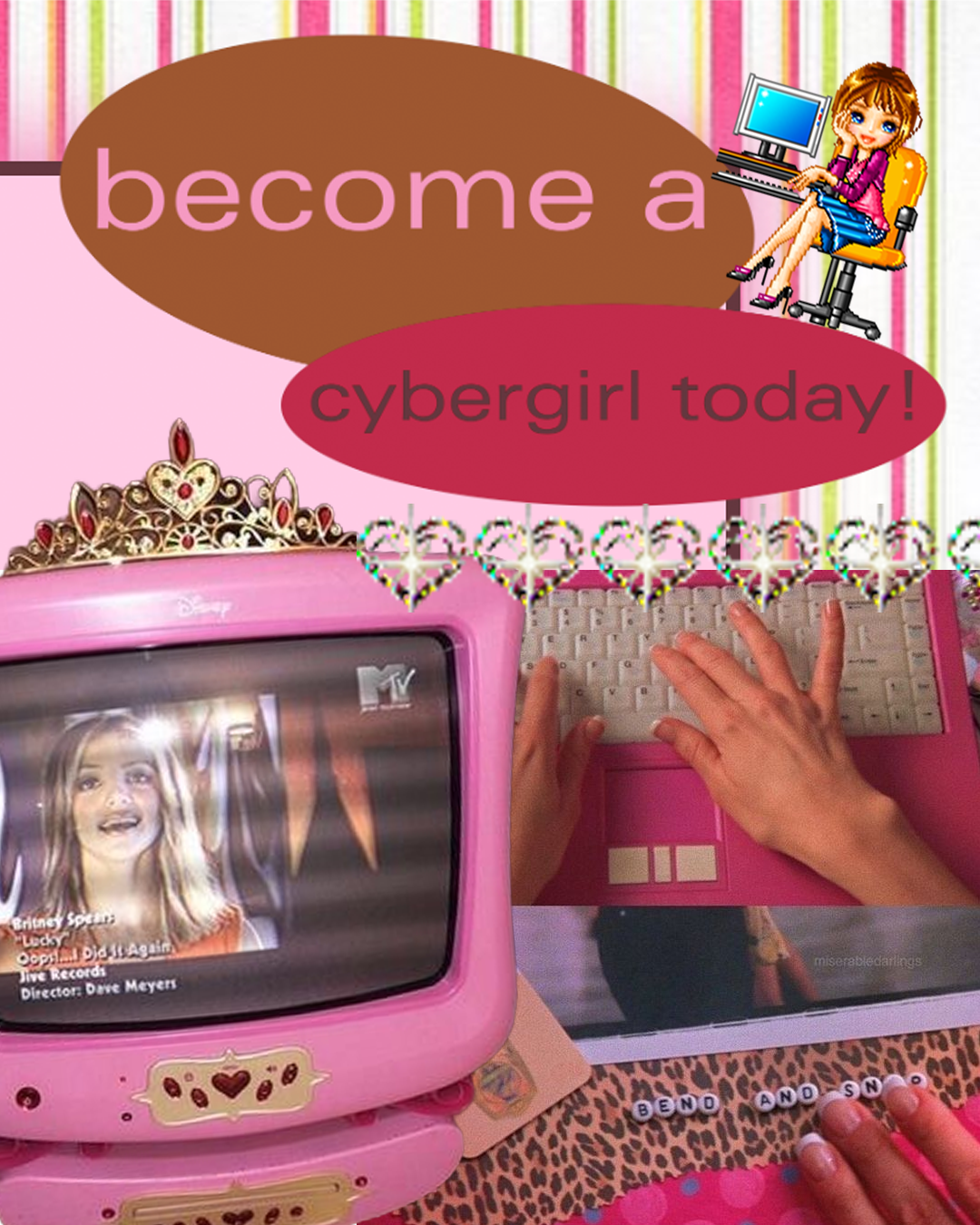
Before the Web went World Wide in April 1993, it was little more than liminal space. But by the millennium's end, over three million sites would go live. During this brief and beautiful period, cyberspace was more colosseum than computer monitor. Digital mythology was made through the collective imagination; the land had not yet been colonised by technocrats (Big Tech) and venture capitalists. Profit motive and personal branding were irrelevant philosophies - what money could possibly be made off the Internet? Instead ordinary people coded amateur assemblies on a promise for infinite communication. Let's be clear, this was no utopia. Yet there was an optimism in owning this means of production, a universality now long-lost.
Despite having been framed with technophobia since the days of Gutenberg, femmes are often the earliest contributors to new technology. The Internet was no exception. 'Computer' was originally a mid-century term for the young women tasked with regulating machine output, checking against its calculations and straightening out software issues. Flashcut to the 1990s and the people's Internet was popularly considered inhospitable for femme users. Think of Steve Jobs, hacking away in his humid garage.
Yet women took to the Web intuitively. Something about the multivocal nature of hypertext molded well to feminist methodology; link chains overlapped self and social constructs, amplifying intersectional, textual production. The cultural cocktail of burgeoning riot grrrl revolution and near-instant access to unprecedented creative control attracted a specifically younger generation; tween and teenage girls, who saw in the Internet a unique opportunity for self-expression. Whereas magazine racks and mall dressing rooms only escalated social surveillance, innocuously reinforcing the regulation of emotional expression and physical appearance, the Internet had no central authority or critical audience. Girls by the thousands began making sites and seeking out each other.
We will be defiant, challenging, probing non-conformists, and open-minded to many different opinions. In other words, don't bother submitting recipes or knitting tips.
- The Cybergrrlz Mission Statement, 1999
___STEADY_PAYWALL___
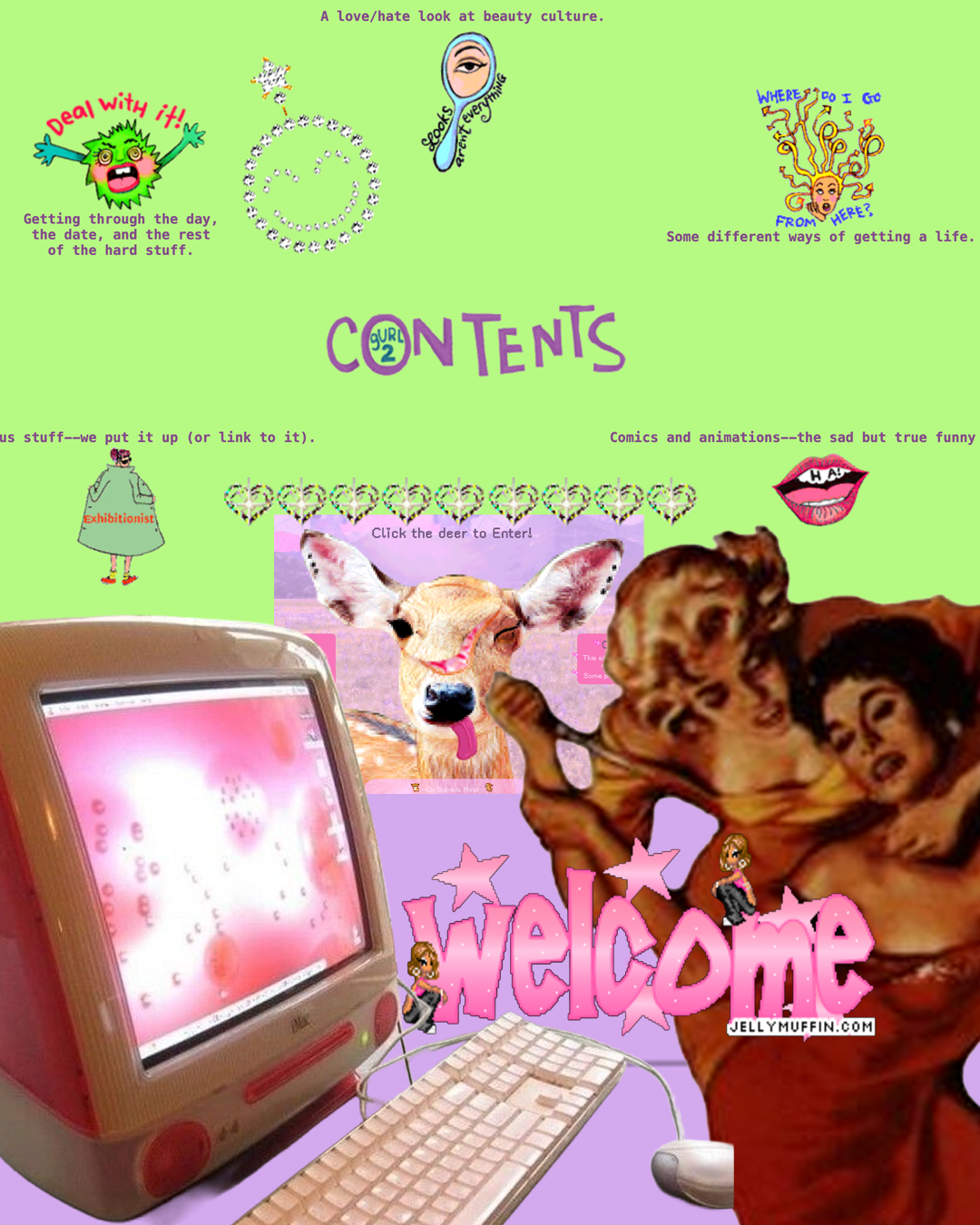
These femme havens filled holes left by the hegemonic URL mainstream. Nearly all sites included resource pages on taboo topics like birth control and domestic violence. Cybergrrlz, a digital co-op of geographically-disparate women, organised regular live debates through their chatroom. The footer featured a subtle call-to-action: "If you're quiet for more than ten minutes, you'll be thrown out of the room (and sent to bed without supper)." gURLs talked truth through serious silliness. Over at e-zine smileandactnice, political correspondent Louisa Brinsmade was posting proto-ragebait. Pleading the case for Elizabeth Doll as America's 2000 presidential elect, Brinsmade admits she's "converting for this one race…America needs a stern Republican mother". This is right-wing drag. This is righteous instigation. The line between tribute and takedown is totally erased, a bobbing-and-weaving fruitful for discourse.
gURLs reveled in rehashing the mundane horrors of adolescence. For "The Boob Files", gURL readers were encouraged to submit cleavage-centric stories. On undergoing a breast reduction, one reads: "neither your ideas of nature nor culture can weigh me down!" Said boobs are hand-drawn and amputated from any actual body, proudly abject inside a checker-pink table. Breasts are so often oversexualised - by 'girlie magazines', and girl-centric x-sites - that they've turned sacrosanct. Yet parody is a molotov against the mainstream.
Playing into stereotypes against girl language protected early internet girls from third-party surveillance. gURL's "Paper Doll Psychology" flipped the conventions of a centuries-old so-called feminine activity, most commonly used to reinforce body ideals on children. Instead, the point-and-click peels back innocuous skin to examine the impressed gender implications bubbling below both game and girl. Or, as the page taunts its potential patient: "you don't think you wear those clothes just because you LIKE them, do you?"
Many typed lengthy tributes to each other. Despite the broken links, Disgruntled Housewife's "Girls I Like" subpage lingers as living proof of gURLs loving gURLs. "She is stubborn and abrasive and funny and wise…she's the only person I know who never makes me feel like I'm talking too loud". Or click on the Cybergrrlz GrrlzHealth board, where a 14-year-old named Tory felt supported enough to submit an essay about her eating disorder recovery. The follow-up from fellow teenager Katie opens with an admission: "I read this past week's essay on anorexia and wanted to share my story." We have no way to know whether they met offline. We have no way to know how many hundreds of lonely girls saw themselves in their sans-serif confessionals. But the virtual bathroom scrawl persists. When current online discourse is steadily siloed to pro-ana Tumblr blogs, Tory and Katie's vulnerability appears almost fantastical.
In fact, the whole gURL ecosystem feels impossible. These artifacts and artworks are well on their way to dead-link doom. More history is being bulldozed by digital monopolies everyday. The majority of gURL sites only exist now through screenshots and ghost stories. What little persists for tech-curious young women places a heavy emphasis on upward mobility - girl coder hollowed out to girl consumer. A healthy relationship with habitual technology is not an autonomous goal, merely a potential byproduct of becoming the ideal worker. Injecting women into an industry built off their exploitation only tightens the noose. Non-profits like Girls Who Code might tout good intentions, but glitter cannot ctrl+z the systemic misogyny upon which our modern Internet sustains itself.
The only conclusion, then, is that we must code space for ourselves. A growing number of us are once again getting intimate with the Web, learning back-end code and surfing on decentralized seas. NeoCities is a popular hub for poetic code. Creators like On Bambi's Mind and Blackberry Sodapop, collectives like Cybergirl Mag and TodaygURL manifest modern efforts to reclaim self-representation. gURL sites are not gravestones but guidebooks for a liberated Internet. Our daily lives are now fully digitalised, and we deserve to understand how these devices function. Don't deify the computer, deconstruct it. Take a lesson from the gURLs: the master's tools - their applications, their artificial intelligence - will never dismantle anything. We must make our own.