
Fashion Legacy Is Dead. Long Live the Debut Loop!
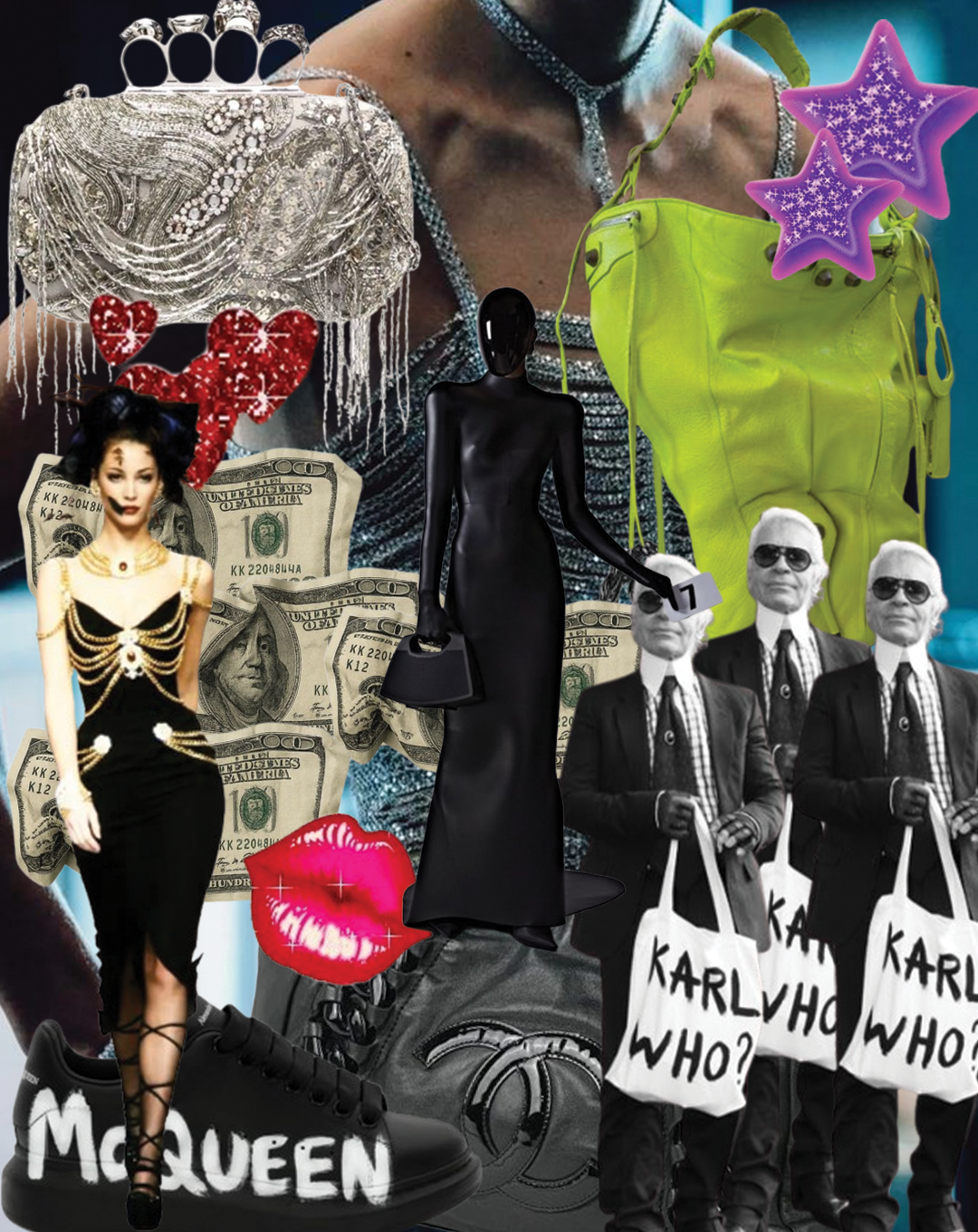
By now, seeing designer-B-just-debuted-at-Z-esque headlines has become a routine part of fashion month. In fact, entire guides are dedicated to tracking which creative director is stepping into which house each season. Just take a look at the past few years, and you'll see: Gucci, Tom Ford, Alexander McQueen, Off-White, Ann Demeulemeester and more have all appointed new talent, dipping their toes in the ever judgmental and demanding fashion sea until reaching a verdict. If they fail to cause any commotion, they’re out. If they don't impress enough, they're still out. It seems that, in such a challenging, fast-paced industry, finding the equilibrium is harder than ever, and so does it finding the right fit. Thus, the cycle continues: more debuts.
2026 has already learned the game early; Harris Reed just stepped down from Nina Ricci, and after Olivier Rousteing and Balmain split, Antonin Tron was announced as the French house's new creative director. Meanwhile, Dario Vitale’s departure from Versace after only one season came as a bit of a shock, though by now, after a similar fate met Ludovic de Saint Sernin at Ann Demeulemeester, we may have seen it coming. Now, Alaïa’s Pieter Mulier has ended his reign of almost five years and took Vitale’s position. Who will assume Alaïa? Who knows.
But it wasn't always like that. Before the late ’80s and early ’90s, designers largely minded their own business. Then came Karl Lagerfeld, who would become the prototype of the modern creative director – moving between houses, leading fully Chloé from 1966, and ultimately taking the helm at Chanel in 1983.
The ‘90s saw a shift: Tom Ford joined Gucci in 1990; Oscar de la Renta at Balmain in 1992; Galliano took on Givenchy in 1995 before decamping for Dior in 1996; and Alexander McQueen at Givenchy that same year. Designers moving between established luxury houses, rather than founding their own, was no longer an exception. This old guard carried singular visions that fused seamlessly with the identities of the labels they touched. Now, one cannot speak of Chanel without invoking Lagerfeld; Gucci without Ford; Dior without Galliano; Balmain without de la Renta; or Givenchy without McQueen.
While the '90s saw a redefinition of creative freedom without jeopardising the idea of legacy, a new force was about to take hold: luxury conglomerates. From LVMH's acquisitions of houses like Givenchy and Céline in the late '80s and '90s, to Kering's (formerly PPR) triumph with Yves Saint Laurent, Bottega Veneta and Balenciaga in the late '90s and 2000s, fashion's shift towards a corporate logic knew no bounds.
___STEADY_PAYWALL___
“A glance around the current scenario makes it clear: the decline of craftsmanship, stemming from a world that demands ever-greater speed, a visual culture where everything looks the same, and an insatiable hunger for nostalgia that prevents us from creating anything truly new. With that, the question arises: What kind of future can creativity have inside a system that treats every work as a temporary phase?”
Converting fashion into a purely profit-driven entity, conglomerates joined forces with something that was in its infancy in the '90s but which has since taken the world by storm: the internet and social media. The relentless pull of it and its novelty in the 2000s and 2010s, combined with the growing online obsession with fashion and celebrities, didn’t just put fashion under a microscope, but also created a world ruled more by speed and hype than by creativity. Out of that came the debut loop, a harsh but accurate reflection of the times.
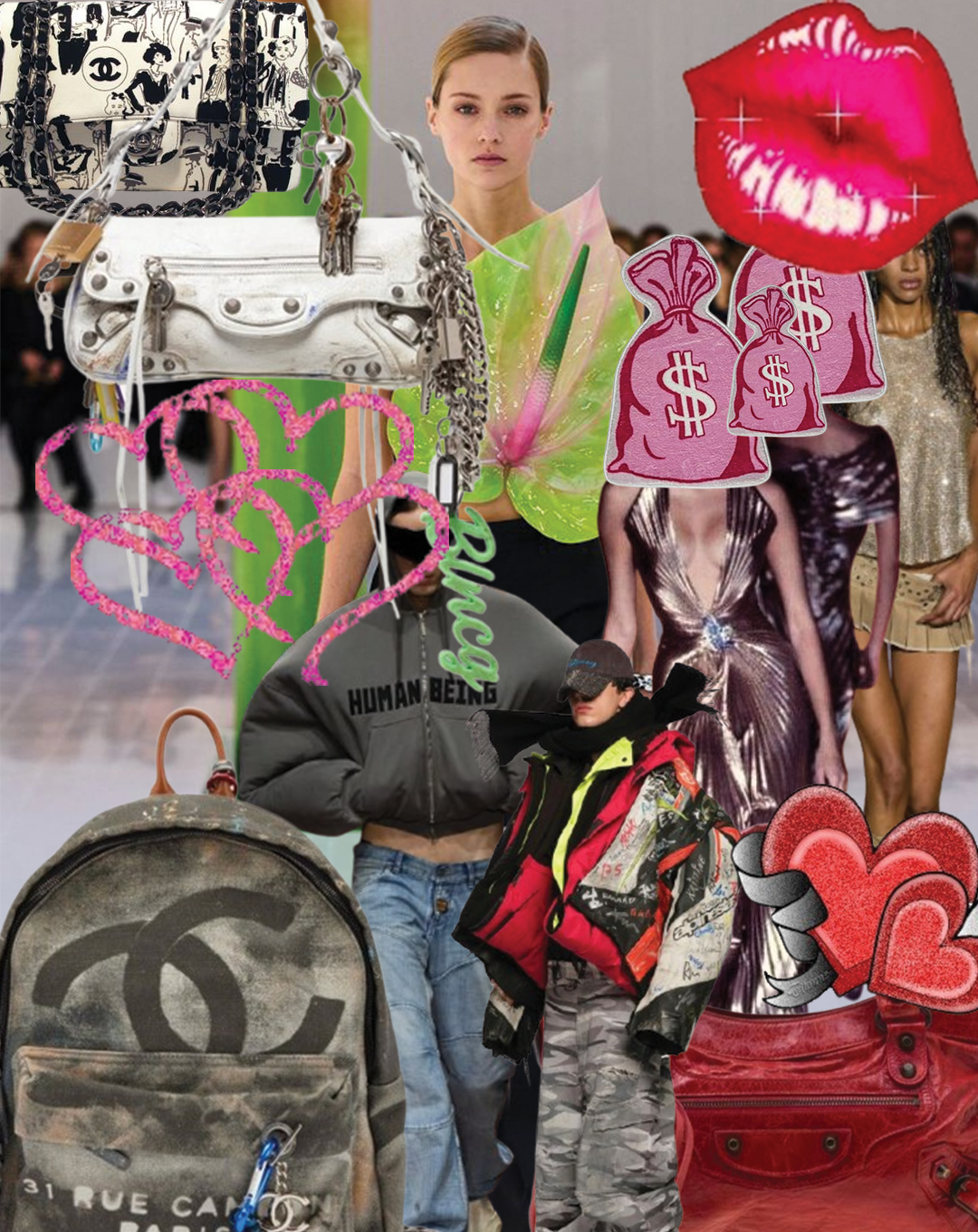
Fashion insiders tend to agree that the loop we now call our own began in 2022, when Alessandro Michele shocked the industry by exiting Gucci after seven years. Something ignited then. Sabato De Sarno stepped into Michele’s position, promising a new perspective. Other houses quickly followed suit: de Saint Sernin was appointed Ann Demeulemeester’s creative director, only to be replaced by Stefano Gallici after a single season; Seán McGirr took the reins at McQueen in 2023, succeeding Sarah Burton’s long reign; and so many other names one doesn’t have the stamina to name.
By 2024 and 2025, the musical chairs accelerated. Burton joined Givenchy, Haider Ackermann arrived at Tom Ford, and Pierpaolo Piccioli left Valentino. De Sarno exited Gucci, while the ever-controversial Demna Gvasalia left Balenciaga, leaving the house temporarily leaderless – until Piccioli stepped in. It hardly stops there: Matthieu Blazy became Chanel’s creative director, leaving Bottega Veneta with Louise Trotter. Jonathan Anderson jumped from Loewe to Dior. Jack McCollough and Lazaro Hernandez left Proenza Schouler for Loewe. Rachel Scott stepped in at Proenza. Again, this isn’t even all of them. Still, just like that, every table has new faces, though no seat is necessarily guaranteed.
The reasons behind these changes remain unclear;sometimes being due to poor sales, others opting to enter a new chapter of their lives, and perhaps with motives we’ll never fully know. Yet, some questions linger: When a debut happens every season somewhere, does the term lose meaning? And how will all of this, the rush for safety and a fresh start, will impact the future of the debut?
When talking or interacting with other industry professionals, one recurring topic always comes up: Don't compare the contemporary state of the industry to the circumstances that guided its past. Inevitably, the current scenario, dominated by speed, money, and, above all, the capitalist production system, has forced brands to quickly adapt to the times. Yet this same malleability, which is necessary to maintain brand sales and its name in the collective imagination, has also engineered an ultimate disconnection from both the aesthetic and historical pillars of their founders.
Take De Sarno at Gucci. His vision was too minimal, too restrained – neither pompous enough nor sultry enough to channel Michele’s maximalist fantasia or Ford’s unapologetic sex appeal. Then there’s Demna at Balenciaga. They may already be last year's news, but their philosophies were inherently opposed. One thrives on streetwear and the idea of shock, the other was founded on elegance and the revolution of the female silhouette. I’m not saying opposing designers can’t coexist. Rather, when the differences run this deep, it’s only a matter of time before one vision overwhelms the other. In fashion, after all, irreconcilable codes rarely end in forever and ever; they end in a breakup, and eventually, a replacement waiting nearby.
And then, when one figure is replaced by another – similar, oppositional, or simply new for the sake of being new – the cycle of a never-ending parade of debuts restarts, season after season, until the idea of new beginnings is fully saturated and something far more precious fades: legacy.
Creating a long-lasting impact doesn't happen overnight, in mere weeks, or one year. Lagerfeld and Chanel were together for almost forty years; Galliano with Dior for almost fifteen; Donatella at Versace for twenty-seven; McQueen and Givenchy for five. Legacy takes time. You can’t rush it, you can’t fake it. It requires patience to bloom and mature, because it is only through it that artists can get to know themselves better, and gradually evolve their vision until it becomes their own.
And so longevity is conquered; always steeped in deeply personal visions that cannot be disconnected from the individuals behind them, and a sense of endurance that understands that not every day will bring greatness, but it will turn the process into a genuine work of art. If the current pace continues, legacy won’t just disappear, it will be replaced by a state of ephemerality the industry has never quite known; eroding not only the foundations of many established houses and ascending ones, but also the very notion of creation itself.
A glance around the current scenario makes it clear: the decline of craftsmanship, stemming from a world that demands ever-greater speed, a visual culture where everything looks the same, and an insatiable hunger for nostalgia that prevents us from creating anything truly new. With that, the question arises: What kind of future can creativity have inside a system that treats every work as a temporary phase?