
Fashion Week Exclusivity Was Worse Than Ever: Remembering The Bodies Fashion Forgets
Words: Alivia Stonier
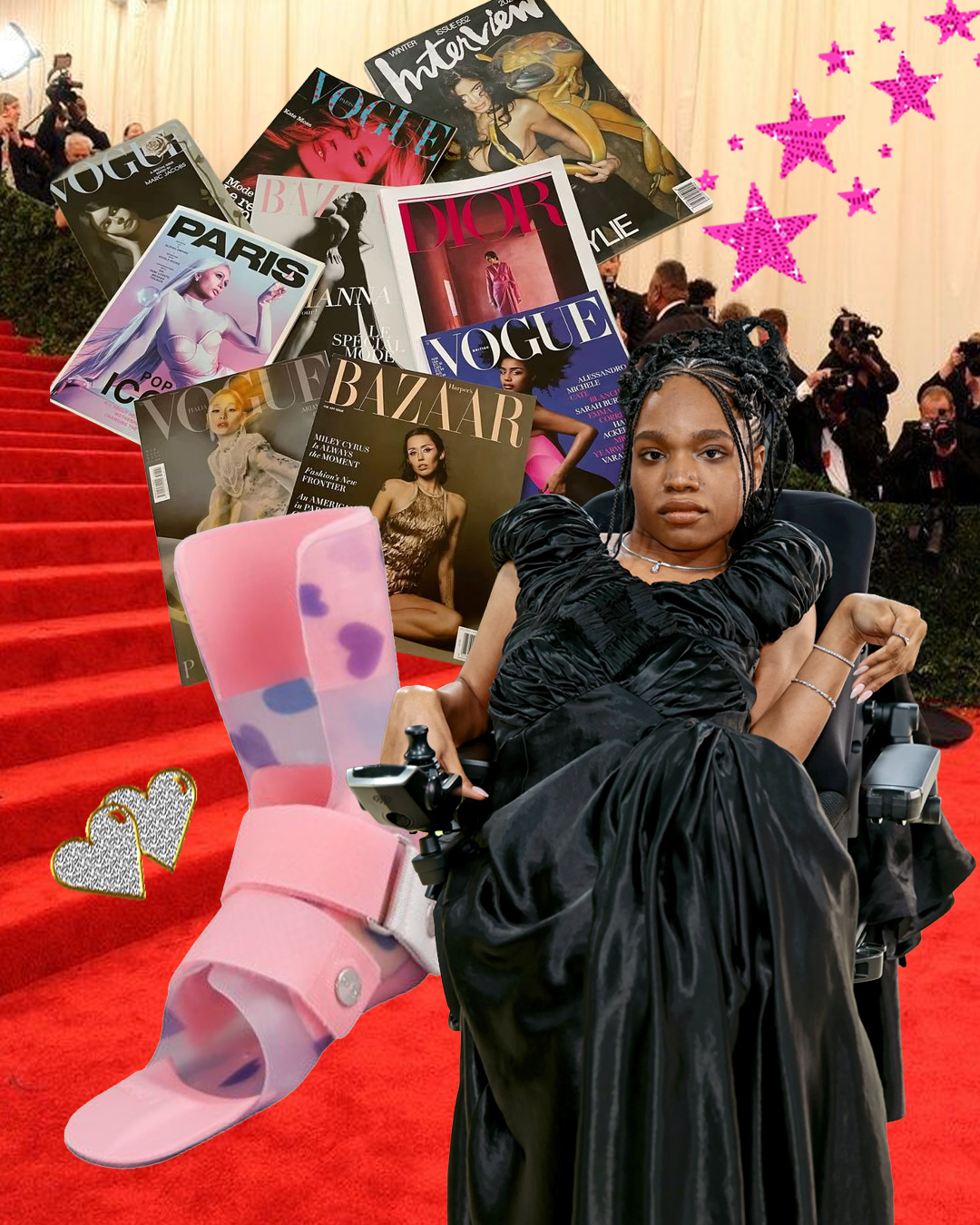
Make it stand out
My mom always dressed me in pretty outfits from as early as I can remember, always commenting on keeping me in style for the early 2000s even as a young toddler, not caring about the effort that it took. This same dedication strung across my youth and into adulthood, where she still fought tooth and nail to help me get the difficult fabric clinging to my body, the backs of a corset sewn in ways I can't reach, aching as her back hurts to lean over me to help get a dress in the right places, all if it means that I will feel better expressing myself in my body.
I am what you would call pigeon-footed, the shaping carved out from soft tissue surgery that overcorrected as my feet crossed over one another in a constant fight to be entwined. Working my way from bottom up, however, the struggle runs much deeper.
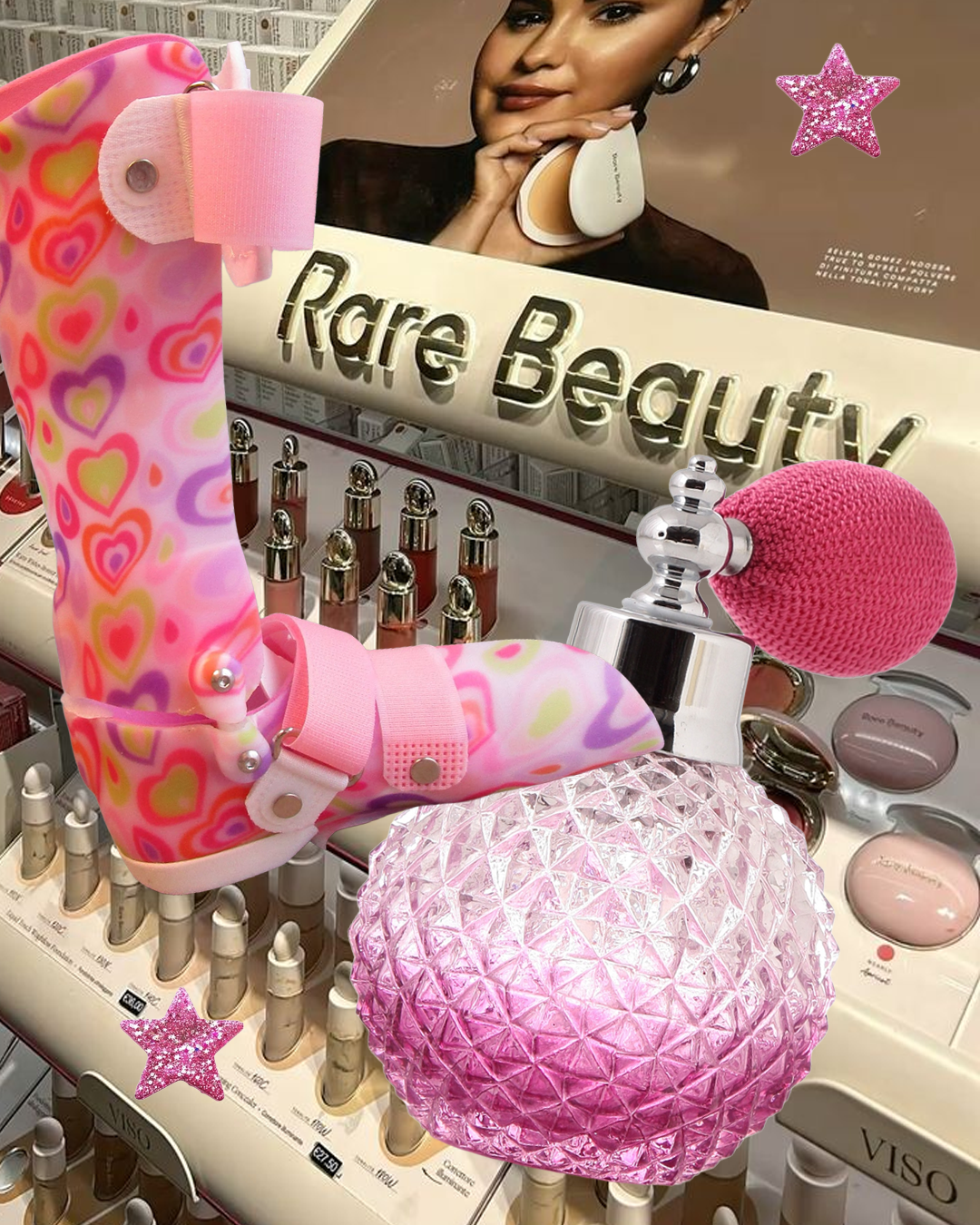
My earliest memory of realising that fashion was different for my body was at the age of five. The bones in my feet ached against the feeling of hard plastic as I grew blisters under neon pink straps. These AFOs (Ankle-Foot Orthosis) helped keep my feet straight but at the cost of landing in the nurse's office, always placing Band-Aids on the soft soles of my feet, and perhaps even before that, playing fairies at my friend Madison's house, unable to wear the same soft jelly shoes filled with glitter that added more magic to the affair that she got to wear. ___STEADY_PAYWALL___
These frustrations follow me into life beyond what you may typically expect. Sure, I can do a full face of makeup - in middle school I wanted to be a makeup artist - yet I find myself unable to do a clean line of eyeliner no matter how much I try to steady my hands. I need to take a moment to celebrate when brands like Rare Beauty make their products able to be pushed out more easily, simple accessibility features giving me that piece of femininity and independence that I've had to yearn for.
My aesthetic has only become more distinct as I have gotten older. I am participating in fashion rather than simply finding something that will accommodate me. I like clothes that feel like they belong to a specific world. I want to wear the things that catch my eye, even when my body makes those choices more complicated. There is something particularly frustrating about finding a piece that feels completely like me and then realising that I cannot physically wear it.
If a bottle of perfume can make me tear up at the idea of being able to be considered, you can imagine the ache during Fashion Week. One of the most sought-after events in the fashion and beauty industry can leave you feeling like nothing more than an afterthought if you can even be considered that. Fashion Week can feel alienating in a way that extends beyond the clothes themselves. It is an industry built around fantasy, beauty, and the idea that anyone can find a version of themselves within fashion, yet the people who most need to see themselves reflected in that fantasy are still so often left to look in from the outside.
“The industry has often treated the inaccessibility of cities like Paris, New York, London, and Milan as if it is an unavoidable fact of life, rather than something that fashion organisations and individual brands can plan around.”
And no, not craving it in the token way, although any amount of representation is a step in the right direction. It is difficult not to think about that absence when fashion can make room for almost anything else. At Vogue World: Milano this year, four humanoid robots were given their own moment on the runway as part of a section called “The Age of Intelligence,” in a show explicitly concerned with the relationship between human creativity and technology.
There is something almost surreal about watching fashion imagine robots as part of its future while disabled people are still asking to be considered part of its present. The point is not that a robot should somehow take the place of a disabled model, or that there was no disability representation at all. There was. But the contrast is difficult to ignore when fashion can imagine bodies that do not even exist as part of its spectacle, while real disabled bodies are still viewed through a lens of simple accommodation. That feeling of being imagined as an afterthought is not confined to Milan. It follows the fashion calendar into Paris, where Fashion Week can be just as alienating for disabled people trying to participate in the industry.
The frustration with Fashion Week is not only about whether disabled people are represented on the stage. It is also about whether disabled people can get into the room at all. The industry has often treated the inaccessibility of cities like Paris, New York, London, and Milan as if it is an unavoidable fact of life, rather than something that fashion organisations and individual brands can plan around. Still accessibility does not have to mean changing the entire character of a city: It can mean choosing an accessible venue, providing an accessible entrance, communicating access information clearly, or making an alternative arrangement when a historic space cannot be fully altered.
There have been attempts to challenge this exclusion. During Paris Fashion Week in 2022, the Japan Persons with Disabilities Fashion Association held Wheelchair Fashion Row, specifically placing disabled fashion and universal design within the Fashion Week conversation. The point was not simply to create a fashion show for disabled people but to challenge the idea that fashion designed with disability in mind has to look separate from fashion itself.
This is the kind of representation I want. Not simply seeing a wheelchair on a runway so a brand can check a box, but being able to see disabled people as participants in fashion culture. I want to be able to enter a showroom or see a campaign and think that it was made with people like me in mind. For accessibility to exist without requiring disabled people to be grateful for the bare minimum.
Organisers cannot simply point to the age or architecture of a building and consider the conversation over. The ADA does not contain a blanket “grandfather clause” that exempts older businesses from accessibility obligations, even if existing and historic buildings can be subject to different requirements and exceptions. More importantly, accessibility is not only a legal question. It is a question of who gets to participate.
I think back to that five-year-old girl with the neon pink straps hidden underneath her sneakers and how much of my relationship with fashion has been learning to see what other people don't have to notice. I notice the shoes I cannot wear, the fabric my hands cannot reach, the venues I cannot enter, and the people who are missing from the conversation. But I also notice when things begin to change. This year, seeing a wheelchair user on the Met Gala carpet and disability given a place within the Costume Institute's conversation made me think about how much can happen when people like me are allowed into the room. These moments matter, but so does having the editorial eye to question what comes next.