
Does Fashion Media Have A Moral or Ethical Responsibility in Deciding Who it Platforms?
Words: Flora Ivins

Make it stand out
The phenomenon of tech oligarchs vying for a closer proximity to fashion and culture has been widely discussed this year. Substack writers and cultural commentators alike have voiced their dissent for “tech’s flirtation with taste” and the “neutered desperation” of billionaires. The physical products these companies are selling skew closer to the preferences of fashion-forward consumers, perhaps banking on the prediction that spending on personal luxury goods will climb 2-4% compared to last year to €365-€373 billion in 2026.
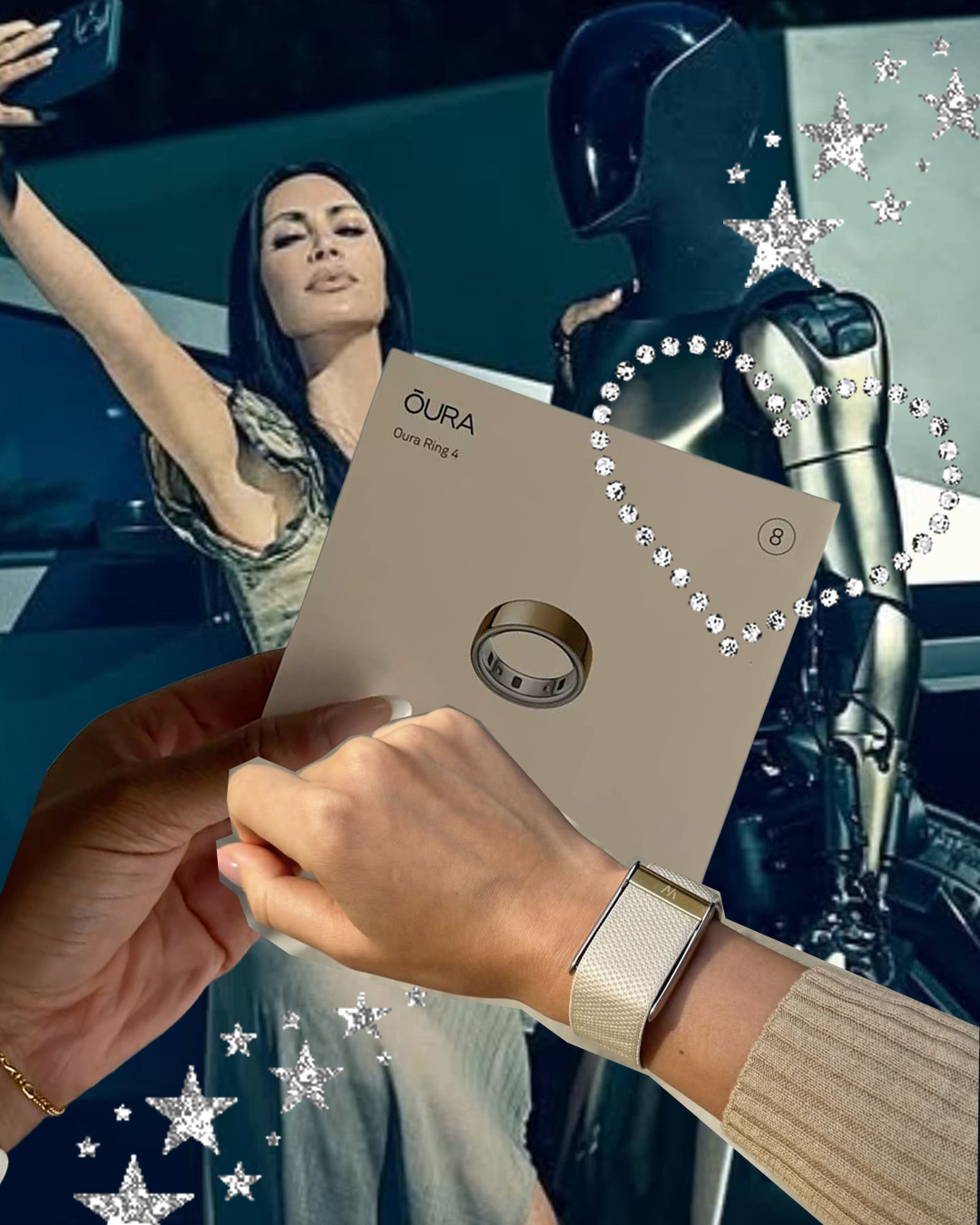
The products are becoming increasingly feminine too. Meta’s new cutesy, anthropomorphic AI agent, Muse, was described by Vogue Business as Meta’s attempt at creating the “new Labubus.” Wearable health tracking devices like Whoop or the Oura Ring now resemble fine jewellery.
Product aside, tech billionaires are betting on themselves as a new kind of prophetic influencers, ushering in their ‘life-changing’ technology. Building an association with fashion and positioning themselves as purveyors of taste is another way for them to get ‘in’ into popular culture. ___STEADY_PAYWALL___
One notable example is the Jeff Bezos sponsored Met Gala earlier this year. Political activist group Everyone Hates Elon thwarted most attempts at good press by slapping his face on almost 300 fake bottles of piss, causing Bezos to opt-out of getting papped on the red carpet.
Venture capitalist and self-proclaimed biohacker, Bryan Johnson, walked the Matières Fécales AW26 show “The One Percent” (perhaps a tongue-in-cheek casting decision by the liberal, provocative design duo) and was interviewed backstage by fashion media. Reportedly his biggest vice is “working out too much.”
“Whilst the tech moguls flaunt their new The Row outfits and pose for the cameras of famed photographers, behind the scenes they are cozying up to Trump at elaborate state dinners.”
Vanessa Friedman recently profiled Mark Zuckerberg for the New York Times with a lengthy article detailing his style evolution. Vanity Fair’s Mark Guiduicci interviewed Sam Altman, CEO of OpenAI, for the cover of their latest print magazine. Regardless of whether this trend is grounded in pure journalistic intrigue or a more sinister attempt at tech bro assimilation into popular culture, it begs the question: does fashion media have a moral or ethical responsibility in deciding who it platforms?
Media Impact Value (MIV), despite its fickleness and difficulty to accurately measure, is still a valued KPI amongst companies and their PR firms. As magazines diversify streams of income, so too does their visibility across multiple channels, from social media to physical industry events, and the ability to spotlight their featured interviewees on these stages. As a result, many mainstream publications that previously served as curators or arbiters of the current zeitgeist have become increasingly warped by affiliate marketing strategies and advertisements.
In an opinion piece for his magazine, Style Zeitgeist, Eugene Rabkin argued that “With each year the demands of advertisers have increased to the point that it feels that the mainstream fashion magazines have completely abdicated their editorial authority, and in doing so have abandoned its intended audience.”
Despite this shift in power balance, the inherent prestige of a legacy publication is hard to overlook. In a now viral clip, Jeremy O’Harris speaks openly to Vanity Fair’s global editorial director about tech founders. He points out that the ‘gatekeepers’ of fashion media still have “immense power over these people’s self-perception. [You can] write hard profiles about them. But they care about the picture. The picture is the thing that makes them feel like they're ‘in’ no matter what.” If the founders of companies contributing to ecological collapse and mass surveillance are being featured in consumer-facing magazines, it becomes difficult to grapple with who is benefiting from their elevation: the intended readership or advertising relations.
Dr Rosie Findlay is a senior lecturer in Media at City St George’s University and the co-editor of the upcoming book Remaking Fashion Media: Sustainable Narratives and Visions of Change. Over email, she tells us that “all media has a responsibility to its audiences when considering who to platform. Media outlets, especially legacy publications, have the power to legitimise what and who they choose to cover, and how. The aspirational slant of such media, which historically has celebrated and promoted the people and brands they feature, has the power to frame people not just as notable leaders in their industry but as figures to look up to, to admire for their influence, or more mildly, to be seen as benign.”
She adds “The fashion and style media that do concerted, disruptive, transformative system critique are often those operating independently. They sit on 'the margins' of commercial media and are not beholden to the advertising spend of companies or to institutional logics that constrain the autonomy of individual employees who might otherwise be very critical of the people profiled.”
In a background of rising conservatism and far-right ideologies, the choice of who is platformed can be perceived as an endorsement and so encourage greater scrutiny. Content creator Zara, @whatzaraloves, behind the hit podcast “taboos on the bus” shared her opinion with us too. “I think fashion media has a real ethical and moral responsibility in deciding who to platform. Whilst I acknowledge the importance and power of reporting bias, we equally cannot detach coverage from attention. Platforming or discussing somebody's fashion choices is not a neutral act, even if removed from their politics in discussion as it puts a spotlight on that person,” she writes. “Taking a look at who one gives a voice to can equally be a teller of who is not prioritised, and unfortunately I think we may be seeing people who generate the most buzz or clicks be platformed over those who align with a set of shared values and ethics.”
Fashion writing cannot be resigned to a passive exercise. To do so ignores the fact that fashion in and of itself is inherently political, and is often a product or tool of resistance to systematic oppression and colonialism. Whilst the tech moguls flaunt their new The Row outfits and pose for the cameras of famed photographers, behind the scenes they are cozying up to Trump at elaborate state dinners. It is evident we need to engage more consciously and critically with our media. Above all, it is integral that we still make room for hope amidst the cynicism.