
From Errands to Interior Motives, Why are Social Media Shows Focusing on the Mundane?
Words: Daniella Parete Clarke
Make it stand out
The creator of Instagram account @socks_house_meeting is reminiscing about television in the 2000s. “It made you feel like you were home sick from school and it couldn’t have been more depressing to watch,” they tell me. “Adverts for Scottish Widows and re-runs of Fawlty Towers and Only Fools and Horses for 14 hours a day, looped. Love Only Fools, but it becomes lobotomising.”
What the meme-page founder calls lobotomising, others consider comforting. Since the 1950s, when television sets became commonplace, daytime TV has been one of few reliable things in this world, alongside death and taxes. Despite the many forms it has taken, from soap operas to talk shows, its lighthearted programming is a constant presence in the home. Or, it was, until the 2010s, when TV channels saw decline at the hands of streaming giants.
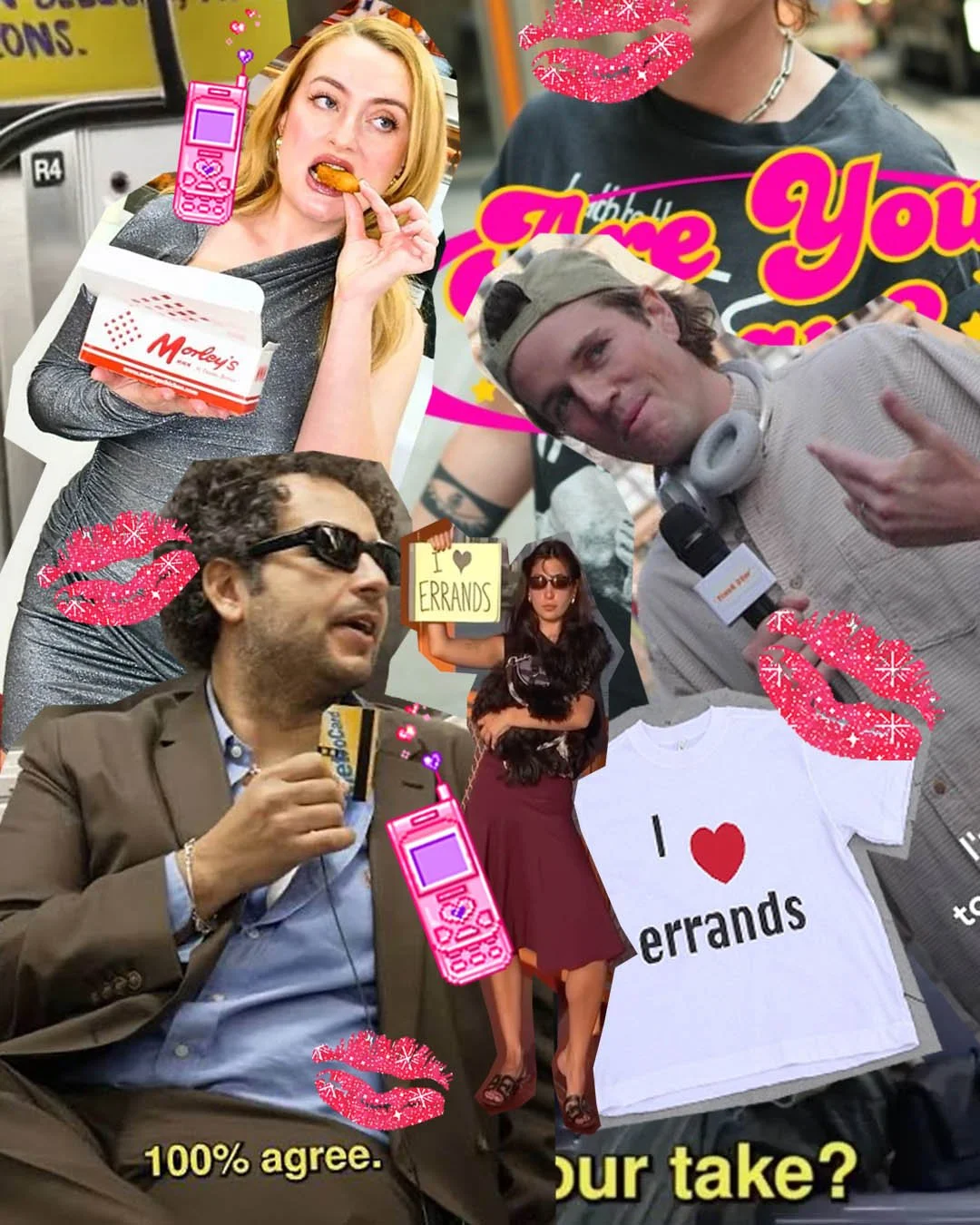
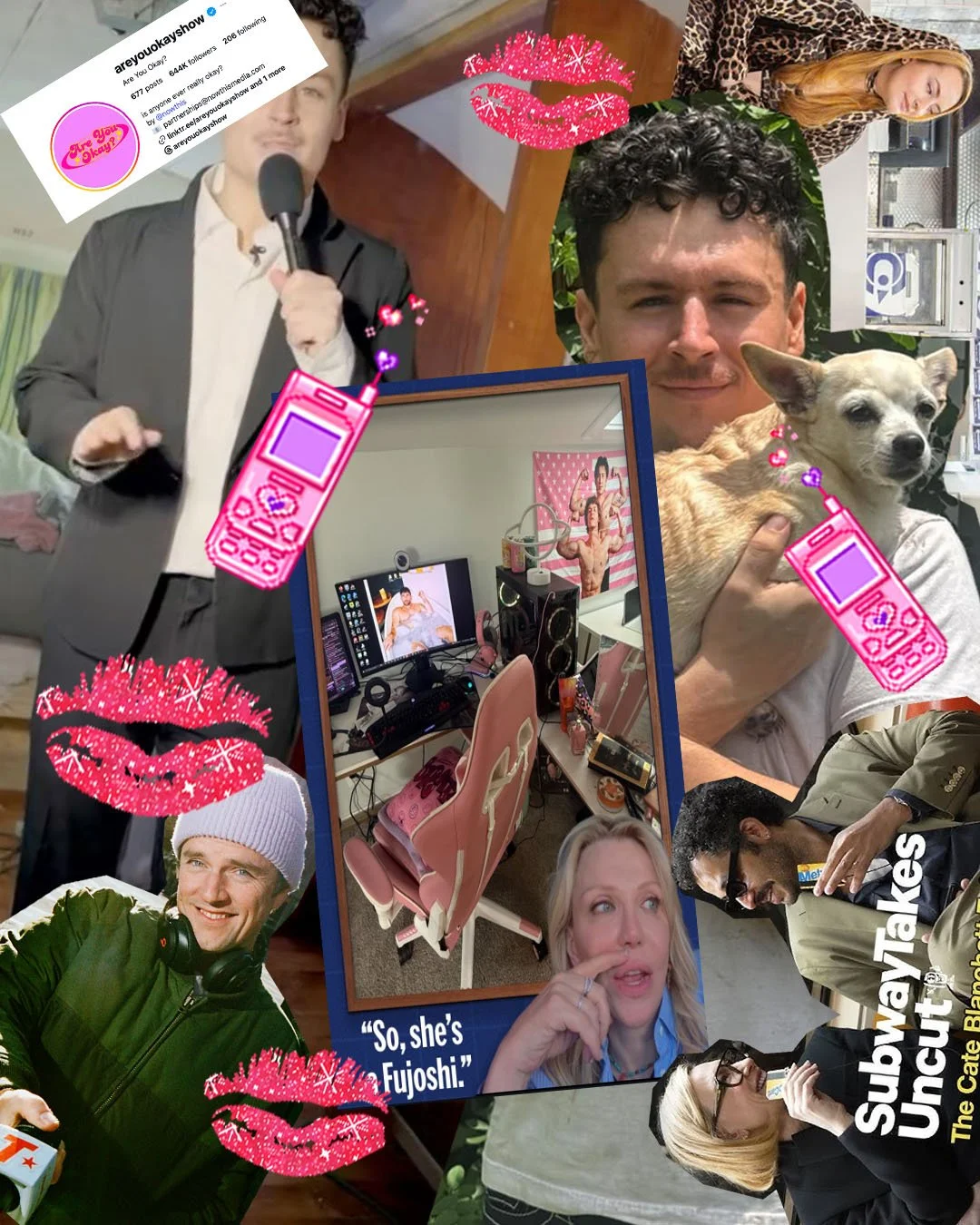
For a while, it seemed that YouTube and Netflix had made this genre of entertainment obsolete. But a new wave of Gen Z-targeted ‘shows’ that live on social media are adopting similar formats. Examples include Subway Takes, the short-form chat show hosted by Kareem Rahma; Interior Motives, a game show where contestants guess the gender, sexuality and age of an anonymous person based on a photo of their bedroom; and the Errandsshow, where each episode follows a different person completing a practical task.
“I think the thing that makes these shows succeed is that they’re all about humans,” says Socks. “Interior Motives is clicky and hilarious. Subway is trying to provoke emotion from its audience. It’s the human factor – the shows are all wonderfully relatable.”
While this content might seem a world away from Lorraine, both attempt to spin mundane subject matter into something compelling. On Reddit, one commenter compares Subway Takes to Seinfeld, in that it’s “a show about nothing”.
Most people use ‘mundane’ to refer to something ordinary, but it can also describe secular concerns, as opposed to spiritual ideas. With most of us preoccupied by work, technology and consumerism, it makes sense we’re drawn to media that focuses on the mundane aspects of life. Rather than spending mental energy on lofty questions, we retreat to the solace of a material world: public transport, a trip to the grocery store, a photo of a messy bedroom.
In the case of Interior Motives, the show’s unfiltered energy is its main appeal. Host and creator Ben Mora tells me the canned applause and his formal attire are inspired by old-school game shows, but the lo-fi aspects are what viewers enjoy most. “I ripped those sound effects from YouTube, so they're very campy,” he says.
“There's a familiarity with this kind of cheesiness that makes people feel comfortable,” he continues, referencing Who Wants to be a Millionaire, The Weakest Link and Room Raiders as predecessors. Formula breeds familiarity, which helps the brain feel safe: ‘It reminds [viewers] of things they know and like.” While Mora had not heard of British game show Through The Keyhole (‘I’m glad that’s officially on the record!’), the similarities between that concept and his help connect the dots of why this entertainment feels timeless.
“Growing up, I loved American Idol – which [is similar] in that it's a panel of judges ridiculing someone in their aspirations. Simon Cowell would be vicious.” Under this umbrella of influence, he also includes the pre-Netflix version of Queer Eye, because “it's about gay guys bursting into your home and critiquing you”.
Mora’s contribution to the canon taps into this audaciousness, while offering a fresh take. Unlike other internet series that have provoked criticism from fans for becoming another stop on celebrity press tours, Mora’s has a different approach to talent acquisition. “I booked Courtney [Love] through a DM because she watches the show,” he explains. Rather than pairing Love with another household name, he chose 22-year-old internet personality Ivy Wolk. “You get one from Hollywood one week, one from the streets the next”’ he says. “The only celebrities who come on the show are ones who can confidently call a chair transgender.” ___STEADY_PAYWALL___
“Coming across an episode during your daily scroll is more akin to channel surfing than the choice-overload we’ve come to associate with TV in recent years.”
It’s for this reason the creator expresses scepticism when I ask if he’d take the series to streaming. “I think, these shows, they go to Netflix to die. They alienate their fanbase. With a show like mine, the audience is so integrated. And I would get really annoyed at some fat cat executives telling me I can’t call someone dirty and non-binary. I have to be off the leash for the show to be funny.”
Earlier this year, The Hollywood Reporter published a story about the rising costs of streaming platforms forcing consumers to be more selective about the services they pay for. It’s a shift that has accompanied claims the streaming era is collapsing. A saturated market, content fatigue and increasing ad integration has left many users nostalgic for the era of live TV. A recently published article in the Guardian explores the rise of internet chat show Chicken Shop Date as evidence of YouTube’s dominance over TV in the media hierarchy.
None of this is helped by the widely held opinion that choosing something to watch on Netflix is annoying – unless you enjoy spending hours scrolling through slop. Series such as Errands, which is posted in installments, offer an alternative to that ennui. Coming across an episode during your daily scroll is more akin to channel surfing than the choice-overload we’ve come to associate with TV in recent years.
Errands is low-stakes entertainment. The show often segues into a comedy of errors, such as when actor Aitana Doyle has to reschedule her driving test, or when artist Santiago Mallan is upstaged by a gloriously eccentric clockmaker. Creator Noah Blau indulges these hijinks, but the errand is always wrapped up by the video’s end.
Watching other people carry out what could be solitary tasks adds a communal element, fostering an impression of intimacy between the subject and the viewer. Subway Takes, meanwhile, transports bar chat into the realm of public discourse, where TikTok commenters become interlocutors in the debate. “The basis of [these shows] are people; since Covid, people miss other people,” Socks House says.
Of course, at the root of all this is access. Spending hours before a screen was once the domain of the sick, elderly and unemployed; now, most of us have portable TVs in our pockets. And the content algorithmically funnelled into it is resembling retro broadcasting more than ever.
Whether this wave of Gen Z-targeted shows actually heralds a return to traditional media is hard to determine, says Socks House, as it “depends on how many people watch it in long-form, rather than a 20 second clip while sitting on the train to work.”
That’s no doubt how some are consuming it, but Mora assures me others are keeping the game-show spirit alive. “People are watching Interior Motives with their families,” he says. “I think it’s because the show offers an insight into identity politics – older generations are stunned by queer culture, and the show can be a crash course in those identities, where even the hosts are speculating as to what the hell is going on in someone’s room and what their pronouns are.”
An amusing image, to be sure, and one that speaks to the ancient, community-building practice of gathering around a TV set with the people you love. “It reminds me of watching American Idol with my mum and brother and sister,” Mora says. “It makes me so happy.”