
From Scratched Gucci to Distressed Birkins, Why Are We Obsessed with Everything being “Lived-In”?
Words: Isabella Greenwood
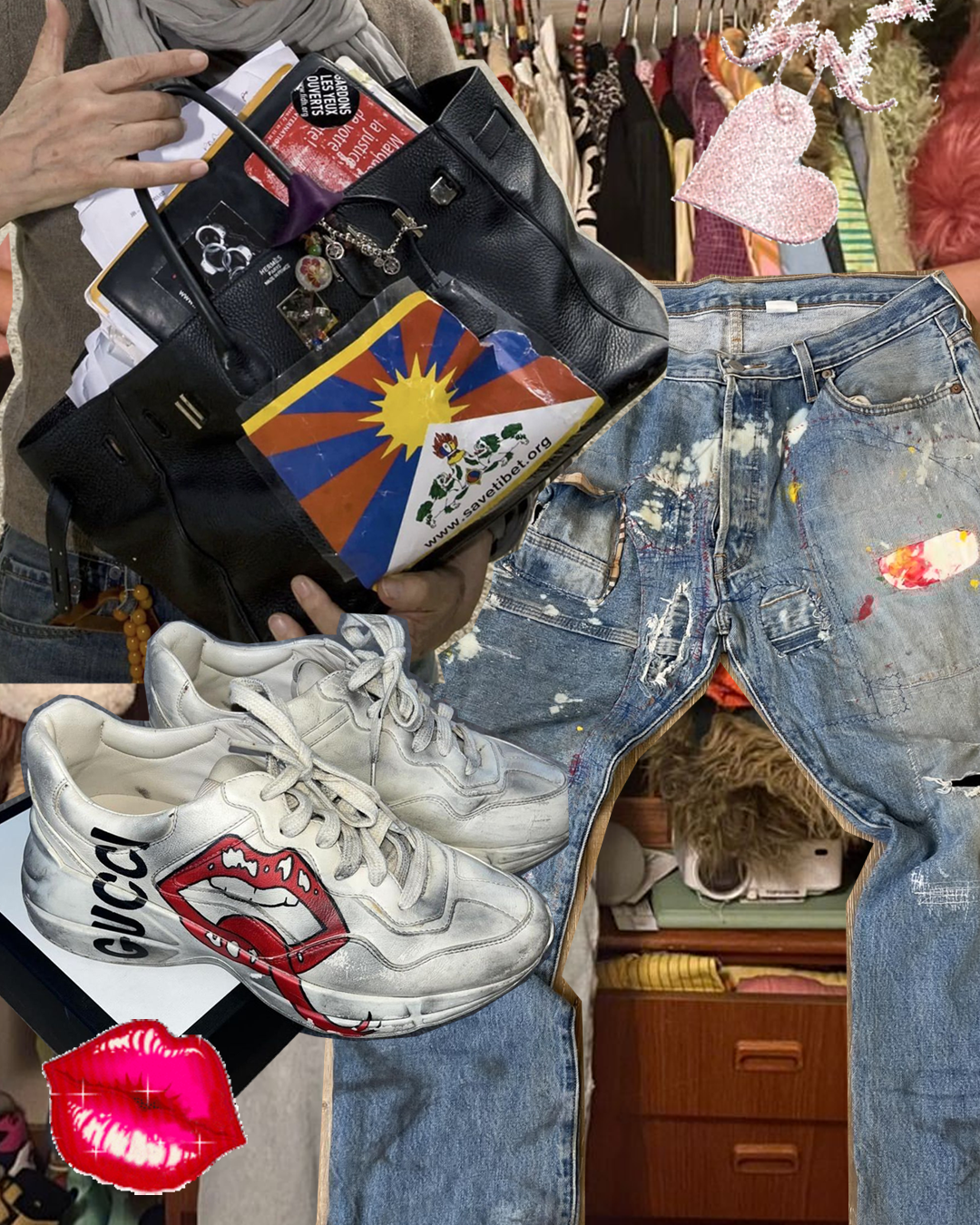
Fashion has always flirted with “distressed” as an aesthetic. Punk pushed this logic further in the mid-to-late 1970s, making destruction explicit, with slashed clothes, pinned and deliberately exposed as a refusal of polish. But once distress entered mass production in the 1990s and early 2000s, its politics began to drain away. What first emerged as the consequence of long-term wear, and then as provocation (as a way of questioning why newness had to look pristine), distressing has migrated fully into the mainstream.
Demna’s latest collection for Gucci marked a decisive return to the aesthetics of wear, featuring slouched, intentionally scuffed Jackie 1961 handbags and beaten-up leathers. The collection echoed a visual language he made famous during his tenure at Balenciaga, where fraying hems, eroded soles and garments that appeared half-finished became luxury codes in their own right.
Brands like Golden Goose, Maison Margiela, D Squared and Diesel, have built entire empires on the optics of pre-wear, with scuffed trainers, distressed finishes, ripped seams and oxidised surfaces, absorbed into luxury wear. Today, TikTok videos showing factory workers mechanically fraying denim with blades, sanders, acid washes, circulate widely, with split shock in the comments ("back in my day this was just called owning one pair of jeans your whole life"/ and, "I can't believe that's how frayed jeans are made?" to which another replies, "are you stupid!"). The factory fraying of jeans is a strange emblem of the phenomenon itself, revealing a manufactured lived-in-ness that isn’t earned, detached from its own history. Maybe beyond this, the factory frayed jeans are a symbol for our current culture, where the passage of time can be purchased, and belonging, history and slowness feel foreign to us.
___STEADY_PAYWALL___
The shift to distressing was crystallised with the auction of Jane Birkin’s original Hermès Birkin, which sold for over $10 million. The bag, still marked with adhesive sticker residue and decades of use, wasn’t valuable despite its wear, but because of it. Online, the moment detonated. Distressed luxury surged across resale platforms and TikTok feeds alike, with creators filming themselves battering pristine designer, like viral videos of Jake Alexander who distresses several of his birkins (both in bare feet, and in Tabis), and and other bags of people intentionally “aging” their designer items, as well as influencer Victoria Paris, who battered a brand new £3090 pound Gucci large Jackie bag against brick steps, to “Olsen-twin-Jane-Birken-ify” the bag.
“Owning a designer bag isn’t the issue (if it were, I’d be guilty too). Buying something new isn’t wholly the problem either. If it’s used, cared for, worn in, passed down, resold or regifted, people should be able to do what they want with their money. But intentionally damaging something instead of letting it age through use, or simply damaging it because one can, feels distinctly different.”
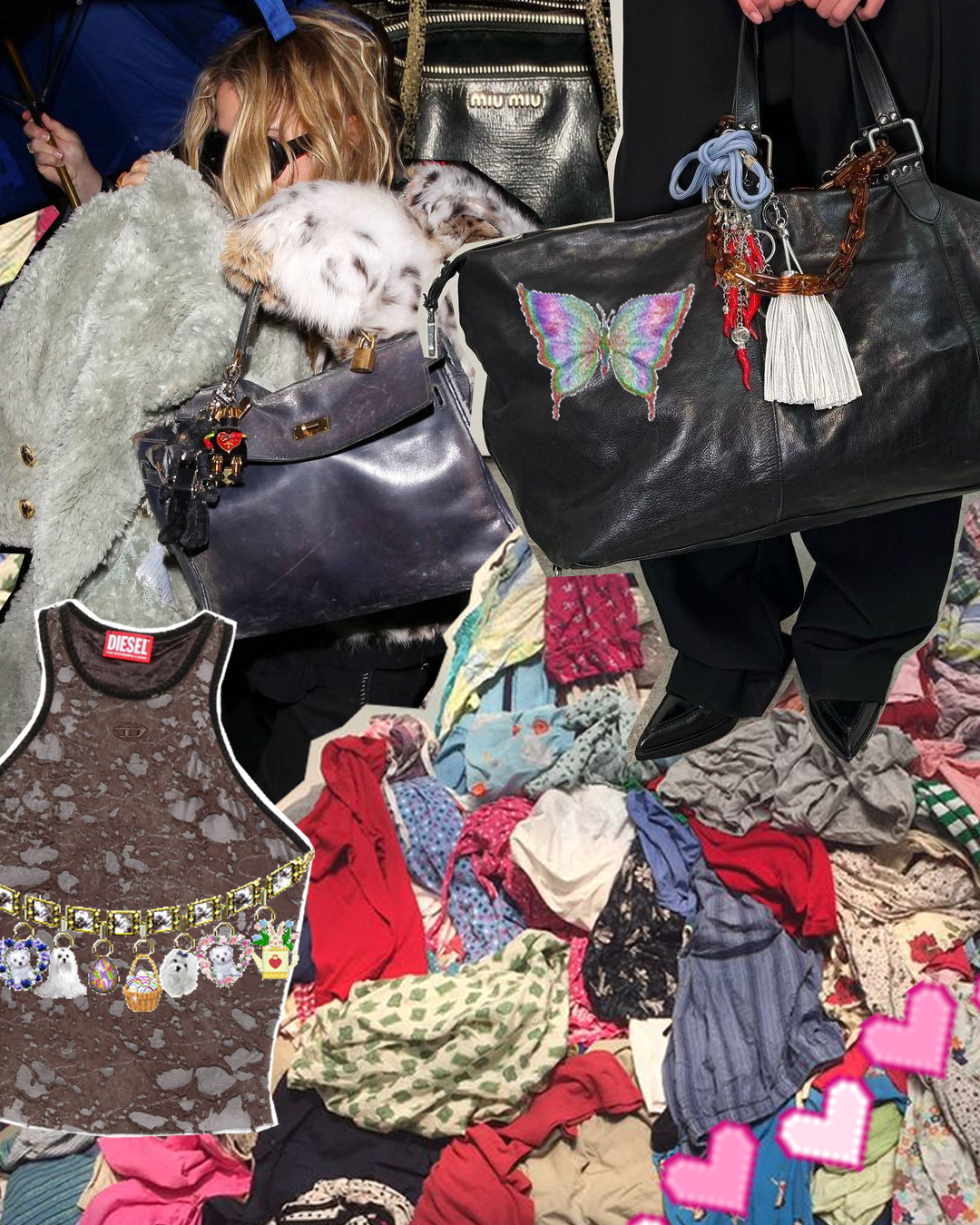
What’s so striking about a “Come-age-my-Birkin-with-me” video (aka, stamp all over it bare foot until the leather folds), isn't just the violence, but the haste. People aren’t waiting for bags to absorb their lives. They’re forcing history onto them, compressing years of intimacy into minutes of content. The lived-in look has become something to perform on demand, speaking to a broader impatience with ageing, accumulation, and time itself.
On the surface, this obsession with distress aligns neatly with a wider hunger for individuality. Personalised leather goods, embossed initials, bespoke hardware, and monogrammed journals have been currently trending online, all gestures which signal a singularity in an era of mass production. But this is where the contradiction sharpens. If what we want is individuality, history, proof of use, why not just buy vintage? Platforms like Vestiaire Collective, eBay or Vinted are saturated with pre-loved Guccis, softened Jackies, genuinely worn luxury at accessible prices. Yet the most viral battering videos almost always feature new bags. (Watch me jump on a £20,000 bag and ruin it, wearing £1350 shoes, or worse, no shoes at all, because I can).
Maybe our obsession with our accessories being lived in, directly contrasts what the cosmetic industry is telling us: aka, from Kris Jenner’s face-lift, to the constant bolstering of cosmetic procedures, we are told to look as un-lived in as possible, and instead appear tight, plump, and youthful. It may be that we are relocating visible time onto our objects instead, allowing our handbags, diaries and leathers to carry the marks we are no longer permitted to show ourselves.
In this light, the deliberate destruction of a pristine luxury object, especially during these times, reads less as style and more as a performance of excess. It's not just about taste, but about power, i.e. the ability to reduce resale value without consequence, and to disrespect the object, and by extension the house that produced it, precisely because replacement is always possible. In this sense, distress becomes a way of signalling that preservation is optional, and this feels like an implicit signalling of wealth or disposable income.
Owning a designer bag isn’t the issue (if it were, I’d be guilty too). Buying something new isn’t wholly the problem either. If it’s used, cared for, worn in, passed down, resold or regifted, people should be able to do what they want with their money. But intentionally damaging something instead of letting it age through use, or simply damaging it because one can, feels distinctly different.
Wearing leather is almost ritualistic. Everyone remembers their first pair of leather shoes, or heels. You somehow earn the buttery leatherness of your most loved pieces, and if you buy them resale or vintage, you can feel the life of someone else in their contours (which is a soft, and poetic thing). It feels akin to finding a hand written inscription in the front page of a second hand book, or train ticket from 2002 in a thrifted coat pocket, a small reminder that time has touched this item before you have.
I’m not saying we need to suffer through Blisterex, bleeding feet and a collection of forgotten relics, but buying something new that’s trying to look old, or ageing it artificially, purely because it’s trending, feels dystopian. Which raises the final question: is “lived-in” really an antidote to mass production, or just its latest iteration? In a culture that equates wealth with constant newness, new drops, new seasons, new trends, distress may simply be another manufactured effect. A way of simulating depth without waiting for it, or of buying (a semblance) of history instead of living it. In 2026, looking worn-out has become the ultimate status symbol, not because it suggests hardship, but because it suggests freedom from it.