The Internet is Dead's Guide to Recording a Podcast From Your Bedroom Floor
Words: Rob Corsini | Guide: Brittany Deitch & Sameera Rachakonda

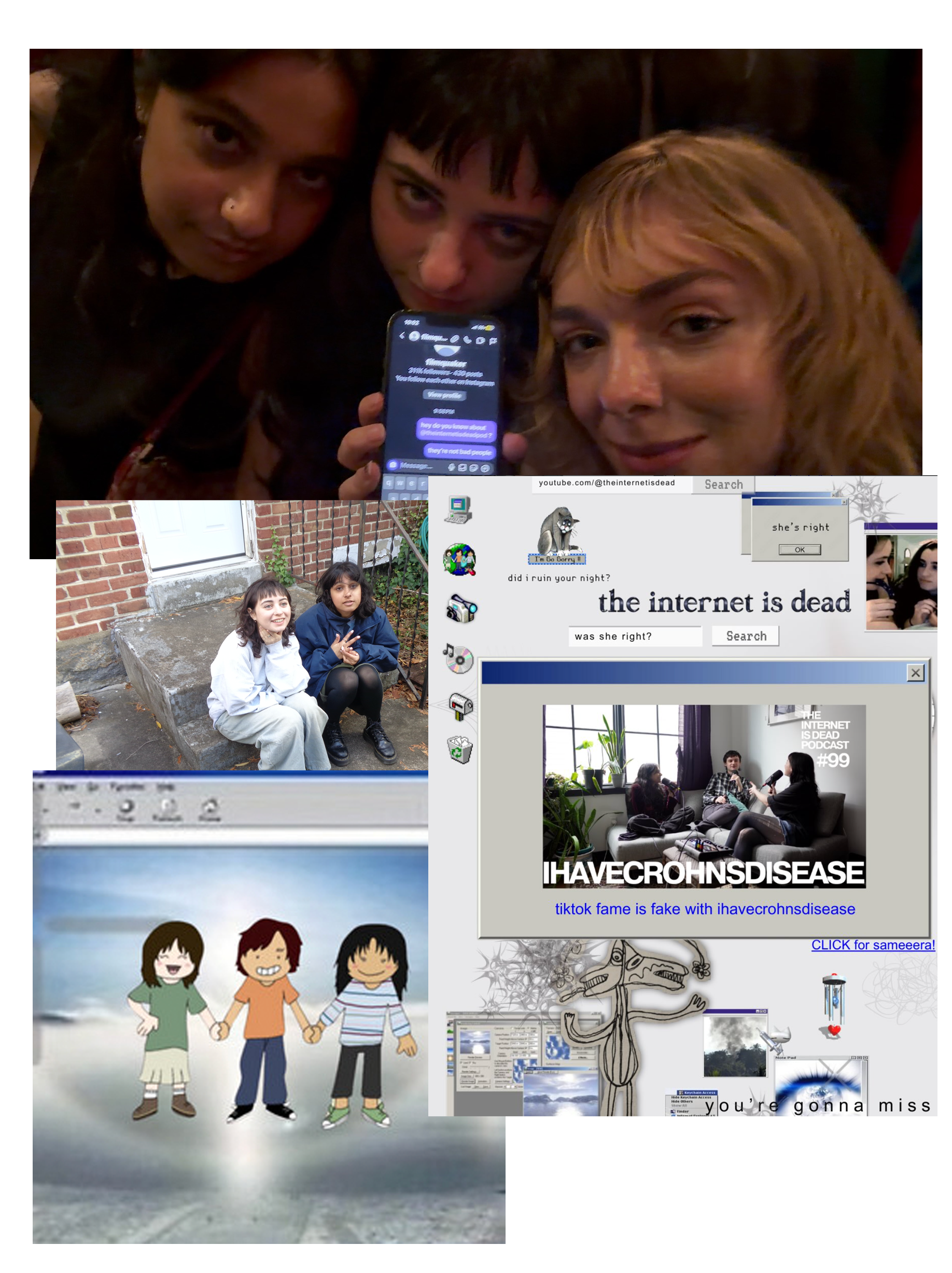
Together, Brittany Deitch and Sameera Rachakonda are the creators and hosts of The Internet is Dead. The podcast is about stan culture, fandoms, and the parasocial dynamics we grew up with online. Brittany and Sameera interview creators from across the internet, and they’ve also embedded a steel culture joke into our podcast by having every guest ask for Josh Ovalle to be a guest on the show.
With their 100th episode (featuring Fritz, otherwise known as ChloeLmao) just released, Brittany and Sameera have gone from having an idea to creating a podcast - all from the comfort of their own homes.
Here’s The Internet is Dead’s guide to recording a podcast from your bedroom floor.
What Are You Dying To Say?
With the way the media landscape has evolved, there's a podcast for literally everything. It’s kinda exhausting to exist in, so it’s important to be considerate about what you’re putting out in the online ether. Listen to if an idea is truly calling to you.
Sotce said in a video that you shouldn't write a novel because you want to write a novel — but because you have an idea that is so magnetic and powerful that it can't help but become a novel. We feel this way about podcasting. The intention shouldn't be to have a podcast, but because there's something you're dying to say. For us, this was stan culture. We were terrified someone would act on the idea before we could, and that’s how we knew it was important for us to create an entire podcast about. There were so many fandom stories/topics we felt drawn to talk about that we didn’t think anyone else would be able to approach from the same perspective.
You Just Need A Bedroom Floor
A lot of things have started, for us, on the bedroom floor. We used to fall asleep on Brittany’s college apartment 5x7 rug (which was the only open square footage in that tiny room) the first year we met. Sometimes alone, sometimes with a bottle of wine and our first ever boyfriends.
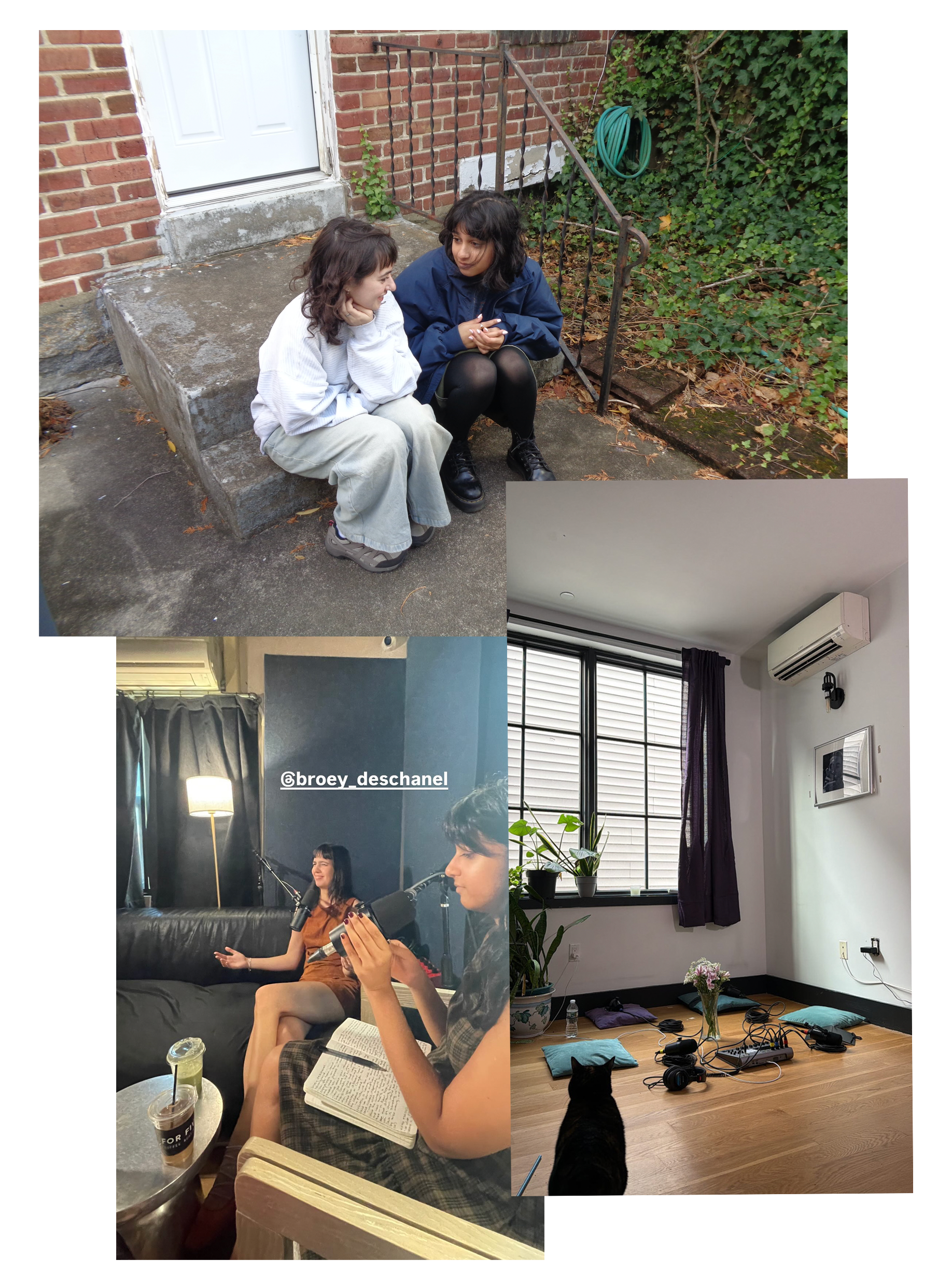
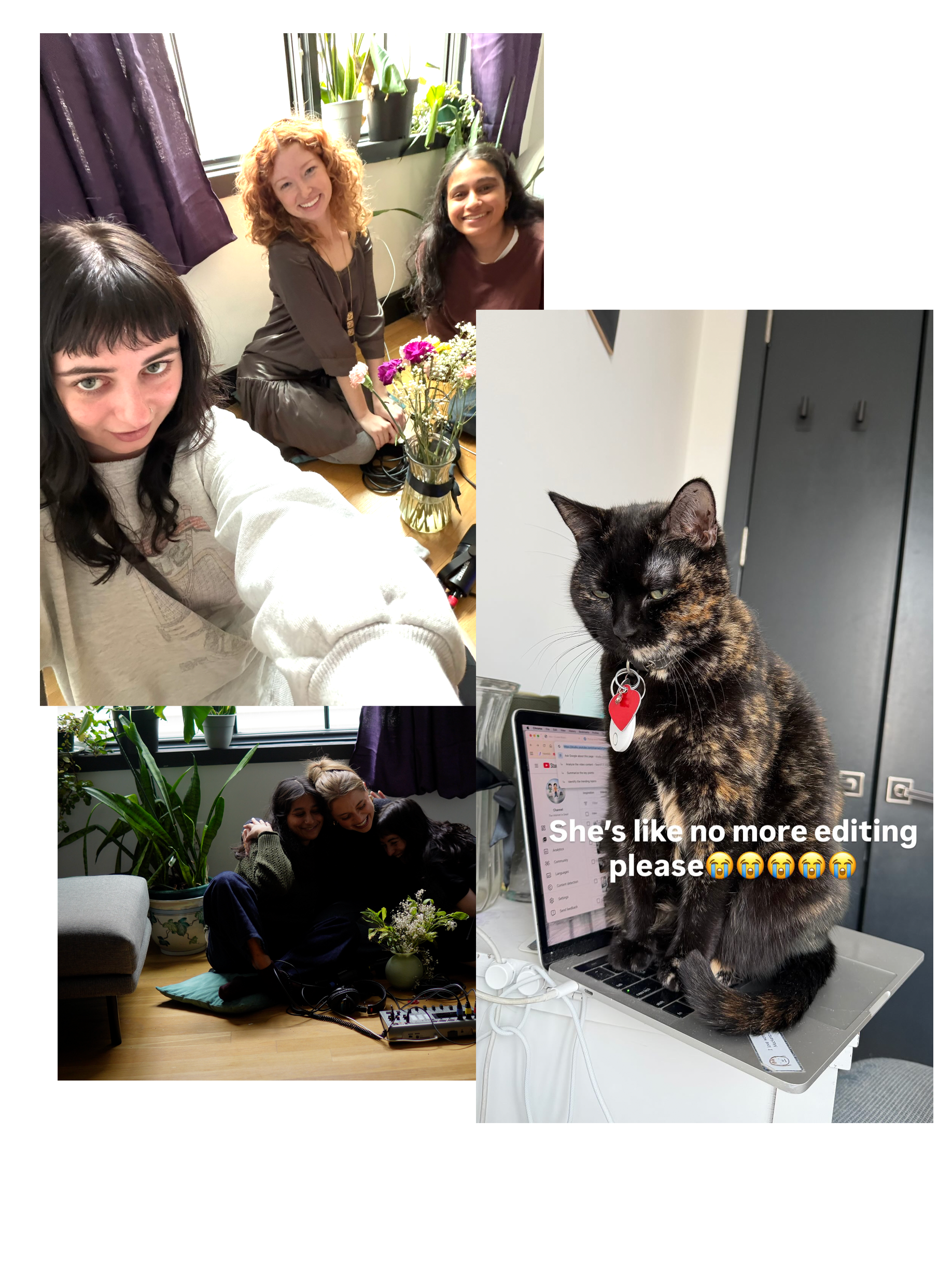
If we hadn’t started on zoom so we could reach guests from across the country, I think we would’ve gone camera-less and used cheap Amazon microphones on her bedroom floor too. Now that we’re in person, we record on the floor of Brittany’s apartment. You don’t need the set of Therapuss or Call Her Daddy to have a beautiful podcast - though our recent camera upgrade definitely helped.
When You Ask For Help, It Is Given
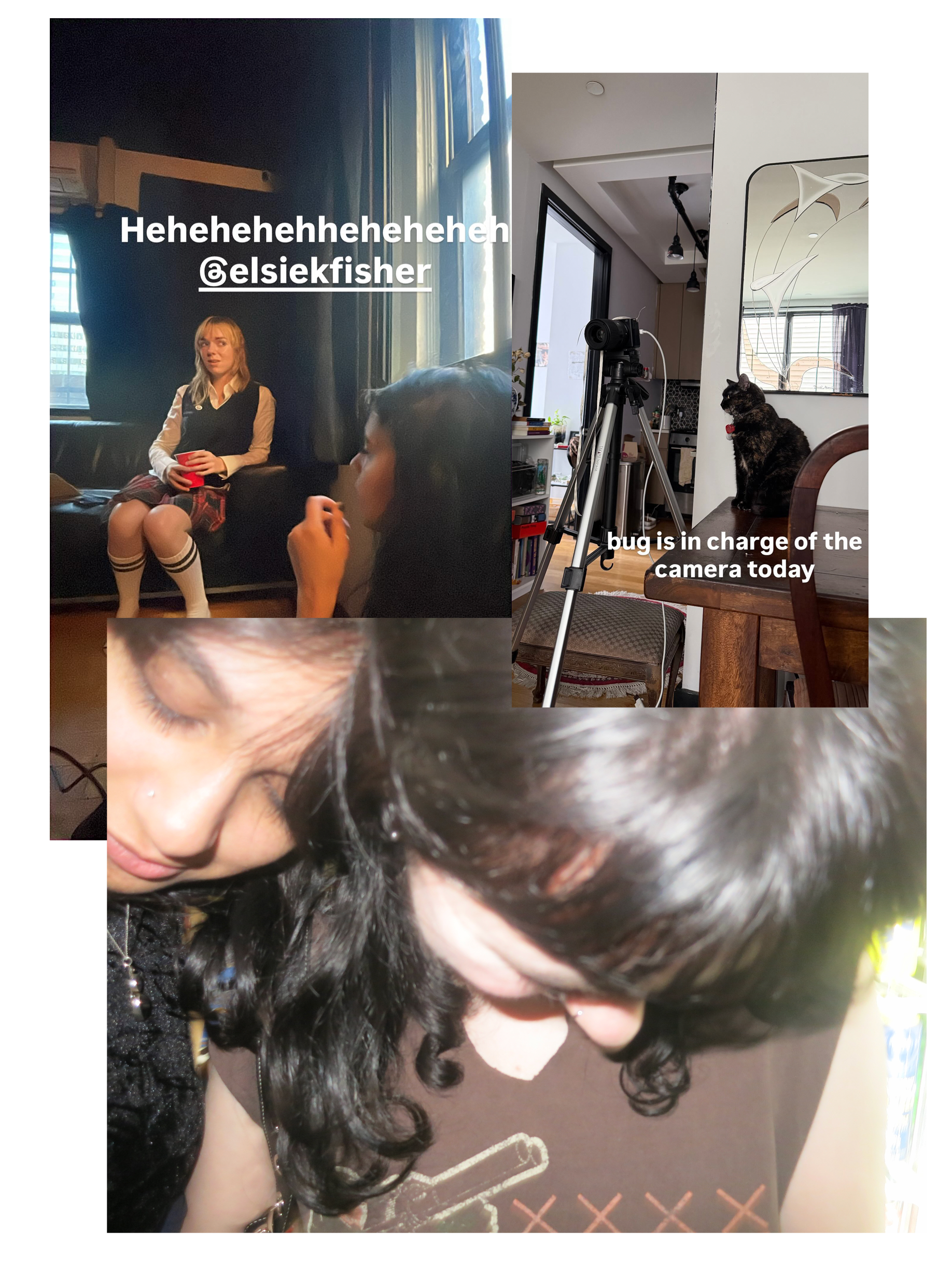
When we started the podcast, we recorded remote episodes on Zoom – both of us had the Blue Yeti USB mic and Brittany edited on iMovie until this past summer. One day we were at a birthday party, and we met a guy named Cameron who mentioned that he worked in a recording studio.
The next day, Sameera texted him and asked him for audio help, and he ended up letting us record in the studio for our first in person episodes. Meeting him felt like a gift, a push to keep going with the project, a sign from the Universe. But through filming a few episodes at the studio, we realized all we really needed was a floor and some extra microphones we didn’t have. We already had everything we needed to go in person once we bought a camera and mixer, but we’re forever thankful to Cameron for helping us get over that roadblock of going in person. It completely changed the energy and made our interviews feel much more natural. They felt way more like talking than they ever had before.
Honour Your Guests
With our guests, we're also embodying a deep desire to run into one of them at a party and to get to have a conversation with them that a lot of people would be too scared to initiate. We try to do this while still honoring them and bringing forth a level of understanding. (Brittany’s psychic friend once told her that the reason our interviews felt different from other journalists was because our hearts are more open, and we honor our guests.) We want every conversation to feel like we just got introduced at Funny Bar by a mutual friend, and now we're finding a way to bring up that internet joke from their Twitcam in 2011 that a small but strong portion of the internet was around for.
Have Heart-Open Conversations, And Follow The Energy
Our conversations with our guests usually start the moment they walk through the door, or when they log onto the zoom call. The energy moves from there, and we’re really aware that those beginning moments are what leads up to the overall energy of the episode. It usually feels the most natural and engaging when it’s someone who we really love and grew up watching, and we’re able to tell them this. Our favorite conversations are built off connecting each others’ realities through the things we saw happening online, involving our guest, and are able to swirl the perspective of the guest into a beautiful moment of recognition.
You Can Be As Annoying As Possible
We still get most of our guests from cold emails. In the beginning we wrote really long emails, explaining the podcast and who we were – we didn’t really know that you weren’t supposed to do that – but we think that actually helped since so many of our guests had never gotten to speak publicly on a lot of the topics we mentioned. We got Maya Henry from a cold email explaining that we wanted to bring a different perspective to an interview with her, one that actually unpacked the psychology of the One Direction fandom. And she later said something in our interview with her: “Nobody else is talking about the fandom!” – which really stuck with me. After doing a lot more emailing, acquiring guests from New York friendships, and befriending a lot of people we once looked up to – it’s like we’re everyone’s worst nightmare because we’re kinda impossible to get rid of. Like leeches.
Post In A Way That Feels Spiritually Right
A big moment for us was when I designed a graphic to mimic a computer desktop, and filled the screen with a bunch of internet references–if you look hard you can find a camren gif or the Drain Gang “Victim” cover art. This made Instagram posting feel less like marketing and more like a beautiful portfolio of our work that also felt Like Us. It’s really hard to not go insane when promoting your work, or feel like you’re giving in to something bad. We try to just move from a really genuine state. Even with our quotes, we try to think of them more like the type of tweet you see and know that whoever wrote it was moving from a really high energy in the moment.
Find A Best Friend
Our podcast would not feel anything like our offline dynamic if we didn’t start it together. When we’re approaching people, we’re able to maintain our sense of selves and bring through an energy that’s close to our actual personalities. Even as we’re thinking right now, we’re finishing each other’s ideas and adding to one another’s perspectives. We’re able to really easily identify, as we hear each other talk, the thing that we’re missing (and say it out loud).
The energy of our friendship is the energy of the podcast. And it’s how we’ve been able to make people comfortable enough to be themselves when we interview them, too.
