
Girls and Their Secrets - On Diaries, Shame, and Privacy as a Product
Words: Isobel Slocombe
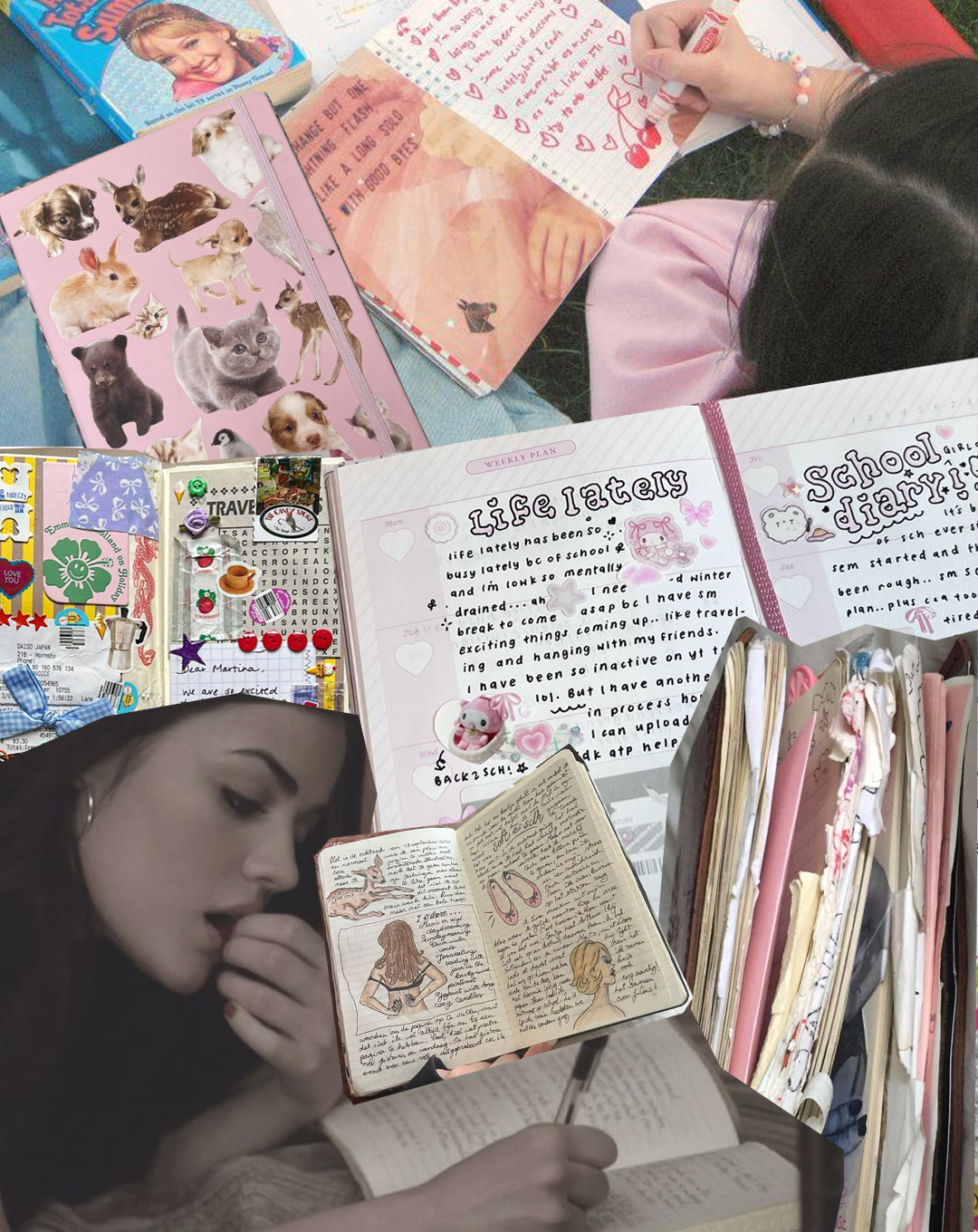
I went home for Mother's Day and found myself surrounded by the possessions I had left behind. Embryonic yet covered in thin layers of dust. Among them, a stack of old diaries from 2013 onwards. A mustard-yellow moleskine; ancient relic of the 'art hoe' epoch (you just had to be there). Three black leather and a ruby red, each memorialising a fragment of time. I worked my way through them. Tenderly, as if doing one of those meditative exercises that involves visualising your younger self and tucking them up into bed. Here, I found an archive of my past self, constructed messily and privately.
Girls have been keeping secret diaries for centuries. Bonnie J. Morris, in 'Before Harriet Blogged: Notes on Girls with Notebooks', traces how girls' diaries have historically been viewed through a lens of shame. Conceptualised as private documents filled with bodily anxieties and romantic confessions, deemed less serious than the public-facing journals of men.
Men’s diaries supposedly record ambitions, serving as important historical archives. Women's diaries record feelings. The implication being that one matters more than the other. Girls are taught and conditioned to be seen and not heard. The diary is a compromise. Feel whatever you want; just do it in private, in your own time, and hide it away.
___STEADY_PAYWALL___
“The lock isn't shame. It's protection, for something true enough to be worth keeping private.”
My mum, I discovered that same afternoon, had taken this logic to its conclusion. I asked if she had kept secret diaries, and she told me that she had for well over ten years. However, her diary keeping came to an abrupt end when she shared the contents with someone. The consequences led her to destroy everything she had ever written, for fears of what would happen if other loved ones came across her writing when she wasn’t there to explain the context. I asked if she regretted it and she replied, “I sometimes wonder what I would make of the girl/young woman of then but still believe I made the right decision.”
Morris discusses this phenomenon, writing that girls often destroy their diaries upon reaching adulthood, burning or throwing away the evidence of who they were and the confessions they can no longer bear to own. It's a sad ritual, but an honest one. The diary absorbed something and the destruction acknowledges that. Does making a diary public always end in devastation? In 2026, more so than ever, we see the private and the public increasingly blurred.
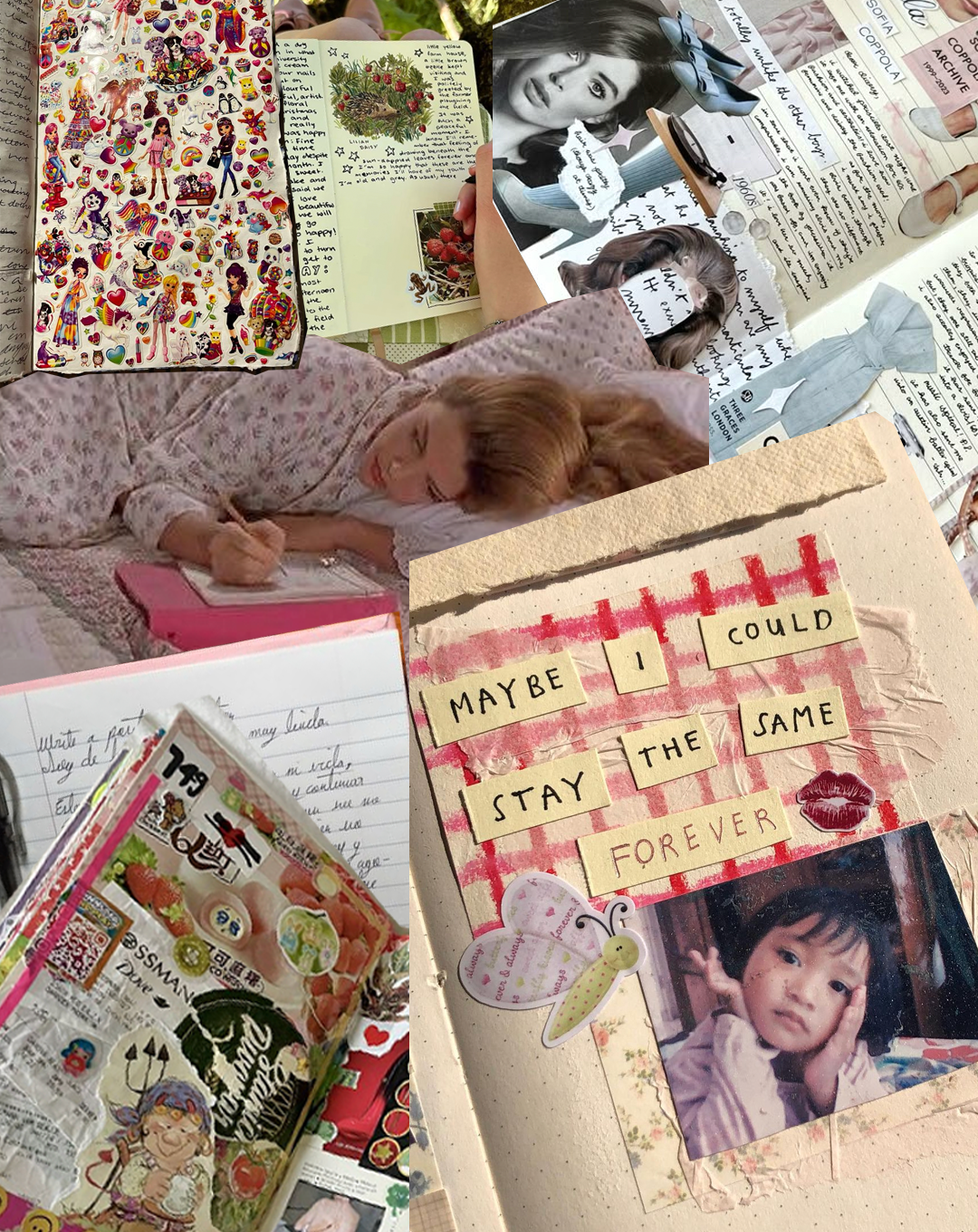
Now, diary-keeping is everywhere online. Not just the act of journalling itself, but the performance and the product. Leatherbound covers. Embossed initials. Silver studs and crystal charms. The ‘journal ecosystem’, a matching set of notebooks for gratitude, for daily logs, for dreams. Accompanied by washi tape, stickers and fountain pens. TikTok and Instagram are full of creators showing you their systems and spreads. The notebooks are closed in these videos, or opened only to reveal colour-coded spreads too neat to be the product of actual feeling.
What's being sold (and is being sold through affiliate links and brand deals and the architecture of social media engagement) is the aesthetic of privacy. The idea of buying into a private self reminds me of those hot-pink plastic electronic diaries from the noughties. As a child, I longed for the keypad password and the invisible ink that pledged your secrets are safe. The fantasy wasn't writing. It was containment. The idea that you could have an interior life and also keep it. The thought made me feel grown up, closer to being a real-life grown up woman. The content barely mattered. What you were buying was the feeling of having somewhere safe to put yourself. Then, as now, the safety was largely theatrical. Then, as now, the object was the point.
What’s changed is the scale and sophistication of the marketing rollout. The plastic diaries were sold as toys but the contemporary journal ecosystem is a wellness product, a productivity tool and a symbol of identity. It comes to us through an algorithm that rewards visibility. Which means that the supposedly private ritual of journaling must be performed and broadcast to viewers. The product has grown up with its consumers: It has raced to meet them, and to resell the same dream. Beneath it all is the lesson that your inner life is most valuable when it has been contained and polished.
None of this is the fault of anyone who engages in the journaling and analogue trends. There is something attractive about it - a return to the physical in a time of infinite scroll, a quiet insistence that some thoughts deserve to exist offline. I understand the appeal. I feel it too. And yet, the diary's power has always come from its privacy. From the fact that no one is watching. The frustration is structural, the system has found a way to monetise even the most private human impulse and then sold the product to the same girls who were taught that their feelings were too much in the first place.
I think about those diaries I found at home. The ugly ones. With inconsistent handwriting and long stretches of silence and then reams of pages documenting obsessions I'd entirely forgotten. No one will ever see them. They weren't made to be seen. And because of that, they gave me something back, not a curated self, but an actual one. A girl I used to be, still legible, still a little raw. That's what diaries are for, I think. Not ecosystems. Just evidence.
Proof that you were here, that you felt things, that the ordinary weeks contained more than you knew at the time. The lock isn't shame. It's protection, for something true enough to be worth keeping private. For now, I will refrain from destroying them.

