Girls in Film at 10: A Conversation with Nikola Vasakova and Becs Rainey
Guide: Girls In Film | Photos: Nora Nord
Make it stand out
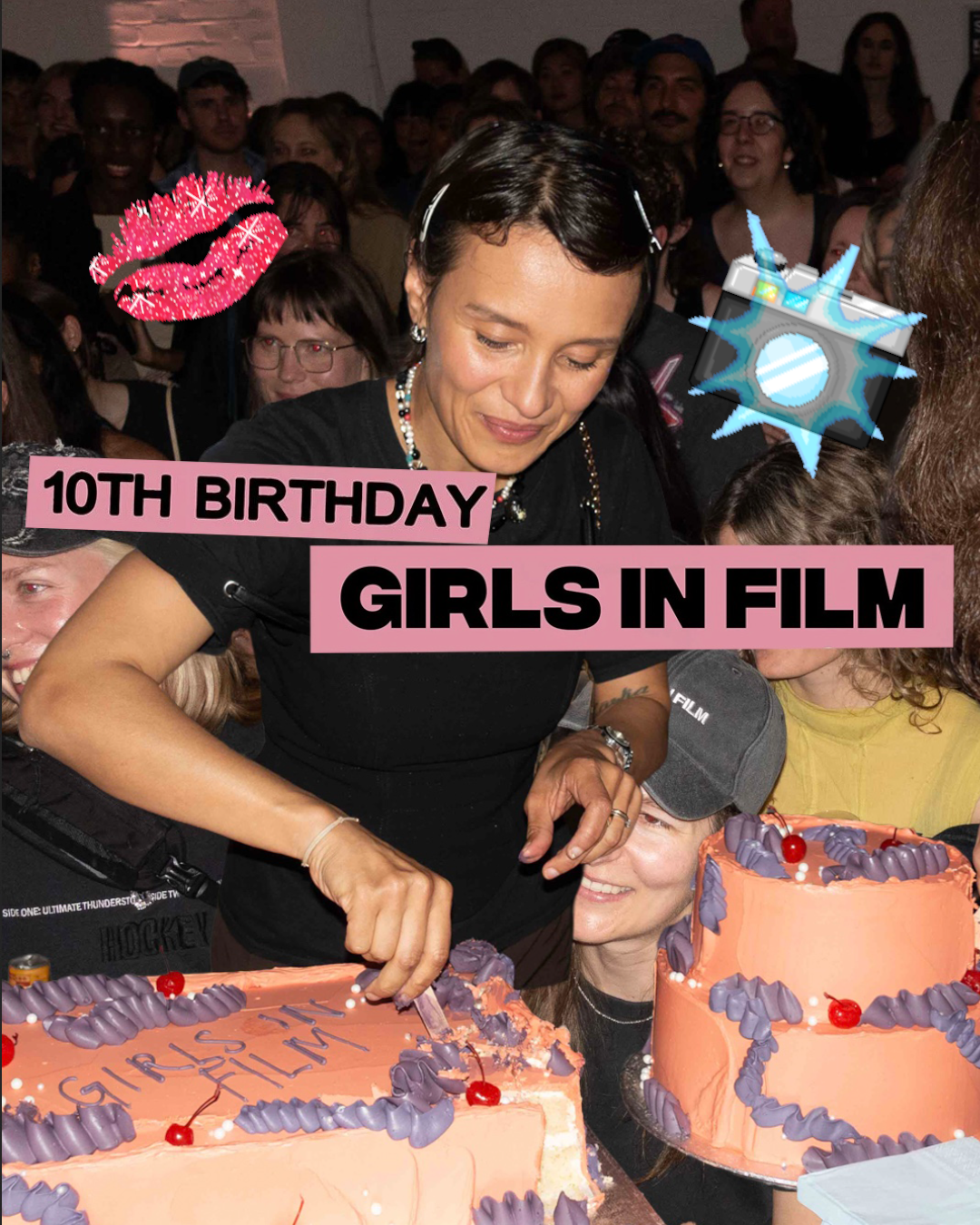
Girls in Film is a community organisation platforming and elevating female, trans and nonbinary filmmakers. Founded in London by Nikola Vasakova, GiF has quickly grown through its monthly events and online presence to a community of thousands of filmmakers around the world. The team of amazing volunteers in London that contribute to events organisation, curation and website programming is spearheaded by Becs Rainey. With 8 international branches from New York to Johannesburg, Girls in Film celebrate ten years this year. Nikola and Becs reflect in a conversation on the wonderful decade and what’s ahead.
Becs Rainey, Head of Girls in Film UK: You've answered this question so many times, but what was your motivation for setting up Girls in Film? Was it in response to something? Where did it come from personally?
What I always say is there was a couple of things at the time — I feel like the ground was prepared for a lot of female collectives to sprout out of this situation in 2016 of what we called at the time ‘fourth wave feminism’. I don't know whether that term still stands up in hindsight, but it felt like there was this new wave of feminism, in terms of women organizing and elevating each other and helping each other out, so I guess my efforts didn't come in a complete vacuum there. I feel that atmosphere had inspired a lot of people to start different communities and clubs and club nights etc., and film clubs too. I had had this idea for a while, and funnily enough the thing that I kept getting stuck on — or at least the reason I told myself, when you give yourself various reasons not to start something— was the name.
It's stuck.
I was like “the name is kind of shit and I can't think of any better name so I'm not going to do it”. I know. Now I'm like, it's not so bad. But of course, a lot of people have pointed out how exclusivist it is, which of course it is. Also ‘girls’— I am definitely not in the ‘girl’ category anymore. But I think that the atmosphere was the final push, because the idea was in my head, but I kept putting up barriers to myself psychologically. Probably just because of the old fear of failure.
But I never had this grandiose scheme for it to be this international community that it grew into. I genuinely thought this was going to be a small get-together, probably in a pub, which will happen once in a few months and maybe it will fizzle out, but that’s okay, at least we tried. Maybe because there wasn't any grand plan, any kind of vision beyond that simple idea, it was ready to be morphed into whatever else it eventually became. I always shout back to the existing groups like Women in Film and TV and other female film organizations who have been doing this for decades. I wanted to reflect their work in that I wanted it to be a kind of membership, but a free membership, because I didn't have any money and so I couldn't join WIFT or anything like that. I also wanted to do events for free. I just wanted to have that barrier of access removed completely, because in our 20s we had no money of course, and so that was my idea, to do something very accessible and very much for the younger people.
Yeah.
Because again, the existing networks were older, more experienced and so not quite as relatable or helpful for us. So that's where it came from. I have some sob stories in terms of workplace sexism — I think everyone probably does — but that definitely wasn't the driving force, it was more positive. It was more about having a space where people can connect with each other.
For a while I was the person who was connecting people. I knew female set designers or directors or DOPs etc. I saw that there were people around, and that I knew quite a few, and other people knew that I knew people, and they always asked me to connect them, and I didn't want to do it for too much longer. So I wanted there to be a space where that could happen naturally without me.
So those are the main reasons why GiF started. It's funny, I looked at the old posters, and there is this dormant website with all the old events still on it, and it started very simple. I literally just called the first event ‘Branded Content’. I think about the kind of curation and programming that we do now and how much thought goes into it, but back then I literally was just like, “I know three people that work in branded content, okay, let's go”.
I think that's why it's worked so well, and why it's grown so much even without any sort of plan or scheme. Like you say, you had no grandiose ideas about it, but what you initially did was in response to your own needs, and your own desire to connect and learn and educate. And that's exactly what everyone else who you’ve brought into the team has done, and it’s how the franchises run as well. This is what it has to be — ‘what are you interested in and what do you want to know more about and what do you want to tell other people about?’
Yeah, exactly, because I think what is important about communities like us is very much the FUBU spirit — For Us By Us. And the reason why people relate to it is because they feel seen in the community that gathers, because it comes from the people that are just like them as opposed to say a government run initiative that you don't necessarily know who's behind. Yeah, that spirit is really important and always has been for GiF anywhere in the world.
You've been with GiF for seven years and you were a Production Coordinator when you joined, and I don't know if I ever asked you what your connection was, your first experience of how you found it and what made you be like, "I'm going to email her”.
I was part of the Facebook group, and I was bored in my job at an unnamed company where you also worked. I was looking for some sort of outlet, something to exercise a bit more creativity and engage a bit more with the community, something that felt rewarding and that I felt more a part of.
I think you'd posted on the Facebook group looking for someone to help you produce events and so I just emailed you on a whim. I remember we went for a coffee or a Coke or something in Box Park, and I think you challenged me to put forward an event proposal and we ended up doing that summer series of films and yeah, that was it. I just enjoyed it so much.
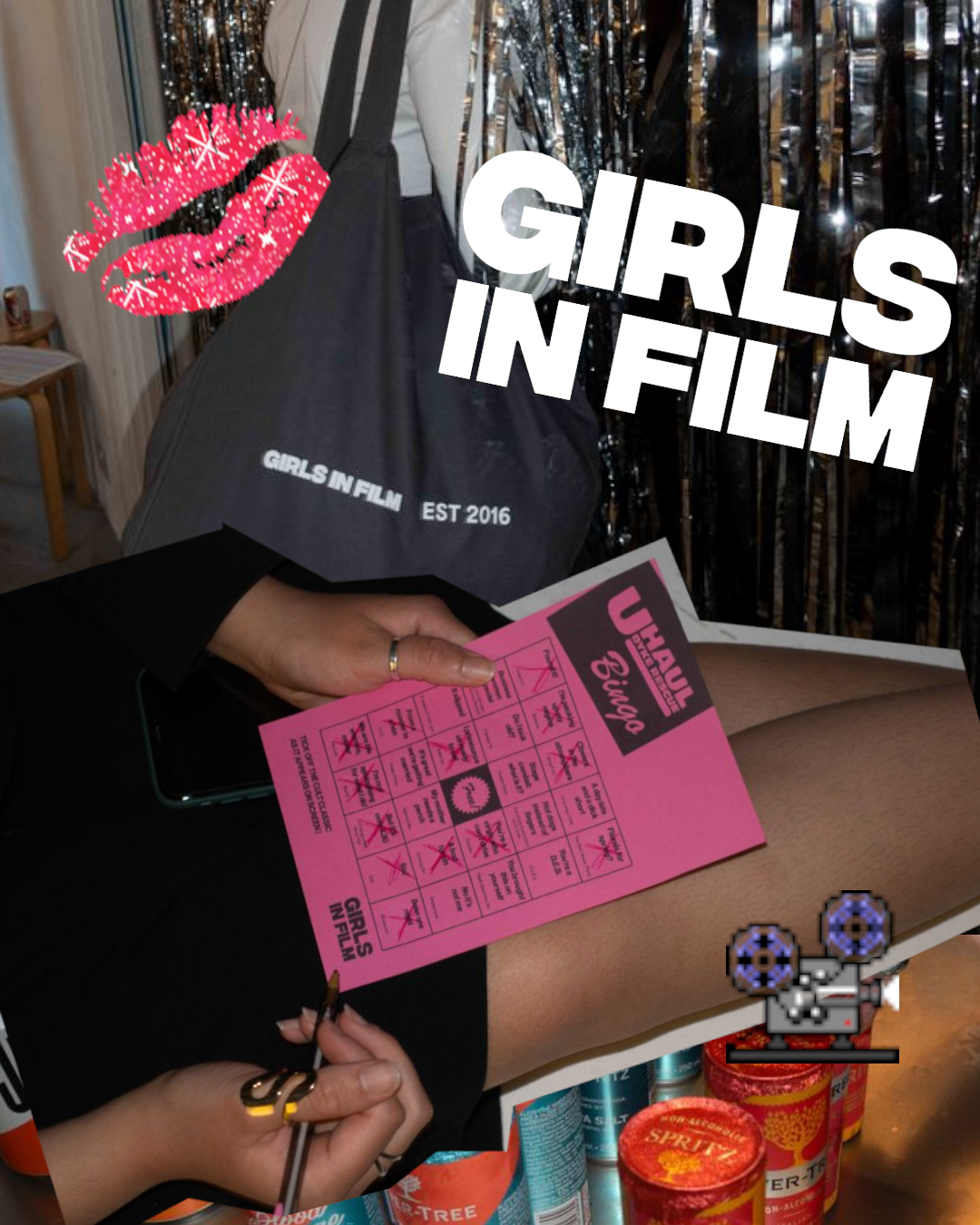
I really realised that I enjoyed getting people in a room and showing new work, engaging with filmmakers. I'm a Producer, and yeah, on shoots you bring all these people together all the time, but you're having a really long stressful day and nobody really gets to experience the final result of something together. By the time you actually get there, you don't even want to look at it. You don't want to look at that ad anymore. But something I really enjoy about events, and this kind of programming that's more educational, is that you can see and enjoy what people are getting from it live. It's a really nice feeling and yeah, that's what's kept me attached for so long.
I think sometimes when people come with feedback during the event, or tell you about being at our past events and liking something — like at our birthday party, someone came to me and said, " you're showing this film and I saw it at the global screening”, that we did a month ago, and she said, “I haven’t stopped thinking about it since’. It's these sorts of things I think that keep us going, if I can speak for everybody, but for myself for sure …
Yeah.
because I am honestly still amazed that we are here 10 years later, and it is difficult to keep people. I think a lot of people find it quite amazing that we have never tried to monetize, and that we are all volunteers. Everyone gives quite a lot of time to this, and I think the reason for it must be —it is for me anyway, and I'm sure for you as well — just that feeling of actually creating something that is very beneficial, and it leaves you with that kind of warm feeling in your heart.
And every time I see people at our events, I'm just like, everyone's a total hun! Being in commercial production often you feel like you're just going through the motions, and there's little enjoyment sometimes and…
Yeah, there's no feedback really.
and I'm also glad that we have managed all through the pandemic and after the pandemic, that it didn't dampen down the spirit of the collective meetings. If anything it's actually so much more important now than ever to be meeting in real life.
The socials have always been important, but other than the period when we had Lucy from U-Haul (U-Haul Dyke Rescue) doing our socials — and she wasn't a person that was like, “I'm going to raise your social media profile to 100K followers in a month” or whatever — we never cared about that that much. I think the social media has always worked on word of mouth, just like everything else, and what really really matters is that connection between people in real life as much as possible. The WhatsApp group that we have now and Instagram, it's all obviously supporting it, but I feel really the most important thing is being in the same room with people that are like you, and that you all try to get through this creative journey together.
Yeah, totally. Everything we do is in response to a conversation that's happening that we might have had or one of the team might have had. Maybe they've met someone, an exciting director that they want to platform, or they’ve had a conversation about a specific issue that they want to kind of bring to the table. Nothing is top down, ‘this season we're going to focus on this’. It also goes hand in hand with the fact that we're not government funded, so we don't have particular things that we need to report on, or restrictions on how money gets spent and what we're hosting. It's all just responsive, and I think that translates onto the socials. We could, in a different world, be super designed and very specific, but I think there's something kind of nice and accessible about the fact that you can probably tell it's three different people running the account with different tones of voice, and whichever designer wants to do a little mockup of something for us for free. I think it makes everything more accessible and it reflects the way that we work IRL as well.
Yes.So you've been running the GiF London branch since I took a hiatus on the other side of the world in 2020, and I just want to know, looking into the future with the amazing team that you put together now, what are your thoughts? I also need to mention that you are probably going to start a master's degree. I definitely get the feeling that working in GIF has prompted you to go for an MA in Curation and Programming, which is so great and I'm really really excited for you. AsI said, we don't have huge plans and it's never been that sort of modus operandi of GiF, but what would you like to see for GiF in the next few years?
I mean, it’s not surprising, but it's always really amazing to hear we've been invited into these quite institutional spaces, working with places like Barbican and Tate, doing stuff with BFI, and it's so rewarding to see the way that institutions and grassroots organizations can work together, and that the mutual respect is there. I think continuing to be present in those spaces, and in quite a tough climate where institutions are concerned that their audiences want them to be more accountable, they can find that accountability through working with grassroots organizations like us. We kind of give them that in return and that's amazing, and I want to keep working in those spaces. We definitely have a nice balanced team who have different aspirations and interests. Some people are more interested in curating and hosting whereas others want to run access schemes and facilitate. So I think we can keep sort of building these pillars.
I think it's also just about having that nice rolling team structure that we have, where someone will join at a point in their career or their studies where it makes sense for them to give up a few hours of their week at a time, and then it may not in the future. It's always felt really natural like that, and I’m always excited to see who new joins, and some people do a little bit here and there, and some people really get stuck in and get involved. So yeah, just excited to see who comes — not through the ranks, there are no ranks — but who comes through and who sticks.
And what they bring here.
Yeah, what they bring, and also, as you know, we get many requests for international branches all the time. People always want to pitch something, and it's another one where it’s always fun to see what sticks.
Exactly. Not all of them do, but I love what our branches are doing.
I think we had like LAand India already this year. So yeah let's see what happens.
Let's see.