Megha Singha and Rupangi Grover on Beauty Ideals, Young Indian Women and Making Images Together
Photographer: Megha Singha | Styling: Rupangi Grover | Hair and Makeup: Eleni Chatzinikolidou, Claire Gil, Anima Creatives, Riviera Lynn, Vishakha Jain | Featuring: Rhea Gupta, Shloka Birla, Aakanksha Porwal, Natallia Arora, Asfa Sinha, Danika Mude, Niharika Jaiswal, Sarah Honda
Make it stand out
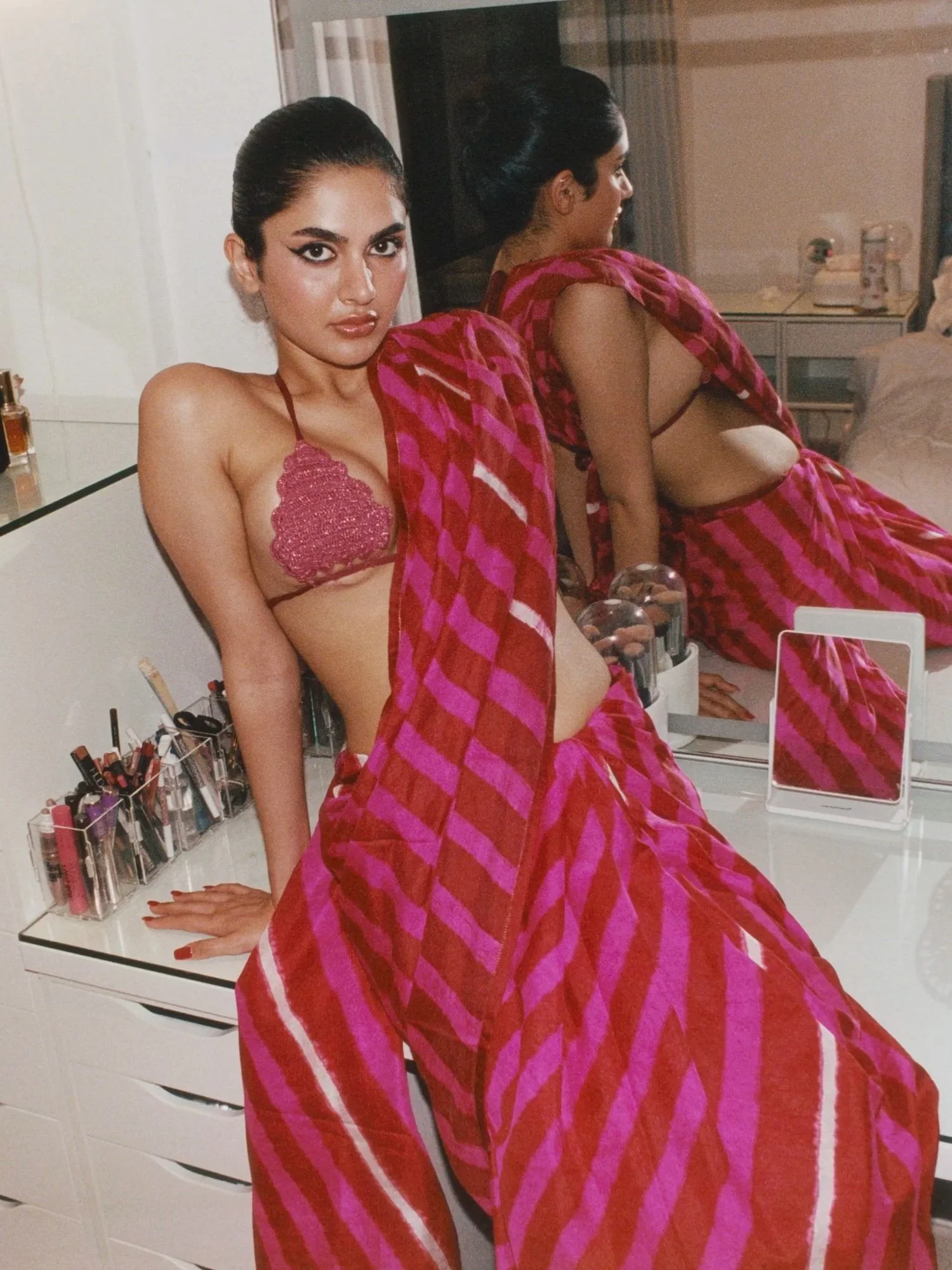
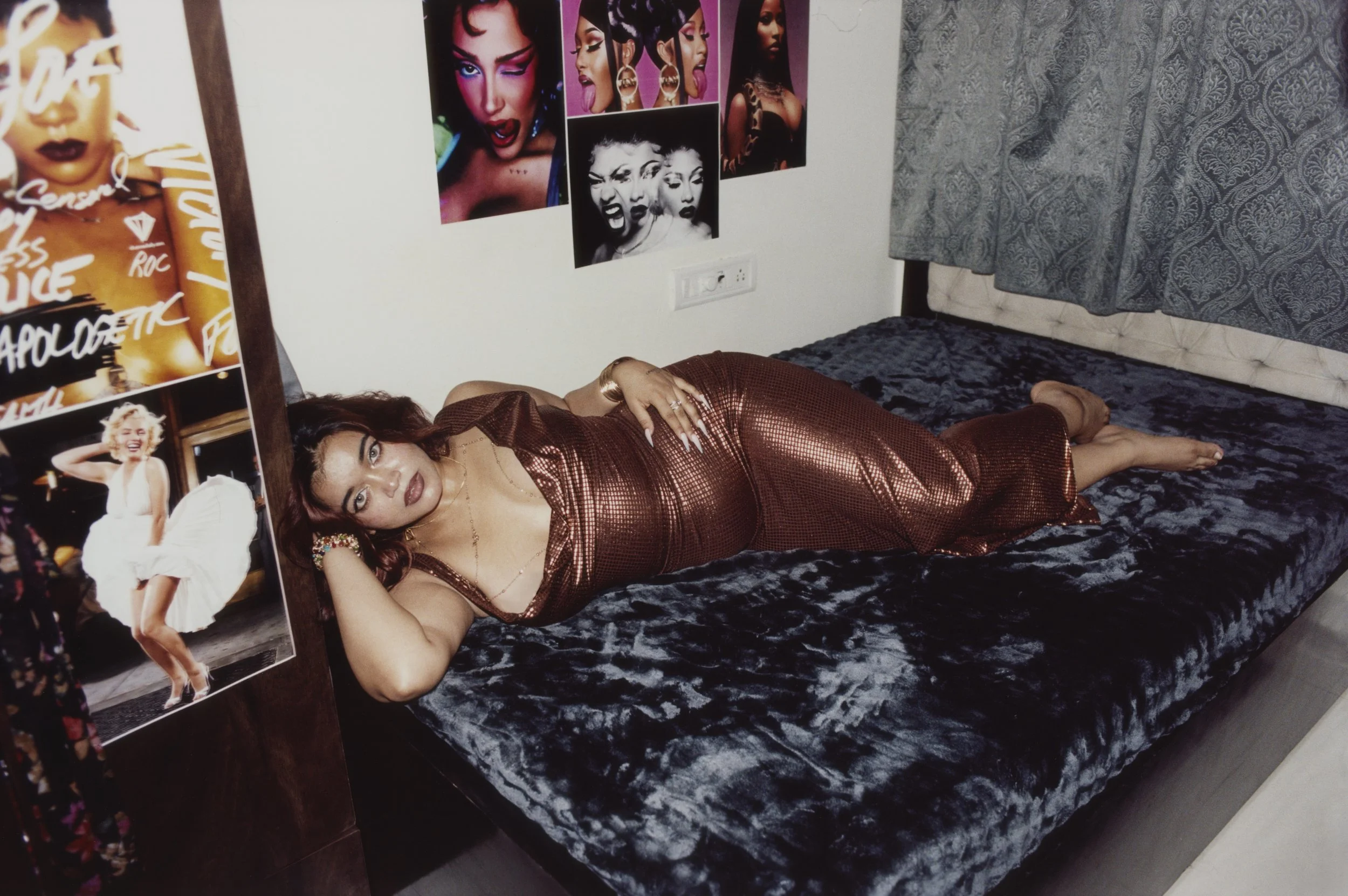
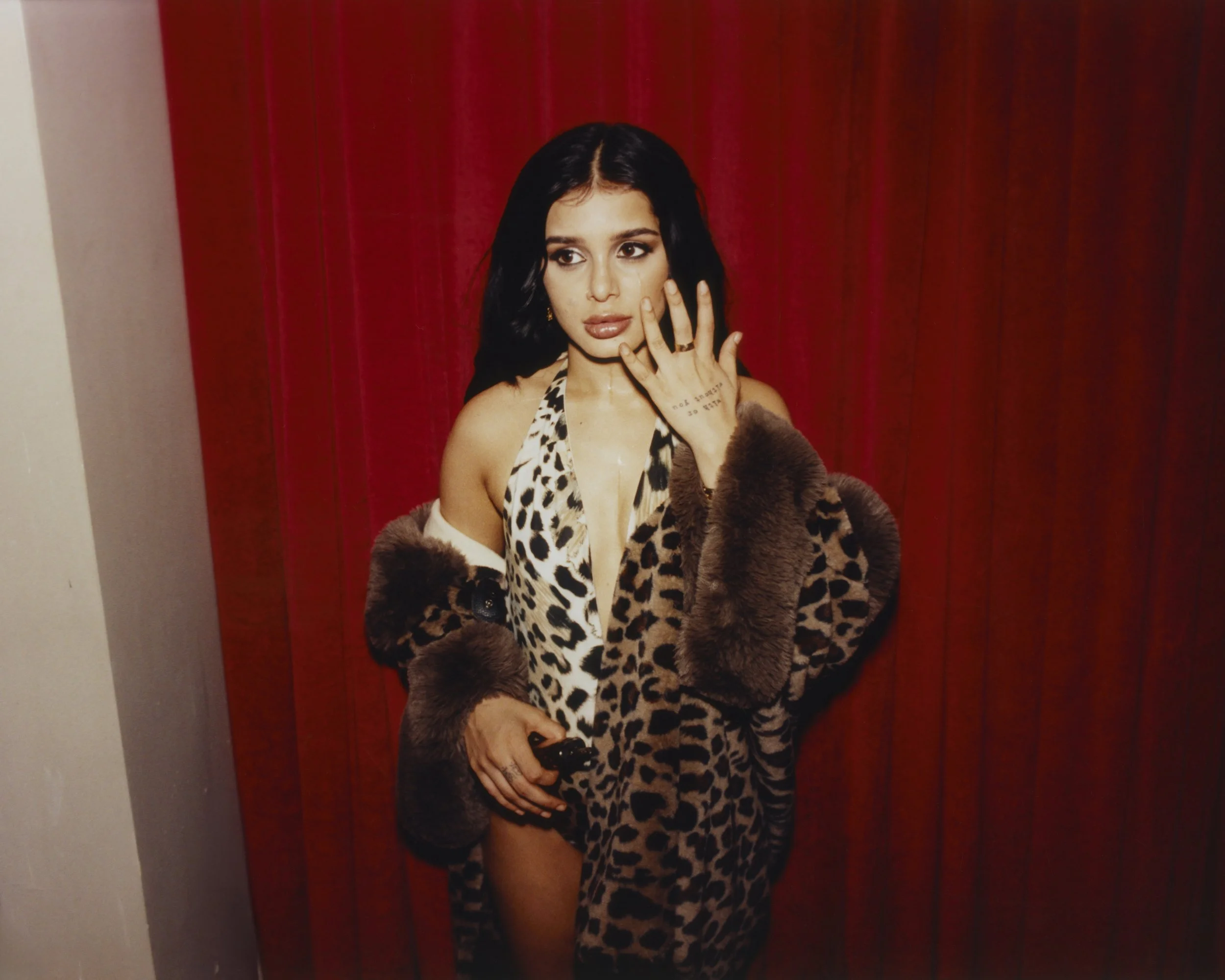
Since 2024, photographer Megha Singha has been working on a project exploring contemporary beauty standards and the women whose lives are increasingly shaped by them. Focusing on young women in Mumbai - among them influencers, reality TV personalities and aspiring actresses - the work looks at how global beauty culture is translated, adapted and lived within contemporary India.
To accompany the photo series, Megha spoke with stylist Rupangi Grover about beauty ideals, social media, image-making, and the process of making these photographs together.
Megha Singha: When we first started speaking about working together, one of the first things I remember, you were really interested in exploring ideas around aging and adolescence.
Rupangi Grover: Yes, age and beauty were the starting points of my interest, and then social media became an important lens through which I was thinking about those ideas. I was interested in evolving beauty standards, the trends of youth and enhancement that run through the digital beauty culture. Whether its glass skin, overdrawn lips or exaggerated hourglass figures, the body becomes a part of the trend cycle.
The books I was reading and the images I was seeing made me want to explore how beauty is performed, circulated, and consumed online. We're constantly looking at curated versions of celebrities and the people we encounter online, and I was interested in how these images shape the way we think about beauty, aspiration, femininity and ourselves.
What was it that drew you to the subject?
What I always wanted to explore is how global beauty ideals that originate from celebrity culture seep into corners of India.
Globalisation circulates images and products, but it doesn't circulate their original meanings. The same beauty practice can carry different histories, desires and aspirations depending on where it lands. Glutathione, for instance, doesn’t carry the same weight everywhere. In India, it exists within a much longer history of colonialism and colourism, where fairness has long been tied to desirability and class. A Rhode lip tint in Mumbai isn't just a lip tint- It can signal access, the fact that someone can travel abroad, or that somebody's cousin is bringing it back in their suitcase.
I was less interested in beauty standards themselves than in the women navigating them. And with no budget, I chose to photograph them in their homes. That limitation ended up defining the project for me.
We exchanged so many references when we first started working together. What were you obsessed with at the time?
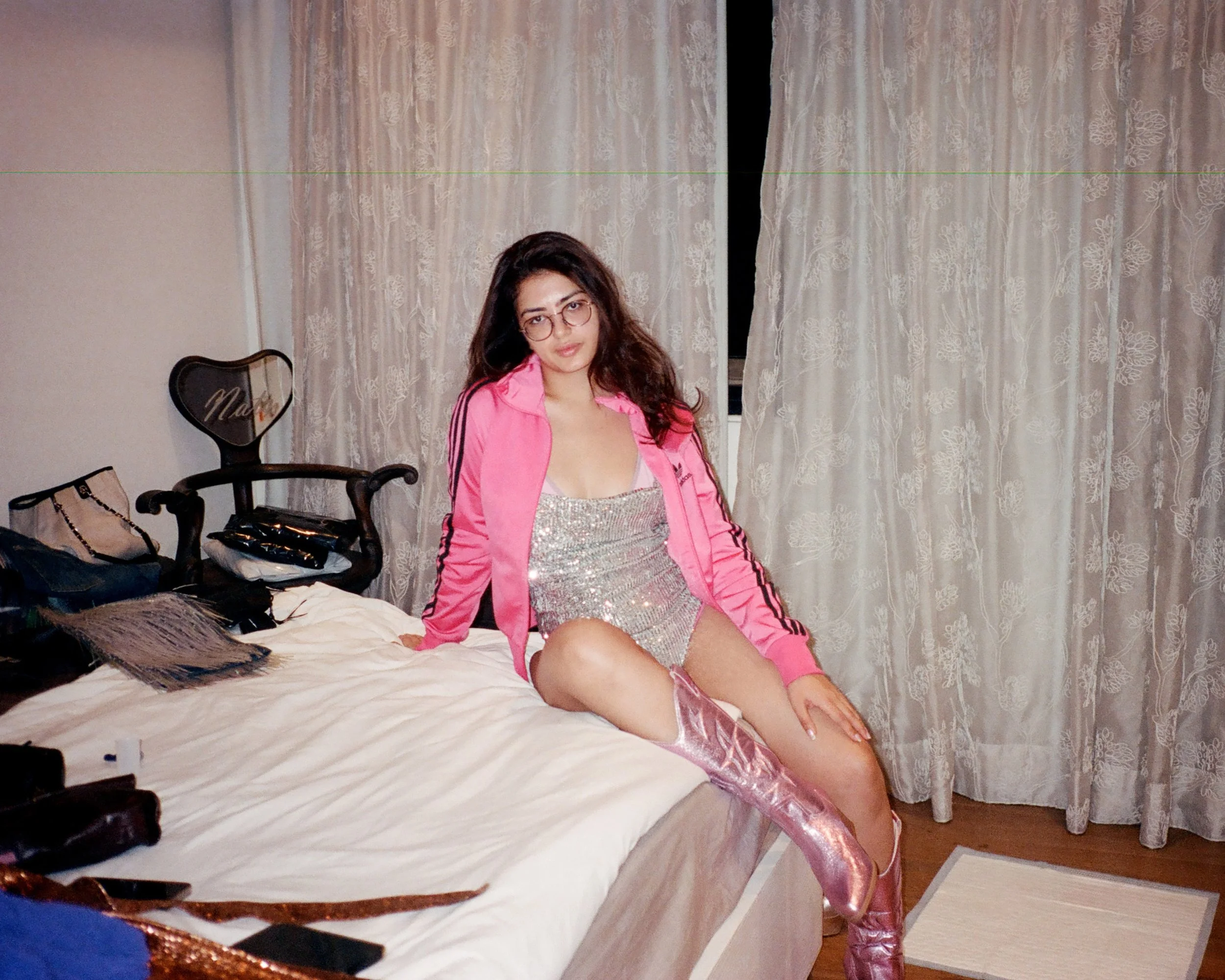
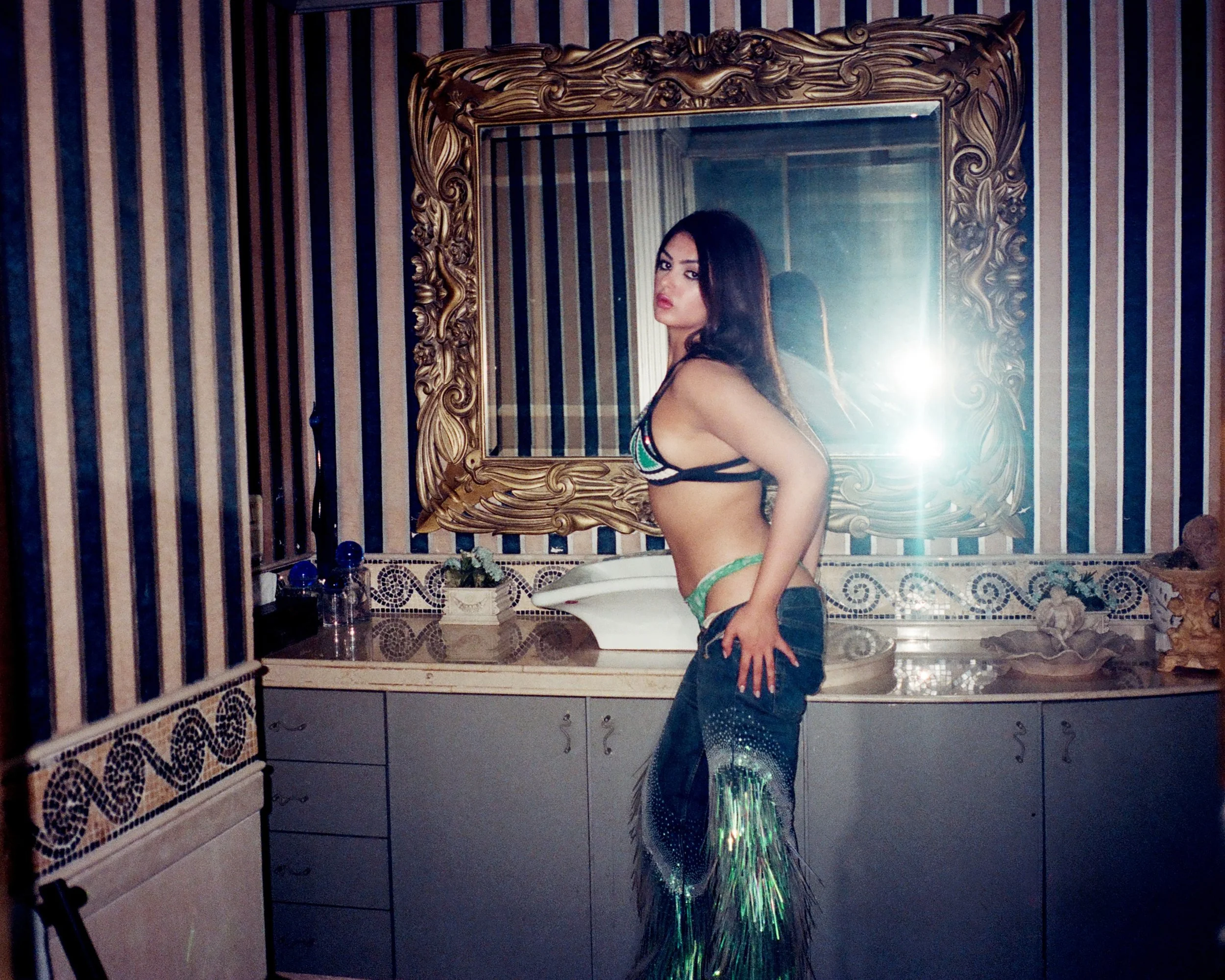
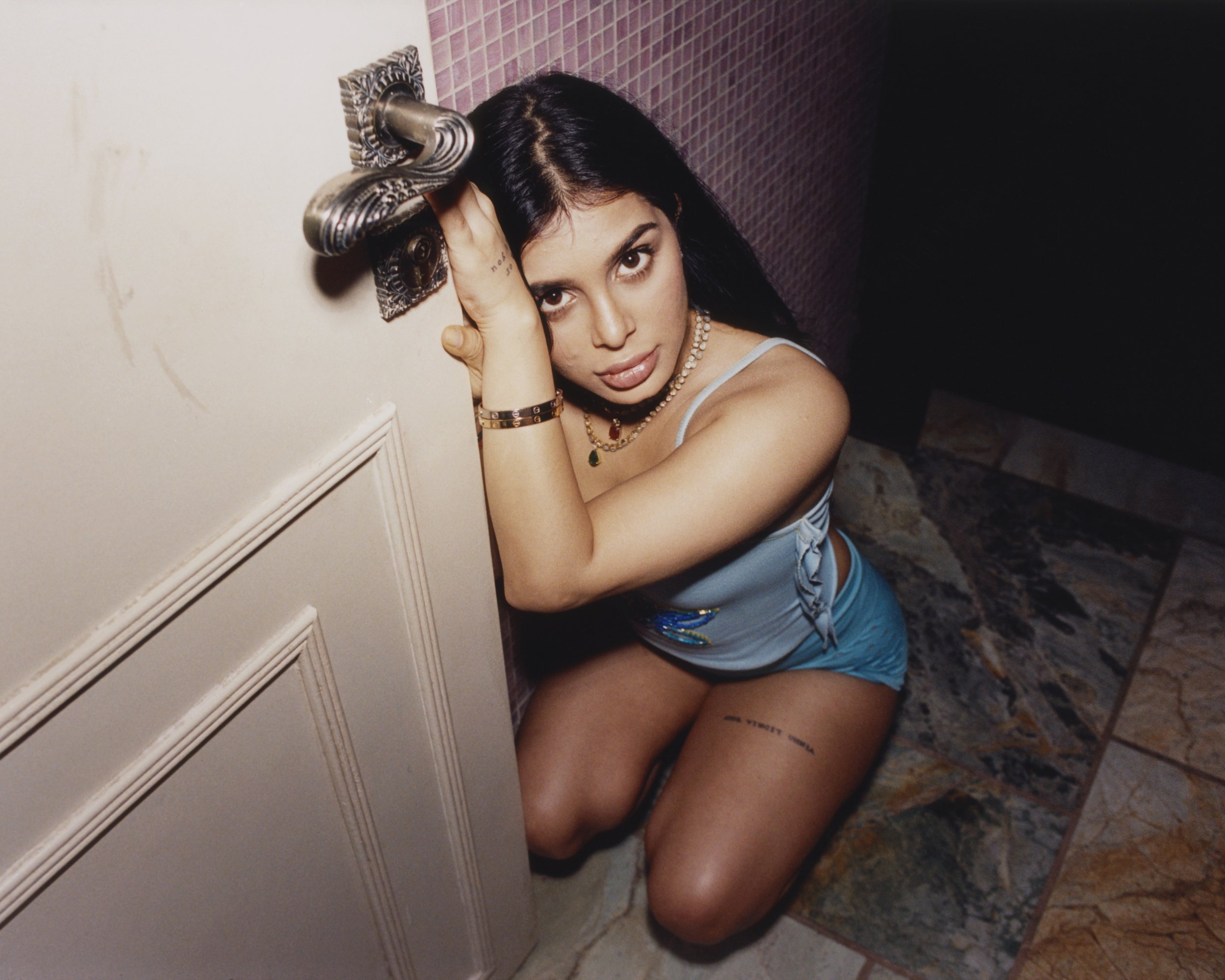
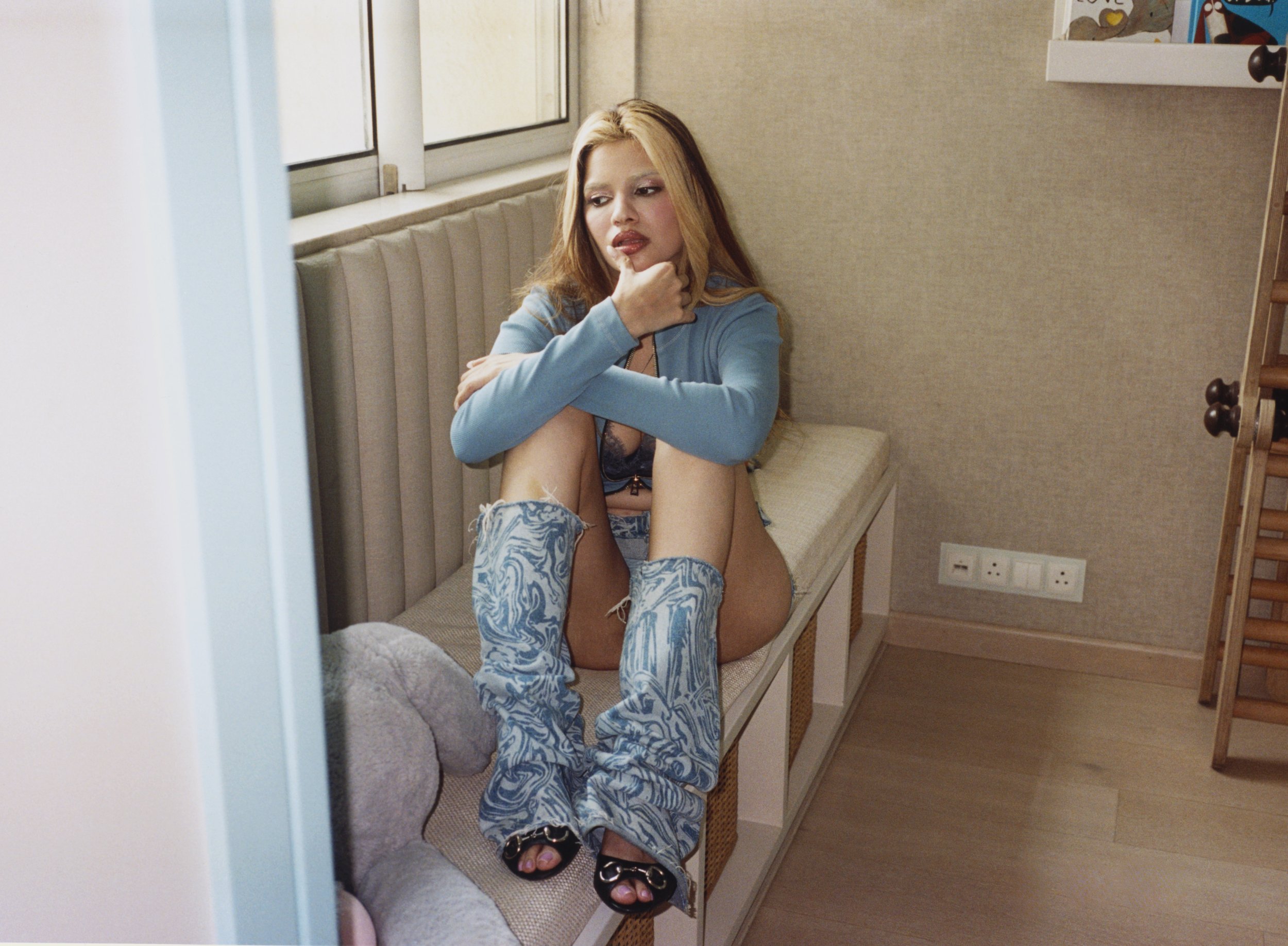
The writing of Jia Tolentino and Philippa Snow, a lot of the themes in their work overlapped with questions I was interested in around beauty and image culture on social media. I was reading Snow’s Trophy Lives: On the Celebrity as an Art Object. It looks at celebrity culture online, and how beauty becomes a site where aspiration, commerce, and performance all come together.
My Instagram feed was full of “morning shed” videos: people removing mouth tapes, heatless curlers, and face masks to reveal the results of their optimized beauty sleep. Videos of tweens reviewing skincare, many of the beauty trends and aspirations I see seem designed for the algorithm more than real life. I found myself thinking about these trends and discussing them with friends.
What about you? What were you looking at?
I couldn't stop thinking about Sean Baker's Anora and the way it moved between humour and heartbreak. That balance became important to me while working on the project. Around the same time, after Rebecca Horn passed away, I went into a deep dive of her work. I was fascinated by the relationship between apparatuses, the female body and performance in her practice. I was also watching Singles Inferno, a Korean reality dating show, and The Tribe, an Indian reality series centred around influencers.
Then there was my instagram feed: Kim and Khloe Kardashian had just landed in Mumbai for the Ambani wedding. Kim was in a Saree taking selfies with Aishwarya Rai.
You said that beauty trends seem designed for the algorithm more than real life, but I often find that they eventually make their way into real life anyway. My mum, sister, best friend and I keep trying versions of them ourselves. Did your relationship to these ideas ever shift from observing them online to experiencing any of them personally?
These trends become more visible when influencers and celebrities share it online, but it’s a cycle, really. The things we see online shape what feels desirable, and then start showing up in everyday life too. My friends and I have discussed beauty tools and the kind of Gua Sha I should buy. I'll DM my mum a new product, a peptide or a silk pillowcase that everyone's talking about online.
How did you approach styling the girls?
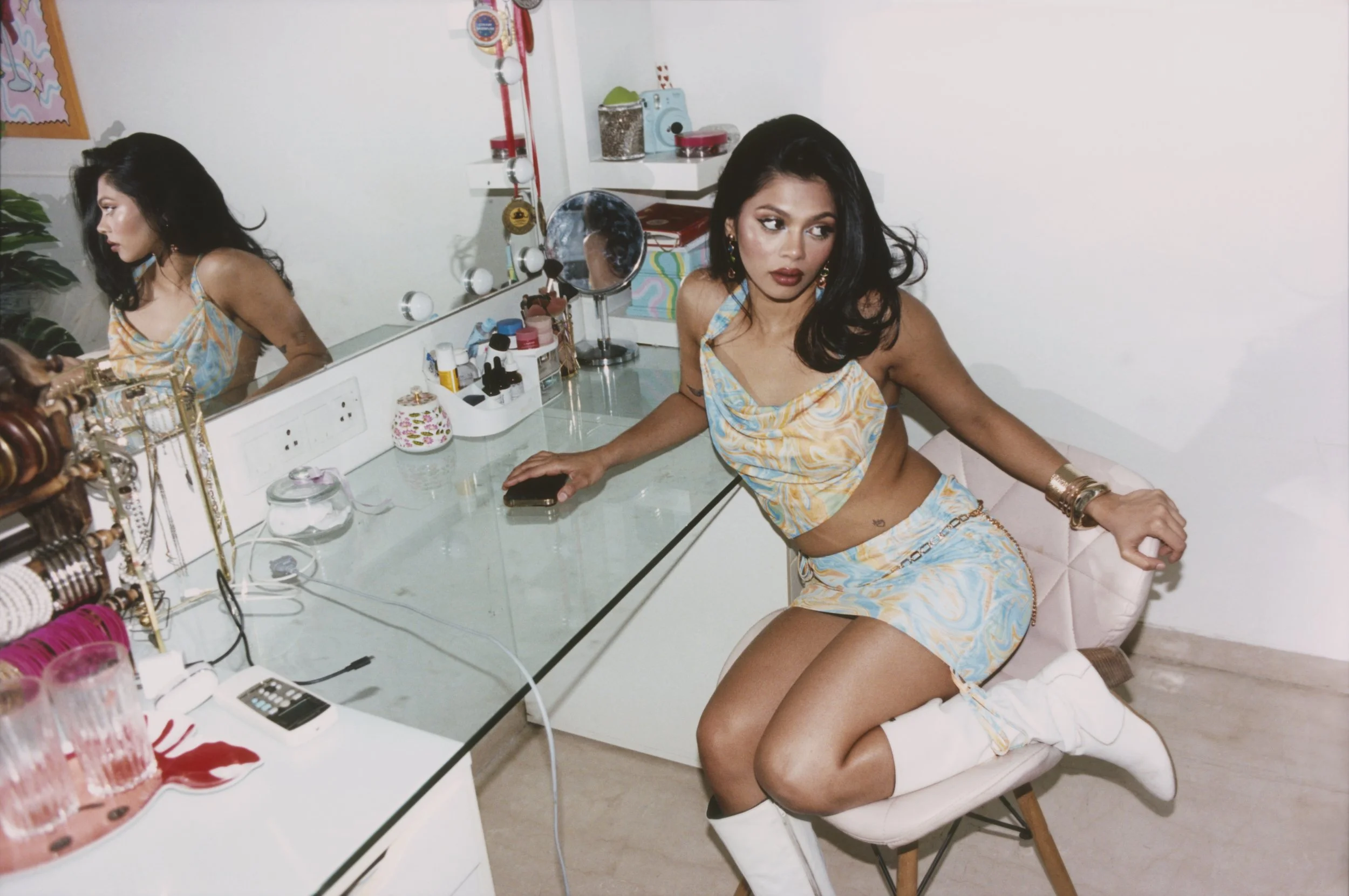
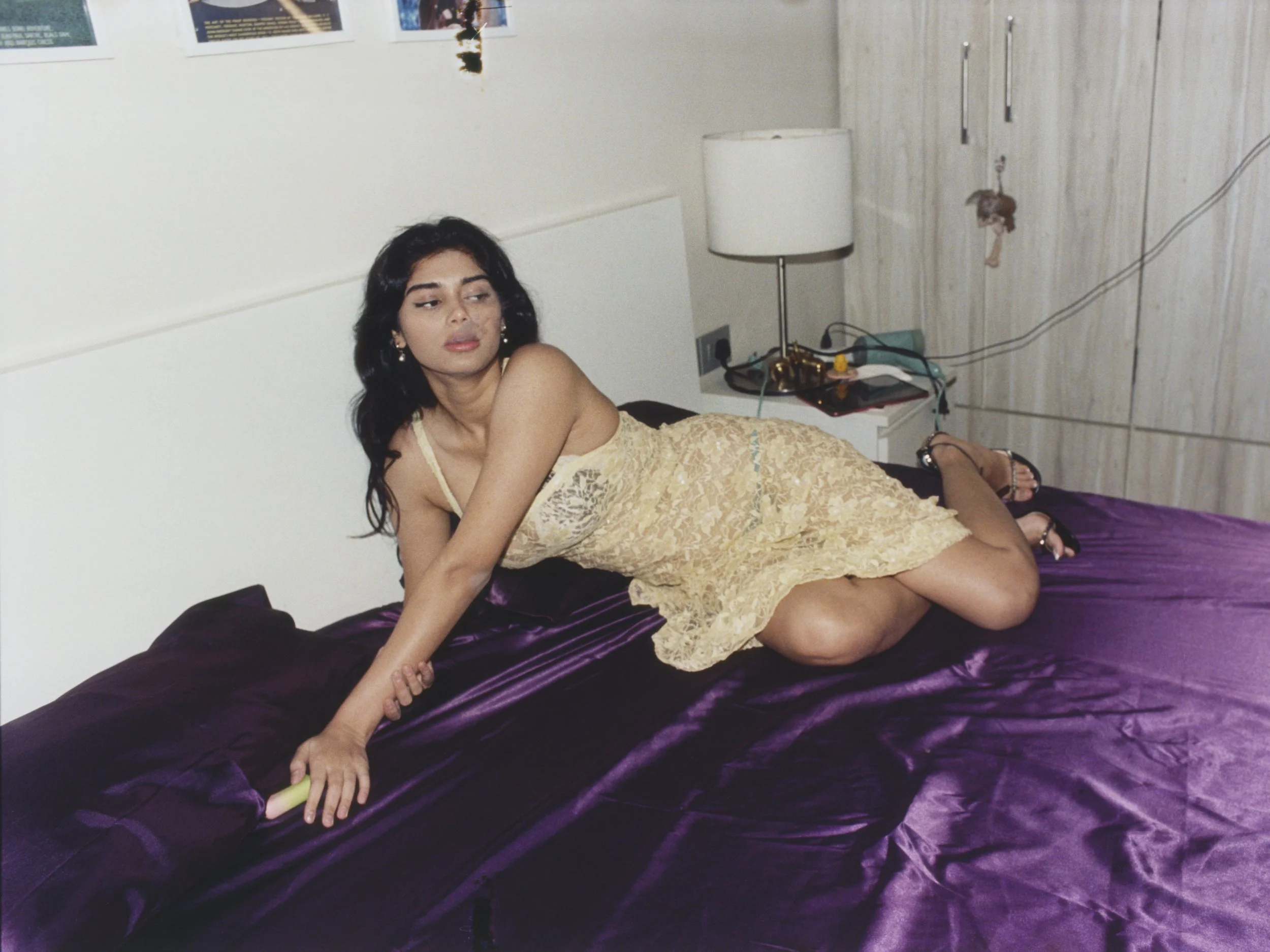
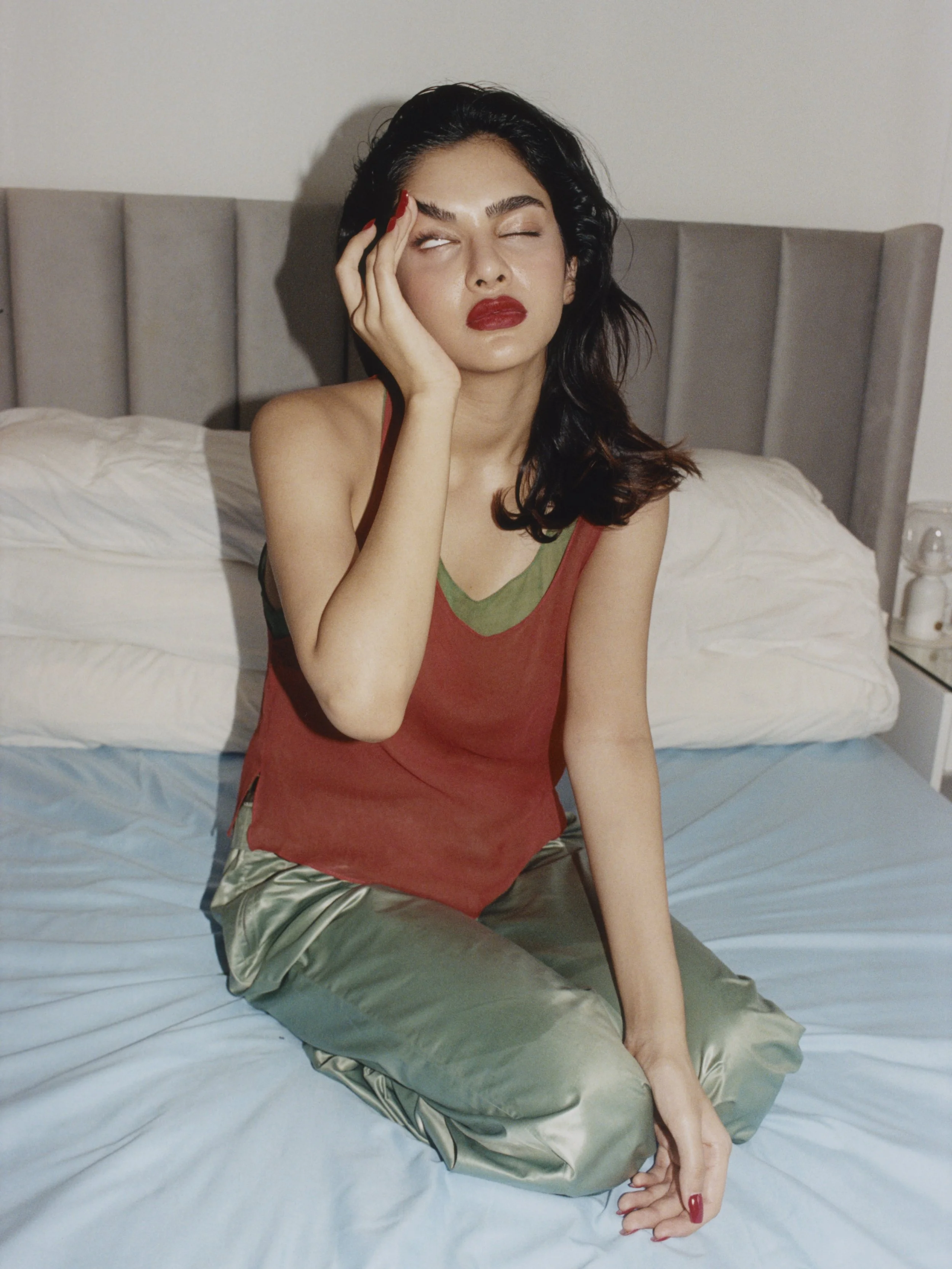
I wanted the styling to reflect the visual tension of feeling intimate and familiar, but also consciously constructed for the image. The looks move between pieces that feel grounded in everyday life- camisoles, jeans, and outfits that feel more camp.
A lot of the process happened during fittings, playing dress up with the girls and sometimes pushing them outside their comfort zones. The wardrobe combines pieces from my own wardrobe, contemporary Indian designers, and the girls’ own clothing and personal items.
I was also rewatching Sofia Coppola films, particularly Marie Antoinette and Priscilla. Their colours, costumes and depictions of girlhood had me thinking about youth, fame and the heavy scrutiny that comes with it.
The girls have such strong ways of presenting themselves online that I kept wondering whether I’d be able to do justice to that world through the project. Did you ever feel something similar while styling them?
I definitely felt it. The girls all had such strong visual languages online, and I was conscious of not letting my approach be shaped solely by my own reading of those images. It's easy to look at someone's online presence and start building an idea around it, but I didn't want the styling to simply respond to or recreate what was already there. The conversations I had with the girls and my own thinking around the themes of the project all fed into it.
What was it that helped you navigate this feeling?
I felt the pressure too. But I don’t think I saw it as something that needed fixing or navigating. I was also using their own images as references a lot of the time. I always felt that they understood their world better than I did. The more I got to know them, the less interested I became in trying to define who they were, and the more interested I became in just making pictures together.
There’s been so much conversation recently around femininity, desirability and beauty standards being shaped by male fantasy and power structures. Do you think about that at all while working with styling and image-making?
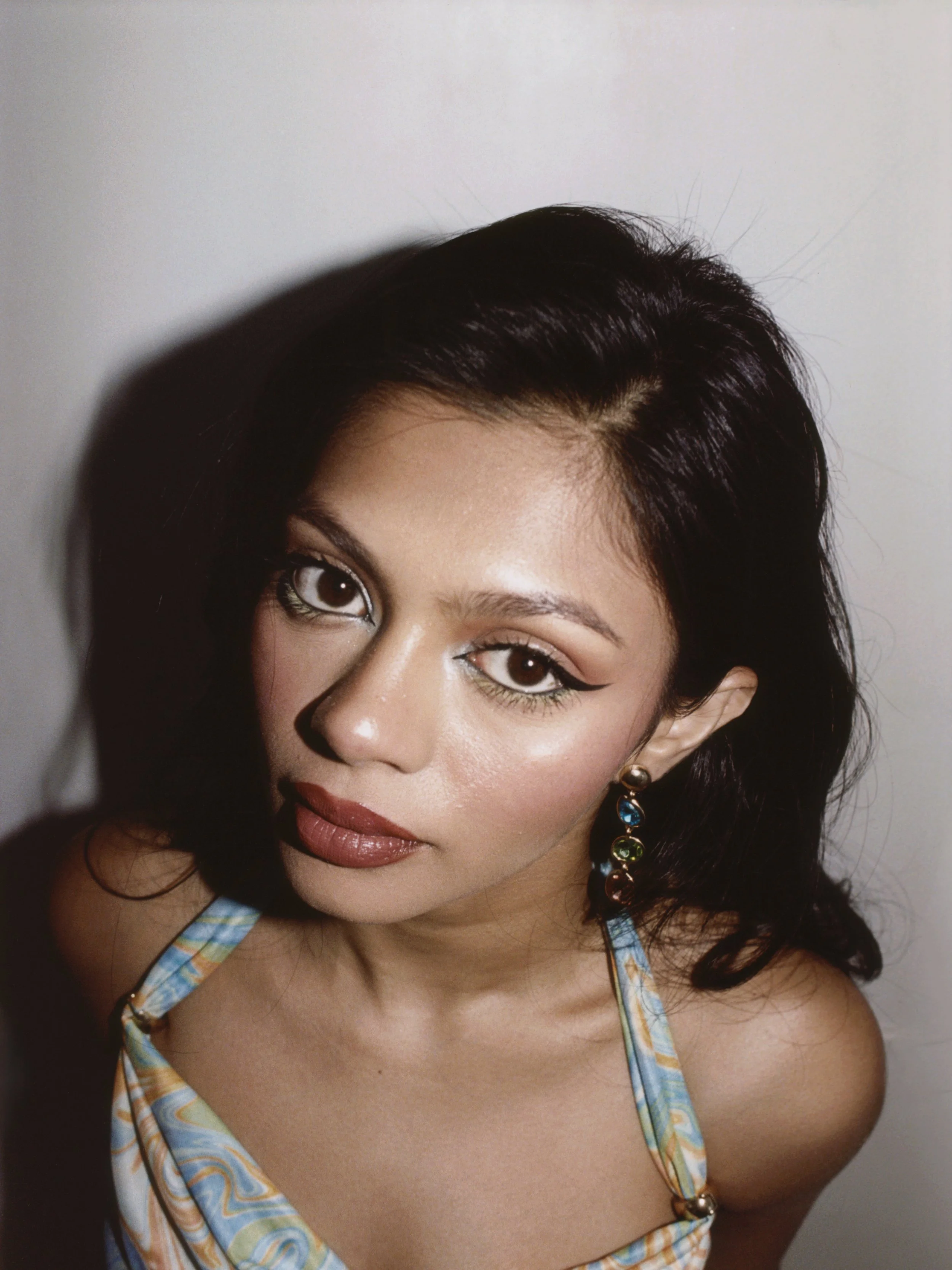
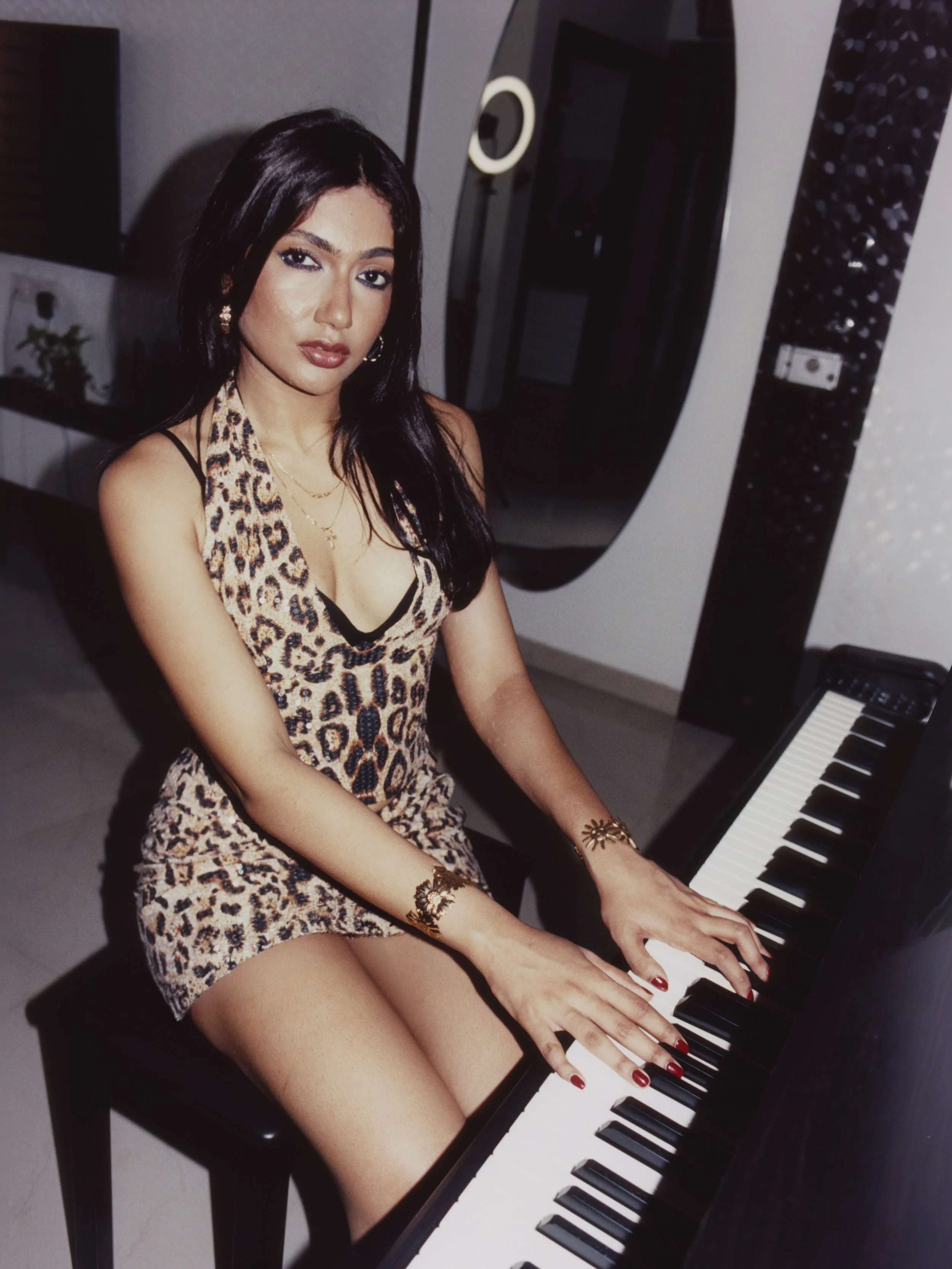
Broader power structures and male fantasy have conventionally shaped beauty standards, but women's relationship to beauty is much more complex than that. Beauty can be a source of pleasure, creativity, community, aspiration and identity, as much as it can be a site of pressure or expectation. Social media has complicated these dynamics even further. While it can reinforce certain ideals and pressures, it has also given women more agency over how they choose to represent themselves.
What I was curious about was whether these ideas affect the choices you make as a stylist. If there are certain ways of presenting women that you find yourself embracing, avoiding or pushing against?
I think that female desire and aspiration are varied and can involve glamour, self-expression, fantasy, sexuality and freedom. Rather than pushing for a singular portrayal of ‘ideal’ womanhood, I try to retain a sense of openness and complexity. For this project, I leaned into materials and aesthetics that carry strong associations to femininity: lace, lingerie, saturated or pastel colour palettes, red lipstick, heels. But I was also aware of how these associations shift depending on who is wearing them and who is behind the camera.
Part of why I was asking is because image-making involves a power dynamic. As photographers and stylists we're constantly making choices about how someone is seen. The women in this project weren't models playing characters. They are real women who let us into their homes and trusted us. I think about that responsibility, especially as a woman who constantly experiences being looked at, while also photographing other women and sharing their images with strangers on the internet.
A small change in an element in an image and a look can suddenly signal personality, independence, desirability or even morality, enough to make someone read like a housewife or a career woman. The length of a skirt, whether a bra strap is visible, where the camera lingers, all of these decisions shape meaning. Even when working with elements that carry sexual associations, I never want sexuality to become its only point of entry. I want my images to be a safe space for the girls to simply be.
Yes, we were photographing real women who put so much trust in us, it required a lot of sensitivity and care. As a stylist, I'm always thinking about the image as a whole, not just the clothes in isolation. I knew they were being photographed by you, and trusted the sensitivity you bring to images. We also worked with an all-female team so the girls were comfortable throughout. It was important that they felt like themselves in the clothes, rather than having an idea imposed onto them.