
“Goddamn Women”: Sex, Sadism, and Supremacy in the Witchsploitation Movies of ‘70s
Words: Lily Hardman
On Halloween 1968, a group of women donned cloaks and pointed hats and marched down Wall Street. They called themselves the Women's International Terrorist Conspiracy from Hell (W.I.T.C.H.), and while their inaugural demonstration took aim at the largely male cogs in the capitalist machine, their movement was speaking directly to women. In one pamphlet, they appealed to their female peers to look within themselves and find the supernatural. “You are a W.I.T.C.H.,” it said. “You make your own rules […] You are a W.I.T.C.H. by being female, untamed, angry, joyous, and immortal.”
The organisation was the convergence of two much broader movements – feminism and the occult. In the late ‘60s, a new generation was demanding greater freedoms for women, while sex, drugs, and rock n roll were opening their minds to questions that stagnating religious institutions were not equipped to answer. Books, music, and radio shows proliferated, but no medium was better positioned to explore the New Age of the supernatural than exploitation cinema, an industry that made quick money by luridly capitalising on of-the-moment issues. ___STEADY_PAYWALL___
Hundreds of low-budget movies were released during the ‘70s that featured brazenly horny, violent witches who used their craft to subjugate their adversaries. Like all exploitation films, witchsploitation was calculated to titillate and horrify, cashing in on the occult revival while stoking anxieties about women high on their own liberation. In these movies, men are hacked to death, sexually assaulted, gaslit, coerced, and tortured by female aggressors. Tapping into male fears, these movies were also offering women a pressure valve. Half a century later, they still are. At a time when the Epstein files and the Cornell 7 are making the ambivalence about violence against women more visible than ever, these movies are not just deliciously trashy, but genuinely cathartic.
“At a time when cinema was advocating for women’s liberation with verité films about quiet suffering, witchsploitation was, albeit unintentionally, allowing women to see themselves as all-powerful, immune to millennia of social repression, and supremely comfortable with their position”
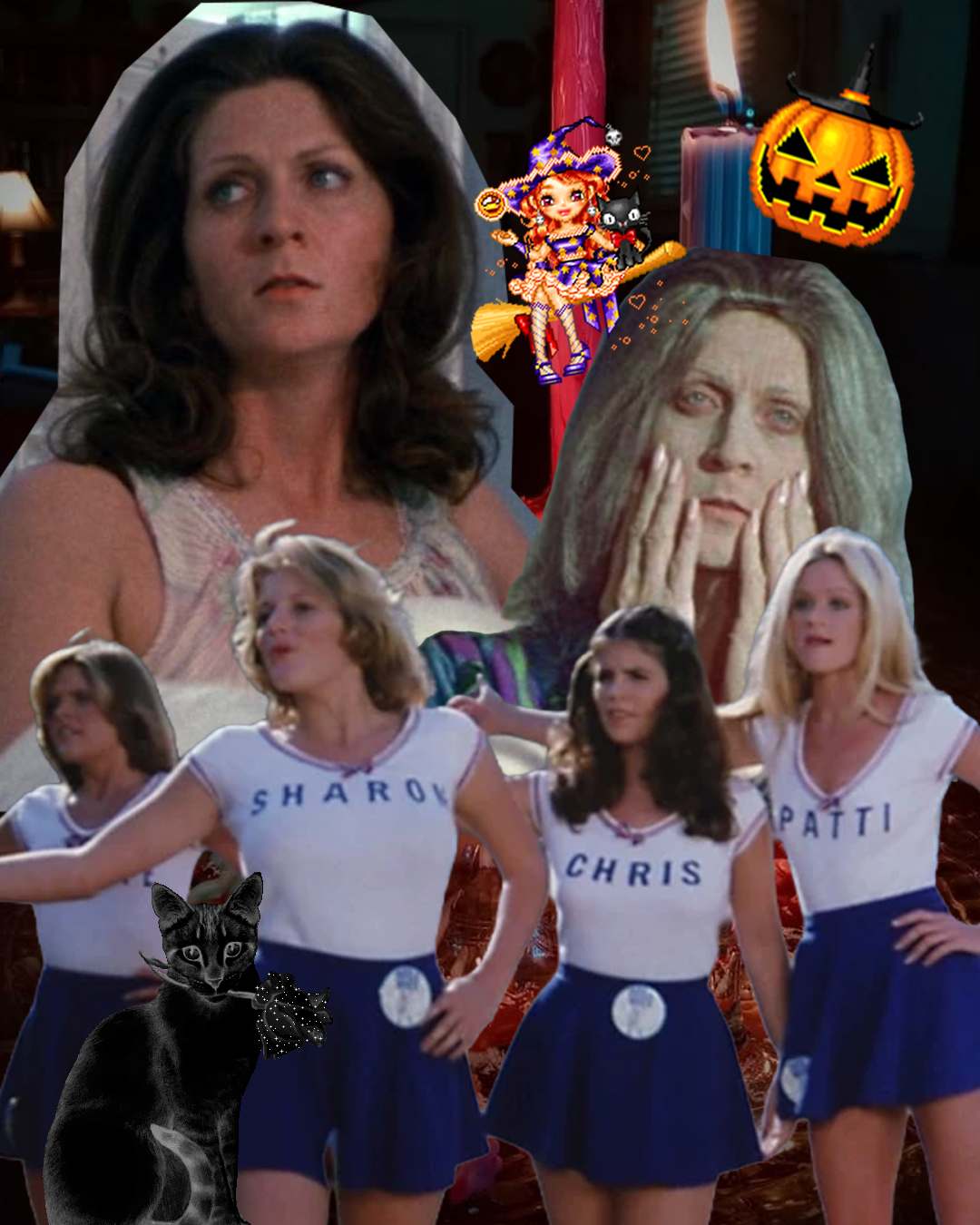
Take Satan’s Cheerleaders, for example, a 1977 supernatural sexploitation comedy in which a team of peppy high school girls is kidnapped by their janitor on behalf of his Satanic cult. The Prince of Darkness needs a virgin queen, and who better to fill the role than a member of the cheer squad? Unfortunately for the Satanic minions, they picked the wrong crowd. “Listen, man,” one of the girls says when she’s hauled up for sacrifice, “I’m as pure as the next guy, but if all this mumbojumbo means have I ever ‘made it’ with anybody, you’ve got the wrong maiden.” As it turns out, none of them are virgins, and none of them are embarrassed to admit it.
What’s remarkable about Satan’s Cheerleaders is not just how matter-of-fact it is about the girls’ sexual autonomy, but how merciless it is towards its men. The star football player is their sexual plaything. A visiting dean from a religious university is a creepy old man. The janitor is a peeping tom and failed rapist. The local sheriff is the biggest villain of them all. In the film’s major twist, Patti, whose supernatural powers make her the defacto leader of the cheerleading squad, reveals that the only virgin among them was their coach, Ms. Johnson, whose “purity” the sheriff stole when he raped her. “You toad. You worm. You crawling miserable man,” she says before raising her arms, conjuring a storm, and sending him to the fiery pits of hell. Who among us hasn’t read a headline recently and wanted to do the same?
George A Romero’s 1972 Season of the Witch takes its cues from Fellini and Godard in its pointillist, dreamlike editing, but it follows the witchsploitation blueprint in its premise. Centring on a middle-aged housewife whose repressed rage over her casually abusive, disconnected husband turns her to the occult, it attends to an often overlooked demographic: women who already had adult children and two decades of marital hell behind them by the time women’s liberation offered a permission structure to opt out.
In the opening dream sequence, Joan (Jan White) walks behind her husband in the woods while he reads a newspaper, branches slapping her face and drawing blood. Later, she dreams of locking him out of the car, fighting him off as he rapes her, and being imprisoned in a kennel, collared and leashed like a dog. At the end of the movie, she shoots him with a shotgun when he comes home early from another business trip. In a brilliant piece of editing, we see Joan’s initiation into the local coven, her kneeling, naked body and soft incantations intercut with a close-up of her husband choking to death on his own blood. Off-camera is the bland chit-chat between police officers. “Goddamn women, man,” one of them says. “They get it all in the end. They get it all from us. They get everything.”
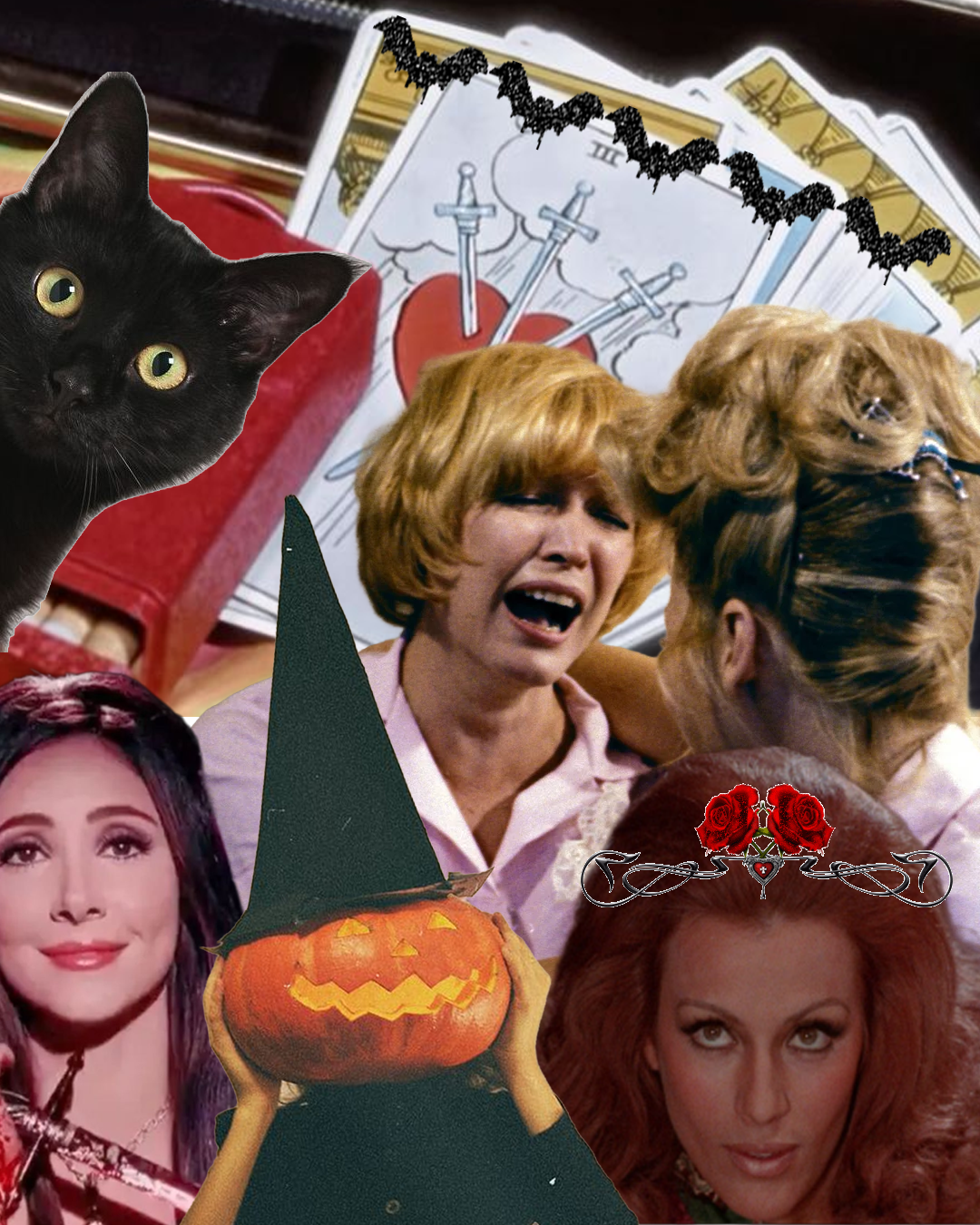
Unlike Season of the Witch, most witchsploitation movies relied on sexualisation to draw audiences, even if the female characters ultimately triumphed. Virgin Witch, a 1971 film about sisters who run away from home and find work as models with a lesbian occult practitioner, displays its female characters in the nude more often than not. Jess Franco’s medium-core nunsploitation flick Les Demons (1973), in which orphaned sisters raised in a convent learn they are witches fated to avenge their mother’s execution, features more close-ups of vulvas than faces. But other films found a more creative middle ground.
Queens of Evil, Tonino Cervi’s dark, Biblically-inflected fairytale, grapples with the idealism of the countercultural movement. It follows a long-haired hippie who is taken in by three goddess-like sisters after his motorcycle breaks down, and rather than casting him as an aggressor, Cervi makes him a dreamy-eyed lamb led to the slaughter by the sister witches who work for a tradition-bound cabal. At one point, they feed him an apple, a much less violent gender subversion than most witchsploitation movies offered. Eventually, though, they hack him to death in an orgy of red paint and bad wigs.
Despite their variations, all these films echoed the W.I.T.C.H. manifesto. Their female characters are “untamed, angry, joyous, and immortal.” They perpetrate violence. They satiate their sexual appetites. They are terrorists to the social order. At a time when cinema was advocating for women’s liberation with verité films about quiet suffering (Jeanne Dielman, Wanda, Alice Doesn’t Live Here Anymore, etc.), witchsploitation was, albeit unintentionally, allowing women to see themselves as all-powerful, immune to millennia of social repression, and supremely comfortable with their position. 50 years later, their trashy excesses still feel like a cleansing ritual.