
How Virtual Reality Became a Safe Space for the Trans Community
Words: Oreoluwa Adeyoola
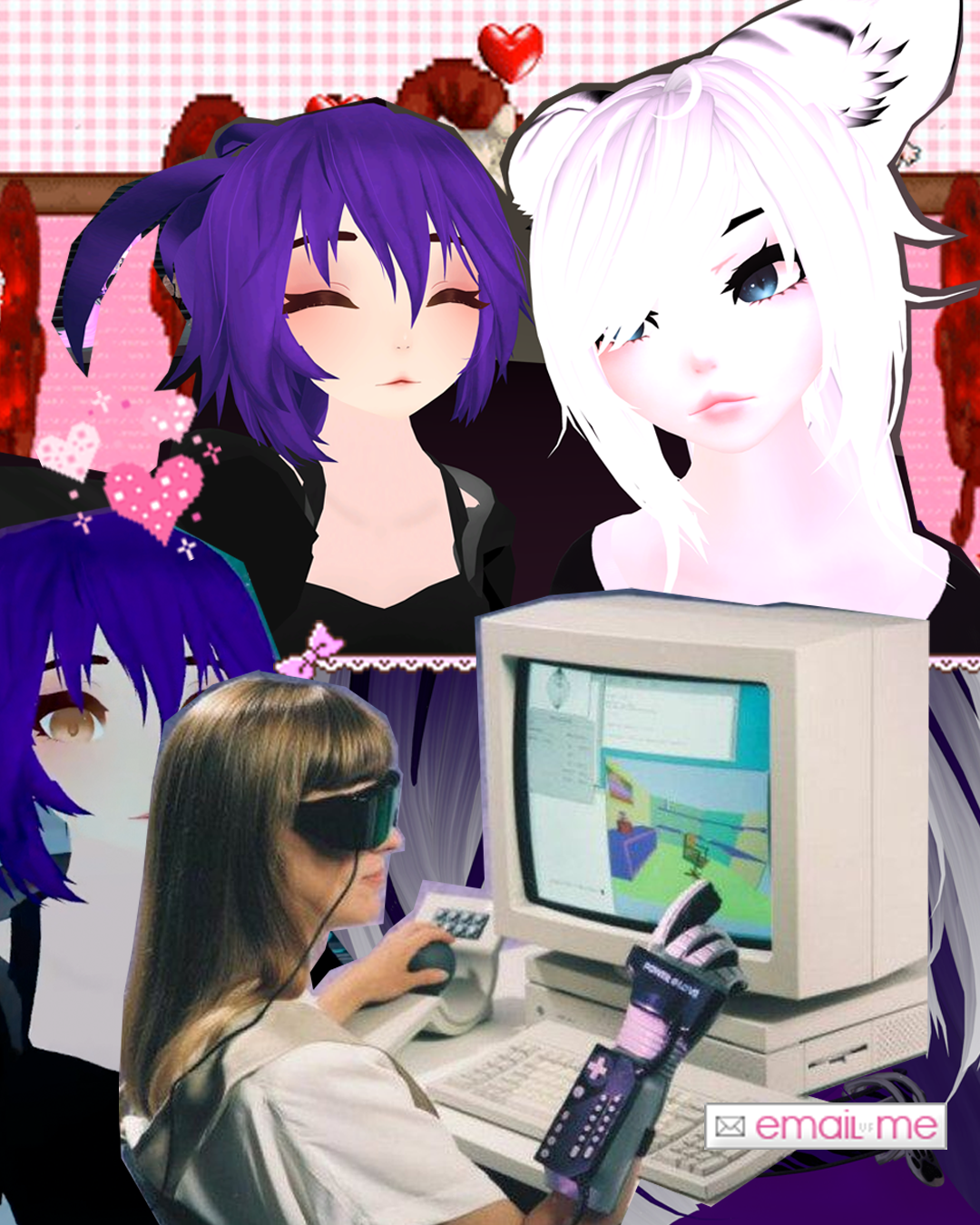
Lucia took a deep breath before meeting her long-term friend and old college roommate. Today, she planned to come out to him as a woman, after two months of secretly transitioning.
The 30-year-old had discovered her true identity after a lifetime of denial and self-hate. Living in the conservative American South, she was surrounded by transphobia. But virtual reality was a safe space and it allowed her to lean into her new gender expression quietly, sharing it with loved ones at her own pace.
When she had finally decided to tell her close friend about her transition, it only felt right to do it where it all began - through the social virtual reality platform VRChat.
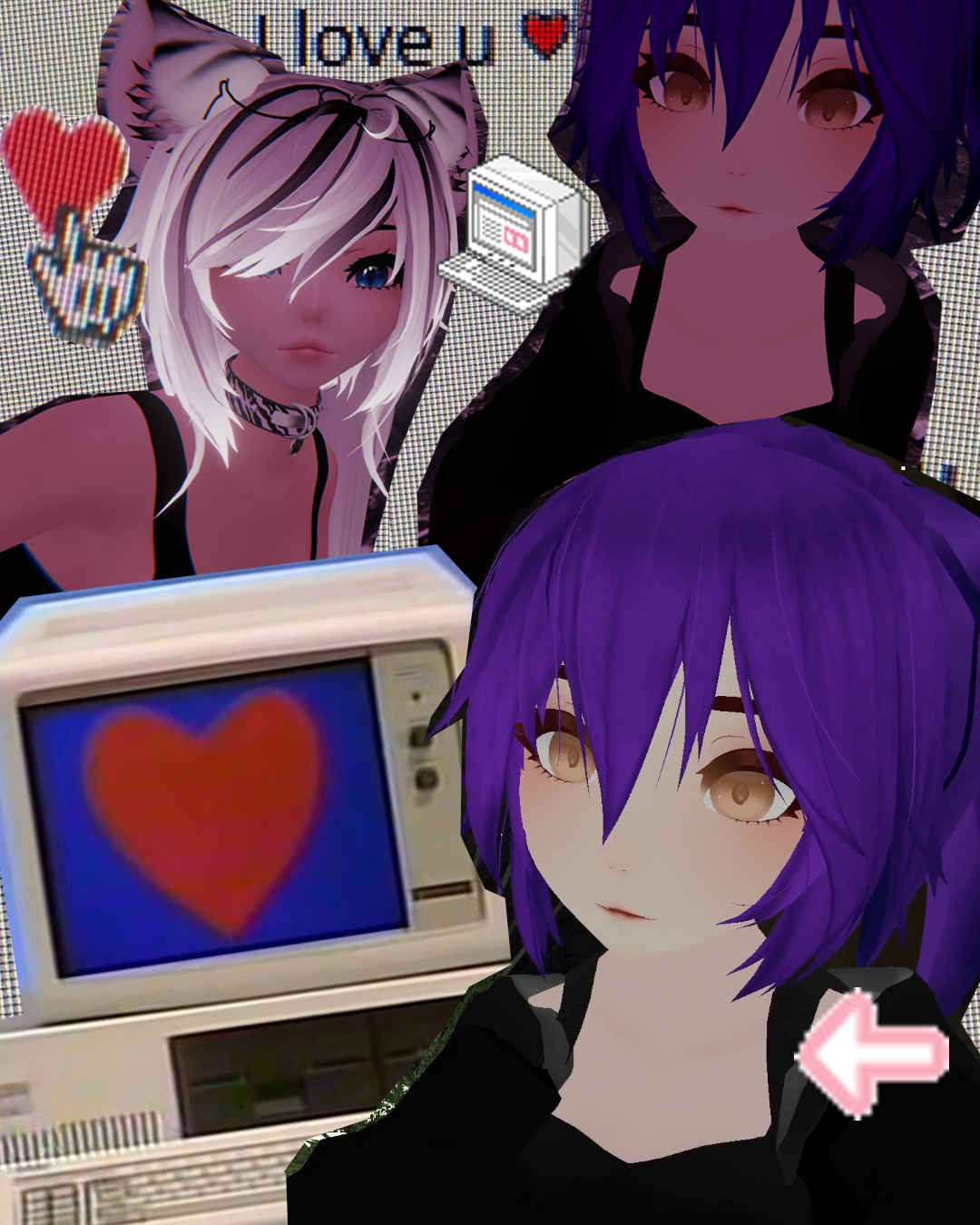
In this virtual world, she had glow-in-the-dark white hair, anime-style blue eyes and always wore her signature wolf ears. Although VRChat has loads of customisation options, she kept her avatar relatively stripped back - an attainable version of herself.
Instead of shock or surprise, Lucia’s roommate burst out laughing when she showed up to their virtual meeting space as a female avatar.
“I knew it!” he said.
The moment was surreal for Lucia. Her virtual reality was finally becoming her actual reality.
VRChat was released in early 2014 by Graham Gaylor and Jesse Joudrey as a side project while Graham studied at university. The pair saw the potential in VR as an emerging tool in the gaming world, but wanted to expand on its social side. After creating a Kickstarter to build initial hype, VRChat quickly exploded in popularity and now hosts an average of 60,000 players per month, who use the free platform to play games and socialise. Users create 3D-generated worlds themed around everything from horror games and obstacle courses to chat rooms modelled after bars and nightclubs.
___STEADY_PAYWALL___
With a full body tracking set-up, which includes a VR headset and a high-tech haptic bodysuit, avatars can replicate all of your real-life movements, from a slight nod of your head down to a wiggle of your fingers.
The endless avatar customisation options and immersive experience have made VRChat a hotspot for the trans community. Many trans users I’ve spoken to have experienced gender euphoria for the first time in virtual reality, after experimenting with their expression through avatars.
Lucia found VR during a dark period of her life. After working her way up to a comfortable position in her technology innovation career and having all the external validation she could ask for, she still felt incomplete.
“I had the life that many people would have dreamed of, and I was absolutely miserable,” Lucia noted.
She had always known she didn’t fit the stereotypical expectations of men. At college, Lucia got involved in drag shows and dabbled in crossdressing, but she decided to pack it all up when she graduated in 2018 and focus on securing a career. Then, the pandemic hit.
“I ended up sitting alone with my thoughts, and very quickly I realised I had to do something about this.” That was when she picked up a VR headset - and everything clicked pretty quickly after that. As she started expressing her gender identity and presenting as a woman online, she was eager to merge the virtual acceptance she got in VRChat with her reality. But coming out held incredibly high stakes.
“What I did in VR has shifted over to an expression in real life, and I could not be happier.”
“I’ve actually lost people I’ve known due to violence against the trans community, and the rate of that has accelerated, especially in areas that are more conservative,” Lucia explains. “I think VR gives people a chance to explore in a situation where it may be physically dangerous for them to do so.”
Without the opportunity to explore her gender identity in VRChat, Lucia is clear: “I would probably be dead by now.”
She continues, “I had a suicide attempt like two months before I got heavily into VR because I was so sick of living in the closet. I think it’s lifesaving for a lot of people.”
Within VRChat, there are multiple spaces created for trans people to connect and share resources. One place is Trans Academy, a non-profit organisation run by volunteers and created by Jordan Bell, who goes by Tizzy online. The Las Vegas-based gamer had previously built a similar community for the trans community on Second Life.
What started as a weekly meeting with 10 or so people now has over 20,000 members in its Discord server. Connecting through VRChat, users can attend classes taught by expert volunteers in everything from vocal feminisation to computer programming. The latter was introduced as a way to empower trans people with the skills required to find jobs that fit their lifestyle as they transition, whilst also funding the expensive surgeries and medications needed throughout the journey.
It was VRChat that Lucia first met Trans Academy volunteer Vee, who had already started medically transitioning when she bought a VR headset. Confined at home during the lockdown, Vee was initially looking for an accessible way to exercise, but instead found “a very freeing playground for gender exploration”
One of the most valuable things she got from her time in VRChat was the community she formed. She adds, “I spent a lot of time exploring and getting to know people from all sorts of different walks of life, and building connections and relationships that way.”
Community building is an essential part of transitioning. For people in rural or more conservative areas, online spaces are an invaluable lifeline for building friendships and passing along information.
In 2021, Vee was in a deteriorating marriage with a wife who was not supportive of her transition or her newfound friendships in VRChat. “She was very much of the position of, ‘these people aren’t real’... that contributed ultimately to the downfall of our relationship,” Vee comments. But Vee knew these connections, although virtual, were real. They were a beacon of hope at a time when everything felt uncertain.
After spending countless hours in VRChat getting to know each other, Lucia and Vee decided to meet in person in 2023. For both of them, the instant connection and spark they felt is a testament to the reality of relationships formed through virtual reality. Vee and Lucia moved into a house in California together in 2024, and are happier than they’ve ever been.
Joshua Fisher, an assistant professor at Ball State University, specialises in the ethics of virtual realities. He recognises VR as a useful tool to prepare for the often hostile and unaccepting world that awaits people in the middle of transition, but argues it can create a sheltered pseudoreality.
“VRChat allows you to rehearse future actions, but that future action exists in a digital space that’s not going to have the same consequence,” he said on our video call.
He added: “It can also build resilience. There needs to be something in the middle, some sort of social scaffolding.”
After Lucia came out to her best friend and then to her sister through virtual reality, she took the bold step of sharing the news with her wider in-person community. When it was time for Lucia to come out to the rest of the world, she decided to use her avatar to make the announcement. She shared two photos of her VRChat avatar on her Facebook account, followed by people from her hometown.
“I came out around the same time I started on hormones. And I didn't have a good frame to describe how I saw myself. My VR avatar was the closest representation,” she explained.
Years later, she is much more settled in her gender expression and finds herself spending less time in VRChat and more time going on adventures with friends offline. But she’ll always have a soft spot for VRChat and the found family she built there.
“What I did in VR has shifted over to an expression in real life, and I could not be happier.”