You Think This Has Nothing To Do With You: Critiquing Miranda Priestly’s Infamous Speech
Words: Phoebe Phelps

The upcoming The Devil Wears Prada sequel has me thinking a lot about the original. I haven’t seen in many years but one scene is still fresh in my mind, both because of my reaction to it, and because it seems to pop up on the internet every so often in the form of gifs, memes, and references where it has taken on a life of its own.
A fresh-faced Anne Hathaway, playing the dowdy fashion magazine intern Andy in an ugly sweater, snorts at a decision at work between two identical seeming belts.
“Oh, I see,” Meryl Streep as Miranda Priestly drawls calmly in response, with her no-nonsense, perfectly styled grey hair befitting her role as the head of the magazine.
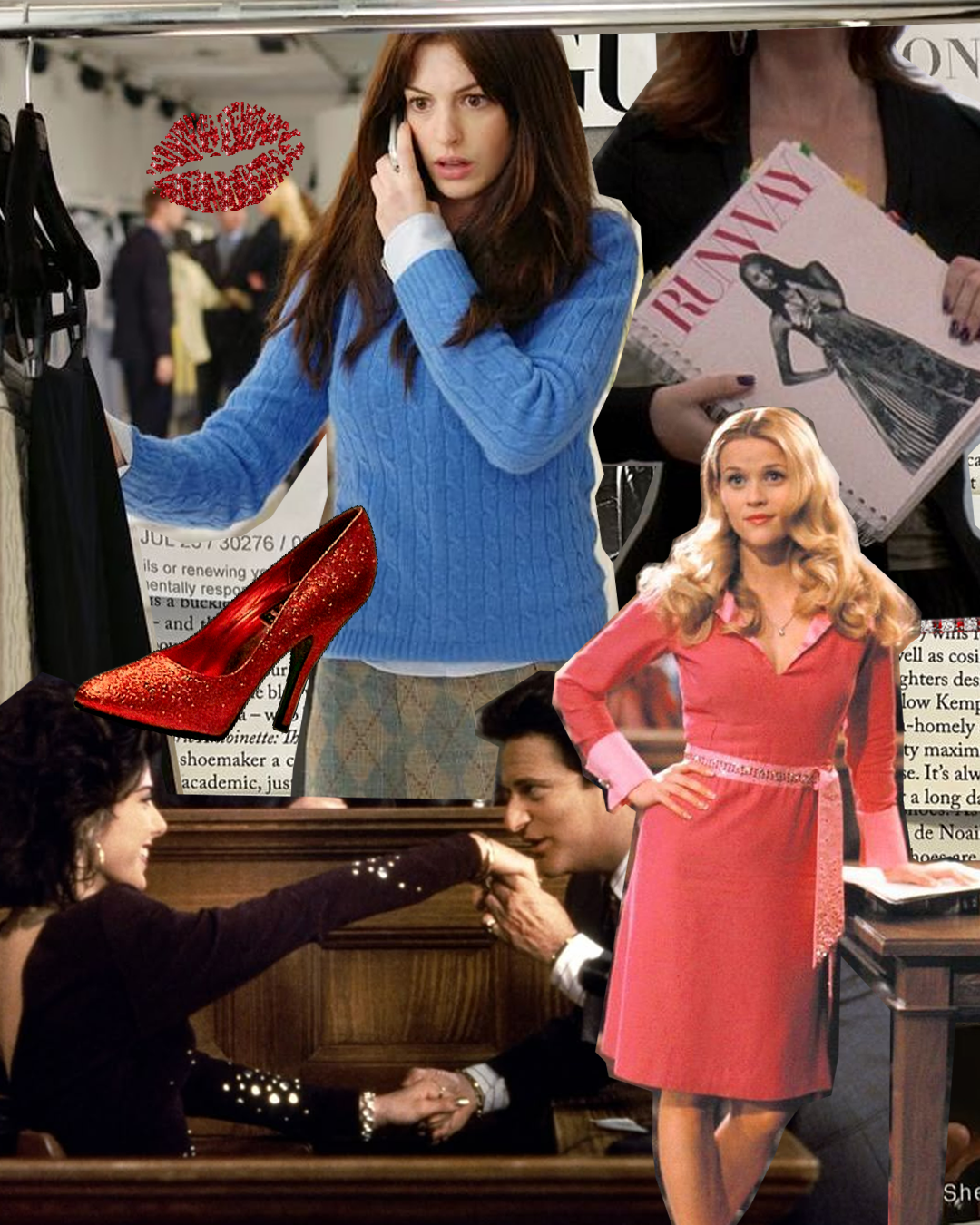
“You think this has nothing to do with you. You go to your closet, and you select, I don’t know, that lumpy blue sweater, for instance, because you’re trying to tell the world that you take yourself too seriously to care about what you put on your back, but what you don’t know is that that sweater is not just blue, it’s not turquoise, it’s not lapis, it’s actually cerulean. You’re also blithely unaware of the fact that, in 2002, Oscar de la Renta did a collection of cerulean gowns. (...) Cerulean quickly showed up in the collections of eight different designers. Then it filtered down through the department stores and then trickled on down into some tragic casual corner (...). However, that blue represents millions of dollars of countless jobs, and it’s sort of comical how you think that you’ve made a choice that exempts you from the fashion industry when, in fact, you’re wearing a sweater that was selected for you by the people in this room… from a pile of ‘stuff’.”
___STEADY_PAYWALL___
What a speech! There’s a reason it’s so famous. The writing is fantastic, the acting is impeccable, and we are left completely siding with Miranda. It’s the moment when Andy begins to see that, hey, maybe fashion isn’t so frivolous and beneath her after all. Shortly after this scene, there is a montage of Andy arriving to work in more and more fashionable outfits.
Andy is converted, yet I think it is more the constant immersion into the glamour of high fashion and working among people who are passionate and confident that seduces her. Miranda’s speech may be a distillation of this confidence, but its actual argument has always annoyed me and, as a viewer from the safe distance of my couch, I have some loose threads to pick.
The monologue is an example of the authority speech, a writing technique that Chuck Palahniuk, author of Fight Club, defines as: “For quick, powerful proof of a character’s authority, few tactics work as well as allowing her to reel off facts that demonstrate she boasts a depth of technical knowledge no one would’ve expected.” Other examples are Reese Witherspoon’s “low viscosity rayon” scene in Legally Blonde and Marisa Tomei’s court scene in My Cousin Vinny. Knowing that Andy’s sweater is cerulean, and the history it contains, may give Miranda an air of knowing what she’s talking about, but having the upper hand in an argument does not mean that her perspective is correct.
“Once you divorce Miranda’s argument from the well-acted and well constructed “authority speech,” she’s left arguing that we are required to take up the mantle for the system that we’re living under because, by way of its inescapability, we have been made complicit in it.”
When you actually listen to the picture that Miranda is painting, you’ll find a depressing description of the fashion industry: top-down biases all controlled by a few big names at the top. It’s very telling that a passion for design or style or community doesn’t come into the argument at all, only control and power and money. So the colour of Andy’s sweater, which she “picked out of a pile of stuff” is the trickled-down result of people who make a whole lot of money - more money than most people will ever see - to make decisions that, sure, look nice and influence trends that Andy can’t escape, but why does that mean she needs to care about it?
What Miranda actually does in this speech is point out the lack of individuality that the modern consumer has. Can we not critique any of the systems that we are held within? The sweater Andy didn’t put much thought into buying was actually chosen “by the people in this room,” but so what? Because it is inescapable it must be respected? According to this speech, if Andy wanted to truly steer clear of this bloated industry she would have to go naked, or to make her own clothes from cloth she’d spun and dyed herself. It is the argument that, because this system affects us in countless, perhaps intangible or unnoticed ways, it is a good one.
I am reminded of a much-quoted excerpt of Ursula K. Le Guin’s address at the United Nations, “We live in capitalism. Its power seems inescapable – but then, so did the divine right of kings. Any human power can be resisted and changed by human beings.”
Andy can’t change the colours available to her. The cerulean sweater will always be cerulean. Most clothes we can pick up from thrift stores or bargain barrel deals are similarly descendants of the top fashion trends and decisions made by powerful, expensively dressed people in skyscraper rooms; in the same way that a politician that you did not vote for can enact a law that affects your community. In the same way that it is nearly impossible to avoid harmful chemicals and preservatives in food, or that we all continue to clock into a job we hate and buy things from unethical websites even though we know we shouldn’t.
Once you divorce Miranda’s argument from the well-acted and well constructed “authority speech,” she’s left arguing that we are required to take up the mantle for the system that we’re living under because, by way of its inescapability, we have been made complicit in it. But donning the cerulean sweater is not a point against us, it is our only option as we continue to find ways to make our own choices within systems that wish to control us, to find our originality and point of view in other ways.