
In Her Bedroom Asks: What is Body? What is Art?
Model: Audrey Grison | Photographer: Melissa Tassadit | Makeup and Hair: Anne-Lise Costes
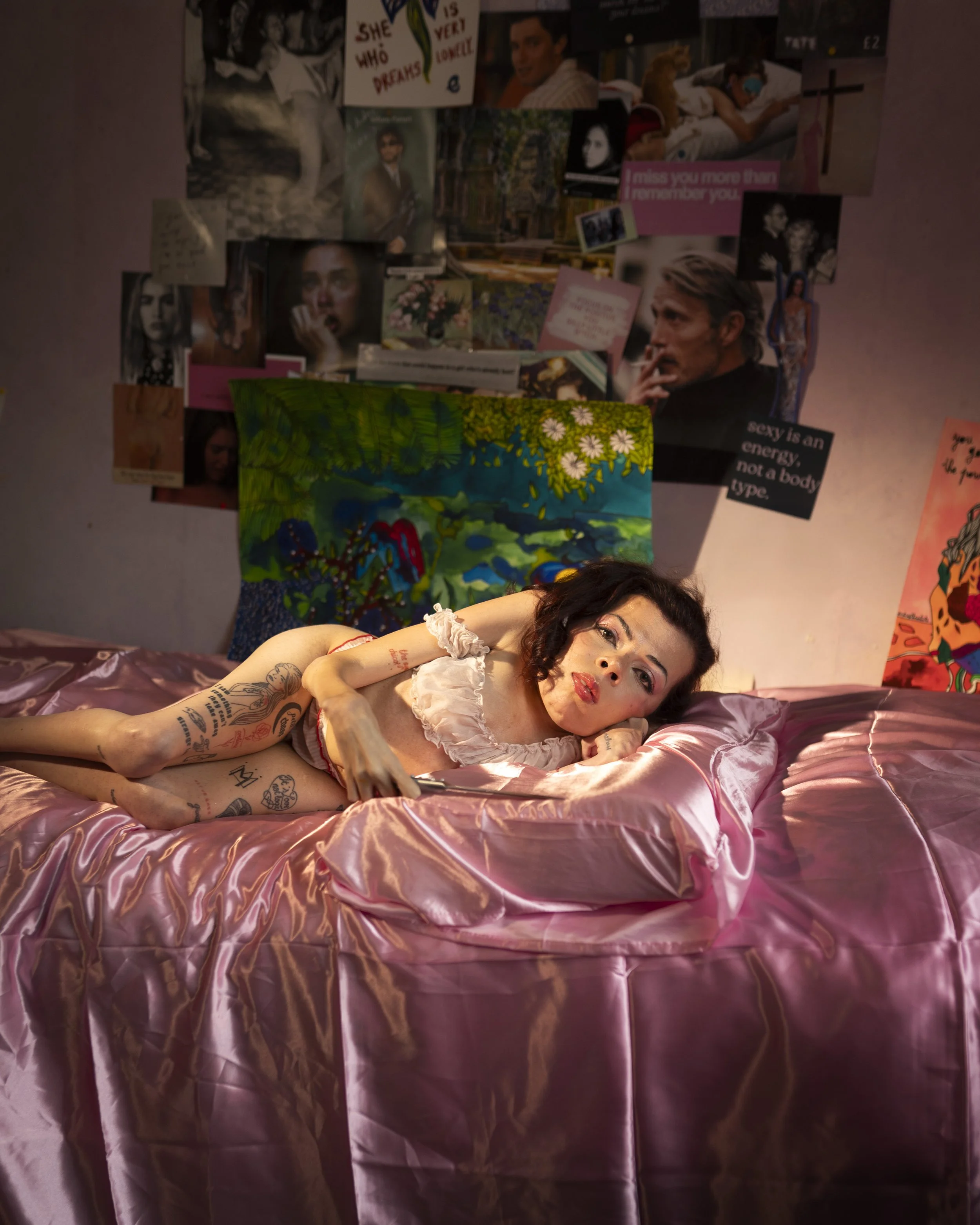
This is a love story.
It begins and ends in the same room, with the kind of lightning you can only dream of when you are a daring woman ready to take over the world.
Melissa is a photographer who is influenced by girlhood, where everything is both sweet and twisted, and the light gets in where it’s not expected. Her work is expressing a feverishness, the beauty of a contained violence. Photography is a playground where she seeks the vulnerability of her models and where she can deconstruct society’s standards.
Audrey is an artist whose femininity is rooted through her self-love, in a world where romancing your difference can be depicted as criminal. She paints portraits of women, writes poetry, gives conferences about What is the place of disabled women in our society?, and started modeling in 2021.
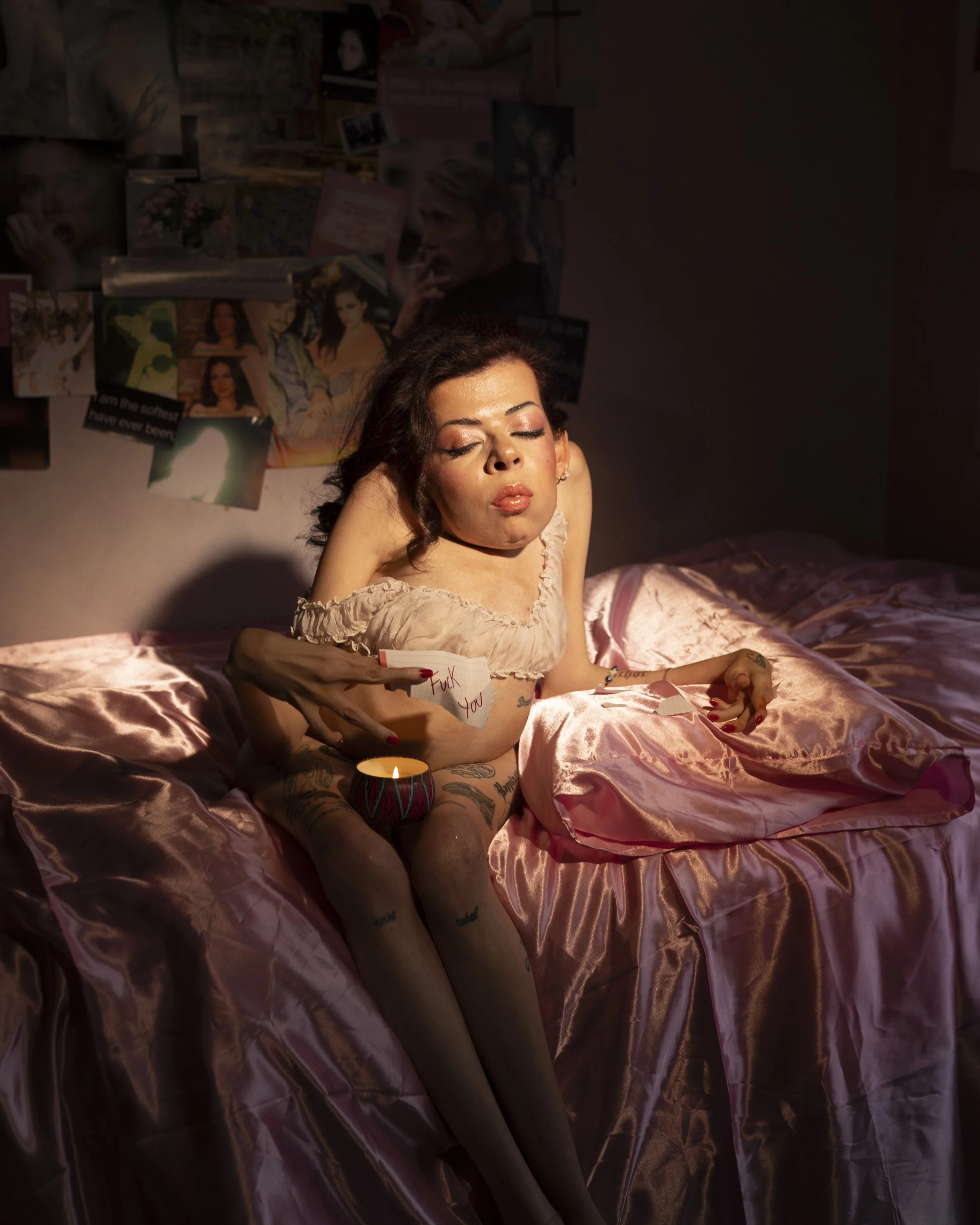
In this series named IN HER BEDROOM, both women felt connected to the desire to create something peculiar, odd but sexy in its own right. They decided to shoot in Audrey’s bedroom, in order to give away, like a whispered secret, the most vulnerable place of hers. It’s where she paints, writes, cries, touches herself. There’s nowhere, and nothing to hide. The stains on the walls, the images, the warmth. Cinematic lightning, dark and contrasted, allow Melissa to create a distance from a tamed representation of femininity. Shadows can hide as much as they reveal, and it lets emotions shine through, in Melissa words:
« I love this way to compose a photograph, where the woman is not entirely displayed to the spectator, yet exists in a more ambiguous place, which feels more intimate and real. »
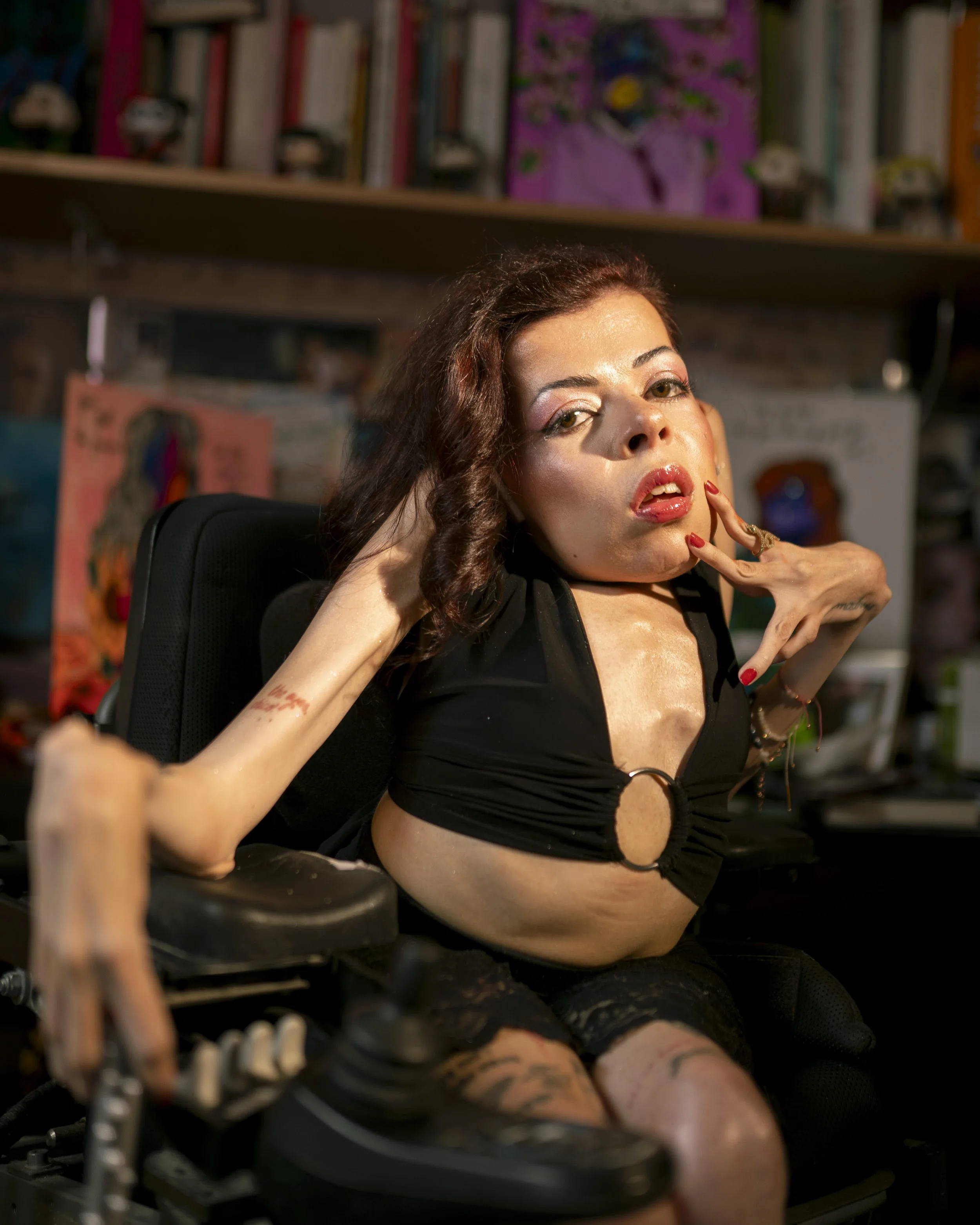
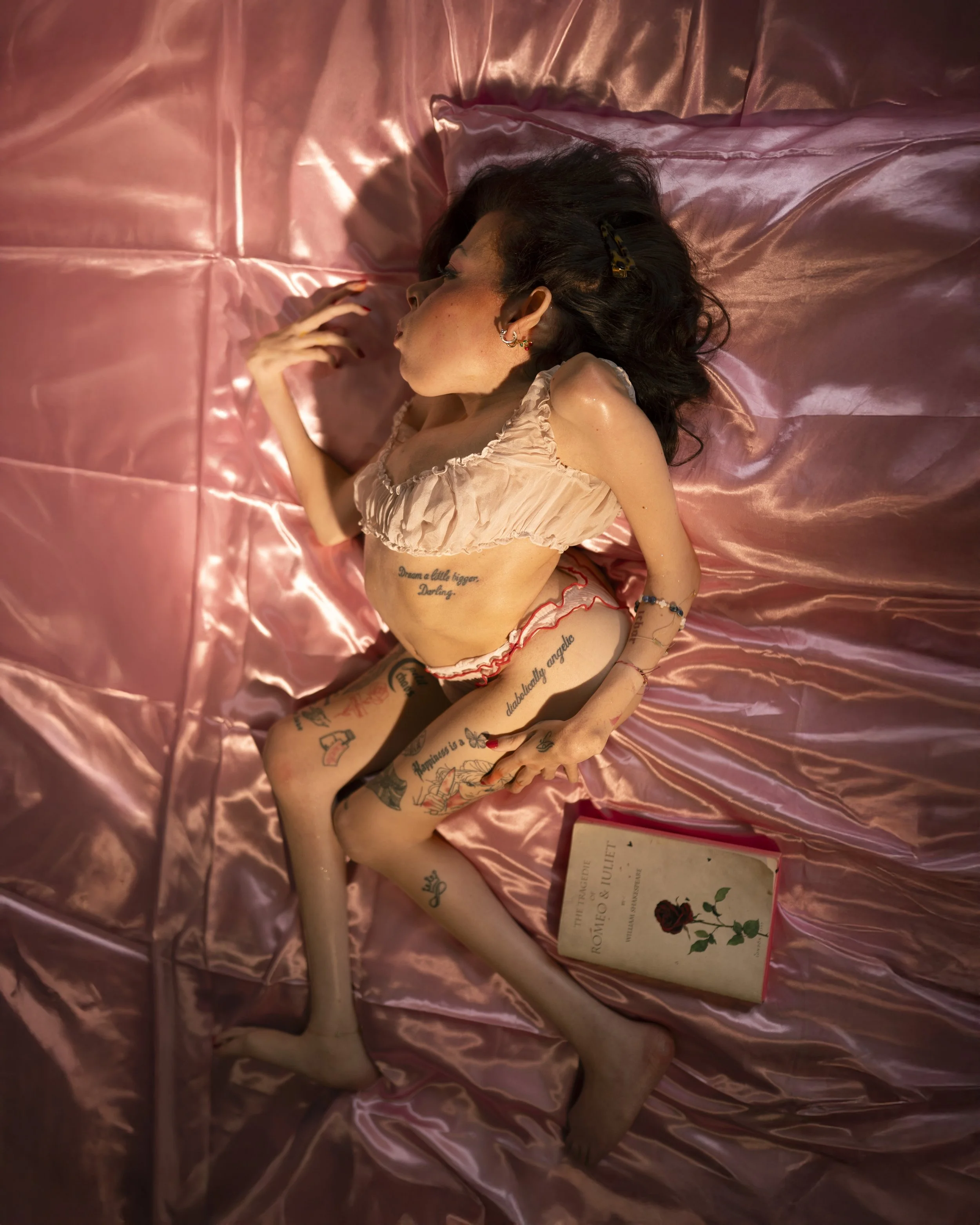
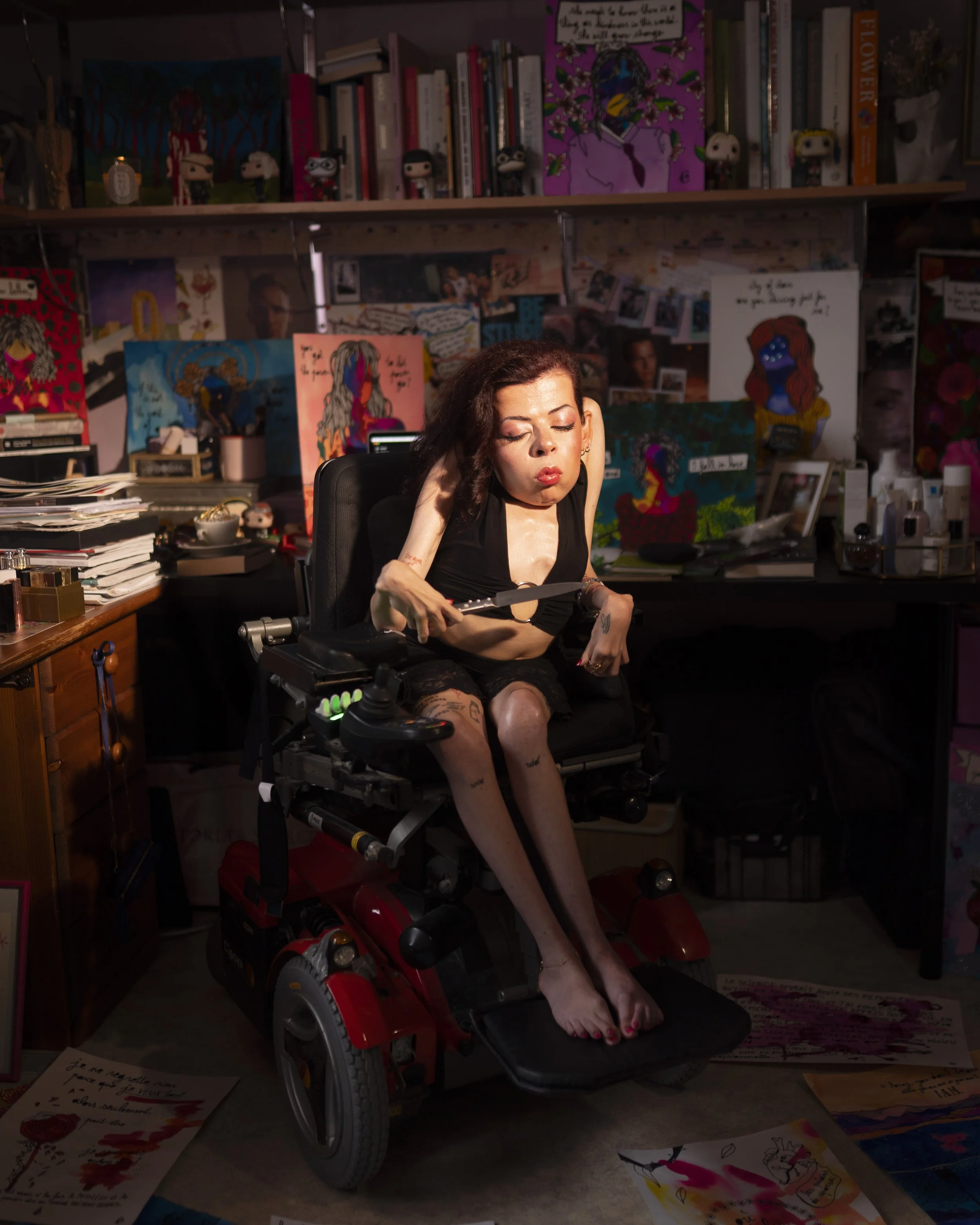
Audrey wanted to pose with her paintings surrounding her. A sort of professional photoshoot, but gone whimsy, to blend in the Art and the Artist, and to peel away the chasm, layer by layer.
IN HER BEDROOM is about bodies and greatness. To actually see someone in her own sanctuary, being naturally at ease, and not pretending to be a sort of heroine.
The sense of intimacy found in one’s safe place cannot really compare to anything else. It gets you invested, feeling present and seen. Melissa and Audrey worked on that set with the sentiment they could express themselves freely, safely and could seek out what makes their definition of feminine identity glows. It speaks in fragments, grace and rituals.
Sorority is a theme which is central in Melissa’s ethic, as working with women can instantly establish a sense of trust and intimacy. There is an understanding of where we come from, a non-spoken fear, or the way our body are constantly objectified. This is both a legacy of pain and beauty. Audrey remembers a conversation she had with a male photographer:
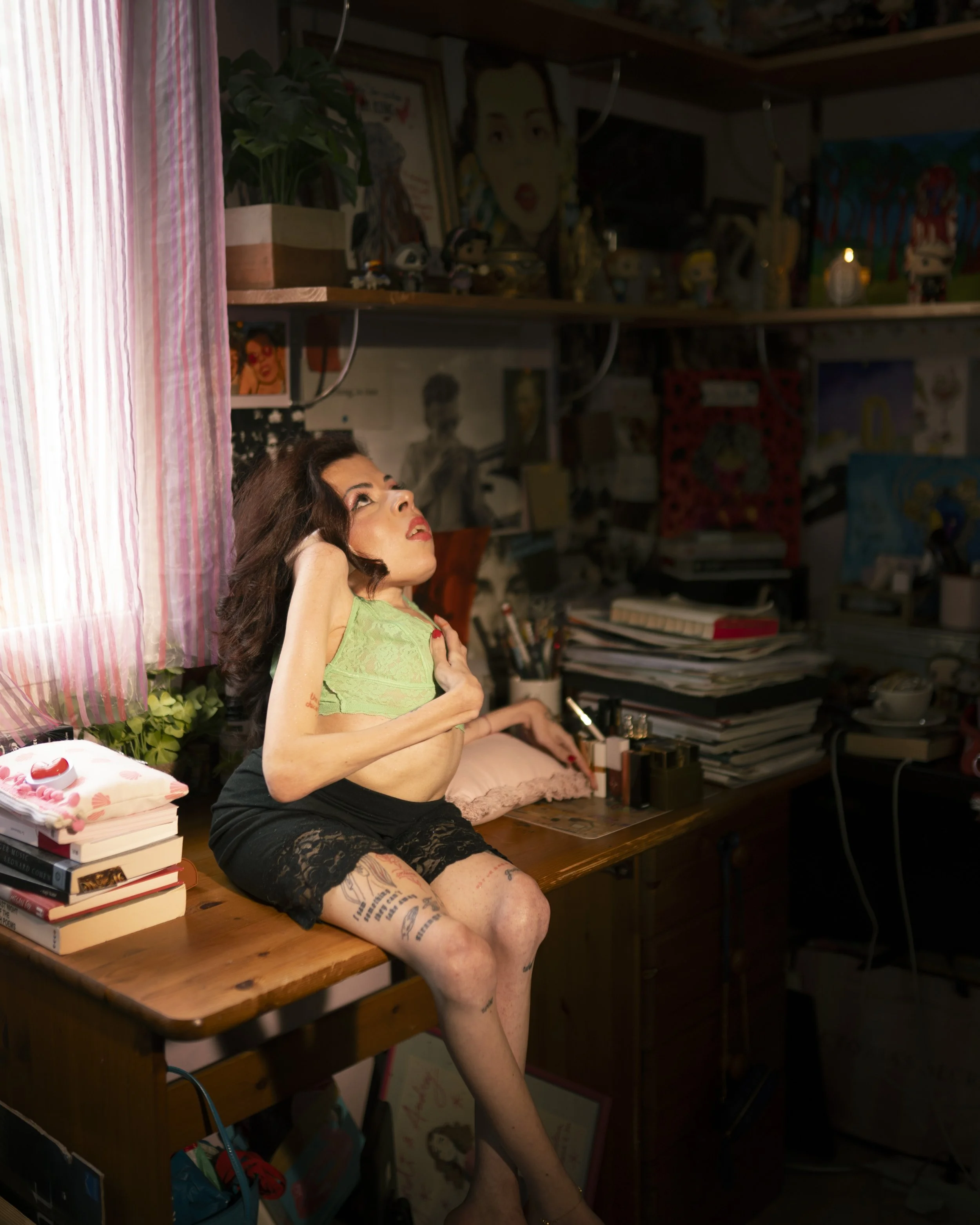
“He invited me to lunch and we were total strangers, so we were chatting about ourselves, and speaking about the upcoming photoshoot we would do together. Completely out of the blue, he asked me if I was a virgin. It offended me but at the same time, I found that I couldn’t really express my discomfort. In retrospect, I realise only men can find themselves legit to ask these kinds of questions. We worked together, and the photographs were good, but I felt guarded the whole time.”
The objectification of the feminine body is such an overlooked violation, dare we say accepted one. In the gaze of someone else’s, it is too easy to get lost. Having drawn the line of what you want and do not want is the only gateway keeping you in your truth.
Melissa, with her passion for womanhood and its beauty, and Audrey with her confidence and will to be vulnerable, were able to create together something singular. The apparent distortions of Audrey’s body, shaped façon Cubism she often jokes, and the way her curves hit the right places, are not something shown like this usually.
Disability does not cancel desire, nor identity.
“Every girl should be free to express themselves, and get to relate to others girls who love themselves hard enough so they see, they’re not alone.”
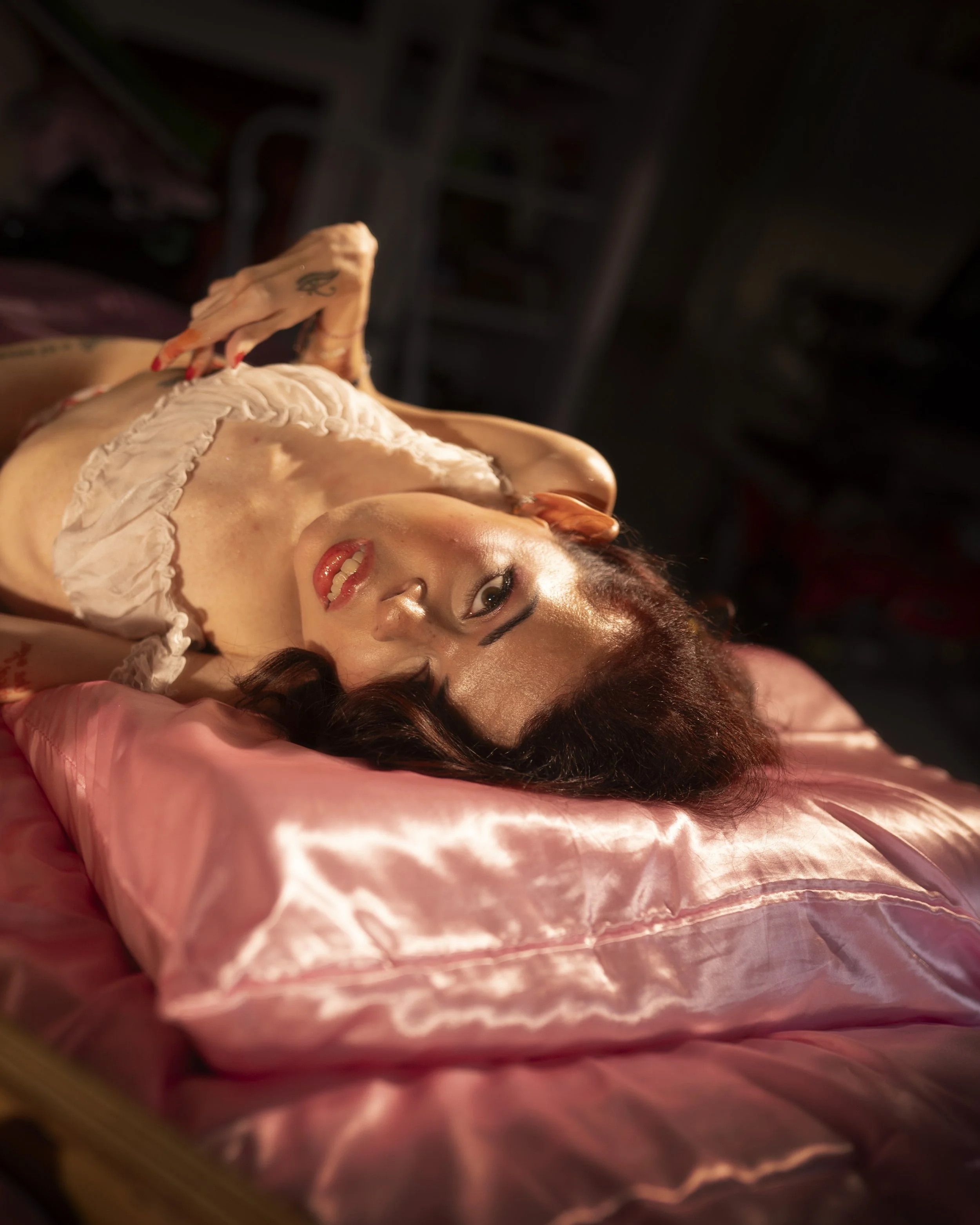
Together, they aimed to let the room speak. The memories, the gentleness of it and its mystery too. Pink as a color was important, as its imposition upon women was as important as rejected through our society norms. It is a sort of two-faced colour, it can be both prude and provocative. It is the perfect colour to speak about the reappropriation of our own image and body, and eventually, how to make peace with it.
The idea of consent follows through the entire photoshoot. Audrey owns a sense of control in showing her skin and Melissa captures the texture of it. It’s coming from a place of rejection and then further on, a burning sense of acceptance of being desired.
“I was told once, your body is a piece of Art. It took me a decade to understand,” reminisces Audrey.
The intention of this photoshoot was to create an authentic understanding of Audrey’s character as a woman, as an artist and all the multitude she incarnates. As Melissa gives her, through her lenses, the possibility to reclaim her divine and her identity, you can see the quiet conversation evolving into a femme fatale sort of aura. It wasn’t intentional, that sassy vibe. It appeared as if the women in the paintings surrounding Audrey, finally gave her the right to embody herself. Like a promise, under all the golden highlighter, and the knife. You’ll see.
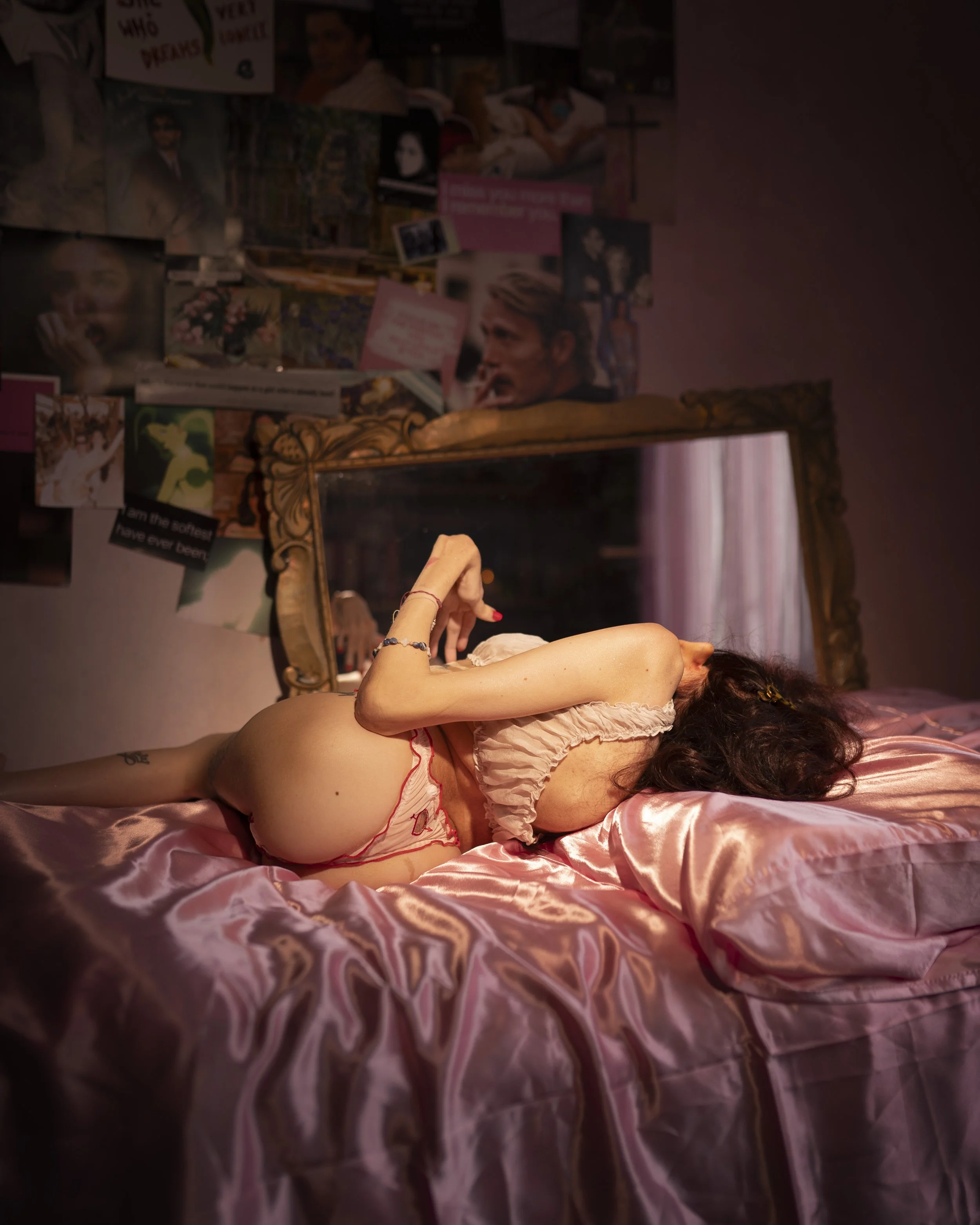
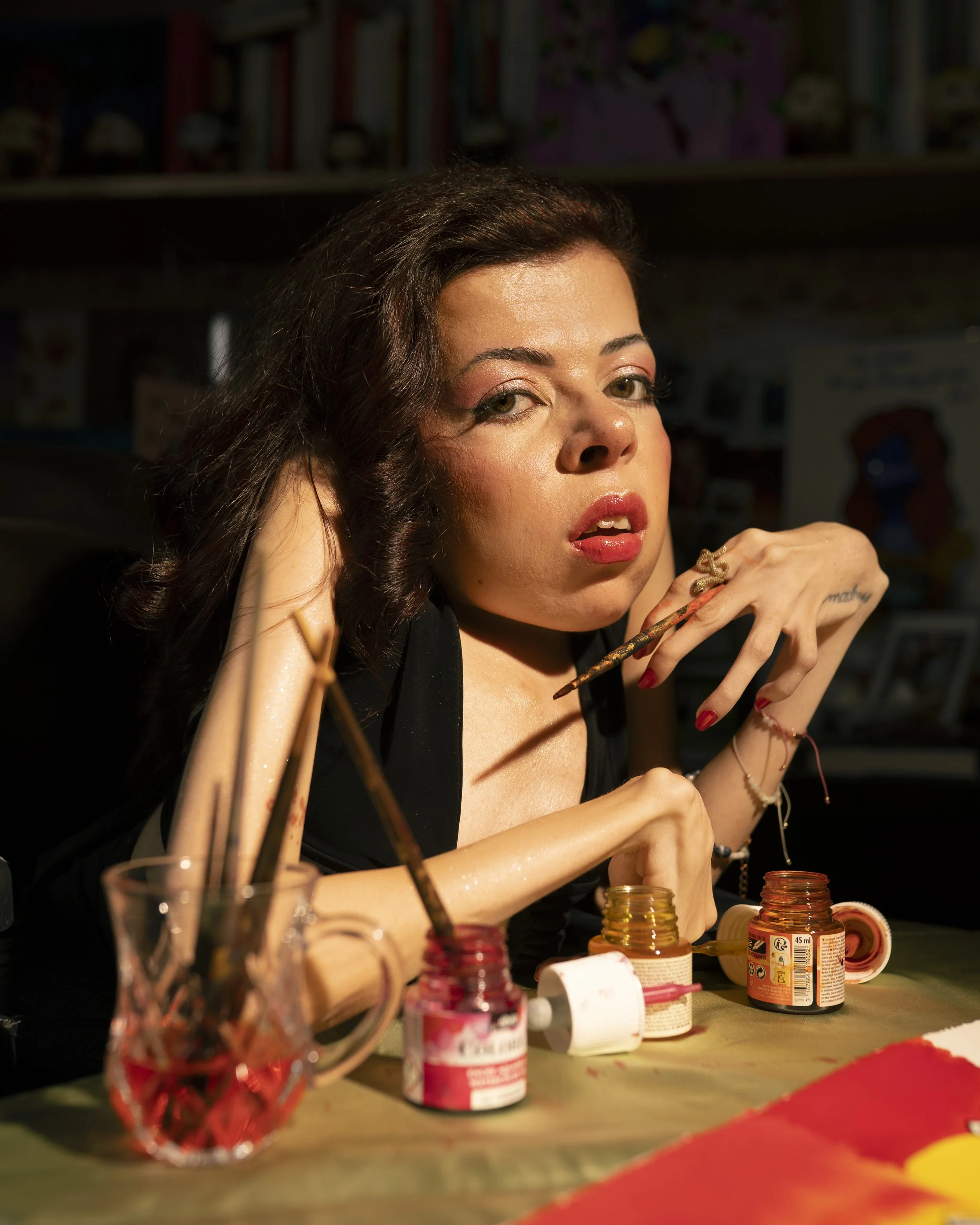
Melissa and Audrey love the idea of not playing around, of directness. Why apologise for taking space when you were born to be who you are?
Every girl should be free to express themselves, and get to relate to others girls who love themselves hard enough so they see, they’re not alone. Not a single day since forever.
You can use your own voice, and love what makes you, you.
This is a love story, and maybe not the one you expected, but one which is required.
This is how it begins.