Why Is Everyone Shoplifting?
Words: Nomi Makin
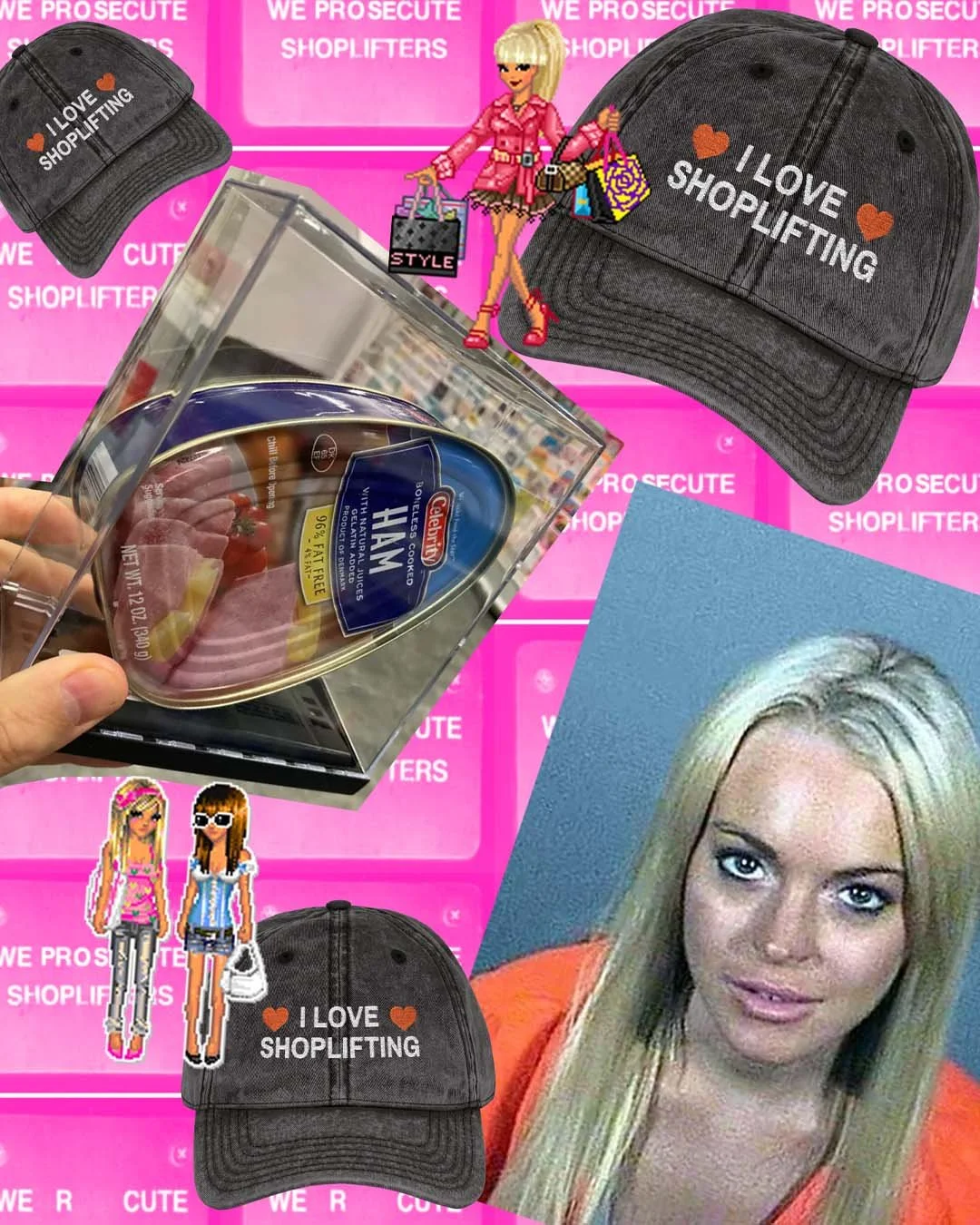
Shoplifting has left the shadows. What was once whispered about behind closed doors is now debated in supermarkets, joked about online and confessed on TikTok. Stealing has taken on a strange new identity — no longer viewed only as a crime, but by some as a necessity.
As the cost-of-living crisis seeps into every aspect of daily life, the food we buy and the way we eat have become a visible reflection of economic pressure. Shoplifting was once seen as an act of desperation, reserved for essential items like baby formula and nappies. Now, as financial pressures intensify, the boundaries between necessity and crime are becoming increasingly blurred. Household staples that were once affordable for the average working person are slowly slipping out of reach.
Recently, Brand Bold Bean Co. shared an image of a jar of beans with a Waitrose sticker underneath warning: “Shoplifting has a price. You could be arrested, jailed or fined.” While the post was clearly intended as a light-hearted joke, it left me feeling more unsettled than amused. Has the state of our economic world declined so astronomically that we could be put behind bars for stealing a jar of beans?
Historically, shoplifting was viewed through a simple binary: desperation or criminality. There was little space for ambiguity, and even less sympathy for those who crossed that line. For the average working person, stealing was rarely considered an understandable choice. But that perception has well and truly shifted.
___STEADY_PAYWALL___
It started with steaks and champagne being locked behind security tags, but the normalisation of these measures has since extended far beyond luxury. From jars of beans being labelled as potential shoplifting targets, to tins of ackee fruit fitted with alarms and even Aldi cheese being tagged, the question becomes: where do we draw the line?
The internet erupted when Lurpak prices, turning a simple grocery item into a symbol of rising inequality. What was once just butter became a wider conversation about privilege and how quickly everyday essentials can become out of reach. Which begs the question: where does responsibility lie? With those struggling to afford basic goods, or with the corporations and structures that allow such pressures to persist?
This pressure is reshaping moral boundaries. The growing list of professionals openly admitting to shoplifting forces us to reconsider who we picture when we think of a ‘criminal’. Whether you're living on a teacher's salary or working in the public sector, the reality is that everyday life has become significantly more expensive for everyone.
“Humour and activism are also reshaping the way theft is discussed. Internet culture — from memes and TikToks to viral confessions — are validating that shoplifting is common and even treated with humour.”
Casey, a teacher from Bristol, laughs as she tells me, "I won't go to the shop unless my coat pockets are big enough for stealing. I can't remember the last time I actually bought olive oil."
Our conversation feels almost mundane. There's no whispered confession or lingering guilt, just another cost-cutting strategy exchanged as casually as cancelling a subscription. Criminologist Professor Emmeline Taylor, argues that economic hardship has increasingly blurred the distinction between opportunistic theft and theft driven by necessity.
Rather than asking why people steal, perhaps the more uncomfortable question is why so many people no longer seem shocked by it.
Humour and activism are also reshaping the way theft is discussed. Internet culture — from memes and TikToks to viral confessions — are validating that shoplifting is common and even treated with humour.
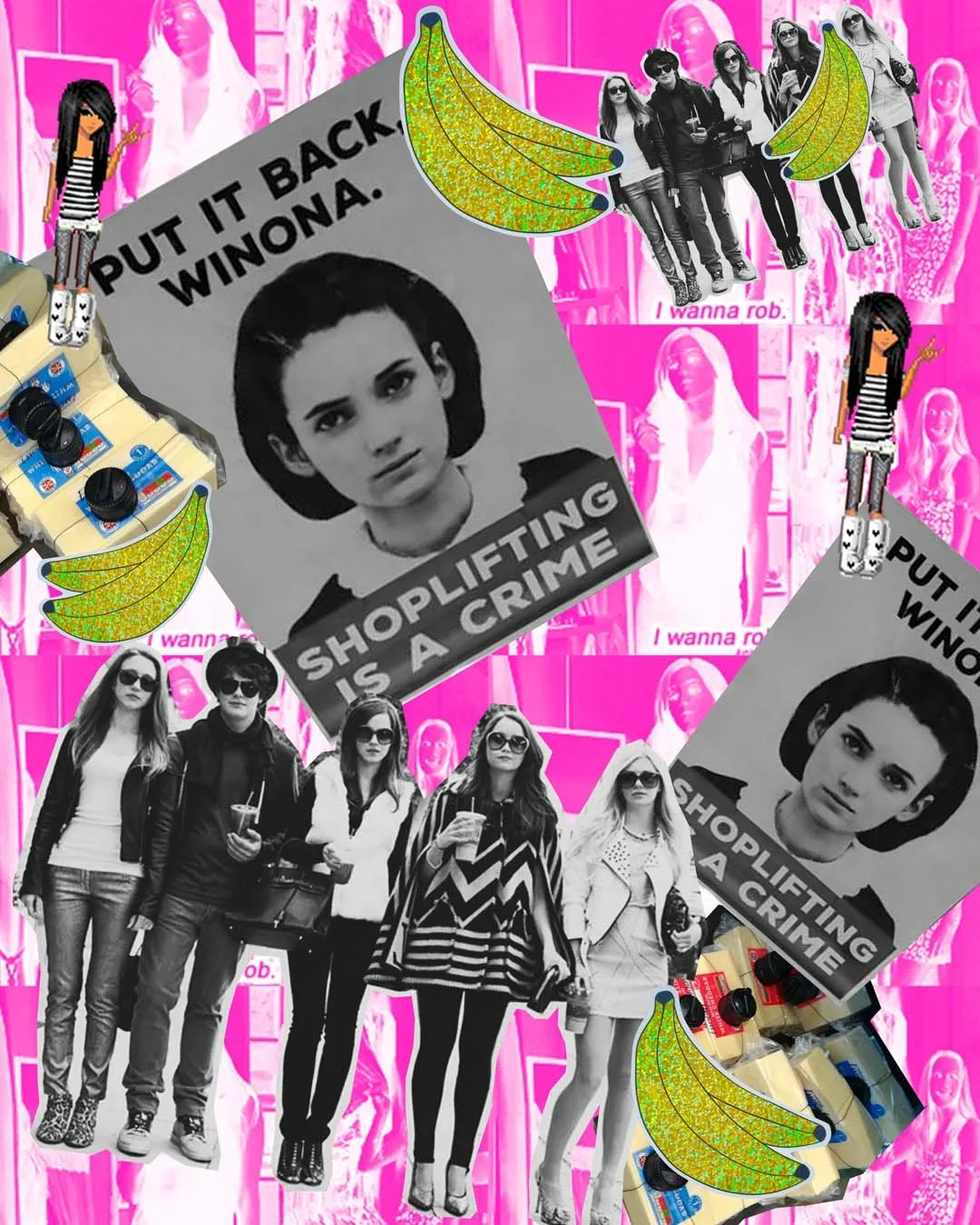
Popular Instagram reels joking about "that one friend who gets you anything you want while shopping" and trends like the "banana method" — a self-checkout method where shoppers swap a cheaper item's barcode (like a banana) onto something more expensive to avoid paying the full price — demonstrate how everyday theft has entered mainstream online culture.
Now so widely accepted in online discourse, shoplifting has become more than an act of necessity or rebellion. It has become entertainment. A race to see who can push the boundaries the furthest.
While memes and TikToks have helped normalise conversations around shoplifting online, physical media artists have been making similar interventions in public for years. Birmingham street artist Foka Wolf has built a reputation for replacing billboards and adverts with satirical anti-capitalist messages. As the UK entered the cost-of-living crisis, his fake Tesco-style poster reading, "It's okay to steal from us if you're broke," quickly went viral, provoking debate about inequality and survival. Earlier this year, another piece emblazoned with the words "Normalise Shoplifting" appeared on a billboard, showing that what was once considered a fringe sentiment has well and truly entered mainstream culture.
As everyday expenses continue to sky rocket, the food we once had access to disappears. Food continues to be one of the clearest indicators of inequality — in today’s climate, a fully stocked cupboard or fridge feels like a birkin bag.
Kim, a nurse from Birmingham, tells me, "I find it hard to eat well and stay healthy on such a tight budget. If I didn't steal, I wouldn't be able to afford good bread or healthy snacks. All of the cheap things are the ones with a million ingredients."
For her, shoplifting isn't about luxury. It's about basic nutrition.
Kim's words stayed with me long after our conversation ended. We're constantly told to eat more fruit and vegetables, cook from scratch and make healthier choices, but what happens when those choices are no longer affordable? Research from The Food Foundation shows that healthier diets remain out of reach for millions of households. Healthy eating is often framed as a matter of discipline, when for many people it's simply a matter of money.
It's a reality that supermarket staff are witnessing first-hand. One checkout attendant tells me about a woman she stopped after noticing several pieces of fruit hadn't been scanned. "She just broke down crying when I approached her," she tells me. "She kept apologising, saying she couldn't afford it. I ended up hugging her."
Her interaction didn't end with an authoritative ‘telling off’. It ended with compassion. Maybe that's the reality of Britain in 2026. Not dramatic scenes of desperation, but ordinary people quietly trying to take home a few extra pieces of fruit.
These conversations ultimately raise a much bigger question about where our own moral boundaries lie. For many people, the distinction feels clear: taking from billion-pound supermarket chains is seen as fundamentally okay and even encouraged. If they can afford to absorb the loss, the logic goes, why shouldn't we all channel our inner Robin Hood? One jar of beans at a time.
Until the government and Britain's largest corporations meaningfully address the realities of the cost-of-living crisis, these moral grey areas aren't going anywhere. They'll continue to expose a society where the lines between right and wrong are becoming increasingly blurred.
Shoplifting now feels almost ordinary. Not shoplifting is starting to feel a bit like trusting the government.