Inspirational Parasites, Ozempidemic and how Memes are Normalising Fatphobia Again
Words: Hannah Van De Peer
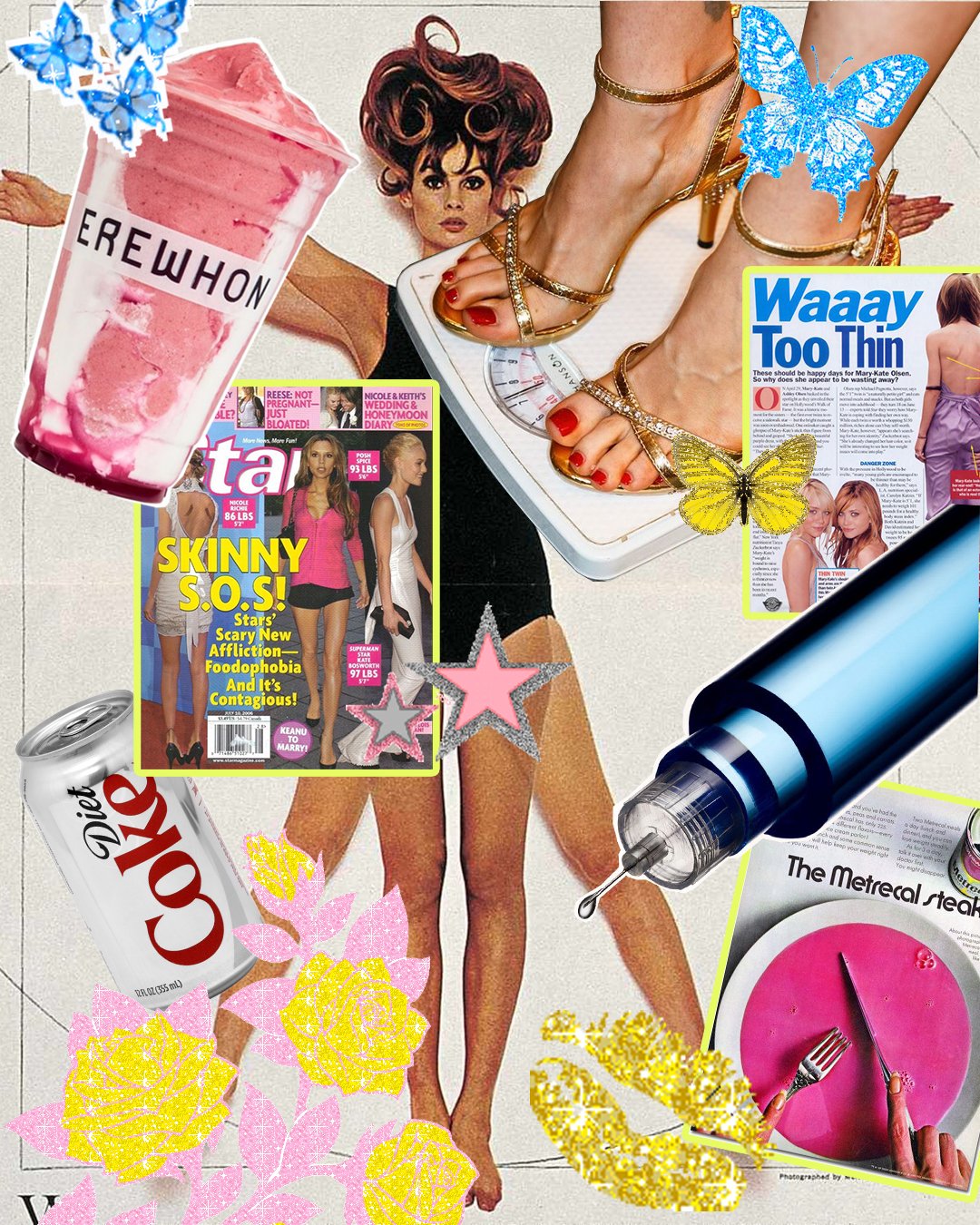
It’s really easy to scoff at the casual fatphobia of the 2000s. We remember tabloid mags picking women apart for ‘piling on the pounds,’ a diet brand being named, quite literally, The Skinny Cow, and how deeply food fear was ingrained into a generation of young women thanks to Slimming World’s ‘syns.’ A lot of us, who were just kids at the time, spent our early adulthood unpacking this language and vowing to leave it in the past, where it belongs. This seemed a lot easier when culture favoured the body positivity movement and it was, for a bit, permissible to feel okay about your own body.
But Body Positivity is dead, obviously. And in its wake, fatphobic language is back. Except it seems more insidious this time: People who claim not to be fatphobic will, in the same vein, talk about how they hope to develop an intestinal infection just to lose a few pounds. TikTok will convince you if you’re not on Ozempic, no matter your size, you should start calling yourself “Fat Amy,” and countless straight-sized creators now feel comfortable listing everything that “makes them feel fat.”
The anti-fat language of the 2020s could perhaps be traced back to the staggering rise in GLP-1 use within the last three years. Around 100 million people worldwide are suppressing their appetites in an era which has now been coined the ‘Ozempidemic,’ or ‘Zempydemic’/’Zempdemic’ depending on who you’re asking.
Initially named this to poke fun at the current diet culture climate by creators like Katie Roe - including incessant adverts for body coaches and celebrities rapidly losing weight - the trend has been co-opted by straight-sized people body-checking - which means repeatedly checking your size and shape. This can be done by looking at visual cues - like turning sideways to check the ‘flatness’ of your stomach; or by compulsively taking measurements.
“Language like this, at its core, is about dehumanising fat people and reducing them down to well-trodden tropes.”
___STEADY_PAYWALL___
Content creators, particularly those in generally accepted bodies, saying: “I’m so glad I’m not a victim of the Ozempidemic,” proves how oppressive traditional beauty standards are. As the standards themselves shrink, skinnier people are compelled to get smaller with them.
June 2026 marked the beginning of the intestinal infection outbreak cyclospora in the US, transmitted via supermarket produce like ‘washed and ready-to-eat’ vegetables. Crucially, symptoms included feeling sick, sstomach cramps, loss of appetite and diarrhoea - similar to the expected side effects of taking a GLP-1.
Cyclospora content became aspirational - one of the must-have diseases of the summer. Creators called it the ‘waist-slimming diarrhoea parasite’ and began manifesting catching the infection.
“I ate blueberries and lettuce and I still didn’t get the slim waist-thinning diarrhea [sic] parasite,” one TikTok user wrote, notably disappointed.
The pressure to ‘achieve’ a slim waist was never based on health concerns - the two aren’t always mutually exclusive. While the cyclospora outbreak was an opportunity for people to show how much they prioritise skinniness over wellbeing; another, more recent trend exposed our collective view that fat people still aren’t seen as human beings.
“Things that feel fat,” I spotted countless creators posting in early August. I thought this would be something along the lines of how people used to say: “God, these jeans make me feel so fat” or, “I’m on my period, I’m so fat and bloated.” This is problematic in itself - as body positivity advocates like Michelle Elman have previously said, “fat isn’t a feeling.”
It isn’t synonymous with insecurity or embarrassment - rather a neutral label for a larger body. These creators went on to list things like: “Spilling food down yourself,” “running for the bus,” “feeling warm when no-one else is.”
Our biggest fear isn’t just gaining weight, anymore. It’s about being seen as fat-adjacent, or ‘fat-coded.’ Language like this, at its core, is about dehumanising fat people and reducing them down to well-trodden tropes: The clumsy one, the gross one, the lazy one… to name a few.
I was disappointed - but not surprised - to see the number of comments laughing along or chiming in with their own additions. Fatphobic language has become as casual as sharing a joke between friends.
Our world lacks empathy, and fat people are being punished for existing.
As someone who has experienced medical discrimination for her size, but didn’t feel comfortable reporting it, I had a serious condition go under-the-radar for over a year. Fatphobic language isn’t just used to make fun of people for their looks; it can have serious implications outside of it, too.
It’s not just online, I’ve heard it from real people around me - people being thankful for not having stretchmarks, cellulite, an ‘apron belly.’ Fat bodies are no longer safe in online - or IRL - spaces. Now more people are getting comfortable with the outward oppression of one type of body, it’ll help to normalise open expressions of hate towards other marginalised bodies too.