‘Madeline Argy’s Arms’ and What TikTok Got Wrong About Thalidomide
Words: Lily-Rose Morris-Zumin

Why is “Madeline Argy short arms” trending on TikTok?
It all began with a Dazed interview, filmed at Givenchy’s Paris Fashion Week show on 6th March. In the clip, Argy’s arms appear slightly shorter than usual, the result of an optical illusion caused by a collared shirt with loose, mid-length sleeves skewing her proportions.
“What am I looking at?” reads one comment. “Are we going to ignore the T-rex in the room?” reads another. The vitriol accumulated quickly, veering between confusion and outright mockery.
In a response video that drew over 10.7m views, Argy addressed the negative reactions directly. Whilst comparisons to a “T-rex” may be in jest, she suggests, they are nonetheless hurtful, particularly for her. Her mother, she explained, has an upper limb disability caused by Thalidomide – a drug prescribed for morning sickness in the late 1950s and early 1960s – “meaning her arms are shorter than everybody else’s.”
“What? I’ve never even heard of thalidomide,” and similar statements filled the comment section. If social media has cast a harsh light back onto the scandal, that same brightness has also revealed an uncomfortable truth: people can recognise visible differences before they know the history behind them, and that ignorance can be incredibly unkind.
It’s been more than six decades since the drug Thalidomide was withdrawn from shelves, and those affected by it will forever live with its consequences – a medical scandal that permanently impacted the lives of between 10,000 and 20,000 infants worldwide.
In the UK, it was sold under the name Distaval, promoted as a “safe” daytime drug – suitable, it was claimed, even for “infants and the aged”. There was, then, no reason to suspect a drug so celebrated for its effects, and so readily recommended by doctors. In the 2014 documentary Attacking the Devil, which follows Harold Evans’ investigation into the drug at The Sunday Times, one mother recalls being told it was a “miracle drug”. “I took the prescription,” she says, “not realising I had accepted my death warrant that day.”
___STEADY_PAYWALL___
The consequences of those decisions did not end with the drug’s withdrawal. Decades later, they are still being contested. Nick Dobrik, campaign leader at Thalidomide Voice, traces his advocacy work within the organisation back to the early 2000s, after reading a report in The Sunday Times on the financial difficulties faced by thalidomiders. (“Thalidomider,” Mikey Argy says, is often preferred to the “dreadful” word “survivor”).
At the time, someone born without arms could receive around £11,000 a year in compensation - much of it taxed, as it was held in a discretionary trust. It was a sum that did little to account for the cost of specialised equipment or the need for day-to-day assistance. “For someone with no arms, you can’t do anything for yourself,” Dobrik says.
“Argy is clear that the issue is not simply visibility, but understanding. Despite the negative TikTok comments, she and Dobrik both believe that younger generations are generally better accepting of disability than those who came before them, in part because of greater inclusion in mainstream schools and public life.”
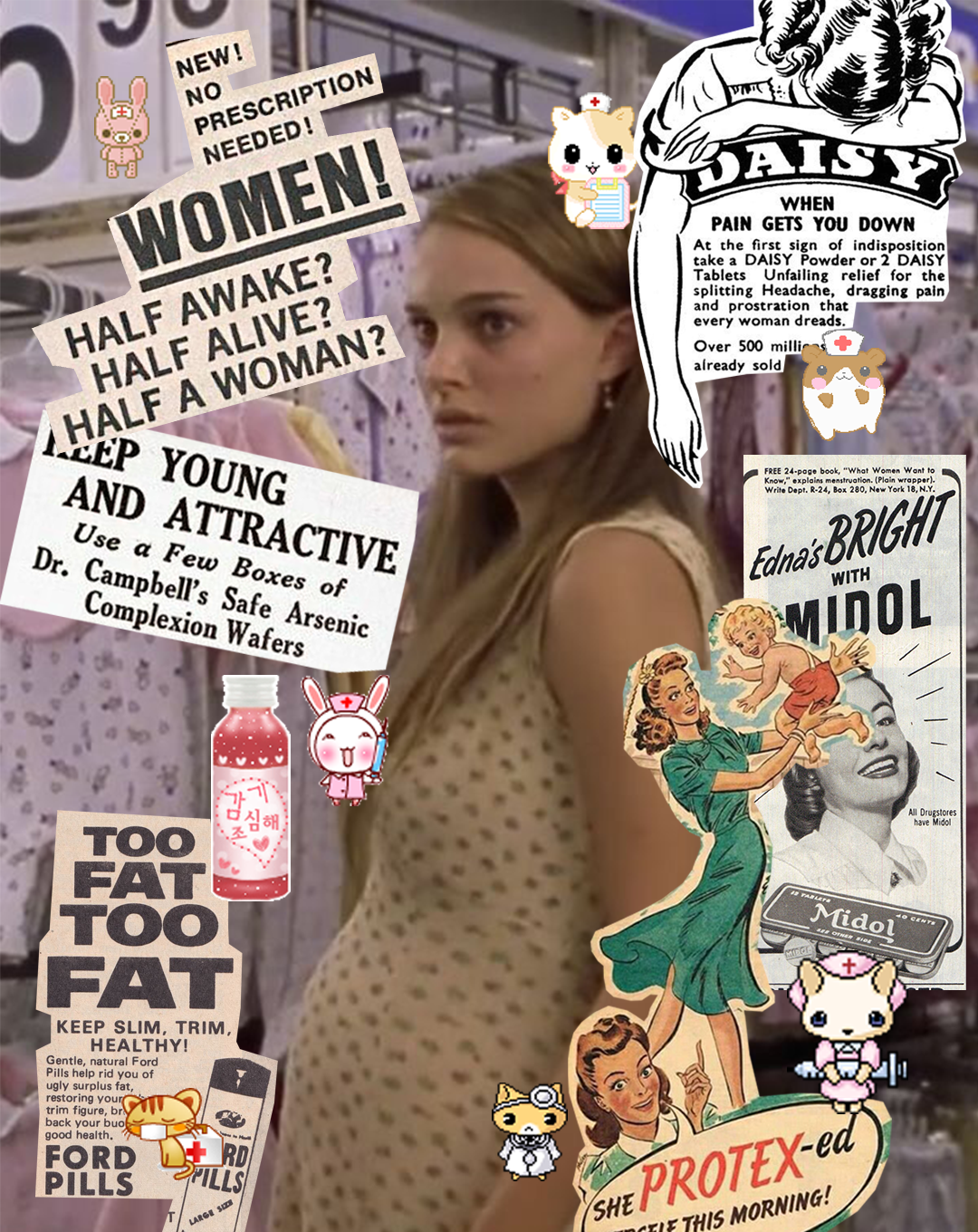
What followed was a series of campaigns: to secure tax exemptions, to push for increased contributions from Diageo – the drinks conglomerate behind brands including Smirnoff, Baileys and Johnnie Walker, and the successor to Distillers who distributed the drug – and to argue that the UK government also bore responsibility. An early day motion gathered 279 signatures in Parliament.
Now, the focus has shifted again. As thalidomiders age, the physical toll of decades of adaptation is becoming more acute.
Mikey Argy, who is also chair of Thalidomide Voice, describes it as a slow collision between age and adaptation. For years, many simply got on with things in ways “that would look extraordinary to anyone else,” bending, reaching, improvising, until pain or injury makes those adaptations impossible.
Argy, who has been leading the campaign alongside Dobrik, says the way survivors are represented has also changed. Until 2023, the National Advisory Council (NAC), a democratically elected body, contributed directly to decision-making within the Thalidomide Trust. Following a governance review, the NAC was scrapped. Argy argues this has left survivors without democratic representation, describing a shift back towards a more “medical model” of disability, where decisions are made on their behalf. Campaigns are now being run independently for the first time.
Argy is clear that the issue is not simply visibility, but understanding. Despite the negative TikTok comments, she and Dobrik both believe that younger generations are generally better accepting of disability than those who came before them, in part because of greater inclusion in mainstream schools and public life.
Dobrik recalls being treated as exceptional, fragile or pitiable as a child in ways that would now feel jarring. He recalls a manager telling him there was no way he could work on the shop floor because he would “put people off buying things”. At a military hospital, a doctor described him as an “interesting specimen”, asking to take X-rays out of curiosity rather than care.
That kind of open prejudice, he suggests, has become less acceptable. And yet ignorance has not disappeared, but merely changed shape. Argy says that in her local area, some younger people have mocked her because they simply do not know what thalidomide is, and have never seen bodies like hers before. The problem, Argy identifies, is not just cruelty but historical amnesia.
The legacy of thalidomide still shapes medical research today. Pregnant women remain largely excluded from clinical trials, some estimates suggest up to95 per cent of studies do not include them, while reporting in The Times has suggested the figure may be evenhigher in practice.And yet medication use during pregnancy is widespread: more than 80 per cent of women take at least one drug while pregnant, according to research published inBMJ Open. The result is a persistent gap in knowledge, where decisions are often made without clear evidence of long-term effects.
Now, that campaign is entering a new phase. In early May, Argy and Dobrik plan to stage a demonstration against Diageo. Backed by an all-party parliamentary group and public figures including Miriam Margolyes and Imelda Staunton, where the aim is to force renewed attention on a story many assume belongs to the past. Yhis time the campaign is being built across platforms rather than a single front page.
That difference is already visible: after Madeline Argy shared links to her mother’s work, Thalidomide Voice gained more than 24,000 followers on social media. “I didn’t even know about thalidomide, but now Mikey Argy is my hero,” one user wrote, a response shaped by the same platforms that had, moments earlier, reduced her body to a punchline.
TikTok has put thalidomide back into conversation, but there is still work to be done to turn awareness into understanding. Mikey Argy’s answer is simple: “education, education, education.” Without it, the past is endlessly rediscovered but never properly learned. With it, there is at least the possibility that attention might harden into something more lasting – amplifying thalidomiders’ voices to reach beyond their own generation.