
MUNA on Stevie Nicks, Political Songwriting, and Their New Album
Words: Lauren O’Neill | Photographer: Sarah Pardini | Makeup: Amber Dreadon | Hair: Antoine Martinez with PARADIS using oribe | Styling: Max Weinstein | Polyester LA Editor: Camille Mariet | Videographer: Amanda Elman | Onset Assistant: Sebastian Lumbreras
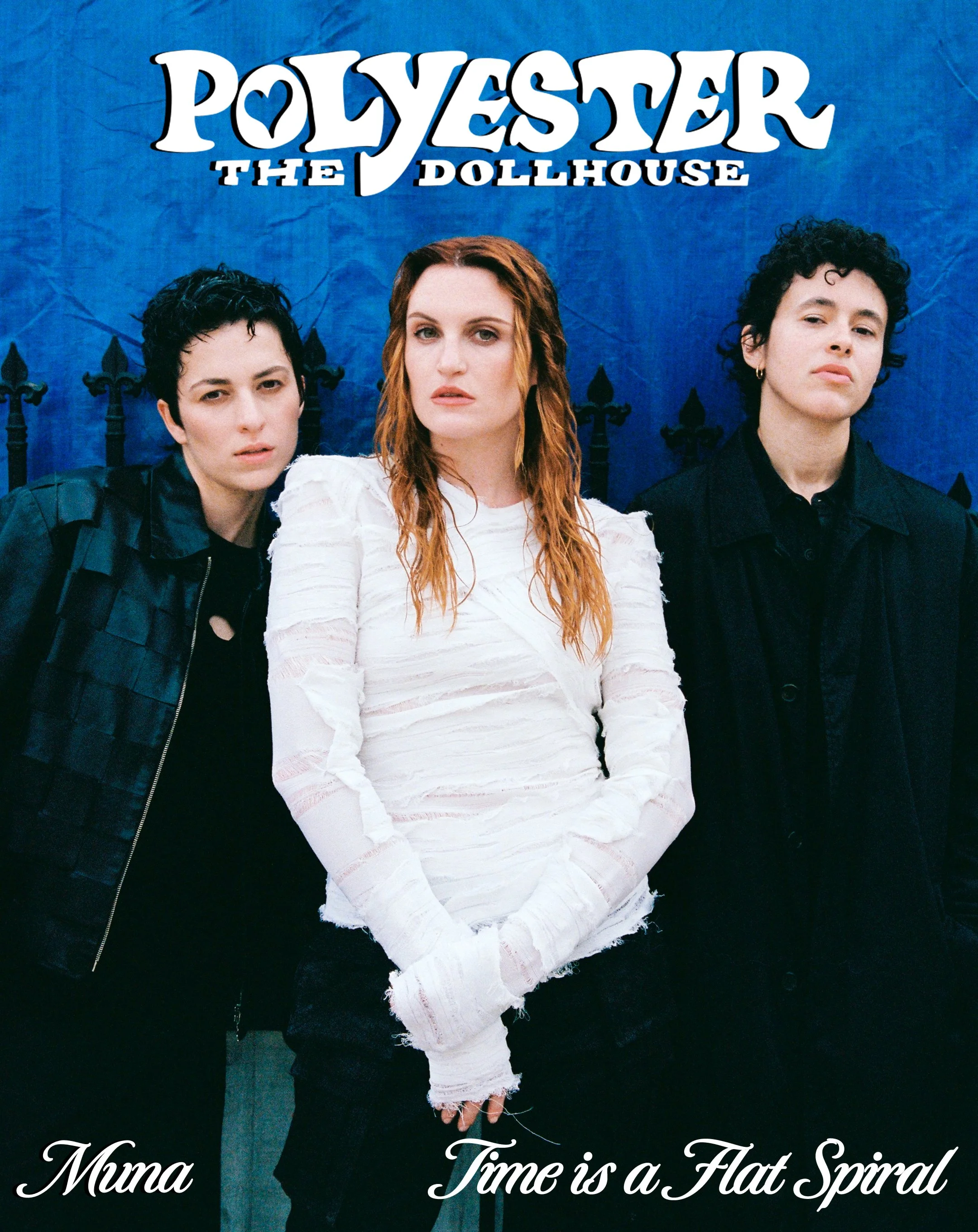
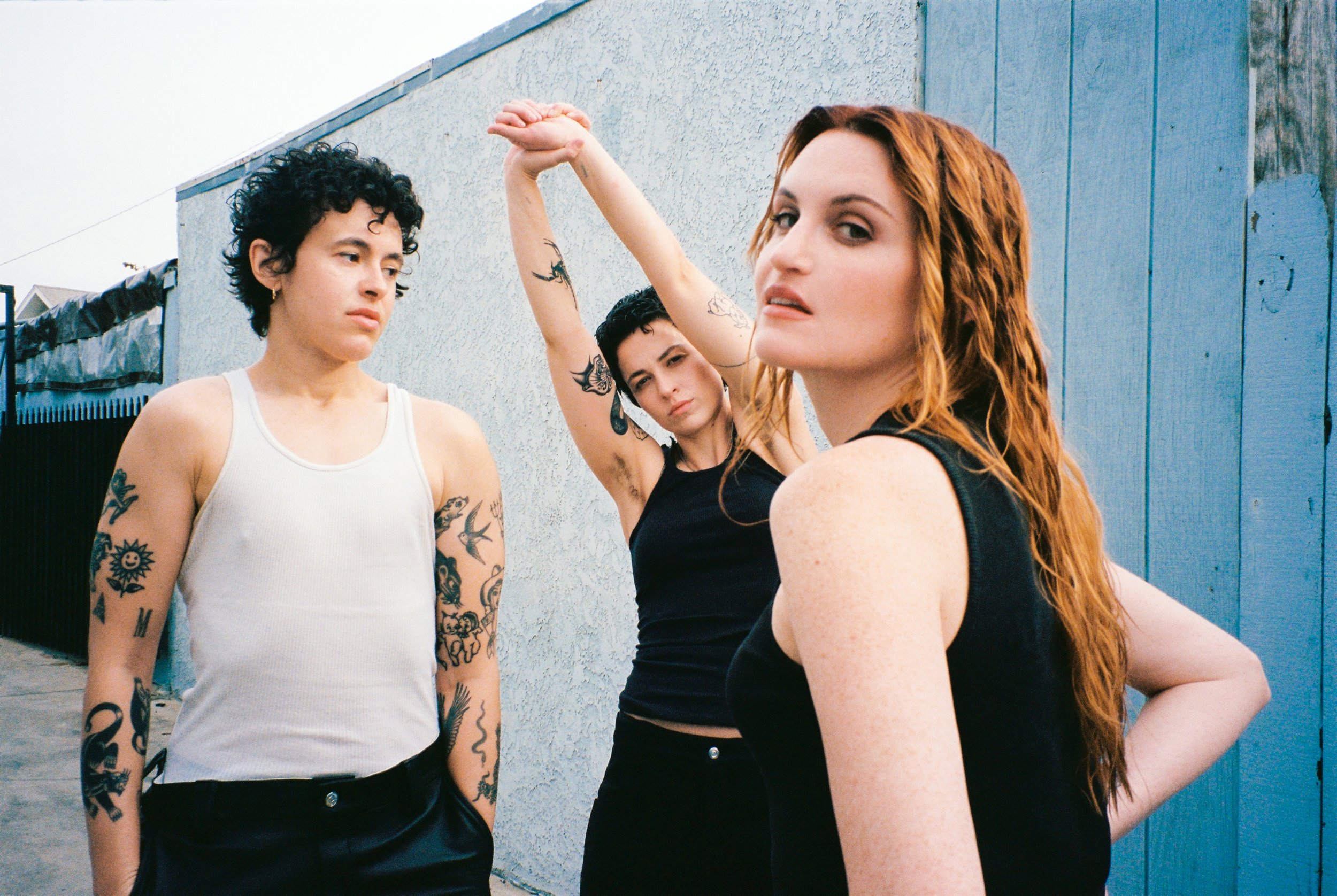
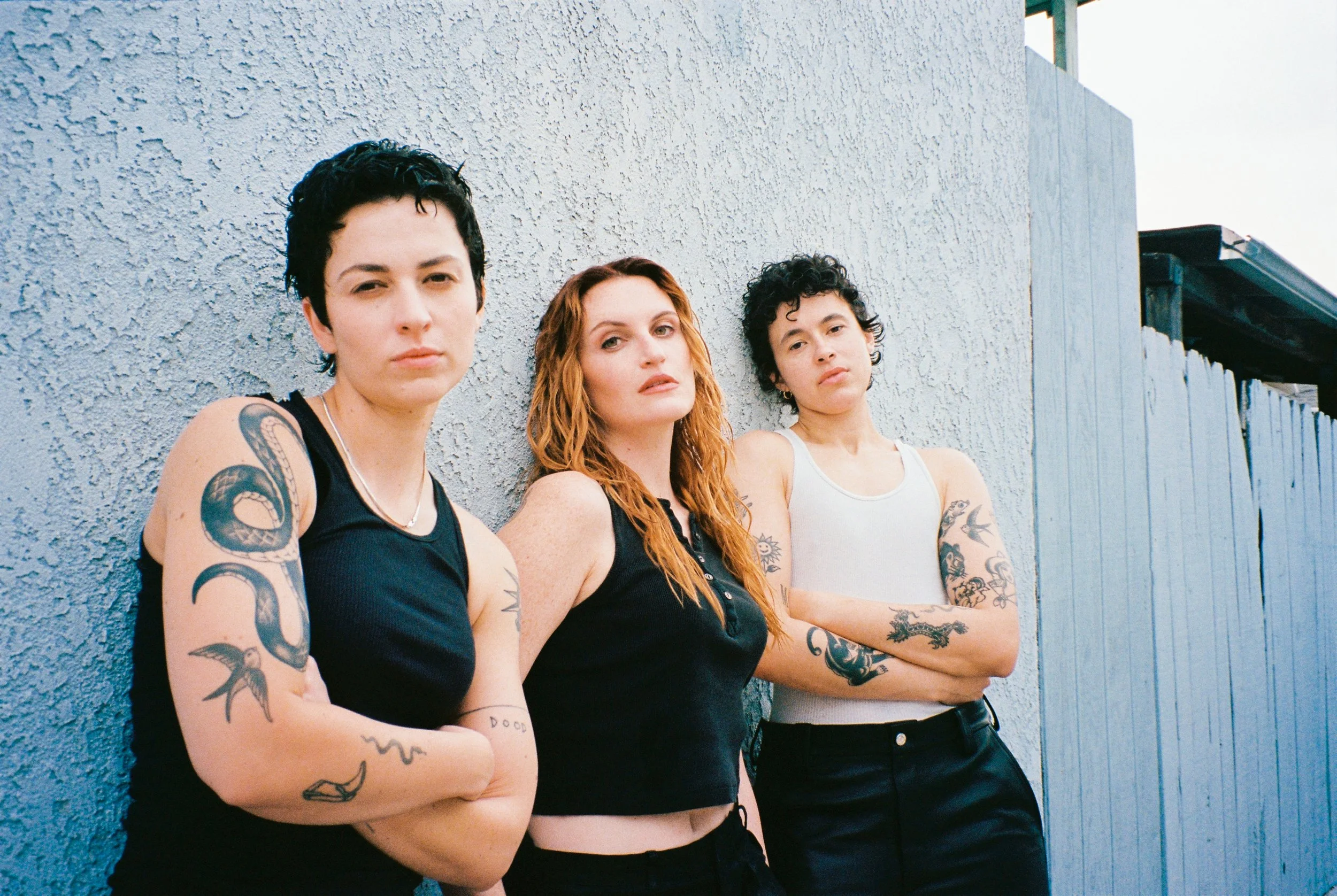
In 2016, when Katie Gavin, Josette Maskin and Naomi McPherson - who made music together as MUNA - recorded their first album, About U, they worked with what they had. They had punk sensibilities and a rugged aesthetic, but the songs they wrote together could never avoid dovetailing into irresistible pop hooks and anthemic moments: it was just who they were.
Over time, the band built a formidable reputation for putting danceable melodies to difficult interior struggles, modern life’s stresses, and the highs and lows of queer love. Their music has soundtracked both sweaty lesbian bar dancefloor encounters, and the types of breakups that leave you bed bound, for many, many listeners. Given their resonance with a fanbase that rides so hard for them, since About U, MUNA’s momentum and vision has grown, matched by the ambition of their inspired pop songwriting, and their springboard choruses.
Forward to 2026, and they are on the precipice of releasing their fourth record, Dancing On the Wall, which they proudly call their most collaborative and cohesive piece of work yet, going as far as to say it is the album the MUNA who made About U would have been delighted to see their future selves record - with more resources, more skills, more experience of each other. If, as Katie says, growth comes as “a spiral,” then Dancing on the Wall is a return to the point they began at: “I think it really speaks to the people that we were when we started this project,” she reflects.
Recently, for our March cover, we caught up with the band to discuss Dancing On the Wall, the process of making a fourth record, writing political songs, 24 Hour Party People, and “sexy bags”. Read that conversation below.
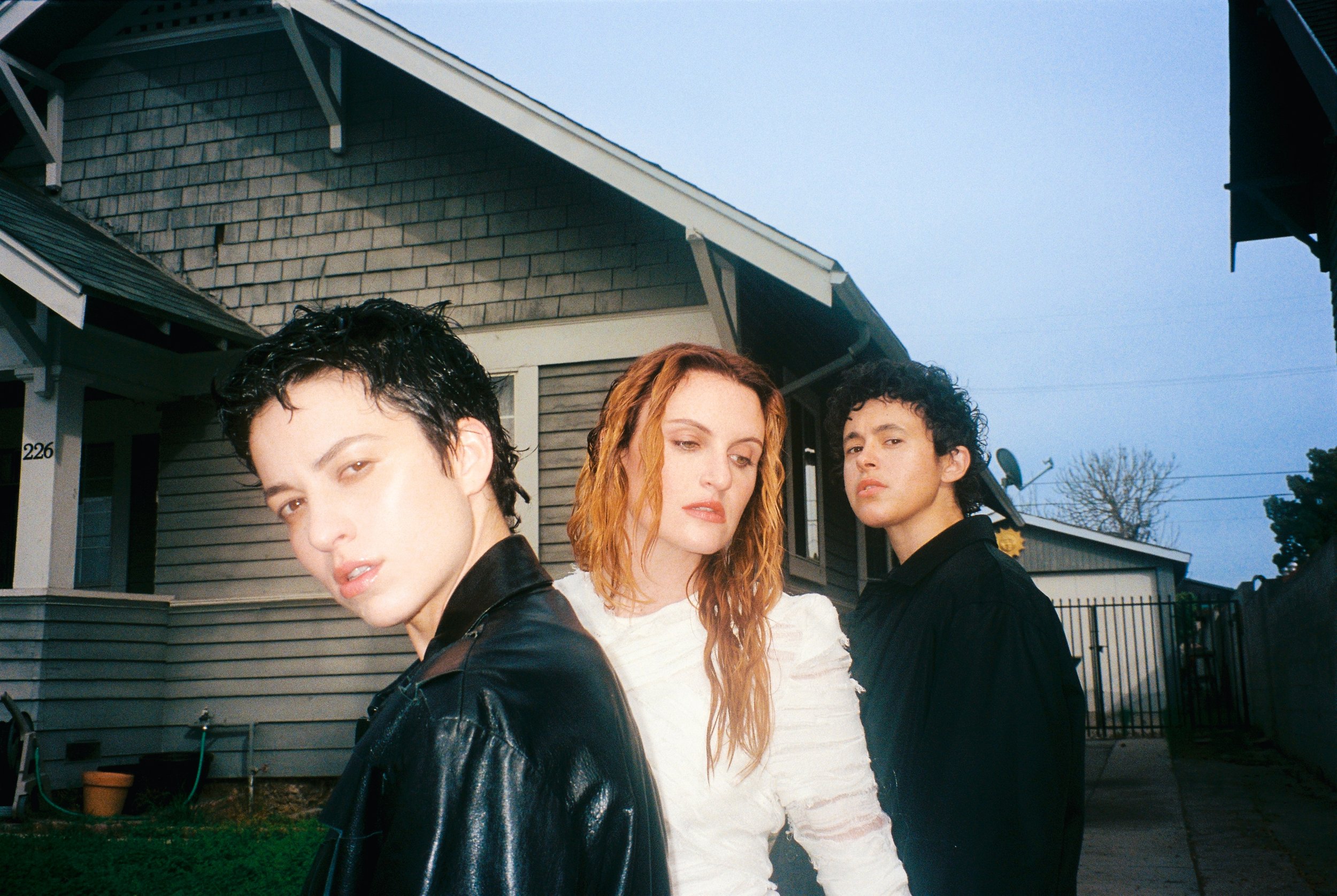
Polyester: Hey Katie, Josette and Naomi! Congratulations is in order I feel - your new album Dancing on the Wall is amazing. But before I start asking you about it, I would love to know what is going on for you guys today. Where are you, what are you doing? Have you got fun days planned?
Katie Gavin: I have to keep myself busy when we're in this part of an album campaign, and I am interested in learning how to fundraise. We have a little group that's called Queer Artists Moving Money, so I'm doing that today. And then I'm probably just gonna do a fuck ton of gardening in my backyard. I really think it's one of the most regulating things you can do. Josette, what are you doing today?
Josette Maskin: I need to clean. I need to clean my house. Hang out with my dog. Literally, that's it.
The glamorous lives of pop stars!
KG: It's unbelievable.
Naomi McPherson: I was home where I grew up this weekend, and now I'm back in LA, and then I go to New York tomorrow. I get to pack my sexy bag, which I like to do.
Tell me about your sexy bag.
NM: I think if you've toured for as long as we do you really get a sense of how to pack for certain different trips. And you can get really into organising your suitcase!
It’s funny, Katie, that you mentioned being in kind of a weird phase of the record campaign, because obviously you guys are starting promo mode, but you're a couple of months out from release still. So my first question is: How are you guys feeling at this moment? Is it exciting, tiring? And also, you've now done this together a few times, and I wonder what have you learned from the previous three record releases that you are maybe applying this time?
KG: One thing that happens every time is that we've just gone from being so in whatever the world of making the record is, which is totally different than having to talk about it. When you're working on music, it's a total feeling thing. And then sometimes you're thinking about larger structure and ideas, and stuff. But this is the period of time where we are talking to people like you and, you know, journalists and stuff, and it’s now that we start to get a better idea of what we've made. And that happens every time. You get better at talking about it once you've talked about it a lot.
I guess it is only really through articulating anything you've made that you get to figure out what you like about it, and maybe what you don't like talking about so much. That kind of thing you only really learn once it's in people's hands. Obviously, you guys last had a record out three or so years ago, and I wondered, on a practical level, was there much breathing room between finishing touring that one and writing this, or did they overlap a little bit? How has managing that been?
NM: There's the most break I think there's ever been, in a way, because Katie also did her solo project. I would say the thing that we learned in that interim space is that we really love the ability to change and have space. That is our goal with this next record - we fortunately made enough money, and were given enough time that we could really make a record that felt new and important to us. I think that can only really happen if you're given the space to digest and evolve as artists.
JM: I think we really believe that the fast pace with which people are pressured into, or have adapted into, releasing music is just totally unnatural for the art form. I mean some people are able to create brilliant art again and again with six months between, but I think our goal every time is to have the faith that if we make something good enough people will care.
Were there any highlights, any stuff that you particularly loved about making this record?
KG: We made it with the three of us, really, for the large part. We have recently been able to get our own studio which we've never had before and is a huge turning point for us as a band. Basically once we really locked in we were just going to the studio Monday through Friday and banging it out. This was definitely the most collaborative album we’ve made. It's always been the three of us.
“We really love the ability to change and have space. That is our goal with this next record - we fortunately were given enough time that we could really make a record that felt new and important to us.”
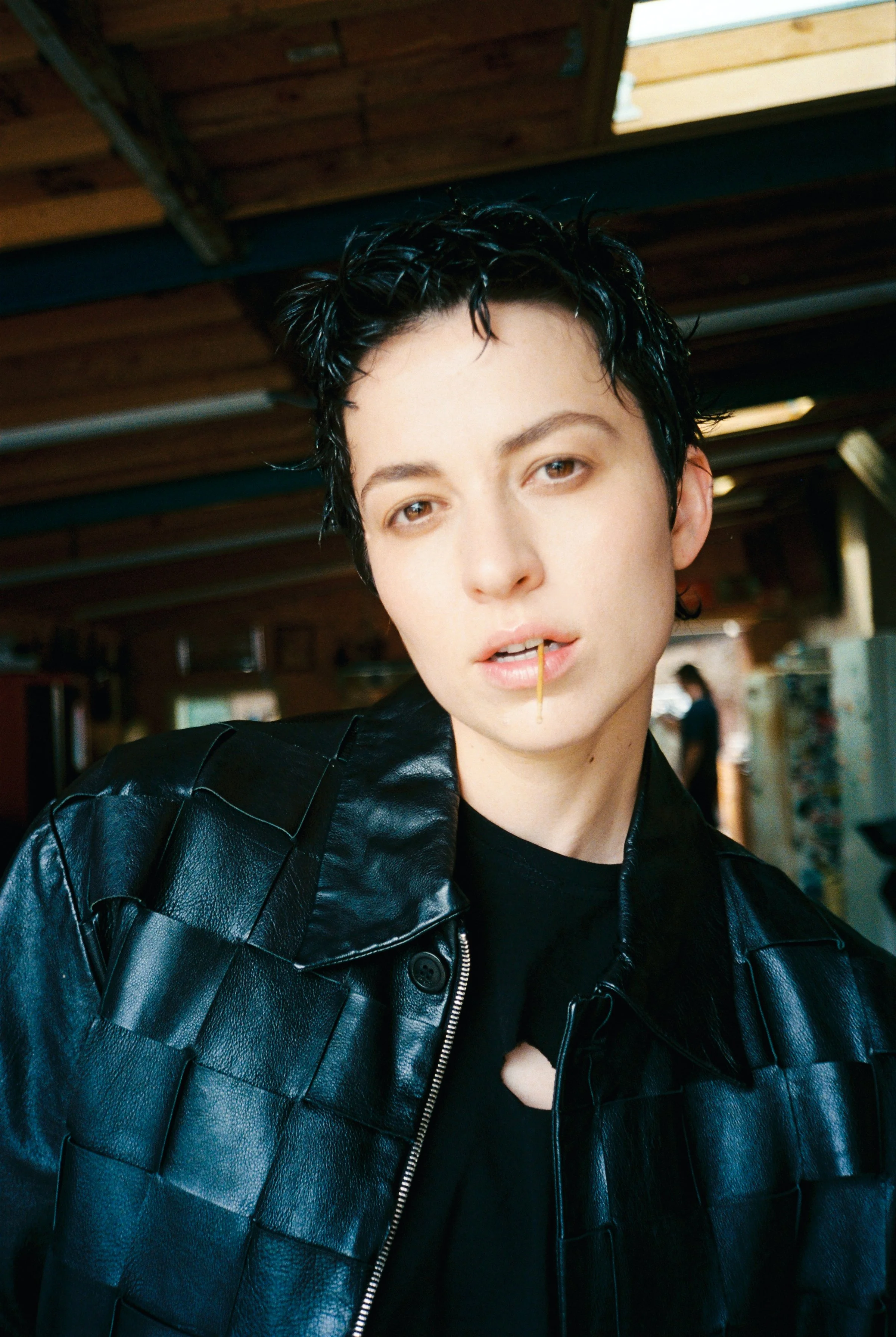
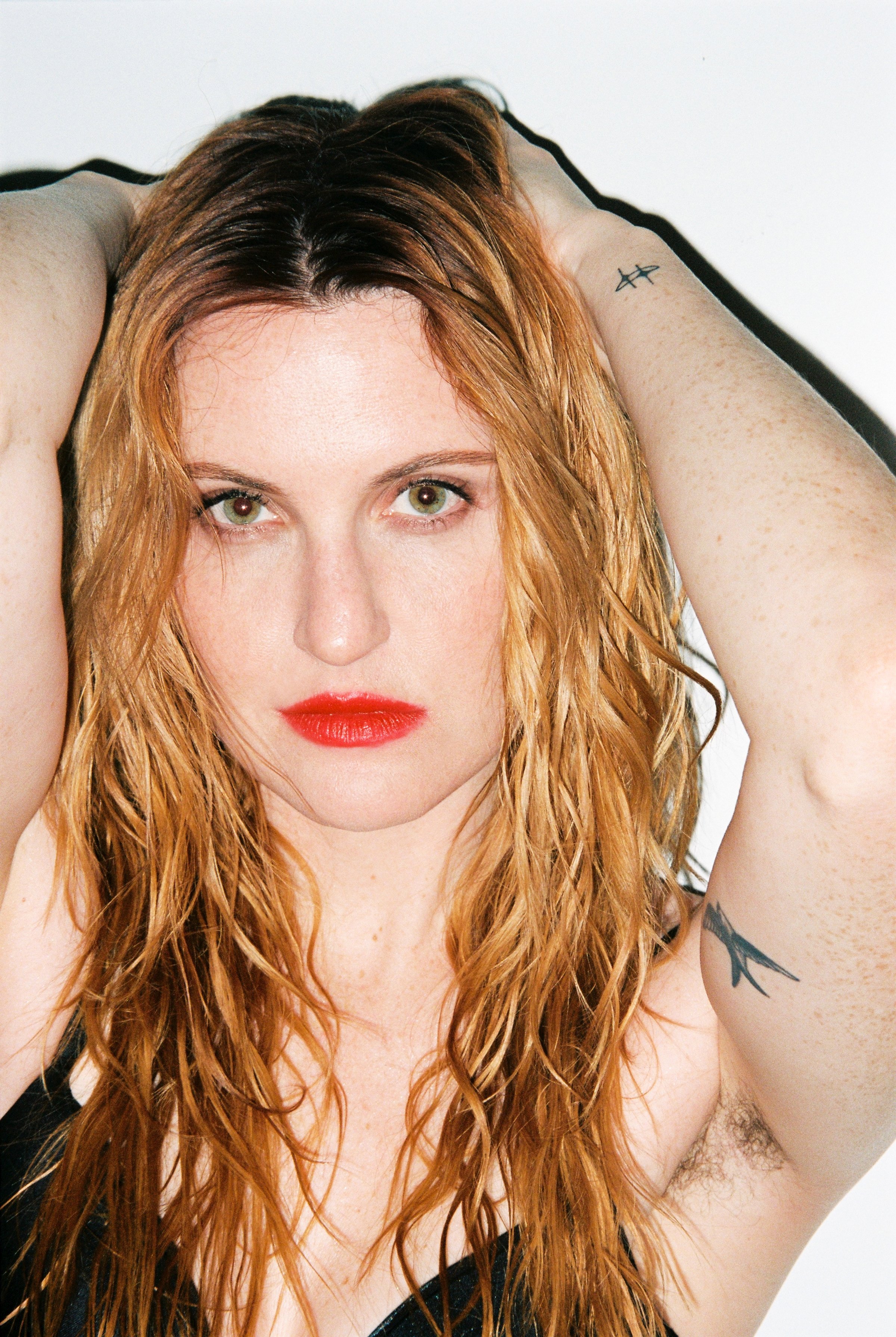
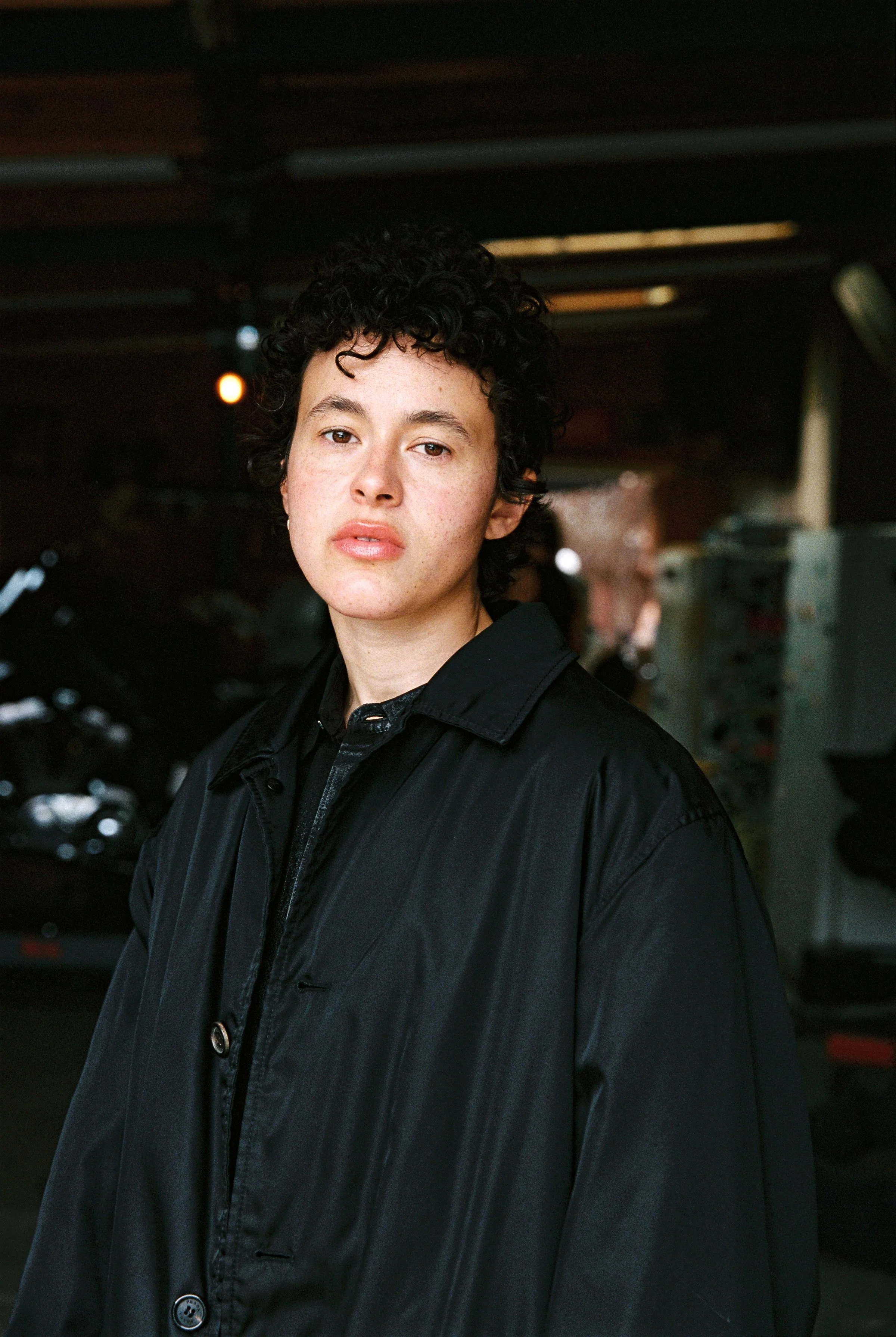
I know that this album has a very specific look and feel. I wonder if you guys could talk a little bit about how sonically and aesthetically you view it as an evolution of your work?
KG: The way that I see it is probably the way that I see most growth in life, which is: it's a spiral. So if you look at our first record About U, I think we were existing in this kind of aesthetically punk space. And the sound was like dark pop. And I think that if you look at what we've done with Dancing on the Wall, it's a more elevated, more expanded version of that thing. I think it really speaks to the people that we were when we started this project, but we have more resources, and we have more experience with each other. It's the album that I think we would be so over the moon that we made if you could have told us when we were 20.
NM: I think also sonically, Katie having done her solo project really helped hone the band sound. In the past we have kind of tried to be genreless and mutable, which is totally a valiant thing to do as a band, and I think it makes you a better musician to stretch your limbs in that way. But I think for this project in particular, we were like “Okay we want to make a dark, poppy, intense, sweaty. funky dance album.”
JM: I feel Katie goes really method. I feel when we started working on the beginning of the project, she was like “I'm no longer in my solo project era.” She would show up into the studio wearing all black, and we were like “That's fucking sick.” And we all really refined what we were listening to. I was not really listening to new music that much when we were making this album, other than music from completely different genres. I always listen to new rap and hip hop and stuff like that, and I'm sure that weasels its way into what I do as a producer in the band. But we were listening to Stevie Nicks, Prince, Janet, Madonna, Tears for Fears and Peter Gabriel and like, Frou Frou. All the stuff that we just have loved the entire time we've been a band.
KG: There's always some movies that were inspiring too. We watched 24 Hour Party People. That's the most kind of cohesive thesis I can put on on the visuals when we were in the creative process.
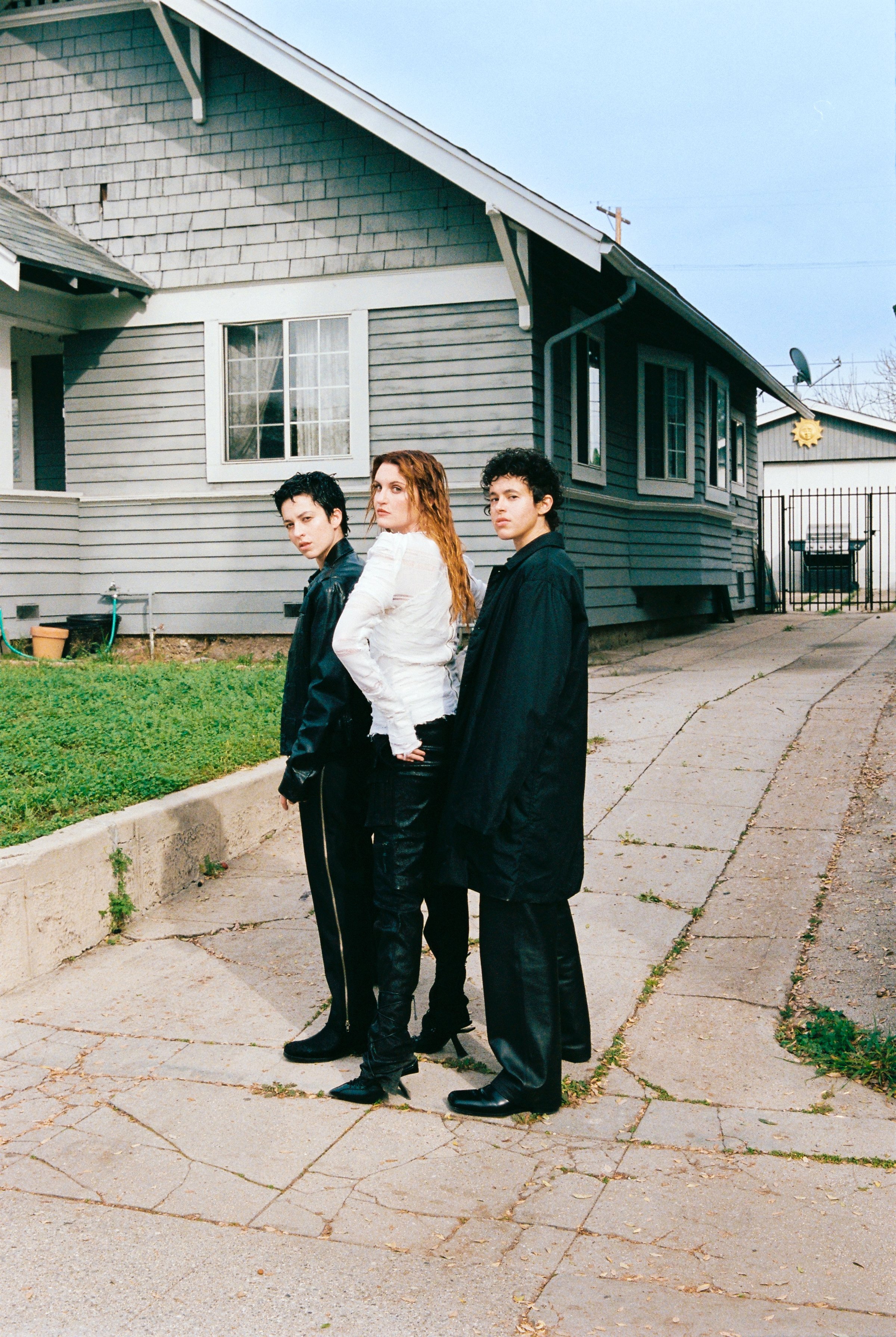
Did you feel it you just walked into it knowing how you wanted to do it, and knowing how you work as a group? Did it feel really cohesive, or were there changes from previous recording moments?
KG: We always have a State of the Union conversation at some point within the phase of making the new project. But I do think that we learned things from the making of the last album that we took into the making of this one. And yes, in short, it was a more concentrated, cohesive, thoughtful process than it has been in the past. We were locked in, as it were. In the past, you know, “Silk Chiffon” was released before we even had an album done. And there was a long period of time between that single and the record. So there was momentum from that song, and we were responding to it in some way. With this, it was a very concentrated record making process.
Do you prefer to work that way so that you can come out of it with a body of work that feels it's this whole cohesive thing that's been protected from anything or any outside influence beforehand?
KG: For me, definitely, yes,
JM: Yeah. I think it's just also all based on availability. It's a privilege to actually be able to work that way. On the second record we worked that way, but also we were forced to grow and work with other people when we maybe weren't necessarily ready at certain points, and there were a lot of growing pains. But I mean being able to do it on your own and do it however you want is just a privilege of money, time and people trusting us, so I think it's definitely preferred. It's something that we had to earn for sure in a lot of ways.
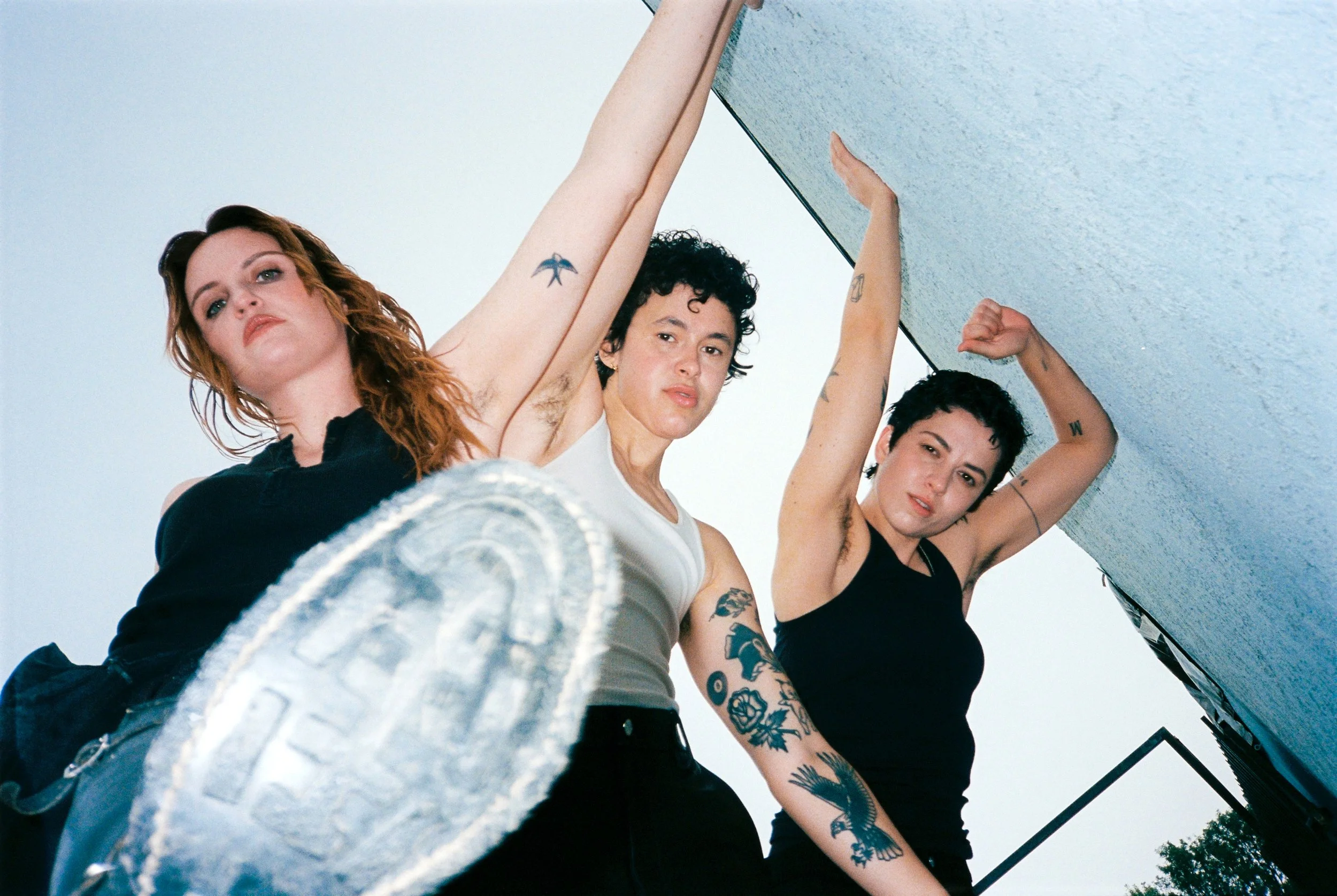
“We all really refined what we were listening to. We were listening to Stevie Nicks, Prince, Janet, Madonna, Tears for Fears and Peter Gabriel and like, Frou Frou. All the stuff that we just have loved the entire time we've been a band.”
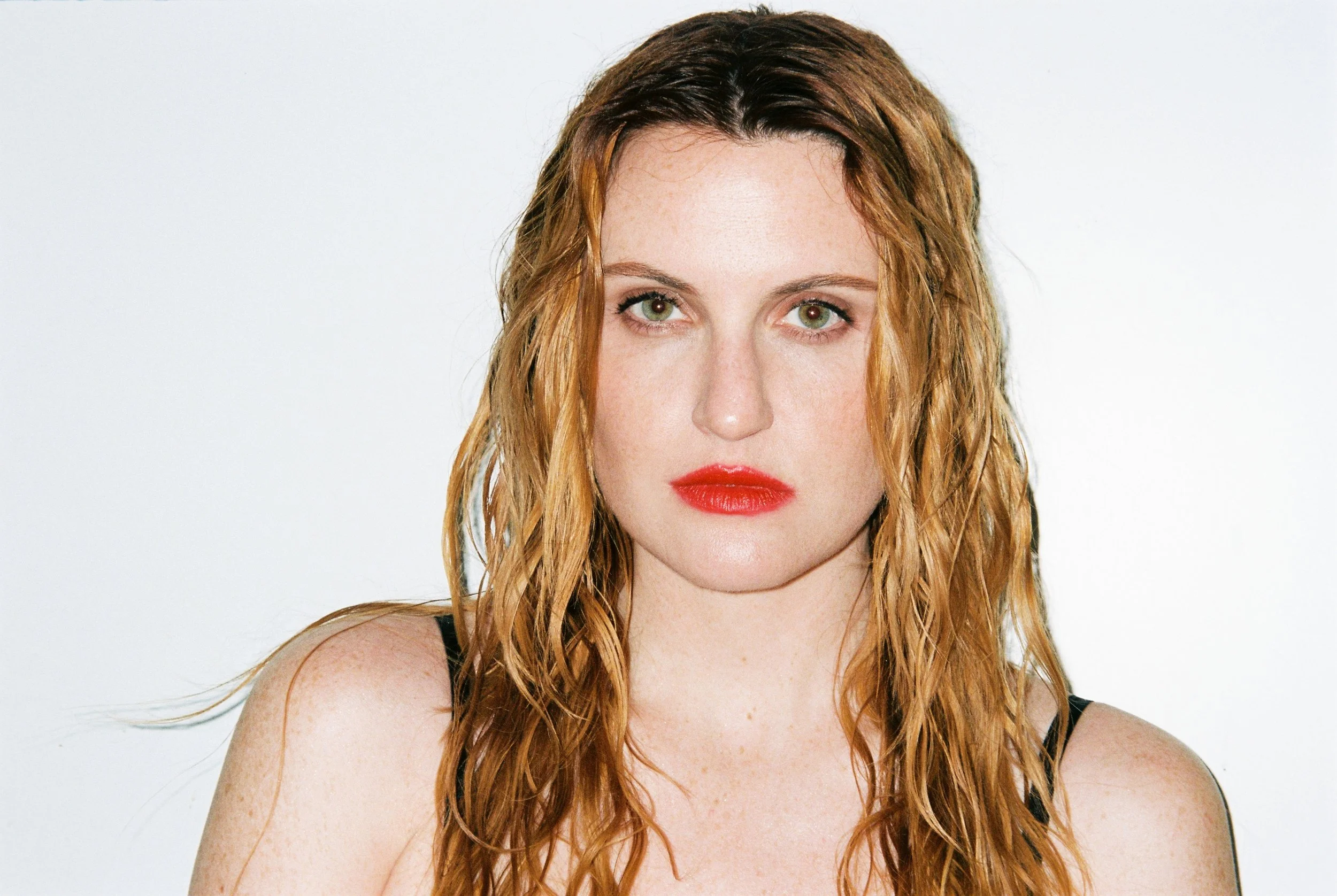
Something that I have really appreciated from listening to this album, is that you guys are really direct about your message on various songs across the record in various different ways, in particular “Big Stick” which discusses the way in which so many are influenced into accepting the unacceptable - like ICE and the war in Gaza - by our media and governments. And I just wonder, do you think that over time you've become more comfortable with speaking directly? Do you think you've got to a place where you've become more straight talking? Why is it important to you as artists to speak on the issues you clearly want to talk about?
NM: I've always felt Katie as a songwriter and as the main lyricist of the project, I feel like you actually have always been. I think it's always been blunt if you're ready to receive the message.
JM: If this is a “Big Stick” conversation in particular, I think it's not even that we've become more blunt. This is an impossible feat of a song to try to write, and to not come across as being condescending, preachy, pushy, trite. The Muses don't often let you write that type of song and have it come across, the way that we hope it does for the listening audience. I think that was, like, a spiritual thing. Full shout out to Katie for the lyrics on this song.
KG: I would say if we haven't been as direct it's not for lack of trying. It's really quite hard to write. I found it quite hard to write explicitly political songs. Tracy Chapman has always been my north star of a songwriter, because she was able to pull that feat off again and again, right? I actually still don't think this is the most heart centred political song. Although it does really, at certain times, make me feel emotional, which makes me feel we've done something good.
For sure, I think anyone explicitly saying this stuff in any way is doing a good thing. To even be able to express it in a piece of art, and to be able to put music to it, and to have that music feel it can elevate what you're trying to say because of the way that the music makes you feel is a huge feat.
KG: I think we're really lucky to have a fan base that is young and young people continue to find us. The best thing as a songwriter is when somebody says, “I didn't have words for what I was feeling until I heard this song.” If we can help them put words to something in the world that they, something within the system that they are living under, then I think that that's also a service. It definitely has been for me with other artists.
To follow on from that question, I'd love to know how you guys would like people to feel when they listen to this record?
KG: It's always kind of the same answer. I really want them to feel seen. I really want them to feel a sense of belonging and to feel less lonely. What about y'all?
NM: It's not a passive listening experience, it's pretty active and involved. I hope it feels like energising in some way, whether that be actually physically or in a more kind of spiritual sense,... I hope it feels propulsive and filled with some kind of energy.
Forward motion, right? Obviously you will eventually be playing these songs live, which I can imagine is always really fun to work out and to put into a show, and kind of helps them to almost have a second life, right? So I wondered what your plans for doing that are, and how you're feeling about taking it on the road?
NM: I think there's almost an impulse when you have such a fun live show, to be like, “Okay, how do we make that like the studio album? People love it, so why don't we make the live show like the album?” But I think it actually is a cool move for us to not do that, so that when you come to a live show you are getting a different experience, it's not just us performing. You will get something different out of it and it'll feel a little bit different and appropriate to the space. So we're getting in rehearsals. Once we finish doing music videos and stuff we're getting straight into practicing and getting into rehearsals with our crew. So shows this year, I'm sure more will be announced by the time this comes out, so I don't want to blow anything. We're touring this year and hopefully next year if all goes as planned and all goes well, people like it, we'll tour it as much as we can. People have to come!
That's the pull quote for the article. I'm gonna write that in big letters. “You have to come!”
NM: Make that the headline! Please come so we don't feel disappointed in all the work we did. I mean that's kind of what the whole thing. Obviously we get to make the record and that's the selfish thing for us, but the whole thing is about the fans getting the record and us being able to share it together. That's really the fucking point of all this.
Thanks MUNA!
Dancing on the Wall is out May 8, on Saddest Factory Records.