
Olivia Taylor Dudley’s Guide to Horse Whispering
Words: Tanya Fevzi
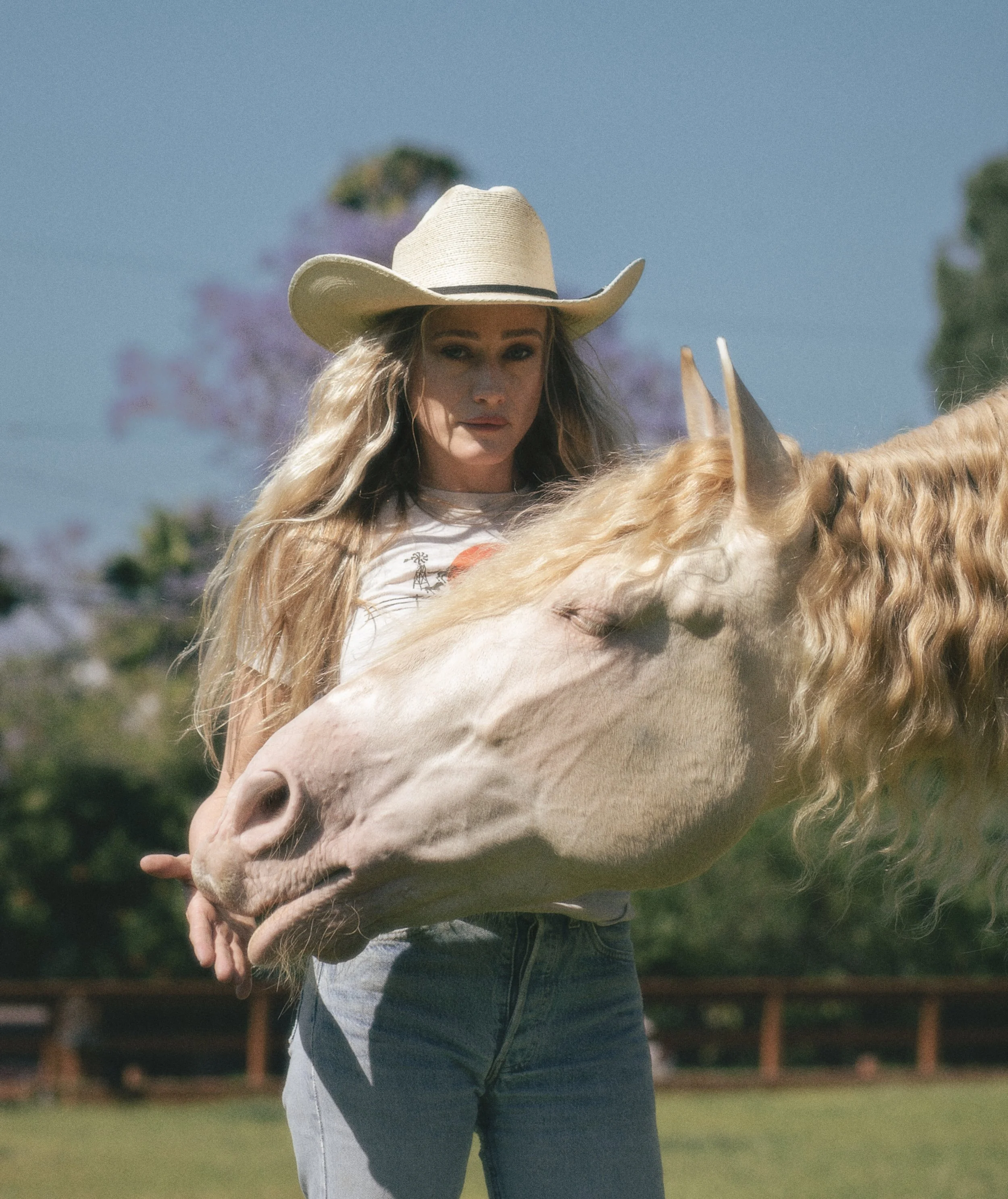
Olivia Taylor Dudley is your new favourite horror girl. After she snuck into her dad’s den to watch The Exorcist aged five, she wanted to be just like Linda Blair, and her acting career - built on scary movies including Chernobyl Diaries, The Vatican Tapes, and Paranormal Activity - is a manifestation of this. Her latest film, Touch Me, is a psychosexual horror comedy that deals with trauma, addiction and codependency.
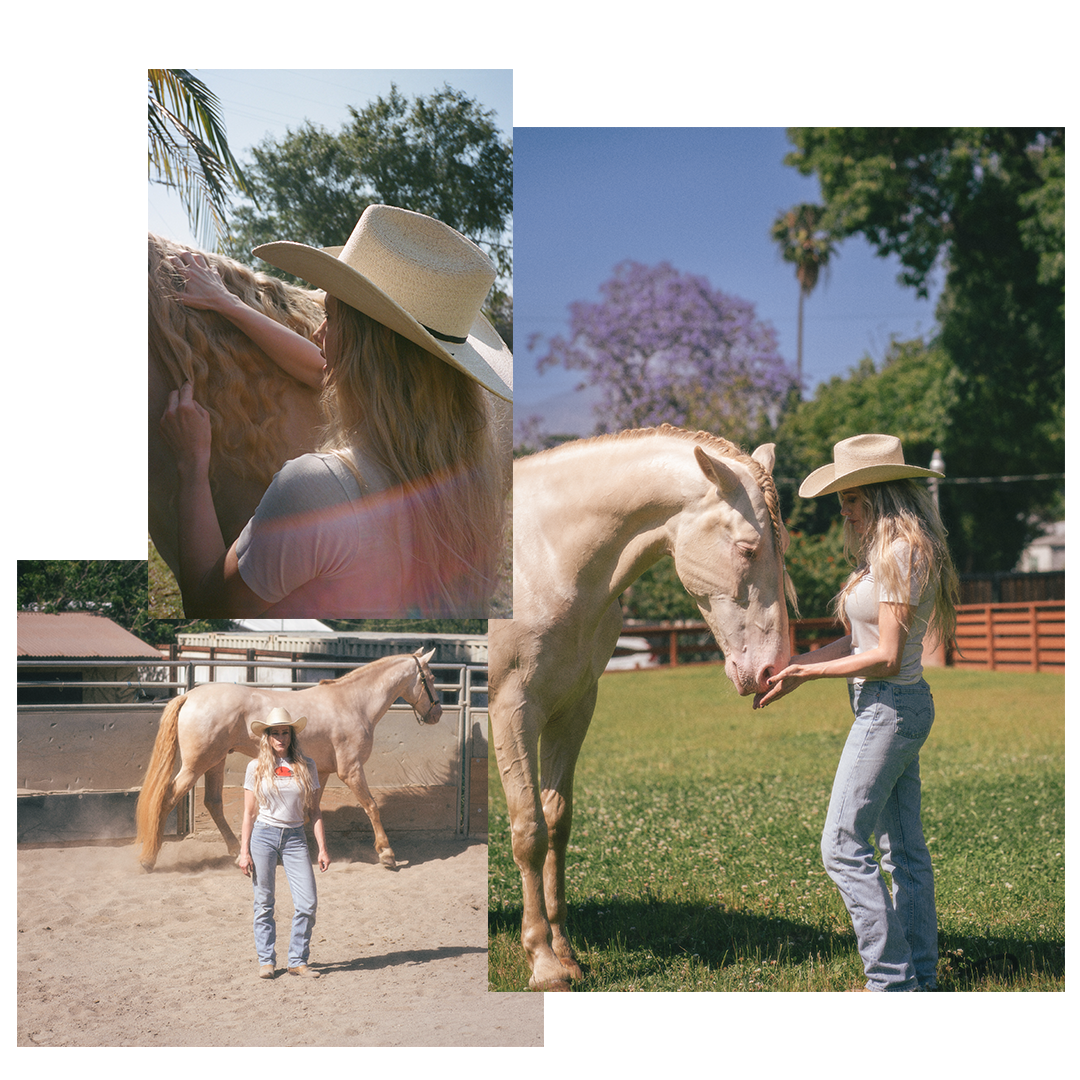
When she’s not a scream queen, however, Olivia is also a cowgirl (someone cast her in a Western!), and spends her downtime on the Californian ranch she grew up on, tending to her animals. This countryside-girl-at-heart knows everything there is to know about communicating with horses, as you would if you too had started riding aged three.
All the time she has spent in the barn has helped her navigate her struggles with social anxiety and OCD, by learning the language and behaviour of her horses. Every little girl loves horses at some point, but for Olivia, they’re still one of the most important things in the world. Here’s her guide on horse whispering.
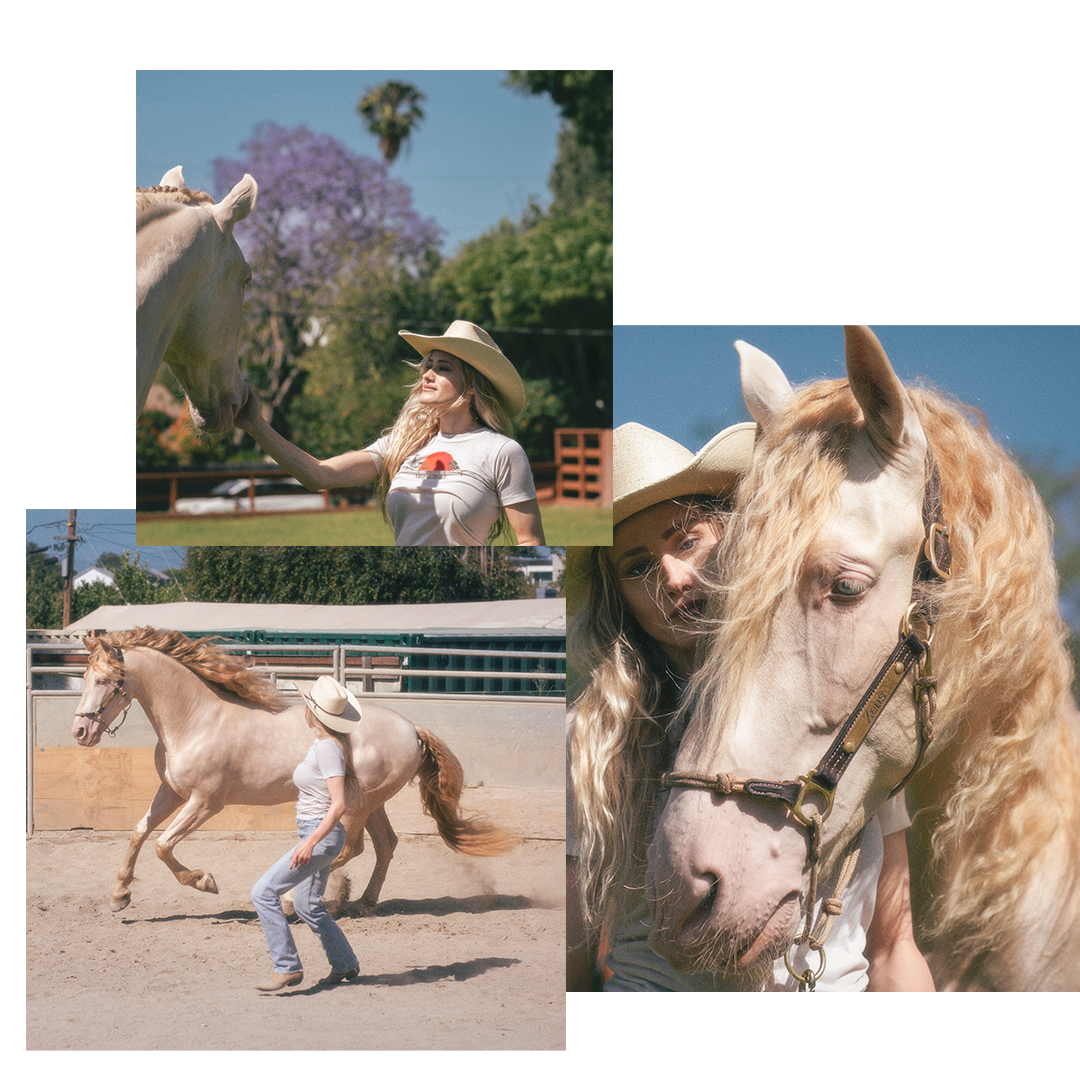
Speak their Language
Horse whispering can be as basic as learning how to walk up to a horse in a field and get them to put their head in your palm, or learning when is the right time to pet them. It’s really just a communication system between you and the horse, because you're not necessarily speaking to the horse. You’re watching what they're doing - their ears, their eyes, their heart rate, their shoulders. And they're watching what you're doing too. If you turn your shoulders, they turn theirs, and if they're licking their lips, then that's them resetting their system and they're happy and they feel safe. There's all these little magical moments that happen.
I literally just like to just ride around and talk to them and tell them about my day. Like, my horse is my journal. And I swear he knows what I'm saying. I'm like, ‘I didn’t get this part that I auditioned for.’ He's like, ‘I'm sorry, mom, that sucks’.
Learn from Your Elders
My cousin Monty Roberts is one of the original horse whisperers and I grew up watching him at his ranch. He's amazing with horses and he's trained a lot of people, and has written tons of books. So I grew up around horsemanship and learnt that it's not pressure that you use to get the horse to do what you want. It’s more asking them.
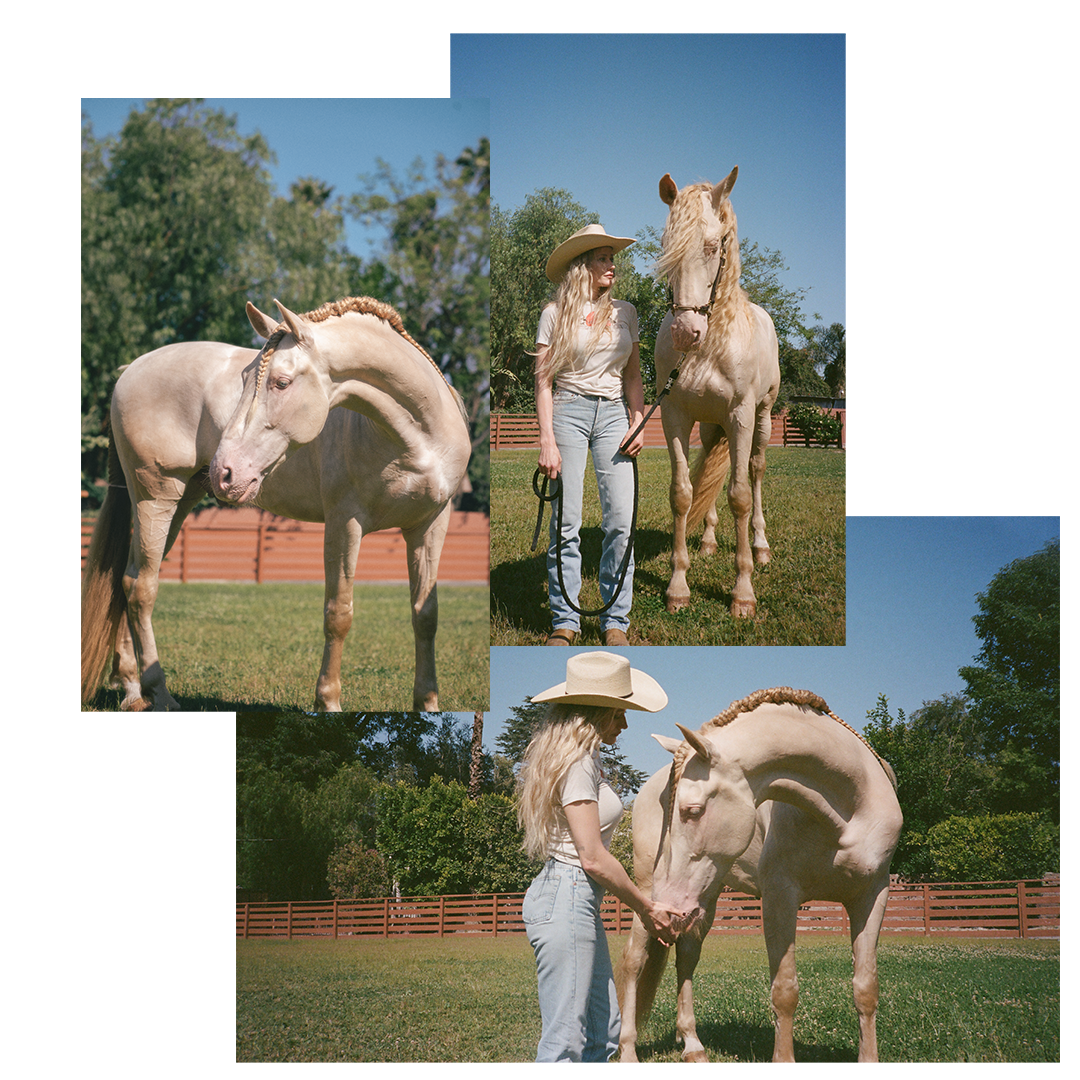
Horses can smell fear, literally, they've done studies on it. And a lot of people are afraid of horses. I mean, they're 1200 pound animals, and they move fast, and they're intimidating, but really, they're just big babies who want you to tell them that they're okay. Once people learn how gentle and sensitive they really are, they get less afraid of them.
Some people naturally have a way of communicating with horses and understand their body language right out the gate, and when you're calm around horses, you can communicate faster with them. But, you kind of have to watch and learn from other people how to do it.
Be Present
Horses don't have intention in the same way as us. Human beings have thought processes and intention and can decide what they want from you. Animals don't have that. They just experience what's in the moment. They're not plotting or planning. So there can be a lot more trust between animals than there is between humans.
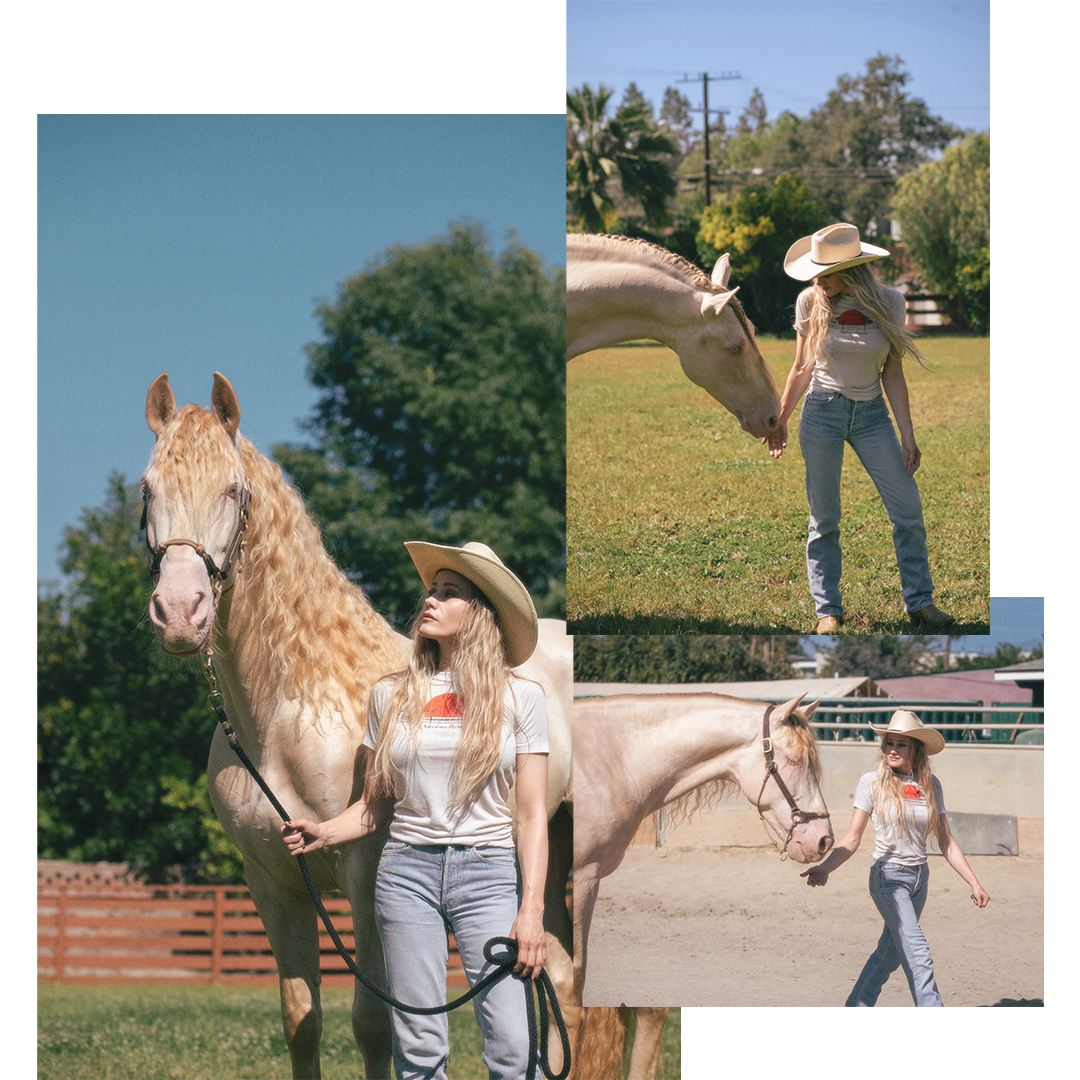
They’re the greatest communicators. They're so intelligent and loving, and they want to be our friends. They’re like people with their own personalities - they wake up on the wrong side of the bed, or they're tired, or they have a stomach ache. You need to approach them differently each time and be willing to listen.
Exchange Energy
I get so energised when I'm around my horse. If I'm having a bad day I go to the barn and I always hug him, and I let my heart rate slow down, and I just listen to his breathing, and it completely recharges and resets my nervous system. And that's just, like, this magical power that they have that I don't think you can really get from another human being in the same way. I think that, energetically, the frequency that they're on is so grounded, even though they're flight animals.
Calm Down!
You're on their time if you want to communicate properly. You have to be very patient and gentle and calm because they respond to positive energy. I mean, they respond to positive and negative energy, in positive and negative ways. They're flight animals, they're always looking to stay alive. They're in survival mode all the time, they're at all times terrified that a lion is coming after them. So you want to keep their nervous system regulated and let them trust you. They want somebody to be the boss so that they can calm down and not have to be on high alert. And then they’ll want to do things with you. You don't have to be forceful with them.
I don't always go in with the right energy, you know? I bring my shit to the barn sometimes when I'm in a bad mood. But then I go and ride my horse and he's being bad, and I'm frustrated, and then I'm like, “Oh, this is me. This is not my horse. I brought the energy here.”
Let Them Help You
I had a lot of social anxiety growing up. I dropped out of school in seventh grade because I couldn't handle being around people. I was homeschooled and I just spent all day with my animals and my horses and that's kind of where I learned a lot of communication.
I moved to LA at 17 by myself after I decided I wanted to be an actress. I didn't really have social skills out in the real world. And I was terrified of it. But as soon as I got on a movie set, I felt fine. It's where I feel at home - on a film set or with animals.
Communicating with animals and learning about them is a big part of why I became fascinated with people as a survival tool. Like, how do I translate this to when I go out in the world and I'm around people? I learned their behaviour. I learned their ticks, their body language, the tone in their voice, heart rate, all these things. I'm always tracking these things when I'm around anybody. It's exhausting, but that's what we do as people. We’re always trying to figure out what the other person is thinking.
I think that being raised around horses really helped me in my career as far as creating and being able to dissect characters, because I'm always watching and observing. I mean, that's what actors do. We're obsessively people-watching. But I learned that through the gaze of horses.