
Cinecism: Mile End Kicks: An Off-Key Indie Ballad
Words: Maia Wyman

These days, as I read Lena Dunham’s Famesick and comb through the racks of the new Los Angeles Apparel store in Soho, I, like many my age, find myself overwhelmed by a powerful nostalgia for the 2010s. For the blind optimism of the Obama era, the romantic club music, nonsensical fashion statements, and, naturally, my own youth. The early 2010s especially were like Camelot, a time before the proverbial Fall where life felt more whimsical and full of hope.
Chandler Levack’s sophomore feature, Mile End Kicks, promises to satiate that yearning by depicting a particular subculture of 2011 Montreal. Based on Levack’s own summer-long stint working as a music critic in Canada’s most “European” city, the film adopts an outsider perspective ala Levack’s self-insert Grace (Barbie Ferreira) to the indie music scene of the city’s Mile End neighbourhood.
I myself am also a Torontonian who lived in Montreal, only a bit later than Grace (2014 to 2018), and was thrilled at the idea of seeing this distinct Canadian experience put to screen. Only Levack’s Montreal is quite different from the one I remember. The film’s references would do numbers on many an indie sleaze Instagram page: Grimes, Peaches, MDMA, owl necklaces, Cobrasnake flash photography, American Apparel’s Helvetica font, a bespoke score by Tops (whose concerts I was attending on a near-biweekly basis during my time there). Yet it’s as though Levack has built a fixie bike you can’t actually ride anywhere.
The Mile End that I knew was, on top of housing a vibrant Hasidic community and long term Francophone residents, a stomping ground for barely legal undergrads who had emigrated from other provinces for Quebec’s low drinking age and Berlin-esque nightlife. It was also full of twenty and thirty-somethings who may have overstayed their welcome, enjoying but also enabled by the laissez-faire lifestyle offered by Montreal's accessible cost of living compounded by party culture. College pastimes became pathologies, and life never seemed to evolve.
___STEADY_PAYWALL___
“The Mile End scene of the 2010s was certainly picturesque, but it was also coated in a layer of (forgive me) grime.”
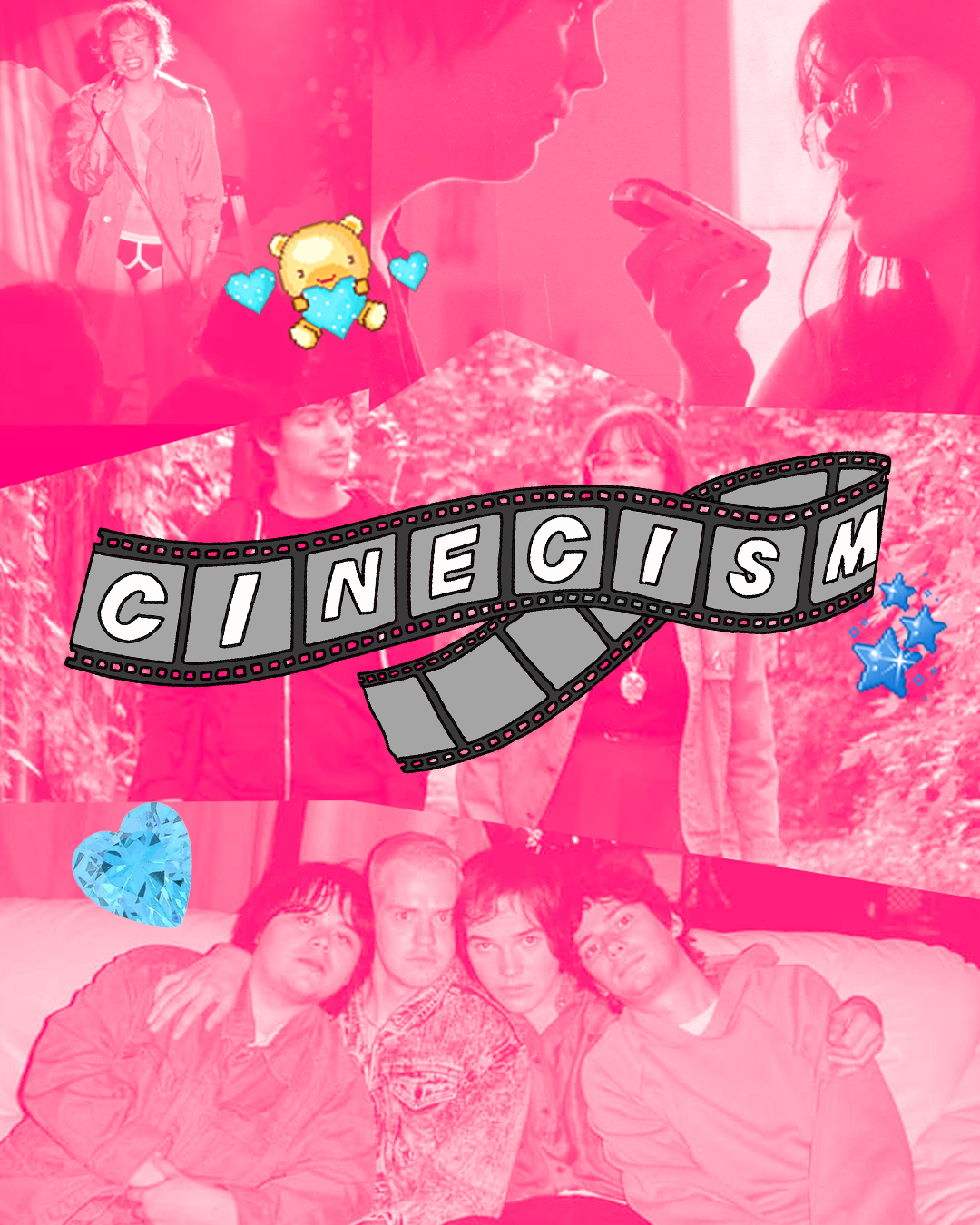
This is a reality told to us in the first act directly by Grace’s stoner love interest, Archie, but the film does little more to expand upon this statement. Instead it offers a rather sanitised approach.
The dialogue is expositional and the characterisations are hollow. From the first scene Levack requires two characters to ask Grace point blank why she’s writing in a notebook at a concert so she can tell us she is a music critic, as if this cannot be inferred. In addition to stating the thesis of Montreal right at the start, Archie also remarks that everyone in the city lives on a diet of “bagels and cigarettes.” The Quebecquois characters are horny and espouse separatist ideas to their predominantly anglophone friends (“She thinks she can colonise us and change our way of life?”). Even the Tops soundtrack is more spry than the group’s usual melancholic bedroom beat.
Due to Montreal’s low cost of living, the music scene was able to thrive - but it was not without its fair share of rampant predation. Specifically among thirty-something men seizing on their proximity to swooning college-aged girls. It isn’t called indie “sleaze” for nothing. The boys of Bone Patrol, the band Grace cavorts with at the expense of her book deal, do seem to be living in limbo, but their actions are comparatively tame to their real life counterparts and played with a cartoonishness that smacks of Disney sitcom.
Levack also skewers music journalism for its belittlement of women critics by having Grace confront her old sexually exploitative boss and present a reflection of her experience of exclusion in a reading. But this message of empowerment is shortchanged when Grace then immediately touches down on Archie’s doorstep (Archie is the second of two romances that dominate the film’s screentime) and willingly gives herself oral herpes as the credits roll. It’s difficult to see the boys as anything other than satirical and to really understand why Grace would be allured by them, because the film does so little worldbuilding outside of Grace, her Quebecquois roommate, and the band - all of whom would have a deep social network outside of their relationships to Grace. Montreal is, after all, like a small town.
The inauthentic feeling of the film can be attributed to the fact that its central POV is that of an outsider who romanticises the city she had dropped into. While the film is aware of its transplant perspective, it has also taken up the mantle of representing a relatively common Canadian experience (the Toronto to Montreal pipeline) and showcasing to the world. Yet the film suffers from a genre problem. Mile End Kicks wants to be a romantic comedy, but points its lens at a city and a scene that cannot fit this mold as effectively as its tone demands it to. The Mile End scene of the 2010s was certainly picturesque, but it was also coated in a layer of (forgive me) grime.
Mile End Kicks was greenlit back in 2016, and takes on a very different meaning ten years later, when the aesthetics of its chosen time period are only now coming back into fashion and our political climate is as fraught as can be. 2026 was arguably the perfect time to capitalise on nostalgia. But that nostalgia requires a specificity not only of references, but of essence, that the film simply isn’t interested in. And if said nostalgia is dishonest to the very environment it is sentimentalising, then what is the purpose? Perhaps we’ve fallen victim once again to the ever-shrinking trend cycle. Perhaps it’s a bit too soon to have genuine hindsight, mired as we are now in a yearning for any other time than the present.
As Grace mounts the Montreal-bound megabus, settles in for the vista-less six hour drive, Levack’s camera pans up towards the skylight. But you find yourself wondering whether we’re looking at the same sky.