
Pamela Des Barres on the Spirit of Sexuality, ‘‘I’m With The Band’ and Fighting Conservatism
Words: Carys Manjdadria-Jenkins
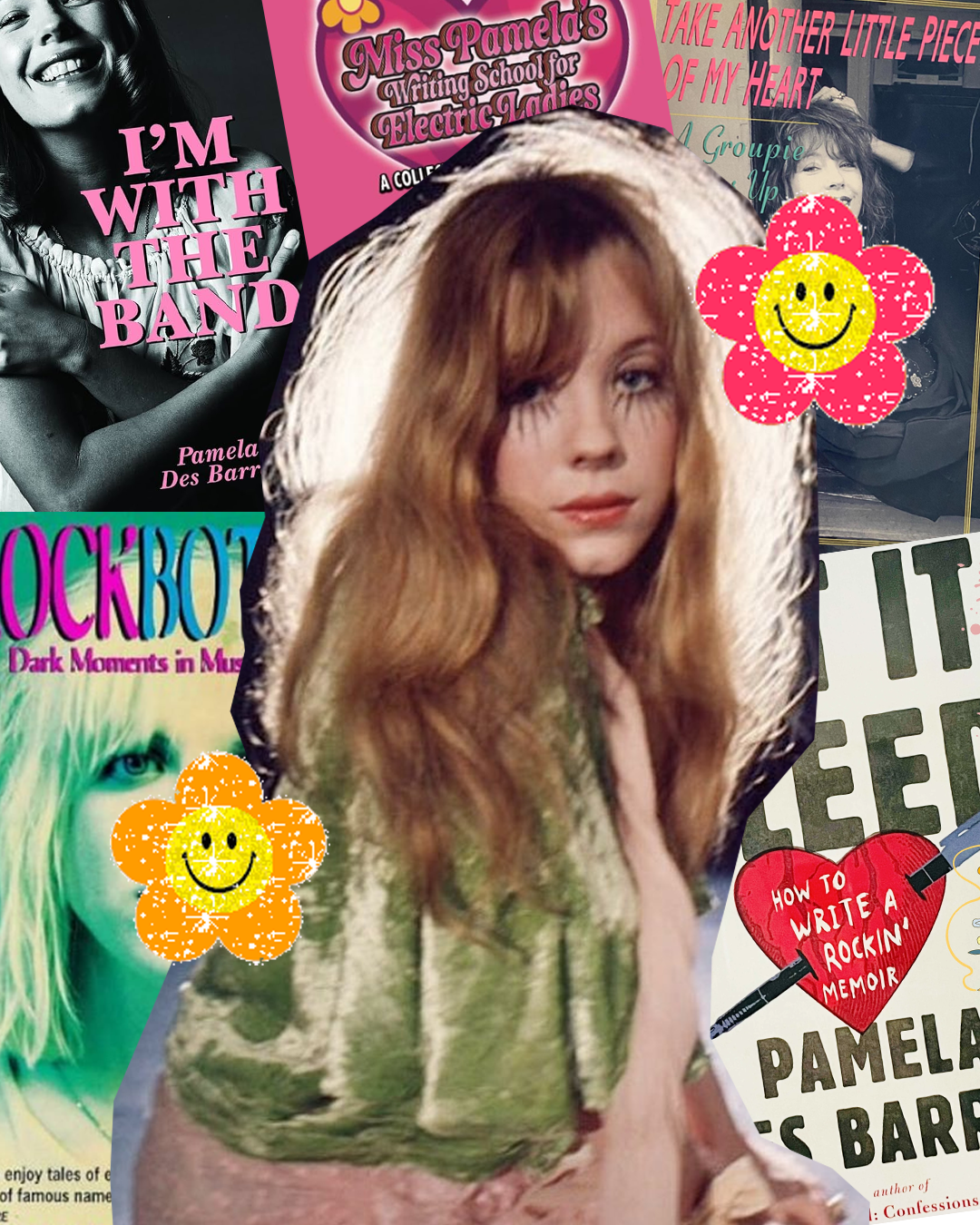
For Pamela Des Barres, sex is a way to touch the divine. The Queen of The Groupies, Des Barres earned her title by establishing herself in the sixties and seventies music scene. A muse, friend, or lover, her passion for music extended to the musicians themselves. She became a star, elevating her fellow fans and followers to groupie status.
Her Frank Zappa-produced girl group roamed the Sunset Strip and its stages, flowers in their hair and feather boas around their necks. Named The GTOs, their acronym was flexible. Girls. Together. Insert adverb beginning with O here: Outrageously, Occasionally, Often, Orally.
Nowadays Des Barres is the author of six books. She teaches writing workshops, where women aged eighteen to ninety discuss, among other things, the state of sexual freedom. We meet via video, eight at night for me and noon California time. She’s preparing for the next installments of her writing workshops, plus planning her ongoing one woman show. It was at one of these shows where we first met in London. Reading excerpts from her memoirs, she sang along to the songs she played, encouraging the audience to join in. The evening was intimate, less performance and more conversation: a candidness characteristic for Des Barres, that also marks our interview.
Thinking back, Des Barres remembers the Sexual Revolution as having “a different feeling in the air” to the one that defines our culture nowadays. “I was totally free,” Des Barres says. “The pill had just come about and feminism was burgeoning. Love-ins were real and the word love was real,” she says. She quotes The Beatles: “all you need is love.”Alongside the sexual revolution, a new spirituality was rising in America.
The emerging popularity of Eastern Religions, particularly Hinduism and Buddhism, was connected to the burgeoning psychedelic scene. It was the Summer of Love, spiritually and sexually. Exploring the body and mind was a means to free the self from the oppressive confines of the American establishment. In The Age of the Aquarius, love steered the stars and peace reigned against politics, Des Barres tells me. “The spiritual meaning has stuck and keeps getting stronger. To me, that’s the most important thing that stemmed from the sixties. We could make a difference by rebelling. We did our best, but it only changed things, sadly, temporarily.”
Now, the sex-positive sixties counterculture has somewhat swung back to conservatism. The freedoms granted in America at the time - abortion, birth control, LGBTQ+ rights, the Civil Rights Act - are being systematically threatened as bodies and orientations become political battlegrounds. “Our country is in a huge turmoil because of the people running it,” Des Barres says. “Something big has to happen to fix it. The whole human experience is a mess. What’s real is in the spirit world, in our hearts. Not in the ego, which is running the world right now.”We need a societal orgasm, according to Des Barres.
"Des Barres echoes the Free Love movement’s urge: “The idea of sex today is a mess,” she says, as we wind down. “It’s making love. Let’s hope.”"
“You know the phrase La Petite Mort, right? The French phrase. An orgasm. La Petite Mort is a little death, and it’s instant rebirth. You are, for those orgasmic few moments, awake. All the spiritual seekers are trying to show us that there is a way to feel that all the time. Not in your nether regions, but in your soul.”
Des Barres calls herself “deeply spiritual.”Born again at eight, she later studied Parahamansa Yogananda in high school - the Hindu guru who heavily influenced LA’s yoga culture and popularised Eastern spirituality in America. “For me, it’s about waking up and promoting love. We’re in our bodies to enjoy them, but we wake up in them too - that’s the main goal. It’s a cosmic classroom. I believe in reincarnation and that we live many lifetimes until we get it right. Sex is just part of it. It’s about promoting love.”
The body as cosmic classroom underlies Des Barres’ memoir, I’m With The Band. In her foreword, she calls it “the story of a young girl coming of age in the best of all possible worlds.” This coming-of-age genre has long includednarratives of sexual awakenings such as hers. Exploring others, finding yourself, becoming ‘mature’. “So much of it has to do with self-love and self-respect before you offer yourself to someone.” Though the book narrates her life experiences, they have largely been eclipsed by her sexual experiences.
Reactions to Des Barres’ frankness have exposed the politicisation of women’s sex lives. “It’s like people think I’m the world’s largest slut,” she says. “Sexual freedom is a personal act, but it also has to do with the response from whoever puts you down for it. People are still condemning me.”She speaks of a message she received from a former classmate: “She said ‘I’m sorry you’ve had a sad life. You slept with hundreds of men.’”
There is a tension inherent in the figure of the groupie. It’s the tension that splits feminism: does female sexuality empower women, or reinforce male wants? Can a woman subvert patriarchal erotic structures, using her body as a personal and political tool? Des Barres thinks so. The promiscuous woman is transgressive in a world where monogamy, marriage, and purity are prized. She acts with autonomy.But the dynamic of groupie and rock star is usually one of power difference, and, at its worst, exploitation. The rich and famous expect to be surrounded by adoring women and their sex - it’s inevitable, and often institutional.
In musician Dave Navarro’s foreword to I’m With The Band, he writes that “there are always lots of hot women around rock stars” and he “pray[s] every night that there always will be.” Though Des Barres’ story is one of conviction and empowerment, her frequent slut-shaming reflects the sex-negative idea that a woman’s sexuality is not a viable political tool when sexual structures are founded on patriarchal structures. The sexual climate of today echoes this: women are turning to celibacy for self-preservation, tradwives spout conservative and purist ideology, sex is seen by some as the microsomic site of female submission and male dominance.
The world-weary stance derives from the pendulum swinging back from the sixties. The state is still trying to control bodies and how they are used: abortion rights are threatened, gender-affirming care is restricted, anti LGBTQ+ bills proliferate. Politics seep into the personal, but, unfailingly, Des Barres echoes the Free Love movement’s urge: “The idea of sex today is a mess,” she says, as we wind down. “It’s making love. Let’s hope.”