
Precious Way’s Guide to Acting in a Comedy Series
Words: Rob Corsini | Guide: Precious Way

Make it stand out
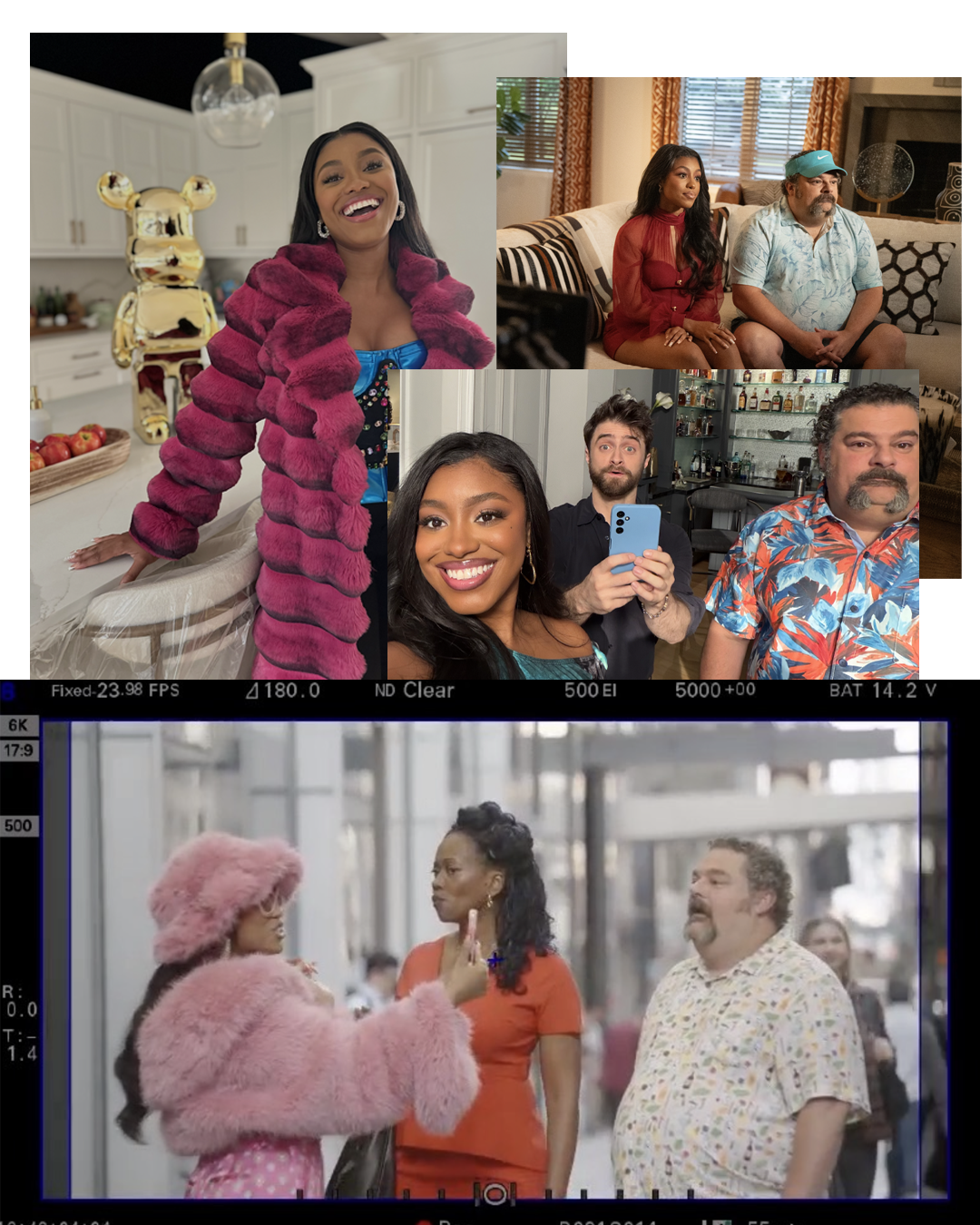
When Precious Way found out that she had been cast as a lead in The Fall and Rise of Reggie Dinkins she was sitting in her car outside of a Wingstop. Just a couple of months later, she was on set with comedy legends like Tina Fey, Tracy Morgan, Bobby Moynihan and Daniel Radcliffe.
Precious was already an established actor - with recurring roles in shows like Partners in Rhyme and Days of Our Lives - but Reggie Dinkins provided was a new challenge. Not only was Precious acting in a comedy show, she was acting with some of the biggest names in the industry. Although it was daunting at first, Precious knew she’d be able to rise to the challenge and even exceed it. Not content with just putting in a star performance, she also sang the show’s theme tune.
The Fall and Rise of Reggie Dinkins has been a masterclass in how to have fun while making a comedy show - here’s Previous Way’s guide to acting in a comedy series.

Do Your Research For Auditions
The first thing I do when I get an audition is try to gather up all the information. I try to find out as much as I can about the writers, the directors - watching some of their previous work to just kind of get an idea for their tone and look through their eyes a little bit - just to see the world that I'm entering into. After that, I’ll read the character and then I just start to say: Where do I see this woman? What did I notice about her first? And the first thing that jumps out to me is what I build on.
The Beauty Is In The Backstory
When I’ve booked a role, I take the seeds that I planted at the audition and start to build out a bigger picture. I think about the chemistry with the other characters, pore over the script, look at the conversations and try to form a bigger picture. I’ll take a step back and say - why would these characters be having this kind of conversation, what’s got them to this point? From there, I build a backstory - even if the writers don’t write it, I’ll make it for myself - so that when I come into scenes I feel comfortable with the other actors, knowing who my character is.

The Joke Isn’t Always Where You Think It Is
Sometimes you think you know where the joke is. You’re preparing, you get it all in your mind, you get it in your body, and you learn it thinking you’ve nailed it. Then when you get on set and you're with the other actors, the joke takes on a mind of its own and lands in a completely different place. You just have to submit to it and let it happen and it’ll end up being hilarious.
Messing Up Is Part of the Job
If you get it wrong, it's okay! I gave myself permission to just go and mess up. Ask yourself what’s the worst that can happen. Nobody laughs? Okay, I’ll try it again and I’ll make them laugh a second time. I’m not going to give up. It’s very vulnerable to be in a space where you’re trying to make people laugh because everyone responds differently to things - but on set, everyone wants it to work - even more than you do! And when you’re feeling good - and not stressing about what could happen - others will feel good too.

Leave Room For Improvisation
Once I get the script in my bones and I feel very comfortable with the words, then I just let the scene happen. Sometimes you’re in the flow and something extra will pop out and the writers will say: What was that? I like that! They’re always very collaborative and supportive and they want to find a way to make their script even funnier. But improv should only be a bonus - don't start with the improv! Begin with the words on the page, because you can always grow from that! The writer is there for a reason, they know what they're doing, and you also want to appreciate their work.
Your Voice Is Valued
It’s easy to feel imposter syndrome and second-guess yourself and to start thinking of the worst possible outcome. But before I went to set, I took a moment and told myself: you are here for a reason, like, you're meant to be here, you did everything you were supposed to do, so now it's time to just go out there and just do it. And then when I went to set, I was met with so much support and so much love from my castmates. They actually wanted to hear what I had to say, to know my thoughts, and collaborate with me.
You’ll Find The Role Made For You
If you don't book a job from your first 10, 20, maybe even 50 auditions don’t feel defeated - because what's for you will find you. When you do book that role, all the little things that you did along the way, all the pieces you’ve collected from all those auditions, all the lessons you’ve learnt from hearing the ‘Nos’ - all of those bits will click into place and you’ll have this beautiful picture that you’ll bring to the role that’s perfectly designed for you.
