Sabrina Impacciatore on Physical Performance, Charlie Chaplin, and Returning to “The Paper”
Words: Jenn Lehwald | Photography: Lewis Vorn | Styling: Katy Cutbirth | Chelsea Frei Makeup: Kenneth Soh | Chelsea Frei Hair: Kelsey Gustovitch | Gbemisola Ikumelo Makeup: Tay Rivera | Gbemisola Ikumelo Hair: Porshawna Mosely | Ramona Young Makeup: Sarah Nelson | Ramona Young Hair: Ryan Burrell | Sabrina Impacciatore Hair: Andrew Ly | Sabrina Impacciatore Makeup: Sabrina Rinaldi | Special Thanks: Margaret Crane, Alex Wong and Olivia Cooper at Universal TV
Make it stand out
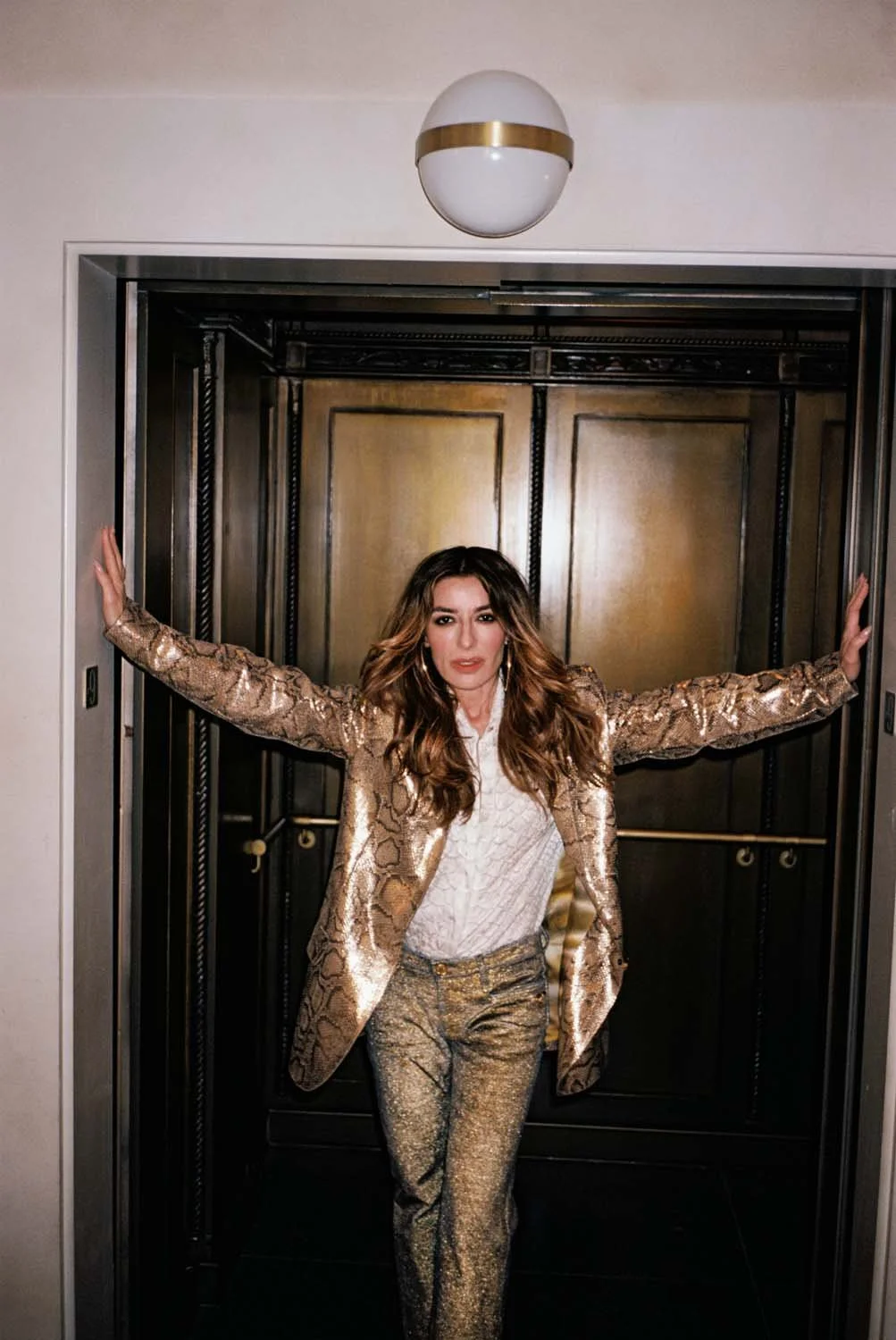
Sabrina Impacciatore thought she might never play Esmeralda Grand again. After the first season of The Paper wrapped, she wasn’t sure if she would ever be able to find her way back into the character of the eccentric Managing Editor - her “crazy twin” capable of doing things she would never do herself. Then she walked into the costume room for Season 2, transformed into Esmeralda, and immediately knew: “She’s back. She’s back.”
For Impacciatore, a native Italian speaker, The Paper has become a surprising lesson in what it means to work within another language and culture. She talks openly about wondering whether her sense of humour translates, and how the experience has made her think differently about immigration, empathy and the ways we understand others. It’s a perspective she brings back to her lifelong love of cinema, from Charlie Chaplin to Anna Magnani. Now, having spent so long being known for comedy, she’s ready for something else - a role where she can do both.
What surprised you most about how audiences have responded to your role in The Paper?
I'm still surprised, and I'm still wondering about how they're going to react during the second season.I was very, very scared because The Office was such a classic, so the responsibility of being part of a show that had the same spirit and was connected to that cult show was very scary. Now, more and more, I'm enjoying the fact that people are loving Esmeralda. It's always a surprise because Esmeralda is like the bad guy of the situation, so it's very difficult to make her lovable. I always have to find this balance, and it's an everyday struggle. I hope people are going to love this character as much as I love her.
I think she's the most lovable character. She's so charming. There's something so earnest and exciting about her.
Oh, thank you. This really makes me happy because yesterday I watched the second season and I couldn't sleep at night because of this fear that I have. I did not sleep, I'm honest! So now that the season is coming out on September 9th, we'll see how people are going to take it. I'm scared and excited at the same time.
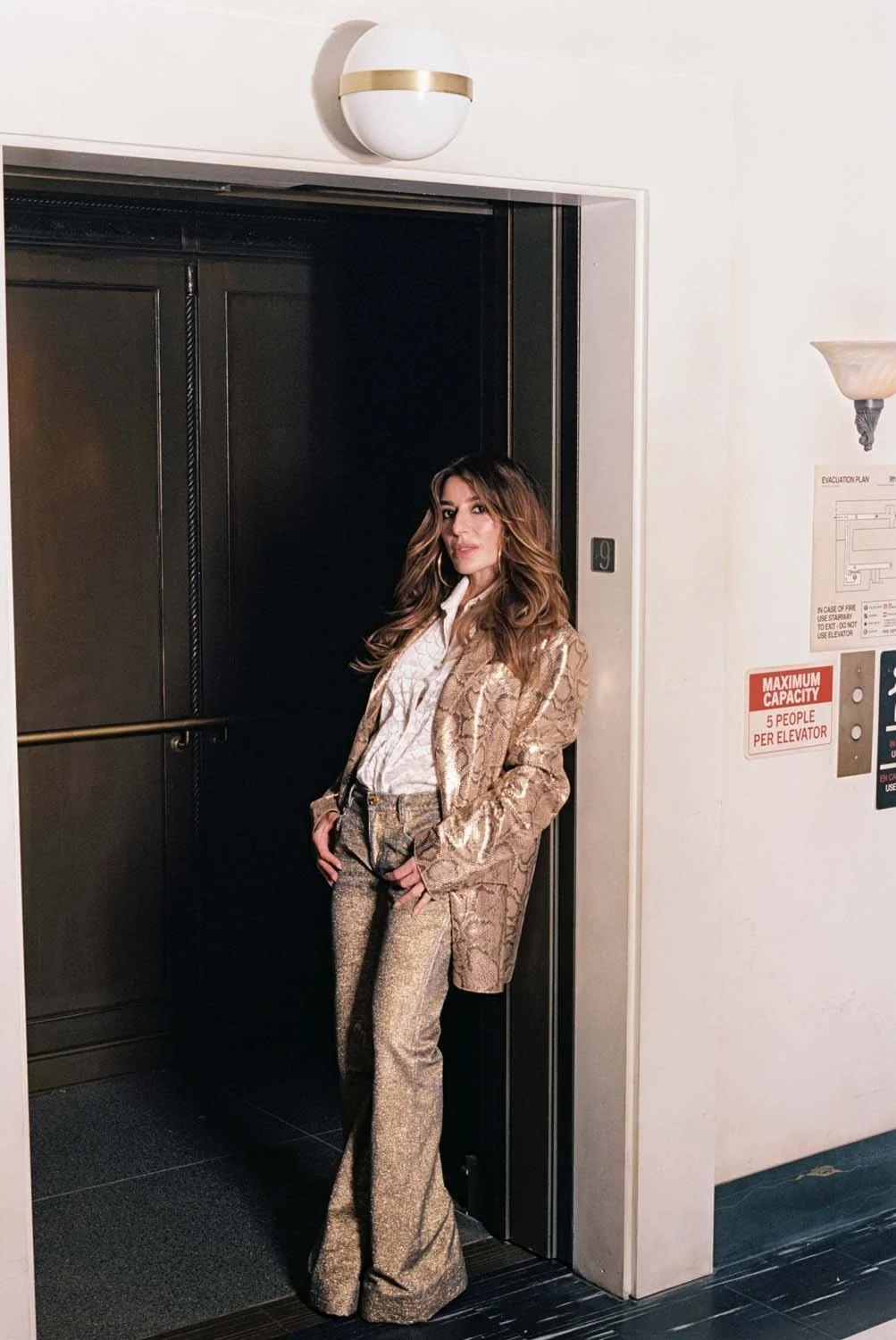
“On the first day, when I went to the costume room and I was wearing those high heels again, with the tight skirt and big belt, I felt, "She's back. She's back."”
Unlike The White Lotus, where it's one and done, you're going to keep playing this role. How different was it going into Season 2 after doing Season 1?
At first, I thought I wasn't able to play this character again because it was a new thing for me, and I had a lot of fears connected to that. Then, on the first day, when I went to the costume room and I was wearing those high heels again, with the tight skirt and big belt, I felt, "She's back. She's back." I was missing her because she's like a crazy twin who is able to do things that I would never, ever do in a million years. She's somehow maybe braver than me.
Now, after the second season, I would love to play her again because I love her more and more. The day I'm going to stop with this character, I'm going to miss her a lot.
Do you think there are many similarities between you and Esmeralda?
No, we are so distant. We are so different. Actually, I am the opposite of Esmeralda. Sometimes I struggle when I have to play her. There's something in my guts that feels not at ease, and I think, "How can she do what she's doing?" So I have to have a meeting about me and her in my head, in my heart, and I have to say, "Sabrina, now you have to do this." And then I just do it. The more I do it every day, the more she starts to possess me and she starts to live her own life, and I just follow her. It's fascinating because she's really, really larger than life.
She's very aggressive, she looks self-confident — of course she's not — and she's very unfair. But in this season, I could finally show another side of her. For the first time, she was questioning herself. It was kind of innocent, this way of Esmeralda understanding for the first time that people perceive her in a way that she cannot even imagine. After this little awareness, she tries to offer something to change that idea. But will she succeed? We don't know.
Was there anything else in the Season 2 script that surprised you going into returning to the role?
Oh my God, of course. The thing that surprised me the most about Esmeralda was when she has to play other characters.
That was also another very scary moment for me because when I saw that they had hired an incredible makeup artist to transform me — my body, my face, everything — I thought, "Oh my God, am I going to be able to do that? Am I going to be able to play these characters?" I didn't know. I just had to jump in.
When I first wore a hat and started to play the 12-year-old kid, I went to the writers' room to surprise Greg Daniels and Michael Koman. When I saw Greg laughing with tears, that was my biggest satisfaction, to be honest. That part was my favourite part to play.
I think you're going to get the same reaction when the show is out. People are going to go mental at how crazy she is.
Thank you. You know, on set while I was shooting this character, there was an 11-year-old kid — maybe she was even 10 — who was one of the extras. She was looking at me like she was looking at an alien. I went to her and asked, "Do you see a 12-year-old kid in me?" And she said, "You really are like a 12-year-old." I believed her too.
Every take, I would go to her and ask, "Hey, how did it sound? Did it sound believable?" And she would say, "Yeah, yeah, I liked it." So in that moment I had this incredible connection with this kid, and I felt, "Oh, I got it."
That must have been such a great experience, having an actual sounding board for the character. Do you think you use the rest of the cast as sounding boards as well? Do you all play off each other and hype each other up?
Oh, absolutely. We work a lot on really listening to each other and really reacting.
This is why I think the show feels real, because we spend so many hours — imagine, 12 to 14 hours — all together in the same space. Now we're becoming more like a real team, and we really react to each other.
In fact, I never know how I'm going to say my lines or how I'm going to react to things. It depends on what we give to each other.
This is something that I really, really love about this show, and it's kind of unique.
We work a lot on really listening to each other and really reacting. This is something that I really, really love about this show, and it's kind of unique.
Have you found it really different working on this compared to other projects?
A: Yes, a lot. This is a kind of live creature that keeps changing every second.
The script arrives sometimes at the last minute, and imagine me as an Italian — I had to learn my lines, and I have a lot of issues with that! At the same time, I have to be able to improvise.
What I also like is playing a lot of physical comedy. I like to use my body, so I try to do it as much as I can.
This collaboration with the writers is a very, very one-of-a-kind thing because it happens moment to moment. They call us into the writers' room, we have meetings, and then we create things together.
It is a very unique process where all together we create these characters. Of course, Greg has the idea of the show, along with Michael Koman, but then this is a live creature that keeps growing in our hands.
Do you like having that kind of input on a character, or do you wish it was more like you get the script and you just do the script?
No, no, no. I love this. I love this way.
If you want to be challenged as an artist, I think this is something that makes you grow in a very consistent way. You have to be ready, you have to be reactive, you have to be aware of everything, you have to try different things, you have to explore things, and you have to be funny. It's the most difficult thing. You have to make people laugh.
And what happens is that if I make the crew laugh, that's the answer. The crew is our first audience. That's why this show is quite peculiar. If they laugh, we can keep going.
Is it a lot harder to make people laugh in a second language?
Yes. This is an idea that I keep struggling with: does my sense of comedy translate in a foreign language and in a different culture?
That was my big concern, and still is my big concern. I'm still wondering about what translates and what doesn't translate.
That's why I love to use physical comedy, because it's more universal and I don't need words.
Sometimes I wonder, are they going to accept me even if I'm from a different culture?
It's very interesting to feel this way. I learn more about humanity. I learn about immigrants. I wonder even at school how people can feel when they're in a new environment, where you have to write your own life starting from zero and try to match with other people.
It's a very interesting experience that's making me grow as a woman. I feel I'm really growing a lot. I have a different vision. I went back to Italy for a couple of months and I felt I'm a different person. I'm the same person, but with a different point of view on things — a wider point of view.
It's really important to learn a foreign language. I think if I had kids, this would be the first thing: you have to learn another language and you have to make sure that your life becomes bigger.
That's so powerful, especially what you said about immigration. I'd love to hear a bit more about that.
How can we know how people feel? We see things from outside and sometimes we make our own ideas, but then when you experience something from your own point of view, you start to understand things in a different way.
I feel everybody should have this experience in life. Everybody should feel this way. You have to put yourself in those shoes to understand how difficult life can be in that way.
And I mean with everything, with every condition. I wish that we as humans could feel what other humans feel, especially humans that are very different from us. That would be a dream.
I think that's the biggest problem in the world: there is this lack of empathy. There is this lack of putting yourself in other people's shoes.
You just don't do it. You see life in your own way and you make wrong choices most of the time because of that.
I think that's kind of the joy of good TV and good cinema — that it helps teach you empathy.
I hope so.
This is what I felt was happening when I was a little kid and I was watching Charlie Chaplin's movies, or Anna Magnani's movies — she was one of the biggest actors of all time — or I was watching Paul Newman.
I remember all these actors who were teaching me about life as a kid.
I could feel the poetry of life.
I think that cinema and television, when they are inspired, can really teach a lot. And I think we discovered during COVID that they are necessary. They're not just a class that we don't need.
To me, it is really clear that movies, music and culture in general are food for your soul. If you don't give food to your soul, you start to be drained inside and you lose humanity.
We have to stay human. We have to stay human for sure. It's so easy to lose the sense of humanity, unfortunately.
That's what I love about The Paper, because it generally has those really tender moments within it. I think that's what makes good comedies — they have those heart-wrenching or heart-warming scenes as well.
I completely agree. This show is very tender. It's very sweet at heart, and it reminds us how to be human, how to be innocent, how to make mistakes, how to try to make it, and how to invent creative ways of trying our own way.
And yes, I think that being connected with other people is something that we're losing with this damned technology that has taken over. We should remember that real connection is live: touching each other, talking to each other, meeting, sharing things, sharing feelings. This is why it's also so important to watch television all together, or to watch a show all together, to go to a movie theatre all together, to have a ritual that you can share and have feelings. Because feelings are what make us human. The fact that we can keep creating feelings and having human reactions is something that we should never stop doing.
You mentioned Charlie Chaplin. I'd love to know your other comedy inspirations.
Of course, Charlie Chaplin is one of the biggest models of all time because it's eternal comedy. More than being a classic, in a million years, if people watched a Charlie Chaplin movie, they would still laugh. I think that on Mars, aliens would laugh about what's happening! That is the comedy that I prefer, and it's the ultimate inspiration.
But The Paper also does this thing of facing universal themes and universal dynamics — human dynamics and every kind of dynamic, from love relationships, seduction, jealousy and competition to working together, creating, being friends or being enemies. There is a lot going on in this show. That's why this show is loved by so many people all over the world, from different cultures.
Definitely. And finally, outside of The Paper, what would be your dream next role?
I just shot my first lead role in a thriller, and it was a really fantastic experience. I love to be challenged. I don't want to be stuck in a genre.
My dream — and my dream is coming true — is to be able to play every kind of character, from extreme comedy to extreme drama. Sometimes when you're a comedian, this isn't easy because sometimes people don't find you believable in a drama. To me, the fact that I'm having this chance means I want to keep going in this direction. I hope my next big international role is in a drama. Ideally, I'm dreaming about a role like the ones Anna Magnani used to play — drama and comedy at the same time. Because this is how life is. In the biggest, deepest moments of pain in my life, in my experience, I always found a moment of comedy, and also the opposite. I would like to play a role like that.