
Savoury Girls Versus The Patriarchy
Words: Kira Manelski
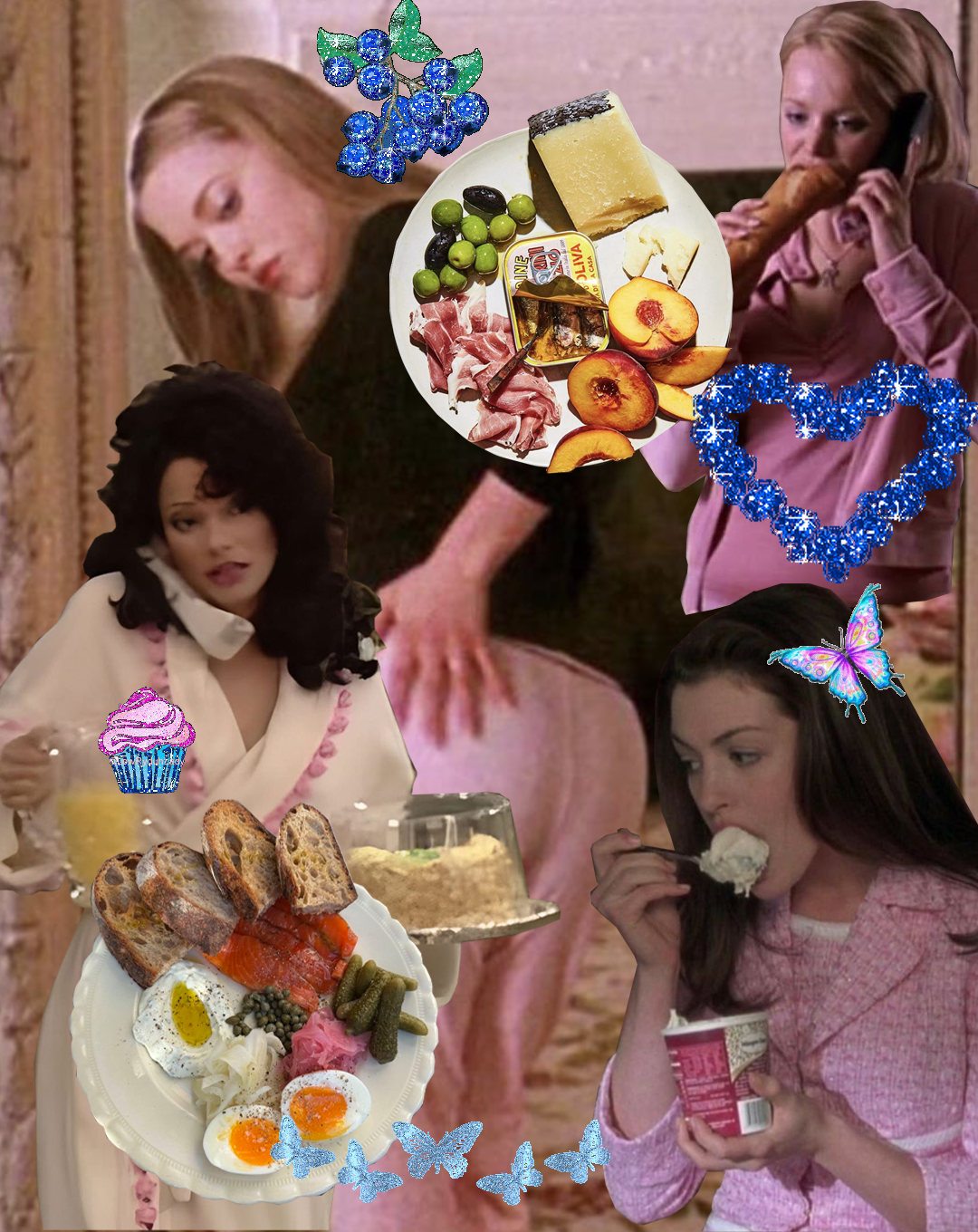
One of the first rules of eating disorder recovery, as I was informed by my nutritionist, is unfollowing diet culture influencers. Preferably, you don’t want to be following anyone whose TikToks might rattle your brain into questioning what you put on your plate. Purging my following list of genetically-blessed women advertising Brazil nuts for breakfast felt like an assertive step in the right direction. Quickly, however, my unfollowing spree became somewhat of a Sisyphean struggle.
The clean girls drink green juice and pick at grapefruit on white ceramic plates. The cottagecore girls curl up with a bowl of “loaded” porridge – oatmeal with a wide array of toppings, from the traditional fruit or maple syrup to cacao nibs, Kinder eggs, or protein supplements – nestled in quilts before a computer screen playing the opening theme of Gilmore Girls. And yes, the MAGA right-wingers are now eating slices of raw meat on a wooden cutting board, making videos donning backwards caps and effaced with text like “this and a Godly woman.” Now, we can get an idea of everything about an influencer just by glimpsing the melange of meals they advertise on their page.
This culture of hyper-aestheticism and self-surveillance begs the question: is there possibly a degree of subversion from the stylised, often performative online food culture in showing that you’re eating something categorically anti-aesthetic? Something with sugar or carbs, or that is just plain gross-looking?
There’s been a lot of talk recently about the sinister return of the “thin is in” beauty standard and its connections to the rise of right-wing governments worldwide. In Lois Shearing’s 2025 article, “How the far right is using thinness to radicalise women and teen girls,” she writes, “For far-right women, there is no such thing as body positivity or body neutrality. Thinness is a moral imperative; it shows dominance over the body and aligns oneself with European beauty standards.” This point has only been underscored by RFK’s Make America Healthy Again movement, which has flipped the food pyramid and told Americans to eat more red meat – echoing messaging we’ve seen for years from the conservative gym-bro cutting board influencers, whose idea of dessert is banana with cinnamon accompanied by poorly-cooked steak. The burgeoning number of “SkinnyTok” influencers like Liv Schmidt spread a similar kind of political food-policing in a different font. The message is clear: deny yourself, dominate your body, and conform to the beauty ideal. Between her Instagram reels in which she states that she willingly indulges in food restraint to “test” how “skinni” she is, or her “Skinni Société” an online weight loss support group, her rhetoric echoes the diet culture of the early 2000s.
___STEADY_PAYWALL___
“To a mind indoctrinated with images of flattened rice cakes and the pale greens of celery juice, Alissa’s meals are almost so weird that you can’t look away.”
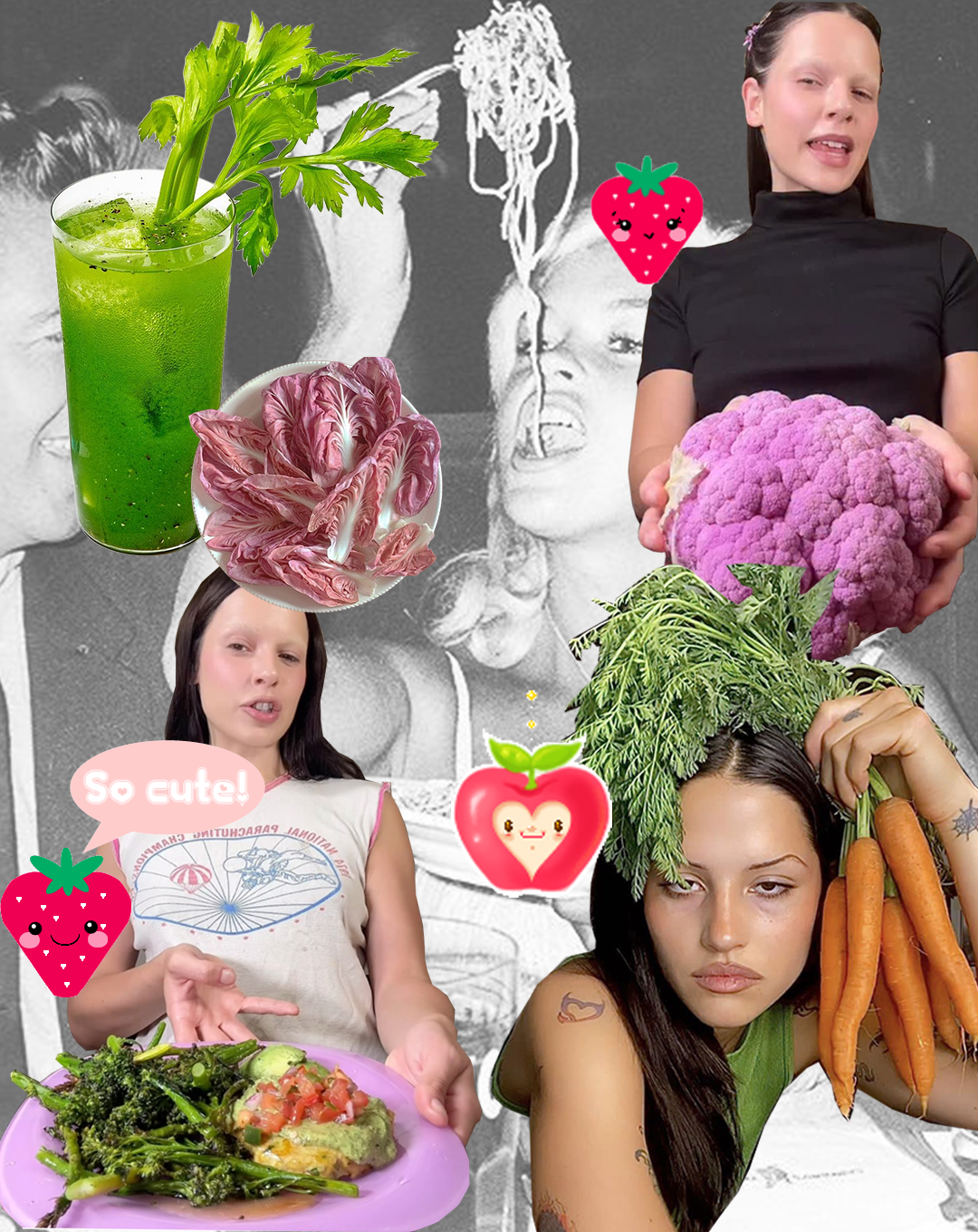
Amidst the reverberating choruses of online fat-shaming lingo like “big back,” and the other end of the spectrum, where you’re lauded for having a “skinny mindset,” a new crop of influencers have been emerging, however. I’m dubbing them the “savoury girl food” posters. Take Alisa Pegram, also known as @alissasmagic on Instagram. Her bio reads “WELLNESS FOR THE FREAKS.” Interspersed between interpretive dance videos, Alissa’s savoury snack plates and sandwiches feature marinated mushrooms, fleshlike pink radicchio, and briny olives have ignited discourse in the comment section.
Her ambitious meals usually balance unexpected food combinations and a vast array of pickled ingredients, playing with flavour palettes. Notably, her food also incorporates an element of visual interest for the spectator. She presents oddly-shaped and contested foods - at least in the Western debates of what is “tasty” - amidst contrasting colour schemes and stimulating variations of texture. Any girl accustomed to chewing dry, diet-culture grain bars, picking at plain ground beef, or scanning the grocery aisles for low-fat cottage cheese, might find herself delightfully disturbed by Alissa’s creations, and undoubtedly intrigued. To a mind indoctrinated with images of flattened rice cakes and the pale greens of celery juice, Alissa’s meals are almost so weird that you can’t look away.
Calling food “weird” or “exotic,” however, betrays a larger, more sinister truth: western standards of food normativity are also connected to notions of empire and racism. The “acceptable” food of conservative diet influencers, from unsalted chicken to plates of unseasoned hardboiled eggs, stands in stark contrast to the spiced, flavorful traditional food of many Eastern, African and Caribbean cultures. In her 2021 article “Stop using ‘exotic’ to describe food,” G. Daniela Galarza writes “In this context, the continued use of the word exotic reads as an attempt at ostracizing the other in the service of empowering oneself.” The labeling of food as ‘weird’ or ‘exotic’ is yet another example of xenophobia, Otherizing non-Western food as ‘gross’, whereas Western food is considered ‘normal.’ A 2020 conversation between cookbook authors Priya Krishna and Yewande Komolafe for Bon Appétit explores how the majority of cookbooks are written for white audiences through a Eurocentric lens. While the internet provides an opportunity to break out of the white, Western mode of food-based storytelling and recipe-sharing, the conservative insistence on “primal,” often plain food as the epitome of health undercuts the work non-Western food influencers are doing to broaden food acceptance.
Alissa isn’t the only girl engaging in this trend. On TikTok, user Stephanie Jakubek @simplystephjaye displayed her savoury, flavour-packed meal of pickled garlic, chive cream cheese, pepperoncino peppers and tortellini, declaring the bowl a “salty rat girl” dinner. Influencer Carla Uselton, @carlacasty on Instagram, announced that her savoury-and-sweet combination of Japanese sweet potato, seasoned salmon, sauerkraut and almond butter dinner a “weird wellness girl” meal. Holly Barnes, also known as @savourygirll on TikTok, has created an entire brand off her full-plated, savoury meals for her 1.1 million followers. Her account showcases adequate portions of foods that might be considered “rule-bending” in the current conservative food landscape: a steak sandwich including ciabatta-based carbs, oils, seasoned meat, and blue cheese; fearless snack plates with villanised processed meats like salami, caesar salad dip, and chips; and unabashed, oversized aperol spritzes in an age that fears “liquid calories.”
What strikes me about these posts is that these women connect their flavourful meals with a kind of subversive femininity, acknowledging that by eating this way, they are opposing a patriarchal norm, even if only implicitly. They are “weird” girls, “freaks,” and “salty rat” girls for paying attention to flavour profiles – prioritising an enjoyable experience of eating and holistic wellness – over eating for thinness or food “purity.”
The thousands following these women prove that there is an audience who gets a kick out of watching women eat against the norm. Women eating things they “shouldn’t” as a demonstration of bodily autonomy and an assertion of individualism may actually be becoming a trope. A Certain Hunger by Chelsea G. Summers reached BookTok cult status in the early 2020s – following Trump’s first administration – while novels like What Hunger by Catherine Dang and Natural Beauty by Ling Ling Huang have been published in more recent years. These books and others explore feminism and the confines of gender roles through the disturbing elements of cannibalism and body horror.
In an era in which what women are eating is supposed to connote something about what kind of women we are – from traditionally-beautiful “skinni” girls to “weird girl wellness,” “savoury” girls to feminine rage cannibal girls and everything in between – our plates have become political assertions of identity. This is especially true given the increasing use of GLP-1s: drugs meant to suppress hunger and curtail the eating experience to an even greater degree than just promoting tasteless food. What kind of society are we in if women’s mere instinctive appetites, one of the most basic elements of human existence, have become controversial? Amidst the MAHA movement and an overwhelming amount of food discourse, eating what you want – or eating anything at all – has become a radical act.